To understand pet food labels, focus on the ingredient list, which is ordered from most to least. Look for high-quality proteins listed as the first ingredient and check sourcing details for transparency. Use the guaranteed analysis to compare nutrient levels like protein, fat, and fiber. Avoid vague ingredients such as “meat meal” or “animal by-products.” If you keep exploring, you’ll gain insights into making the best choices for your pet’s health.
Key Takeaways
- Ingredients are listed in order of weight, from most to least, indicating the primary components of the food.
- Look for clear, specific ingredient names (e.g., chicken, salmon) rather than vague terms like “meat meal.”
- Check the guaranteed analysis for minimum or maximum nutrient levels such as protein, fat, fiber, and moisture.
- Focus on high-quality ingredients and transparent sourcing details to ensure nutritional adequacy and safety.
- Understand that “complete and balanced” labels, based on regulatory standards, indicate the food meets your pet’s dietary needs.
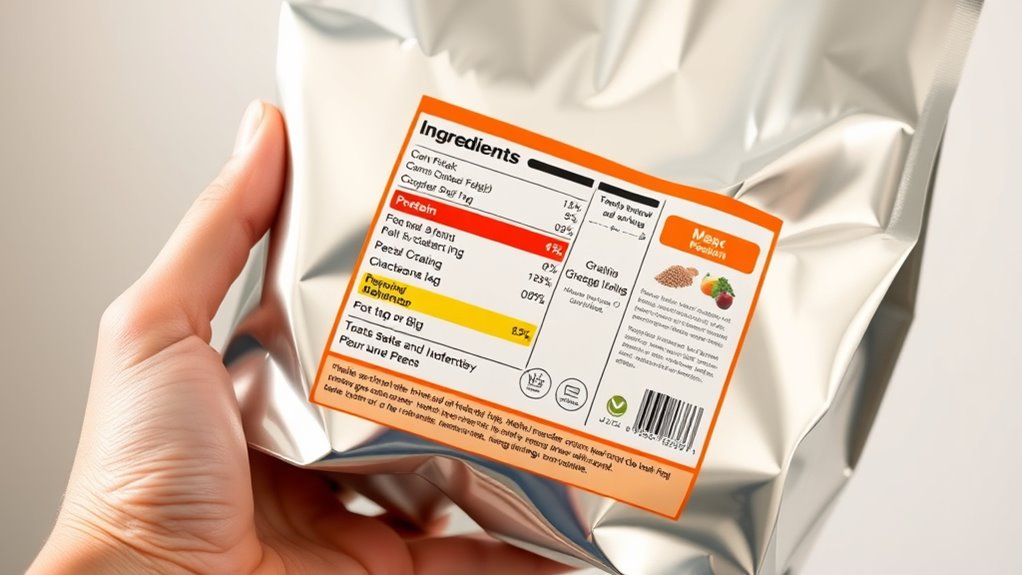
Have you ever looked at your pet food label and wondered what all those ingredients really mean? Understanding the label is key to ensuring your pet gets proper nutrition. The first thing to *contemplate* is nutritional adequacy, which guarantees the food provides all the essential nutrients your pet needs to stay healthy. Labels often include a statement like “complete and balanced,” which indicates the food has been formulated to meet standards set by organizations such as AAFCO. This assurance means the food contains the right proportions of proteins, fats, vitamins, and minerals. It’s important to check for these claims because they help you identify whether the food is suitable as a primary diet or just a supplement.
Understanding pet food labels helps ensure your furry friend receives proper, balanced nutrition.
Beyond nutritional claims, ingredient sourcing plays a *crucial* role in quality. When you scan the ingredient list, you’ll see various components listed in order of weight, from most to least. The source of these ingredients can influence the overall quality and safety of the food. For example, wild-caught fish or locally sourced meats often indicate fresher, less processed ingredients. Conversely, some ingredients may come from less transparent sources, raising questions about their quality or potential contaminants. Knowing where ingredients come from helps you make informed choices. Look for labels that specify “sourced from” or “grain-fed,” as these details reflect the manufacturer’s commitment to ingredient sourcing transparency.
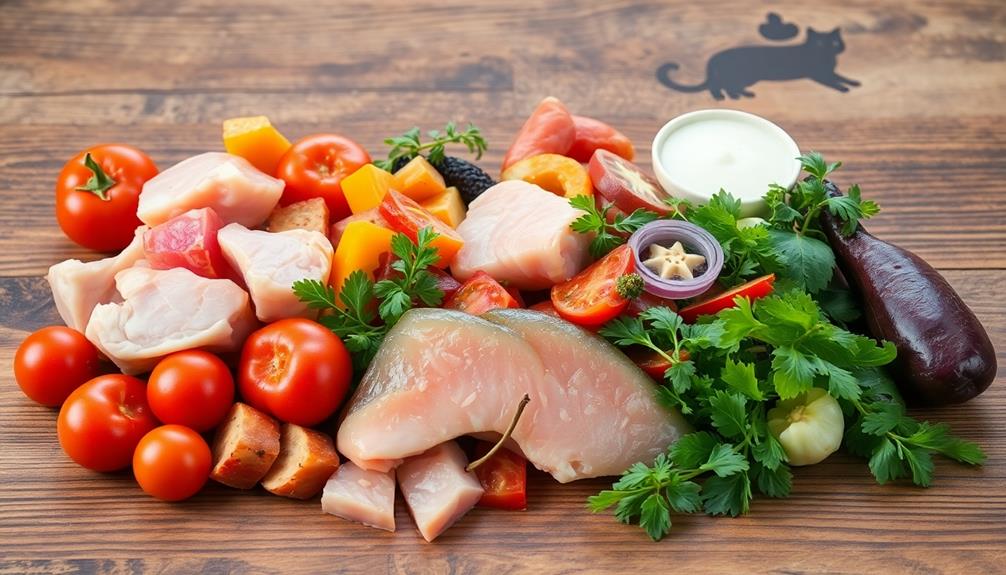
Additionally, understanding regulatory standards can help you better interpret labels and ensure your pet’s food meets safety requirements. Pay attention to how ingredients are listed because it gives insight into the food’s composition. If the first ingredient is a named meat or fish, you can be more confident that your pet is getting high-quality protein. On the other hand, if the top ingredient is a vague term like “meat meal” or “animal by-products,” it’s a sign to dig deeper. These ingredients can vary widely in quality; some may be nutritious, but others may be less so. The percentages printed on the label, often called guaranteed analysis, show the minimum or maximum amounts of key nutrients like crude protein or fat. While they don’t tell you the exact composition, they do give a snapshot of the nutritional profile.
Ultimately, reading pet food labels isn’t just about glancing at the list. It’s about understanding the significance of nutritional adequacy and ingredient sourcing, so you can select the best food for your pet’s health. Knowledge empowers you to avoid fillers, low-quality ingredients, and questionable sourcing practices, ensuring your furry friend receives proper nutrition from a trusted source.

Taste of the Wild High Prairie Canine Grain-Free Recipe with Roasted Bison and Venison Adult Dry Dog Food, Made with High Protein from Real Meat and Guaranteed Nutrients and Probiotics 28lb
Taste of the Wild High Prairie with ROASTED BISON and VENISON dry dog food; REAL MEAT is the…
As an affiliate, we earn on qualifying purchases.
As an affiliate, we earn on qualifying purchases.
Frequently Asked Questions
How Often Should I Update My Pet’s Diet Based on Label Changes?
You should update your pet’s diet whenever you notice label changes, typically every few months. Keep an eye on label compliance and ingredient freshness, as manufacturers may reformulate products. Regularly checking for updates guarantees your pet gets the best nutrition and avoids potential allergens or outdated ingredients. Staying vigilant helps you maintain a balanced diet for your pet and ensures you’re feeding them the safest, freshest options available.
Can I Trust Ingredient Lists for Homemade Pet Food Recipes?
You can generally trust ingredient lists for homemade pet food recipes if you prioritize ingredient transparency. Always source fresh, high-quality ingredients and verify their origins. Trust your instincts and do some research on the ingredients you include, ensuring they’re safe and nutritious. Remember, homemade recipe trust depends on your diligence—stay informed and choose transparent suppliers to give your pet a healthy, balanced diet.
What Certifications Indicate High-Quality Pet Food Ingredients?
Think of certifications as a lighthouse guiding you through foggy waters. Look for USDA Organic, AAFCO approval, and NSF certification—these indicate strict certification standards and ingredient transparency. They show the food meets safety, nutritional, and quality benchmarks. Trusting products with these labels helps guarantee your pet gets high-quality ingredients, and you’re making informed choices for their health and well-being.
How Do Preservatives Affect Pet Food Safety and Health?
Preservatives help keep pet food fresh by preventing spoilage and bacterial growth, offering significant preservative benefits. However, they can also pose preservative risks, such as potential allergic reactions or long-term health concerns. You should choose products with natural preservatives like tocopherols or rosemary extract, which are safer options. Always read labels carefully to balance the benefits of preservatives with their possible risks to ensure your pet’s safety and health.
Are There Specific Labels for Organic or Natural Pet Foods?
Yes, there are specific labels for organic or natural pet foods. Look for organic labeling, which indicates the product meets USDA organic standards, ensuring no synthetic fertilizers or pesticides. Natural certification, on the other hand, signifies the food contains minimal processing and artificial ingredients. Always check the packaging carefully, as these labels help you identify products that align with your pet’s health and your preferences for natural ingredients.

UCARI Pet Sensitivity Test | Screens for 1000+ Intolerances | Food & Environment Analysis | Painless Home Test Hair Sample Method | Results in 48 Hours | Cats & Dogs
Provides general information about your pet's daily habits and environmental exposure based on the data you enter, giving…
As an affiliate, we earn on qualifying purchases.
As an affiliate, we earn on qualifying purchases.
Conclusion
By understanding pet food labels and their ingredient lists, you can make smarter choices for your furry friend’s health. Remember, 70% of pet owners admit they’re unsure how to interpret these labels, which highlights the importance of being informed. Knowing what to look for guarantees you’re feeding your pet quality ingredients and avoiding unnecessary fillers. Take a moment to read labels carefully—your pet’s well-being depends on it, and informed choices lead to happier, healthier pets.

Herz Air-Dried Dog Food Chicken & Duck Liver Recipe 2.2 lb, All-Natural, High-Protein, Grain-Free, Limited Ingredients, Complete & Balanced, Premium Canine Cuisine
Gently Air-Dried: Preserves essential nutrients while enhancing natural flavors, retaining more vitamins, minerals, and protein integrity for a…
As an affiliate, we earn on qualifying purchases.
As an affiliate, we earn on qualifying purchases.

Besttile Transparent Clear Stickers Labels with Black Border,Removable Waterproof Transparent Jars Labels in Assorted Sizes for Jars,Storage Containers or Craft Decoration,2×1.5 inch.
1.120 Pcs 2”×1.5" Transparent Clear Stickers Labels,these label stickers are removable and waterproof,you could also put it in…
As an affiliate, we earn on qualifying purchases.
As an affiliate, we earn on qualifying purchases.