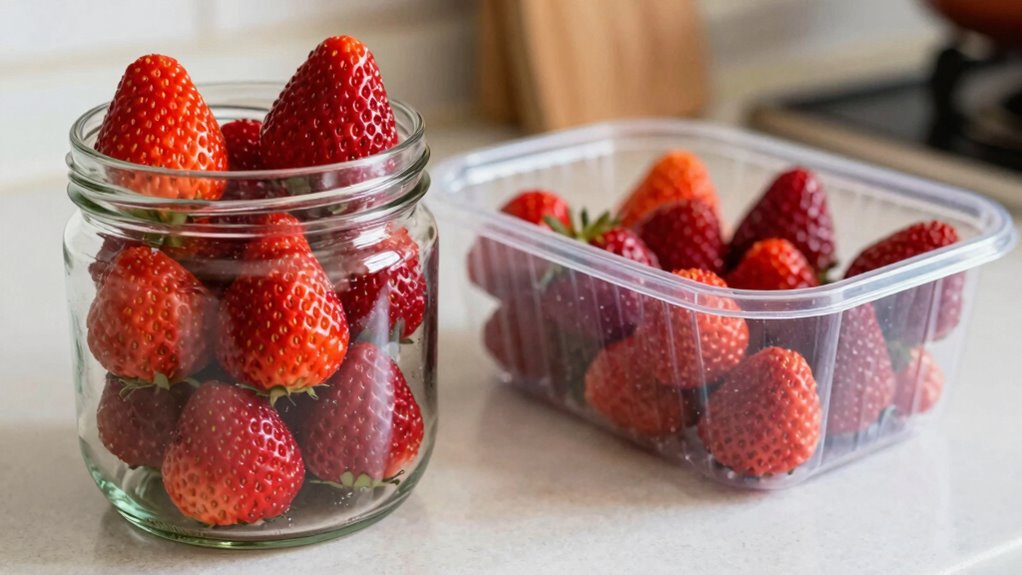

Choosing between glass and plastic containers can impact your food’s taste and freshness. Glass resists staining, odors, and chemical leaching, helping keep flavors clean and food looking appealing longer. Plastic may absorb scents and chemicals, which can alter taste over time and pose health risks, especially when reused or exposed to heat. To guarantee your food stays fresh and tasty, understanding how these materials interact with your food can make a difference—learn more to make the best choice.

Get health and wellness essentials delivered free with Prime
- Fast, free delivery on millions of items
- Prime Video, Amazon Music and more included
- Member-only deals all year
Key Takeaways
- Glass is non-porous and inert, preventing odor transfer and preserving food flavor longer.
- Plastic can absorb and retain odors, causing taste alterations over time.
- Chemical leaching from plastics, especially with heat or acidic foods, can affect taste and pose health risks.
- Glass containers maintain food freshness by resisting staining and material degradation.
- Plastic’s surface texture and material breakdown may lead to flavor and aroma loss, impacting overall freshness.
As an affiliate, we earn on qualifying purchases.
Glass vs. Plastic Containers: Which Keeps Food Fresh and Tastes Better?
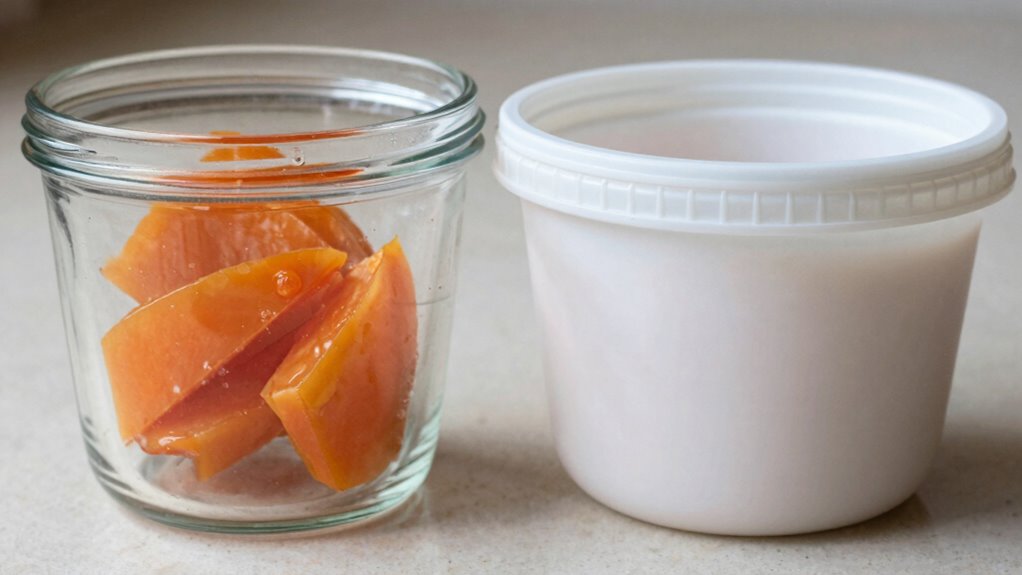
When it comes to keeping food fresh and tasting its best, choosing the right container makes a big difference. Glass containers excel in container durability; they resist staining, odors, and scratches, maintaining their appearance over time. This means less frequent replacements, saving you money and reducing waste. Glass also typically has a higher color accuracy compared to plastic, which can help in visually assessing freshness. Plastic containers, on the other hand, can crack or warp more easily, which might compromise food safety and freshness. Additionally, glass has a lower environmental impact because it’s reusable, recyclable, and doesn’t release harmful chemicals. Glass materials are often produced with sustainable processes, aligning with environmentally friendly practices. Glass’s resistance to staining and odors helps preserve the natural flavors of food and prevents cross-contamination. Properly choosing containers that are safe for food storage can further enhance food preservation and safety. Plastic often ends up in landfills and can contribute to pollution, especially if not properly recycled. By selecting glass, you support sustainability efforts and ensure your food stays fresher longer, with a container that lasts and minimizes environmental harm. Choosing the right material can significantly influence food preservation and environmental impact.
How Material Choice Affects Food Shelf Life and Quality
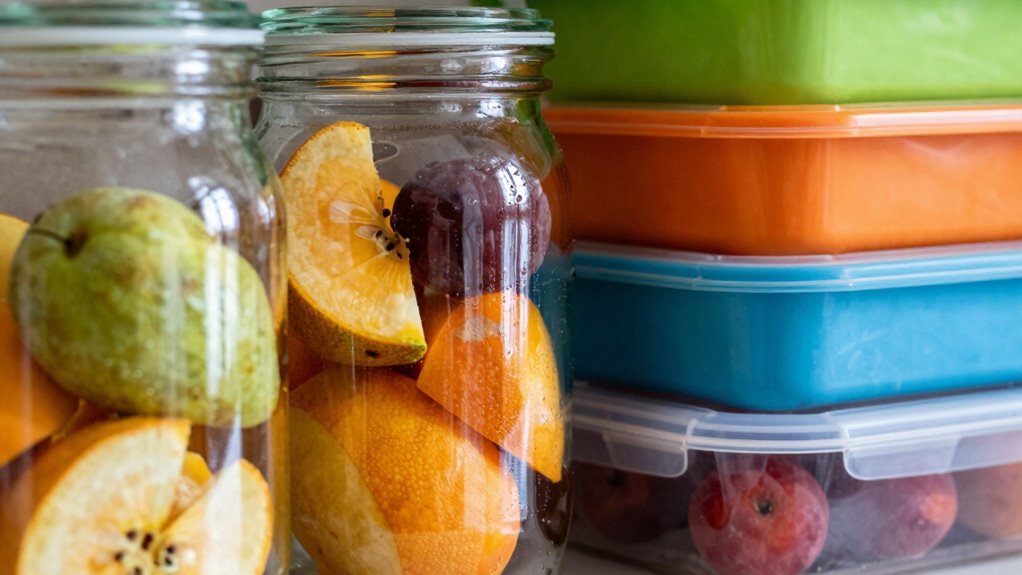
Choosing the right container material directly impacts how long your food stays fresh and maintains its quality. Glass containers are non-porous, which helps prevent contamination and preserves freshness longer. They’re also inert, meaning they don’t react with food, maintaining flavor and nutritional value. Plastic containers, on the other hand, can absorb odors and may degrade over time, potentially shortening shelf life. Additionally, your choice influences container sustainability and environmental impact. Glass is reusable, durable, and recyclable with minimal environmental footprint. Plastic, although lightweight and convenient, often involves production processes with higher environmental costs and can contribute to plastic waste if not properly disposed of. Your material choice affects not only food quality but also your ecological footprint, making it an essential decision for both freshness and sustainability. environmental impact is an important consideration when choosing food storage options for sustainability.
Flavor Transfer and Odor Absorption in Glass and Plastic
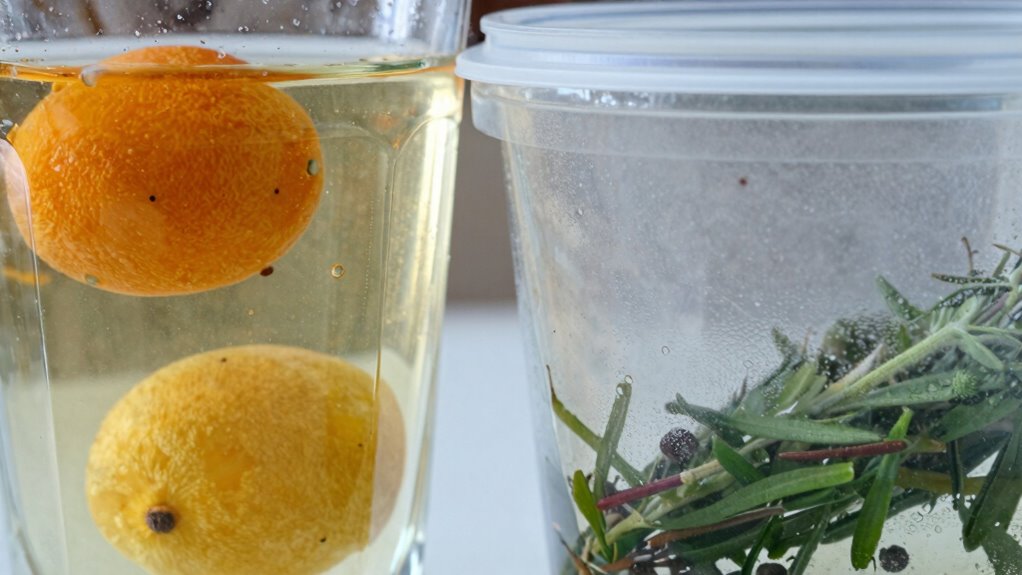
The material of your container plays a significant role in how flavors and odors transfer between your food and its storage environment. Plastic tends to absorb and retain scents more than glass, leading to odor transfer over time. This scent retention can cause flavors to mingle or become distorted, especially if you store strongly scented foods. Glass, on the other hand, resists odor transfer and doesn’t hold onto smells, preserving your food’s original taste. Additionally, the material properties of glass make it less prone to microbial buildup, further supporting food safety and freshness. The non-porous nature of glass also helps in preventing bacterial growth, making it a safer option for long-term storage. Furthermore, glass containers are often more environmentally friendly, reducing the impact of single-use plastics on the environment. Because of these qualities, many people prefer glass for food storage to maintain optimal freshness and safety.
Do Plastic Containers Leach Chemicals That Change Food’s Taste?
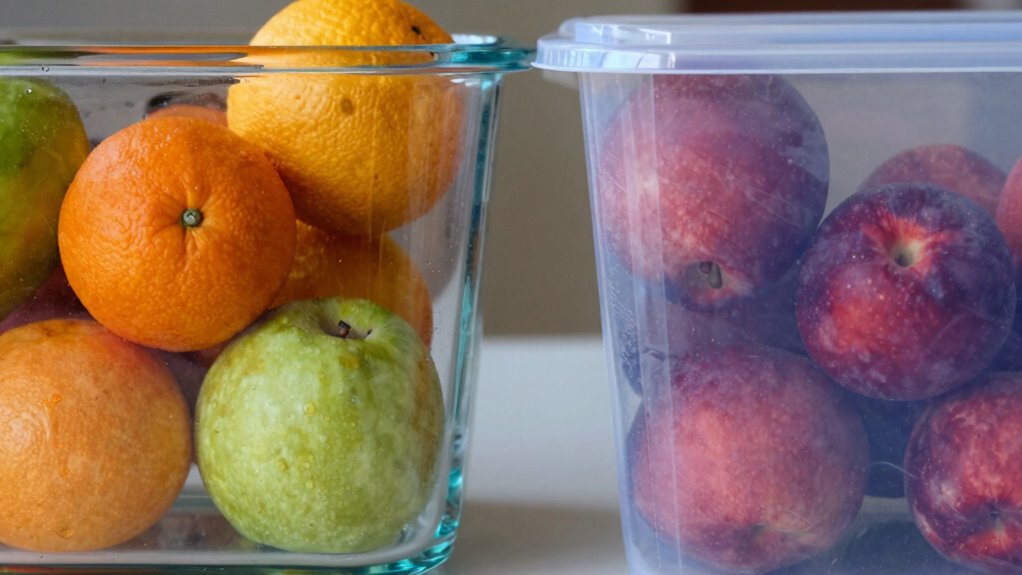
You might wonder if plastic containers release chemicals that affect your food’s taste. These chemicals can leach into your meals, potentially altering flavors and raising health concerns over time. Understanding the risks helps you choose safer storage options for your food. For example, choosing reputable brands with safe materials can help ensure better safety and quality standards. Additionally, using containers made from BPA-free plastics reduces the likelihood of harmful chemical migration into your food. Being aware of free floating chemicals prevalent in some plastics can further inform your selection process. Furthermore, research shows that plastic type plays a significant role in chemical leaching and flavor impact.
Chemical Leaching Risks
Plastic containers can sometimes leach chemicals into food, especially when exposed to heat or acidic ingredients. This process, known as chemical migration, can lead to the transfer of toxic residues into your meals. Here are three key points to contemplate:
- Heat accelerates leaching – warming plastic increases chemical migration, raising health concerns.
- Acidic foods enhance leaching – citrus or vinegar-based dishes are more likely to pick up chemicals.
- Certain plastics contain harmful substances – like BPA or phthalates, which can leave toxic residues behind.
These chemicals can alter your food’s safety and contribute to long-term health risks. Being aware of leaching risks helps you choose safer storage options and minimize exposure to toxic residues.
Food Flavor Alteration
Wondering whether plastic containers can alter the flavor of your food? They often do, especially if the container’s durability is compromised or if it’s reused frequently. Over time, plastic can develop scratches or cracks, increasing the risk of chemicals leaching into your food. These chemicals might subtly change the taste, leaving a plastic-like or chemical aftertaste. Additionally, some plastics contain additives that can migrate into food, affecting flavor quality. Recycling considerations also play a role; older or recycled plastics might be more prone to leaching and flavor alterations. Unlike glass, which doesn’t impact taste, plastics can introduce subtle flavor changes that diminish food freshness. Being mindful of container condition and choosing safer, high-quality plastics can help preserve your food’s natural flavor. For example, Vetted options like high-grade plastics are designed to minimize chemical migration and flavor interference. It’s also helpful to understand the chemical composition of plastic materials to make informed choices, especially considering the importance of sustainability and proper disposal practices. Properly maintaining and replacing plastic containers can further reduce the risk of flavor contamination caused by material degradation.
Long-term Health Effects
Since plastic containers can leach chemicals into food over time, there’s growing concern about their long-term health effects. Exposure to these chemicals can lead to issues like hormone disruption and increased risk of certain diseases. Consider these key points:
- Chemical exposure from plastics, such as BPA and phthalates, can interfere with your hormone balance.
- Continuous use of plastic containers may increase your cumulative chemical intake, affecting overall health.
- Studies link long-term chemical leaching to potential risks like reproductive issues and developmental problems.
- Using water-related containers like those made from glass can help prevent chemical contamination and preserve food’s taste and freshness.
While plastic offers convenience, the potential for hormone disruption and chemical exposure makes it wise to limit use, especially for hot or acidic foods. Switching to glass reduces these health risks and ensures safer, cleaner storage.
How Container Material Influences the Appearance and Smell of Food
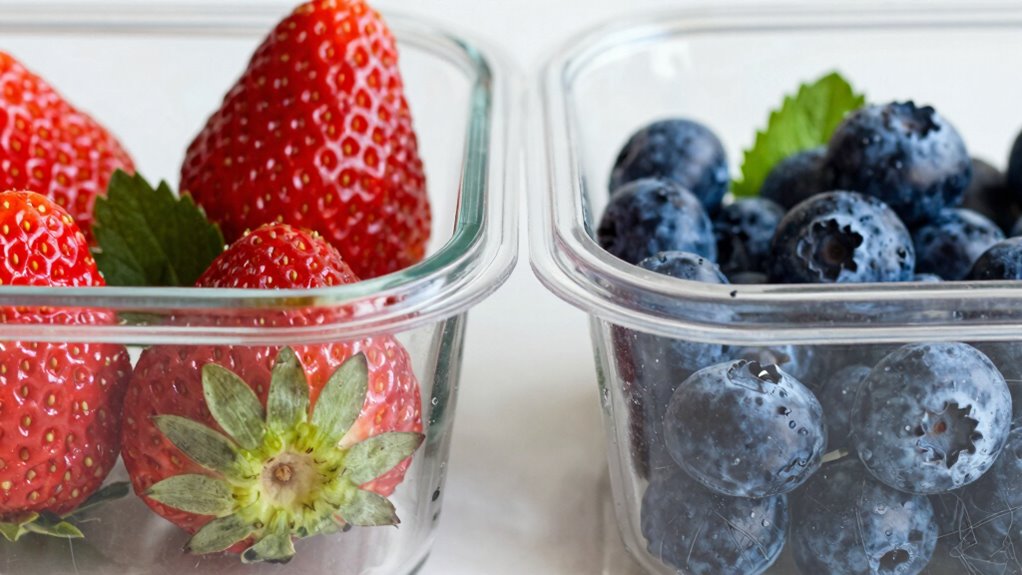
Have you ever noticed how the material of a container can change the way your food looks and smells? Container transparency plays a big role; glass allows you to see the food clearly, making it more appealing, while opaque plastic can hide imperfections or spoilage. Surface texture also matters—smooth glass surfaces resist staining and odors, keeping your food looking fresh, whereas plastic’s textured surfaces can trap residues and odors over time. This buildup can alter the appearance, making food look dull or unappetizing. Additionally, plastic containers are more susceptible to odor absorption, which can further impact the scent of stored food. Moreover, plastic containers are more prone to material degradation, which can release compounds that influence both the smell and taste of your food. The cultural significance of container choice can also influence how food is perceived and enjoyed in different settings. Understanding material safety is essential for choosing the right container to maintain food quality. So, the choice of container material directly impacts the visual appeal and scent of your stored food, affecting how fresh and tempting it appears. Proper container selection helps preserve the food’s freshness, ensuring your meals remain enjoyable for longer.
Which Container Should You Use Daily to Keep Food Fresher Longer?
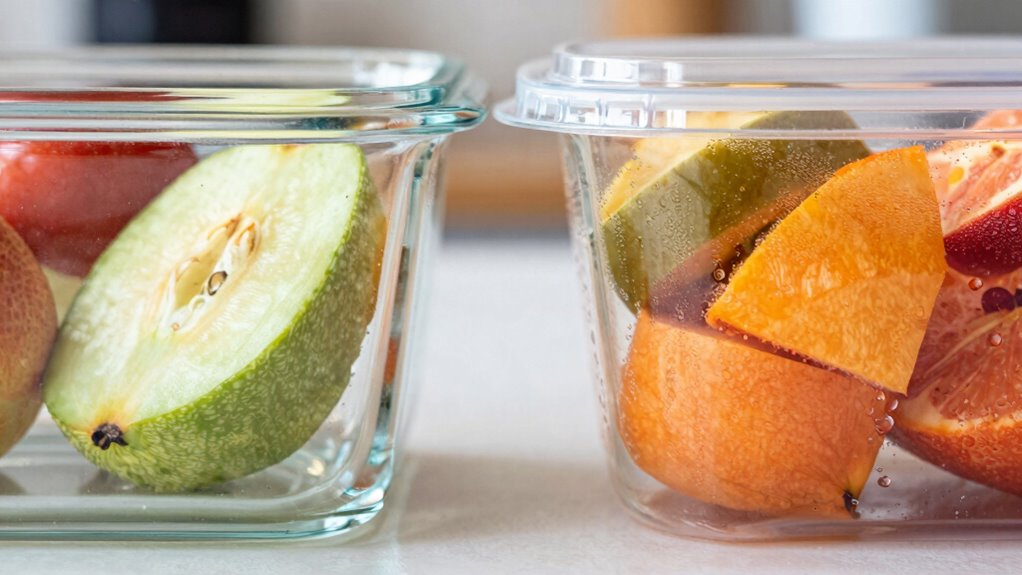
Choosing the right container for daily use is essential to keeping your food fresh and safe longer. When deciding between glass and plastic, consider these factors:
Choosing the right container ensures your food stays fresh and safe longer, with glass offering better preservation and sustainability.
- Freshness Preservation: Glass containers seal tightly and don’t absorb odors, helping food stay fresher longer.
- Environmental Impact: Glass is more durable and easier to recycle, reducing recycling challenges and environmental footprint.
- Convenience and Safety: Plastic is lightweight and shatterproof but may degrade over time, affecting food safety and contributing to plastic waste.
While plastic offers convenience, glass supports sustainability and better freshness retention. Opting for glass reduces recycling challenges and environmental impact, making it a smarter daily choice for fresh, safe food.
Frequently Asked Questions
Are There Health Risks Associated With Plastic Containers?
Yes, there are health risks associated with plastic containers. You might be exposed to chemical leaching, especially when plastics are heated or damaged, which can lead to ingestion of potentially harmful substances. These chemicals, like BPA, are linked to endocrine disruption, affecting hormone levels and overall health. To minimize risk, opt for BPA-free plastics or switch to glass containers, especially for hot or acidic foods.
How Do Temperature Changes Affect Container Material Performance?
Temperature changes cause container materials to expand and contract due to thermal expansion, which can compromise their integrity over time. Plastic containers often deform or weaken with heat, affecting insulation properties and risking leaks or spills. Glass resists temperature shifts better but can break if exposed to sudden thermal changes. To maintain freshness and safety, handle containers carefully during temperature fluctuations and choose materials suited for your storage needs.
Can Glass Containers Cause Food Spoilage Faster Than Plastic?
You might think glass keeps food fresher longer, but it can sometimes cause faster spoilage if its durability is compromised. Its transparency reveals any signs of spoilage early, yet if glass cracks or chips, bacteria can sneak in. Plastic’s resistance to breakage offers durability, but its opacity can hide spoilage. So, while glass’s transparency is helpful, its fragility can sometimes speed up food spoilage if not handled carefully.
What Environmental Impacts Do Glass and Plastic Containers Have?
You should consider that glass containers have a recyclability benefit because they can be recycled endlessly without losing quality, reducing waste. They also have a lower manufacturing footprint, meaning less energy is needed compared to plastic. Plastic containers, while lightweight and convenient, often contribute more to environmental pollution due to their limited recyclability and longer decomposition times. Choosing glass can help minimize your environmental impact.
Do Different Foods React Differently to Container Materials?
Yes, different foods react differently to container materials because of food acidity and container porosity. Acidic foods, like citrus or tomatoes, can react with plastic, causing flavors to change and potentially leach chemicals. Glass containers are non-porous, preventing reactions and preserving food taste and freshness. You’ll notice that high-acidity foods stay fresher longer in glass, while plastic might alter their flavor over time.
Conclusion
Choosing between glass and plastic is like selecting the right brush for a painting—you want the one that preserves your masterpiece. Glass often keeps flavors pure and odors out, while plastic may impact taste if it leaches chemicals. Think of it as a shield for your food’s freshness. By understanding these differences, you’ll make smarter choices, ensuring your meals stay as vibrant and delicious as a freshly picked fruit.
Halloween Picks
halloween
As an affiliate, we earn on qualifying purchases.