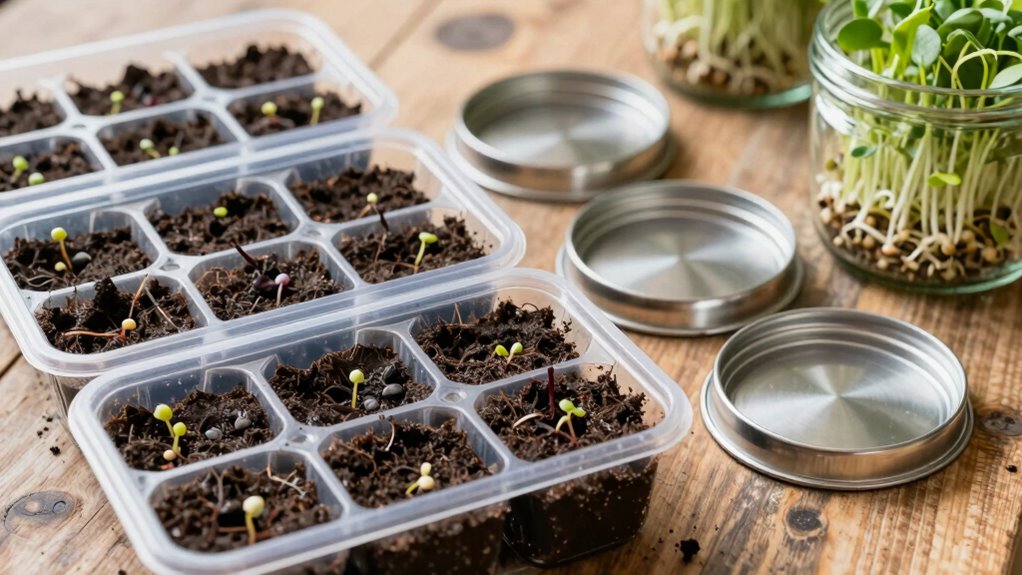

When starting with sprouting, choose tools and trays that suit your method—simple mesh trays for organic soil or multi-tier systems for hydroponic setups. Look for features like proper drainage, airflow, and food-safe materials to keep your sprouts healthy and safe. Regular cleaning and environment control boost success, while the right tools make the process easier and more rewarding. Stay tuned to discover more tips to help you grow nutritious sprouts with confidence.

Get health and wellness essentials delivered free with Prime
- Fast, free delivery on millions of items
- Prime Video, Amazon Music and more included
- Member-only deals all year
Key Takeaways
- Choose trays with proper drainage, airflow, and food-safe materials for healthy sprout development.
- Select between hydroponic trays for water-based systems or soil trays for organic growing.
- Multi-tier trays optimize space and allow simultaneous sprouting of different seeds.
- Regularly clean trays and environment to prevent mold and ensure sprout safety.
- Use trays compatible with your sprouting method to accelerate growth and produce nutritious greens.

When starting out, you’ll want to choose the right sprouting trays. Many options are available, from simple mesh or mesh-covered trays to multi-tier systems that allow you to grow different types of sprouts simultaneously. These trays are designed to promote proper drainage and airflow, which are essential for healthy sprout development. If you’re interested in hydroponic techniques, look for trays that are compatible with water-based growing systems, as these allow you to control moisture levels precisely, often resulting in faster germination and growth. On the other hand, if you prefer organic soil mediums, opt for trays that accommodate soil or potting mixes, providing a natural environment for sprouting.
Incorporating hydroponic techniques into your sprouting practice can be a game-changer. Hydroponic methods eliminate the need for soil, instead relying on nutrient-rich water solutions. This approach reduces mess, minimizes pests, and can accelerate sprout growth. To implement hydroponic sprouting, you’ll need trays that can hold water or nutrient solutions, along with a system to circulate or refresh the water regularly. These trays often come with drainage systems to prevent waterlogging, ensuring your sprouts receive just the right amount of moisture. Conversely, if you lean toward organic soil mediums, you’ll want trays that provide good drainage and aeration, such as those with perforated bottoms or mesh screens. Using organic soil mediums mimics natural growing conditions, supporting the development of more complex flavors and textures. Additionally, selecting trays made from food-safe materials can help ensure your sprouts remain healthy and safe to eat. Maintaining a clean environment is also crucial, as it helps prevent mold and bacterial growth, especially when working with organic mediums or water-based systems.
Regardless of the method you choose, maintaining a clean environment is essential. Regularly washing trays and tools prevents mold and bacterial growth, ensuring your sprouts stay healthy. Proper lighting and temperature control also play roles in successful sprouting, but the foundation starts with selecting the right trays and understanding the techniques—hydroponic or soil-based—that suit your goals. With the right tools and a bit of knowledge, you’ll find sprouting to be a rewarding and straightforward process, giving you fresh, nutritious greens whenever you want them.
sprouting trays with drainage and airflow
As an affiliate, we earn on qualifying purchases.
As an affiliate, we earn on qualifying purchases.
Frequently Asked Questions
What Is the Best Sprouting Tool for Beginners?
The best sprouting tool for beginners is a simple sprouting jar with a mesh lid. It’s perfect for using sprouting containers and makes seed soaking easy. You can rinse and drain your seeds effortlessly, promoting healthy growth. Plus, it’s compact, affordable, and easy to clean, making it ideal for newcomers to sprouting. This tool helps you master seed soaking and sprouting basics without any hassle.
How Often Should I Water My Sprouts?
You should water your sprouts twice a day to maintain proper watering frequency and guarantee consistent sprout hydration. In the morning and evening, rinse them thoroughly to keep the moisture levels balanced without over-saturating. Adjust watering based on your sprout type and environment—if it’s humid, you might need less frequent watering. Consistent hydration helps your sprouts grow healthy and strong, so monitor them closely for best results.
Can I Reuse Sprouting Trays Multiple Times?
Yes, you can reuse sprouting trays multiple times. Their durability depends on the material—most trays are made from sturdy plastic or metal designed for repeated use. To keep them in good shape, follow reuse cleaning tips like washing with warm, soapy water and sanitizing regularly. Proper cleaning prevents mold and bacteria buildup, ensuring your sprouting tray remains durable and safe for ongoing use.
What Is the Ideal Sprouting Temperature?
You should aim for a sprouting temperature of around 65-75°F for ideal growth. When choosing your sprouting container options, make sure they provide good drainage and airflow. Environmental control tips like keeping your trays in a consistent, warm spot away from direct sunlight help maintain perfect conditions. Regularly monitor the temperature to prevent mold or spoilage, and adjust placement as needed to keep your sprouts healthy and thriving.
How Long Do Sprouts Typically Take to Grow?
Like a knight waiting for victory, your sprouts typically take 3 to 7 days to grow. During this time, they develop their nutrient content, making them a healthy addition to your diet. Keep in mind, proper sprout storage tips help maintain freshness once they’re ready. The key is consistent rinsing and providing the right temperature, ensuring your sprouts stay vibrant and nutritious throughout their growth period.
Conclusion
As you begin your sprouting journey, remember that even the greatest gardeners started with simple tools and a curious mind. Like Da Vinci’s endless sketches, your tray and sprouting tools are just the beginning of a vibrant, nourishing adventure. With patience and care, you’ll watch your greens grow, transforming tiny seeds into a lush, living proof of your dedication. Embrace the process, and let your sprouting story flourish—one sprout at a time.
Cold & flu season Picks
humidifiers
As an affiliate, we earn on qualifying purchases.