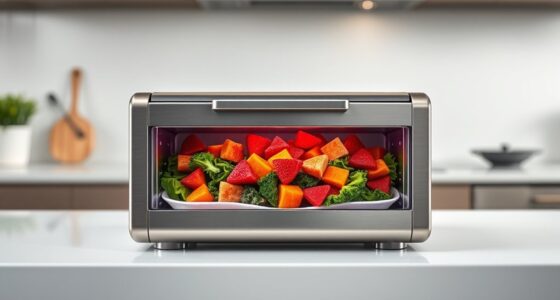
For businesses or serious home chefs, choosing a commercial dehydrator with NSF certification ensures safety, durability, and food safety compliance. The 18-Tray Commercial Food Dehydrator stands out as the overall best for its large capacity and robust stainless steel build, ideal for high-volume needs. The Commercial 22 Trays Dehydrator Machine offers impressive drying space and power for larger operations, while the NutriChef 20-Tray Dehydrator provides a more budget-friendly option with reliable performance. However, tradeoffs often involve balancing capacity, power, and price. Keep reading for a detailed breakdown of these top options and what to consider before making your choice.

Get health and wellness essentials delivered free with Prime
- Fast, free delivery on millions of items
- Prime Video, Amazon Music and more included
- Member-only deals all year
Key Takeaways
- Capacity and tray count are the main drivers of throughput, with models offering from 16 to 24 trays, suitable for different scales.
- Power ratings between 1500W and 2500W significantly impact drying speed and efficiency, especially for larger batches.
- Stainless steel construction is common among the top picks, providing durability and easier cleaning, but may come at a higher cost.
- NSF certification adds a layer of safety assurance, but not all models include it — verify before purchase.
- Tradeoffs between price and features are evident; higher-capacity models tend to cost more but save time in high-volume settings.


| commercial dehydrators with nsf certification | Power | Temperature Range | Material | Number of Trays |
|---|---|---|---|---|
| 18-Tray Commercial Food Dehydr | 2000W | 70°F to 190°F | Food-grade stainless steel | — |
| Commercial Large 12-Tray Food | 1100W | 86°F to 194°F | — | 12 |
| Commercial 22 Trays Dehydrator | 2500W | 70°F to 190°F | 304 Food-grade Stainless Steel | 22 |
| Commercial Food Dehydrator 18 | 2000W | 70ºF to 190ºF | — | 18 |
| NutriChef Commercial Dehydrato | 2000 Watts | 95°F – 167°F | Stainless steel | — |
| Commercial Food Dehydrator Mac | 1500W | 70-190°F | 316 stainless steel | — |
| Commercial Large 12-Tray Food | 1200W | 70℉ to 190℉ | — | 12 |
| Commercial Dehydrator Machine | 2500W | 70°F-190°F | 316 stainless steel | 22 |
| 24-Tray Commercial Food Dehydr | 1600W | 86-194°F | Stainless Steel | 24 |
More Details on Our Top Picks
18-Tray Commercial Food Dehydrator, Full Stainless Steel Large
This dehydrator stands out for its extensive capacity with 18 stainless steel trays, making it ideal for high-volume food drying in commercial settings. Its durable construction and precise digital controls ensure consistent results, especially when compared to smaller models like the 12-tray alternative, which may lack the same capacity and control features. The large size and heavy weight are tradeoffs, requiring significant space and effort to move or set up, but these are acceptable for dedicated commercial kitchens. The quiet operation and even airflow contribute to reliable performance, though the higher price reflects its premium build and capacity. This pick makes the most sense for busy food producers or large households needing professional-grade equipment.
Pros:- Large capacity with 18 stainless steel trays for high-volume drying
- Durable, BPA-free stainless steel construction
- Precise digital temperature and timer controls
Cons:- Heavy and bulky, requiring ample space
- Higher price point due to commercial features
Best for: Large-scale commercial kitchens or food producers needing maximum capacity and durability
Not ideal for: Small kitchens or casual users who have limited space and simpler needs
- Capacity:18 trays
- Power:2000W
- Material:Food-grade stainless steel
- Temperature Range:70°F to 190°F
- Timer:0.5-24 hours
- Noise Level:<50dB
Our verdict“This dehydrator is perfect for commercial operations or large households seeking professional-grade capacity and control.”
Commercial Large 12-Tray Food Dehydrator Machine, 1100W
This dehydrator offers a solid balance of capacity and quiet operation with 12 stainless steel trays, making it suitable for both small commercial setups and serious home use. Compared to the 18-tray model, it consumes less power and is easier to fit into smaller spaces, but still provides ample drying area. Its even heat distribution via rear airflow and digital controls enhance reliability, though its somewhat larger footprint and higher price may be drawbacks for very limited kitchens. The tempered glass window adds convenience for monitoring, and preset modes simplify operation for less experienced users. This model makes the most sense for those wanting commercial features without the bulk or expense of a larger unit.
Pros:- Large capacity with 12 stainless steel trays
- Even heat distribution with rear airflow
- Quiet operation and digital controls
Cons:- Relatively bulky for tight spaces
- Higher power consumption compared to smaller models
Best for: Small commercial operations, food entrepreneurs, or large families wanting reliable capacity and control
Not ideal for: Very small kitchens or casual hobbyists who need a compact, budget-friendly option
- Number of Trays:12
- Tray Material:304 Stainless Steel
- Power:1100W
- Temperature Range:86°F to 194°F
- Timer:up to 48 hours
- Noise Level:55dB
Our verdict“This dehydrator offers a versatile mix of capacity and ease of use for mid-sized commercial or serious home food drying.”
Commercial 22 Trays Dehydrator Machine with 37.5 ft² Capacity, 2500W, 110V
This model delivers an enormous drying area of 37.5 square feet with 22 trays, making it suitable for large-scale food processing, such as jerky or bulk fruit drying. Its high wattage and stainless steel build ensure durability and rapid, uniform drying, especially compared to smaller 18-tray units. However, the size and weight demand substantial space and handling effort, which could be a concern in smaller kitchens. Its adjustable temperature and programmable timer provide flexibility, but the dual-plug system may require careful electrical setup. This dehydrator makes sense for established commercial kitchens or food businesses with significant drying needs.
Pros:- Huge drying capacity with 22 trays and 37.5 ft² space
- Durable stainless steel construction
- Adjustable temperature and programmable timer
Cons:- Heavy and requires substantial space
- Complex electrical setup due to dual-plug system
Best for: Commercial food producers or large-scale kitchen operations requiring maximum capacity
Not ideal for: Small kitchens or users with limited space and lower-volume needs
- Capacity:37.5 ft²
- Number of Trays:22
- Power:2500W
- Voltage:110V
- Material:304 Food-grade Stainless Steel
- Temperature Range:70°F to 190°F
Our verdict“This dehydrator is best suited for large-scale commercial production where capacity and durability are priorities.”
Commercial Food Dehydrator 18 Trays, 2000W Large Capacity Food Dryer Machine for Jerky, Meat, Fruit, Herbs
This dehydrator combines a large drying area of 34.42 sq ft with 18 trays, making it suitable for both commercial and serious home use. Its digital controls and quiet operation mirror features found in higher-end models like the B0FKBDN8BW, but at a slightly lower price point. The inclusion of various accessories enhances versatility, although its weight and size still require ample space and effort to handle. The 2000W power ensures efficient drying, but users should be aware of the higher energy use. It’s a strong choice for those who want a capable, flexible dehydrator without the premium cost of the largest units.
Pros:- Large capacity with 18 trays and 34.42 sq ft of space
- Durable stainless steel and dishwasher-safe trays
- Digital temperature control and quiet operation
Cons:- Heavy and bulky, requiring sufficient space
- Higher power consumption at 2000W
Best for: Food businesses or large households needing versatile, high-capacity dehydration
Not ideal for: Small kitchens or casual users who prefer compact, budget options
- Power:2000W
- Number of Trays:18
- Tray Dimensions:15.67 x 15.67 inches
- Total Drying Area:34.42 sq ft
- Temperature Range:70ºF to 190ºF
- Timer:0.5-24 hours
Our verdict“This dehydrator provides a flexible, high-capacity solution suitable for varied dehydration tasks in busy kitchens.”
NutriChef Commercial Dehydrator Machine 2000-Watts Electric Food Dehydrator with 20 Stainless Steel Trays
This NutriChef dehydrator offers a substantial capacity with 20 stainless steel trays and precise electronic controls, making it suitable for both hobbyists and small commercial operations. Its touch-control LED display simplifies operation, and features like auto shut-off and memory functions add convenience for regular use. Compared with larger, more complex models, its controls are more user-friendly, but that also means fewer advanced customization options. Its internal fan and rear motor position improve airflow, although the overall bulk and 2000W power draw might be a concern for smaller kitchens. This unit makes the most sense for users seeking a straightforward, reliable dehydrator with ample capacity.
Pros:- Large capacity with 20 stainless steel trays
- Easy-to-use touch-control LED display
- Auto shut-off and memory functions
Cons:- Bulky, may not fit in small kitchens
- High power consumption with 2000W
Best for: Food entrepreneurs or home users seeking reliable capacity with easy operation
Not ideal for: Small kitchens or budget-conscious buyers who want a more compact or less powerful unit
- Power:2000 Watts
- Trays:20 stainless steel
- Temperature Range:95°F – 167°F
- Control:Touch-control LED
- Features:Auto shut-off, memory function
- Material:Stainless steel
Our verdict“This dehydrator balances capacity and ease of use, making it ideal for users who want straightforward operation and reliable results.”
Commercial Food Dehydrator Machine 16 Trays 27.28 ft² 1500W
This dehydrator stands out for its large drying area thanks to 16 stainless steel trays, making it ideal for industrial kitchens or serious home users with high-volume needs. Compared to the 12-tray models, it offers more space but at a larger footprint and higher power draw, which may impact energy costs. Its precise temperature control from 70°F to 190°F and 24-hour timer provide versatility for different foods. The stainless steel construction ensures durability and resistance to corrosion, though its size and power consumption mean it’s less suited for small kitchens or casual users. Overall, this model is perfect for those prioritizing capacity and robustness over compactness and affordability.
Pros:- Large capacity with 16 stainless steel trays for extensive food drying
- Precise temperature and timer controls for versatile drying options
- Durable, corrosion-resistant stainless steel construction
Cons:- Relatively large size may not suit small kitchens
- High power consumption at 1500W
- Price may be high for casual users
Best for: Large-scale food producers or busy commercial kitchens needing extensive drying capacity.
Not ideal for: Small kitchens or casual users with limited space and lower volume drying needs.
- Trays:16
- Tray Size:15.7 x 15.7 inches
- Total Drying Area:27.28 ft²
- Power:1500W
- Voltage:120V
- Temperature Range:70-190°F
- Timer:0.5-24 hours
- Material:316 stainless steel
- Dimensions:21.53 x 16.53 x 24.8 inches
Our verdict“This dehydrator suits professional or large-volume users who need maximum capacity and durability, despite its size and energy use.”
Commercial Large 12-Tray Food Dehydrator, 1200W Stainless Steel, Up to 22.67 sq ft, 70℉-190℉ Temperature
This model offers a well-balanced combination of capacity and control, with 12 large stainless steel trays and digital precision over temperature and time. Its airflow system ensures uniform dehydration, making it a reliable choice for dehydrating meats, fruits, and herbs. Compared with the 24-tray dehydrator, it takes up less space and consumes slightly less power, but sacrifices some volume. Its quiet operation (<50dB) makes it suitable for environments where noise is a concern. However, its voltage restrictions to US and Canada limit international buyers, and it lacks detailed drying guidelines, which could be a drawback for beginners. This dehydrator makes the most sense for serious hobbyists or small-scale commercial operations that value control and quietness.
Pros:- Precise digital control of temperature and time
- Even airflow system for uniform drying
- Quiet operation under 50dB
Cons:- Limited to US and Canadian voltage standards
- No included recipes or detailed drying instructions
- Potentially heavy and bulky for small kitchens
Best for: Home-based entrepreneurs or small businesses seeking precise digital control and quiet operation.
Not ideal for: Large-scale industrial users needing maximum capacity or international buyers outside North America.
- Number of Trays:12
- Tray Dimensions:15.75 x 15.75 inches
- Dehydrator Area:up to 22.67 sq ft
- Power:1200W
- Voltage:120V
- Temperature Range:70℉ to 190℉
- Noise Level:<50dB
Our verdict“Ideal for users prioritizing precise control and quiet operation over maximum drying capacity.”
Commercial Dehydrator Machine, 22 Trays, 2500W, 110V, 37.5 ft² Capacity
This dehydrator provides substantial drying space with 22 trays and a powerful 2500W motor, making it suitable for large households or small industrial use. Its size and high wattage mean it can handle high volumes efficiently, but the 110V power setup requires careful handling or dual plug configurations, which could complicate setup. Compared to the smaller 16-tray models, it offers more capacity but at the cost of increased energy consumption and bulk. Its stainless steel build ensures longevity, and the adjustable temperature range from 70°F to 190°F adds flexibility. This model is best for those who need high throughput and are prepared for setup complexity and energy costs.
Pros:- Large capacity with 22 trays for high-volume drying
- Durable stainless steel construction
- Adjustable temperature and timer for flexible drying
Cons:- Requires careful handling of dual plug setup
- Potentially high energy consumption at 2500W
- Large size demanding significant storage space
Best for: Small commercial kitchens or large-scale home users needing maximum capacity and power.
Not ideal for: Small kitchens or users with limited electrical capacity due to its size and high power requirements.
- Power:2500W
- Voltage:110V
- Capacity:37.5 ft²
- Number of Trays:22
- Temperature Range:70°F-190°F
- Material:316 stainless steel
Our verdict“Best suited for high-volume drying needs where power and space are available, despite setup complexity.”
24-Tray Commercial Food Dehydrator, 39.3 sq ft Drying Space
This dehydrator excels in capacity with 24 trays and an impressive 39.3 square feet of drying space, making it ideal for large-scale commercial operations or busy food production facilities. The dual fan technology promotes even drying, and the adjustable temperature and timer add precision. Its glass front door with LED light allows easy monitoring, and caster wheels provide mobility. Compared with smaller models like the 12- or 16-tray options, it offers significantly more volume but at a higher price and larger footprint. The 1600W motor balances power with efficiency, though the size and weight might limit placement options. This model is best for professionals who need maximum throughput with advanced features for quality control.
Pros:- Largest capacity with 24 trays and 39.3 sq ft drying space
- Dual fan technology for even drying
- Includes mobility features with caster wheels
Cons:- Potentially high power consumption at 1600W
- Bulkier size requires substantial space
- Price point reflects advanced features and capacity
Best for: Large commercial kitchens or food producers requiring maximum capacity and real-time monitoring.
Not ideal for: Small kitchens or users with limited space and less need for extensive capacity.
- Number of Trays:24
- Drying Space:39.3 sq ft
- Power:1600W
- Temperature Range:86-194°F
- Material:Stainless Steel
- Noise Level:Under 50dB
Our verdict“Designed for high-volume commercial use, this dehydrator offers maximum capacity with advanced features at a larger size and cost.”

How We Picked
I evaluated these dehydrators based on several key factors: NSF certification status, capacity (tray count and drying space), power consumption, build quality, and usability features. I prioritized models that combine reliable NSF certification with large capacities suitable for commercial use, ensuring they meet safety standards. Cost was also considered, balancing affordability with durability and performance. Only products with consistent positive reviews and clear safety compliance were included, and I ranked them to reflect their overall value for different types of commercial or high-volume applications.Factors to Consider When Choosing Commercial Dehydrators With Nsf Certification
When selecting a commercial dehydrator with NSF certification, it’s essential to consider not only capacity and power but also build quality and ease of use. Understanding these factors helps avoid common pitfalls like underestimating capacity needs or choosing less durable materials. A well-chosen dehydrator can streamline your food drying process, improve safety, and reduce long-term costs.Capacity and Tray Count
Capacity is often the deciding factor for commercial users. Larger tray counts allow for more drying space and higher throughput, essential for busy kitchens or food production lines. However, bigger models can also mean increased size and energy use. Consider your typical batch size and whether you prefer a model that can handle your current needs with room for growth. Choosing the right capacity helps optimize productivity without unnecessary expense or space requirements.
Power and Efficiency
Power ratings influence how quickly and evenly your food dries. Higher wattage models often offer faster drying times, which is crucial in commercial settings. But more power also means higher energy consumption, so balancing speed with cost efficiency is key. Look for models with adjustable temperature controls to fine-tune drying conditions for different foods, preventing over-drying or spoilage.
Build Quality and Material
Durability is vital in a commercial environment, where equipment sees frequent use. Stainless steel construction is common among top-tier dehydrators, providing resistance to corrosion and easier cleaning. Cheaper plastics or thin materials may save money upfront but can lead to quicker wear and less sanitary conditions over time. Weigh the initial cost against long-term durability and maintenance requirements.
Safety Certifications and Compliance
NSF certification is an assurance that the dehydrator meets strict safety and sanitation standards required in commercial food handling. Not all models carry this certification; choosing one without it could pose health risks or compliance issues. Always verify certification before purchase, especially if your operation is regulated or aims for professional-grade food safety standards.
Price and Value
Price varies widely based on capacity, features, and build quality. Larger, more powerful models tend to cost more but offer greater efficiency and capacity, which can save money in the long run. Conversely, smaller or less feature-rich options may be suitable for startups or low-volume use. Weigh your current needs against projected growth to find a model that offers the best value without overextending your budget.
Frequently Asked Questions
Is NSF certification necessary for a commercial dehydrator?
NSF certification ensures the dehydrator complies with strict safety, sanitation, and performance standards, which is especially important in commercial food environments. It reduces the risk of contamination and helps meet regulatory requirements. While some non-certified models may be cheaper, choosing NSF-certified equipment adds a layer of trustworthiness and long-term safety, making it a wise investment for professional use.
What capacity should I choose for my commercial dehydrator?
The capacity depends on your typical batch size and future growth plans. If you process large quantities regularly, models with 20+ trays or extensive drying space are preferable. Smaller setups may suffice if your volume is limited or you’re just starting out. Overestimating capacity can lead to unnecessary expense, but underestimating might slow down your production, so consider your current needs and potential expansion.
How important is the material of the dehydrator in a commercial setting?
Material quality directly impacts durability, sanitation, and maintenance. Stainless steel is highly recommended for its resistance to corrosion and ease of cleaning, which are critical in food safety. Cheaper plastics or thin metals may save money initially but can degrade faster under frequent use, leading to higher replacement or repair costs over time. Investing in quality materials ensures longevity and consistent performance.
Can I find an NSF-certified dehydrator at a lower price?
While some less expensive models may claim compliance or safety features, NSF certification involves rigorous testing and certification fees that typically drive up the price. It’s rare to find a bargain model with full NSF certification without compromises in other areas like capacity or build quality. Prioritizing NSF certification often means paying a bit more upfront but gaining peace of mind and regulatory compliance.
What are common mistakes to avoid when buying a commercial dehydrator?
One common mistake is choosing a model based solely on price without verifying NSF certification, risking safety and compliance issues. Another is underestimating capacity needs, which can hinder your workflow. Additionally, neglecting build quality can lead to frequent repairs and sanitation issues. Always consider your volume, safety standards, and long-term durability to select a dehydrator that truly meets your business needs.