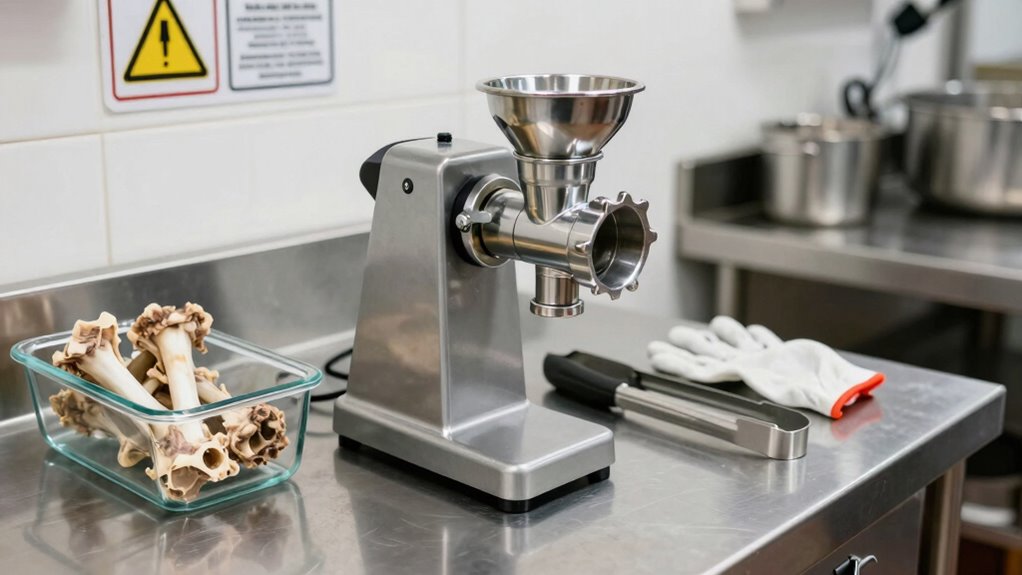

Bone grinding can be safe when you choose appropriate bones, use the right equipment, and follow strict safety precautions. Always wear protective gear, handle bones carefully, and keep your tools in good condition. Avoid fragile or brittle bones that might splinter and ensure proper ventilation to prevent dust inhalation. By following proper procedures and safety tips, you can minimize risks. You’ll learn essential steps to keep your process safe and effective if you continue exploring this topic.
Key Takeaways
- Use purpose-built grinders, inspect equipment regularly, and wear protective gear to minimize health and injury risks during bone grinding.
- Select high-quality, fresh bones, removing tissue and avoiding fragile or small bones prone to splintering.
- Ensure proper ventilation, secure bones firmly, and apply steady pressure to prevent splattering and kickbacks.
- Store and dispose of bone residues safely in leak-proof containers, following environmental and biohazard regulations.
- Seek professional advice if uncertain about techniques, equipment, or legal compliance to prevent accidents and ensure safety.
What Are the Safety Risks of Grinding Bones?
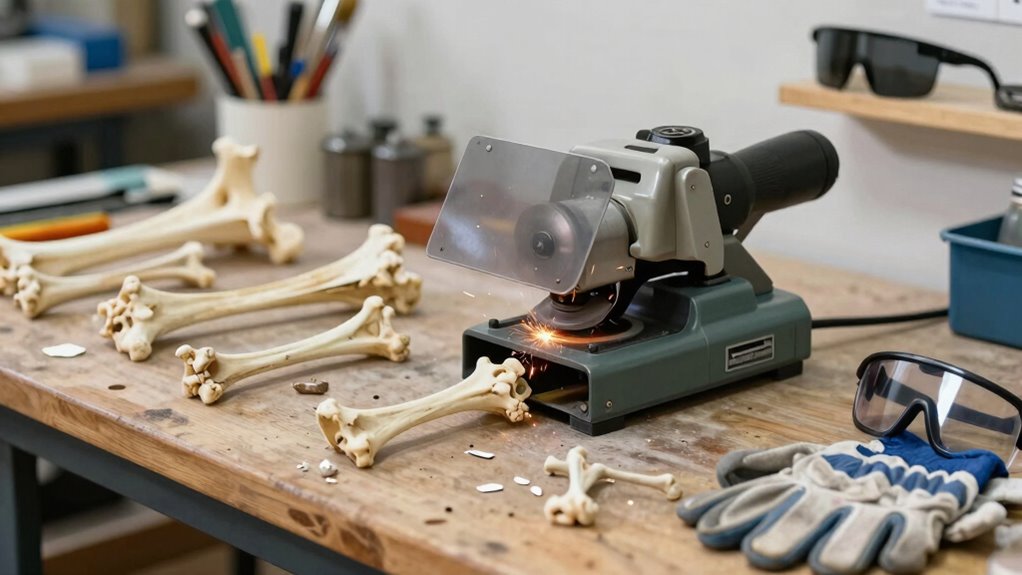
Grinding bones can pose several safety risks if not done properly. One major concern is bone dust, which can become airborne during the process. Inhalation of bone dust may lead to respiratory issues or allergic reactions, so proper ventilation and protective gear are essential. Additionally, bone dust can create a slip hazard if it accumulates on surfaces. Conducting a thorough risk assessment before starting helps identify potential dangers and guarantees safety measures are in place. Without proper precautions, you risk inhaling harmful particles or causing injury from sharp bone fragments. Always use appropriate equipment, work in a well-ventilated area, and stay alert to avoid accidents. Understanding these risks allows you to grind bones safely and prevent health hazards. Proper technique and equipment also help minimize the generation of projector dust, which can be hazardous if inhaled or if it contaminates your workspace. Implementing dust control methods can significantly reduce airborne particles and enhance safety during bone grinding. Additionally, incorporating local automation can help monitor air quality and activate ventilation systems automatically to maintain a safe environment. Incorporating protective equipment such as masks and gloves further enhances safety during this process.
How Do I Choose Safe Bones for Grinding?
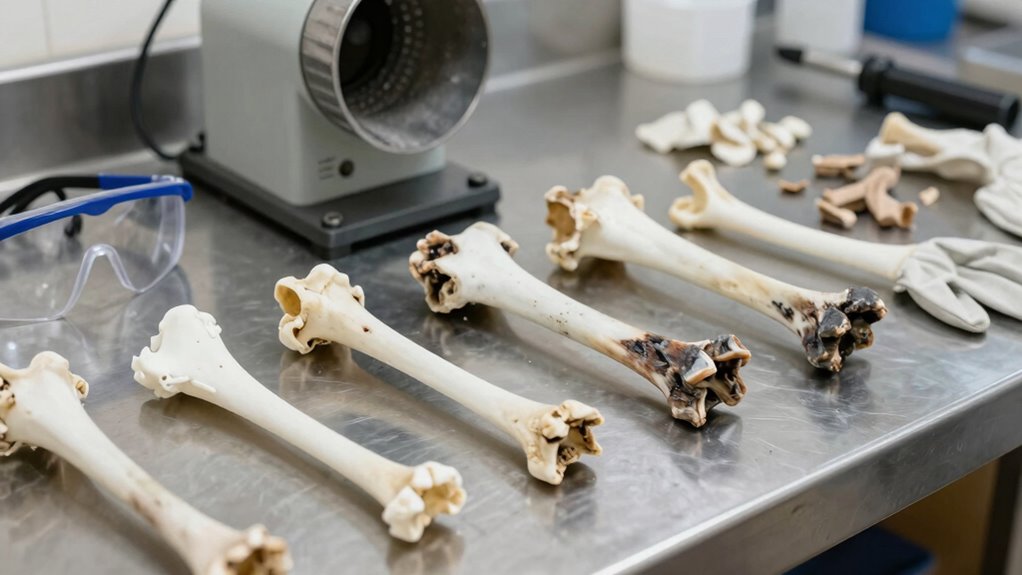
To guarantee safe bone grinding, you need to select appropriate bones that are free from contaminants and suitable for processing. Focus on bone selection by choosing fresh, high-quality bones from trusted sources. Avoid bones that appear discolored, show signs of mold, or have a foul odor. Safety considerations also include removing any remaining tissue or marrow to prevent spoilage or bacterial growth. Use this guide to help with bone selection: proper bone selection ensures safety and quality in grinding. Additionally, inspecting bones for cleanliness and integrity before grinding is crucial to prevent potential health risks. Ensuring proper handling techniques during preparation can further reduce contamination risks.
Which Bones Should I Avoid Grinding and Why?
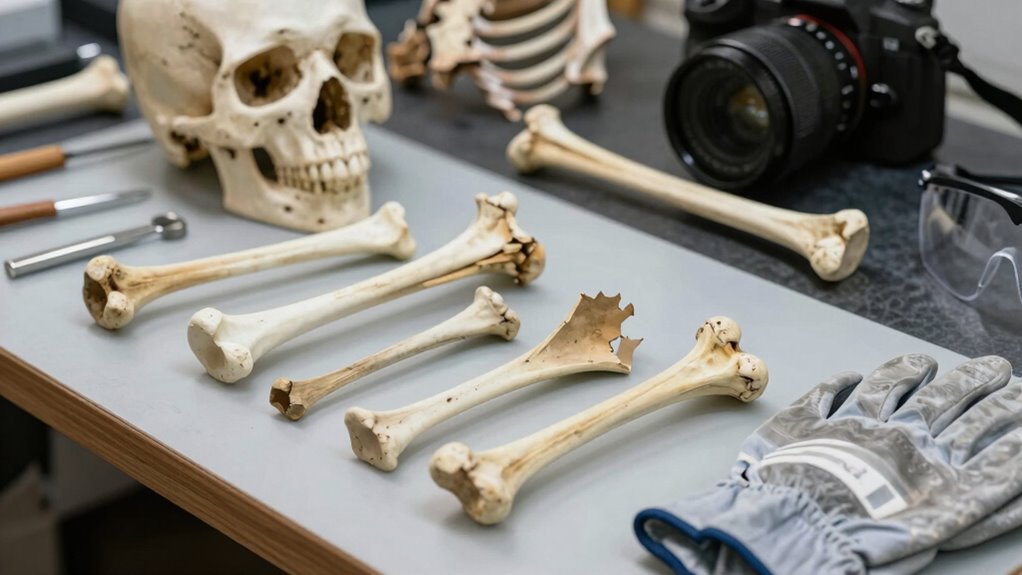
You should avoid grinding small, fragile bones because they can break apart easily and pose safety risks. Long bones, like femurs or tibias, are best left untouched since their density makes them harder to process correctly. Staying away from these bones helps prevent accidents and guarantees safer grinding. Additionally, being aware of osteoporosis and other bone health issues can inform safer handling practices. Recognizing bone density is crucial for understanding which bones are safer to grind and which ones pose risks. Moreover, bone composition varies among different bones, affecting their suitability for grinding. Being familiar with exfoliation and the effects of acids on bones can help prevent damage during processing. Knowing about bone health can further guide safe practices when working with bones.
Avoid Small Fragile Bones
Because small, fragile bones can break apart easily during grinding, it’s best to avoid working on delicate bones like the ribs, phalanges, and tiny skull bones. These bones are highly susceptible to damage due to their bone brittleness. Fragile bones lack the density and strength needed to withstand grinding pressure, increasing the risk of shattering into tiny pieces. Attempting to grind such bones can lead to unsafe debris and damage to your equipment. If you value safety and want quality results, steer clear of small, fragile bones altogether. Instead, focus on sturdier bones that can handle the grinding process without breaking apart. Bone density is a crucial factor in determining which bones are safe to grind, helping to minimize hazards and ensure a safer, more effective grinding experience. Incorporating auditory processing techniques can also help improve understanding of bone characteristics and safe handling practices. Additionally, understanding bone composition can further guide safe grinding practices to prevent accidents. Recognizing material properties such as brittleness and toughness can aid in selecting bones suitable for grinding and avoiding those prone to fragmentation. Furthermore, assessing bone structure can provide insight into which bones are more durable and suitable for mechanical processing.
Steer Clear of Long Bones
Long bones, such as the femur, humerus, and tibia, present unique challenges during grinding due to their size and shape. These long bones are often fragile bones that can splinter unexpectedly, risking injury or damage to your equipment. Grinding them can cause unpredictable fractures, making the process dangerous.
Avoid grinding long bones because:
- They can shatter suddenly, creating hazardous fragments.
- Their shape increases the risk of uneven grinding and damage.
- Fragile bones may splinter, risking injury to you or contaminating your product.
Focusing on safer, smaller bones reduces the risk of accidents. Steer clear of long bones to protect yourself and ensure a safer grinding process.
What Equipment Do I Need for Safe Bone Grinding?
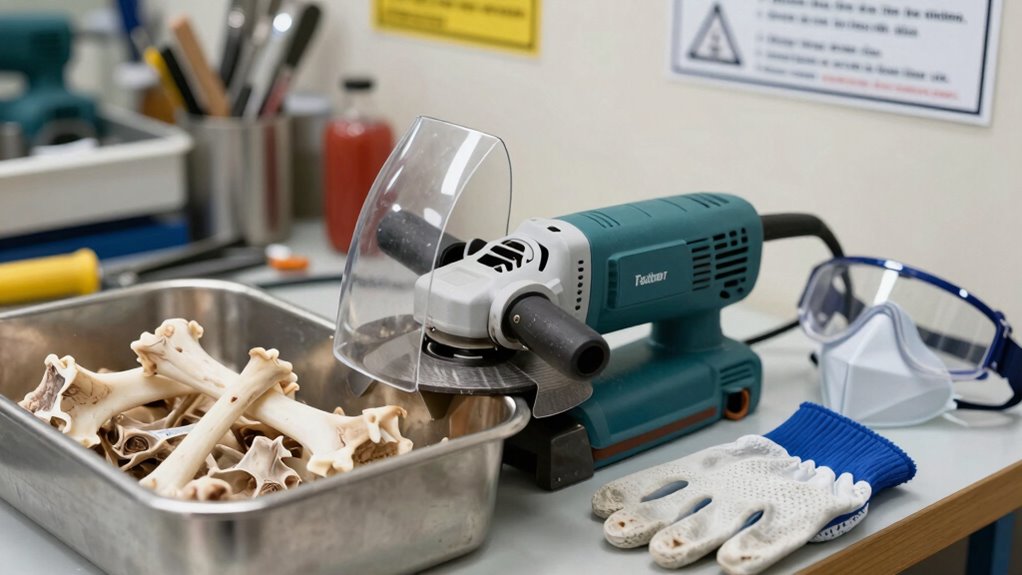
To guarantee safe bone grinding, having the right equipment is essential. Start with a sturdy, purpose-built grinder designed for bone processing to ensure efficiency and safety. Proper bone preparation is crucial; removing excess tissue and long bones minimizes hazards and equipment strain. Invest in high-quality blades and grinding plates, and regularly inspect them for wear. Equipment maintenance is vital: keep your grinder clean, lubricate moving parts, and follow the manufacturer’s guidelines to prevent malfunctions. Using the correct tools reduces the risk of accidents and ensures consistent results. Avoid makeshift solutions or cheap alternatives, which can compromise safety. Additionally, understanding safe handling procedures and proper operation techniques is key to preventing injuries. Proper tool maintenance not only extends the lifespan of your equipment but also ensures safe operation by reducing unexpected failures. Regularly reviewing safety standards helps keep your practices aligned with current recommendations and minimizes risks. Incorporating protective gear such as gloves and eye protection further enhances safety during the grinding process. Familiarity with electric safety practices is also important, especially when working with powered equipment, to prevent electrical hazards.
How to Grind Bones Safely: A Step-by-Step Guide
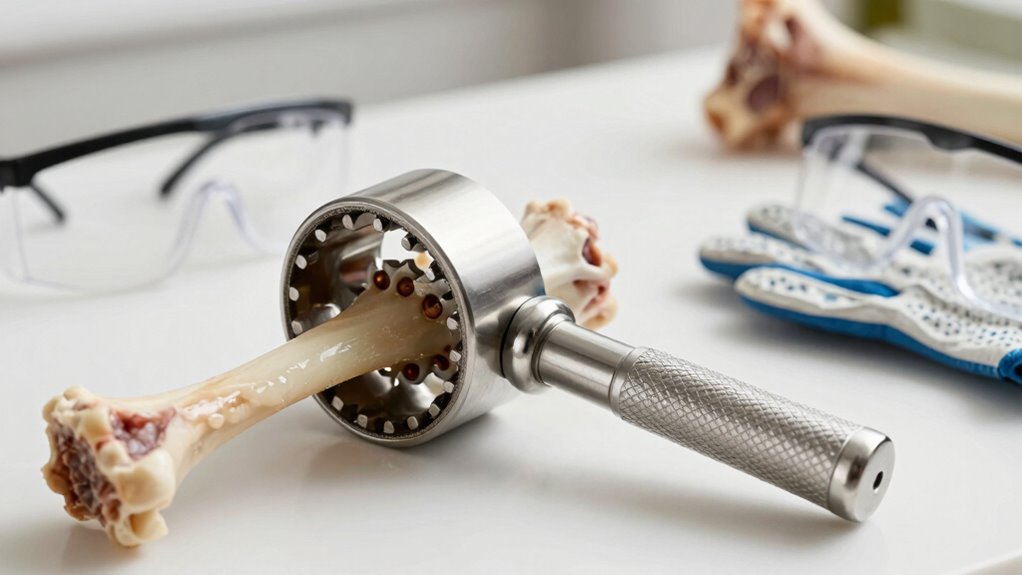
Before you start grinding bones, it’s important to plan each step carefully to guarantee safety. First, secure the bone properly to avoid slips that could cause injury. Second, use controlled grinding techniques, applying steady pressure to prevent splattering or kickbacks that might release bone marrow unexpectedly. Third, always wear protective gear, like gloves and safety glasses, to shield yourself from shards and debris. Focus on grinding techniques that keep your hands steady and maintain a safe distance from the blade. Remember, bones with marrow can be slippery and unpredictable, so patience is key. Additionally, understanding wiring basics (informational) can help ensure your equipment is properly set up to operate safely. Being aware of the proper water safety practices can also prevent accidents in environments where water is involved. Proper safety protocols are essential to handle unexpected situations effectively and prevent injuries. Incorporating proper maintenance procedures can further reduce the risk of equipment malfunction during grinding. By following these steps, you’ll minimize risks and ensure safe, effective grinding every time. Safety should always come first in every grinding session.
How to Spot Equipment Damage and Safety Hazards
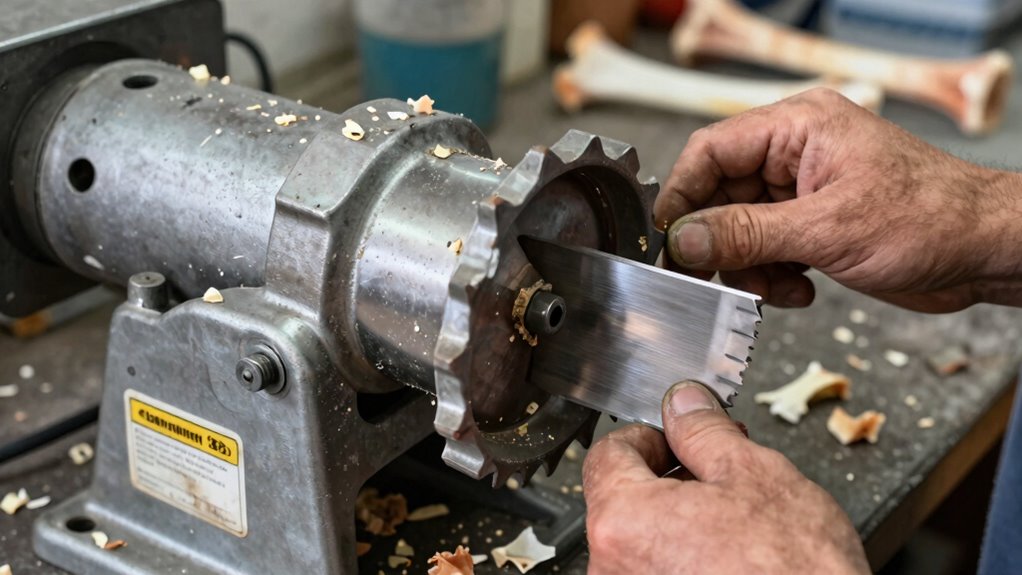
Regularly inspecting your grinding equipment for signs of damage is essential to maintain safety. During equipment inspection, look for cracks, rust, worn-out belts, loose bolts, or any abnormal vibrations. Damaged parts can compromise the grinder’s stability and increase the risk of accidents. Pay close attention to the grinding plates and motor area, as these are common failure points. Hazard identification involves recognizing any unusual noises, overheating, or leaks that could indicate underlying issues. Addressing these problems promptly prevents equipment failure and potential injuries. Remember, a thorough inspection before each use helps catch issues early, keeping your workspace safe. Consistent hazard identification not only extends your equipment’s lifespan but also ensures safe, effective bone grinding.
What Common Mistakes Should I Avoid When Grinding Bones?
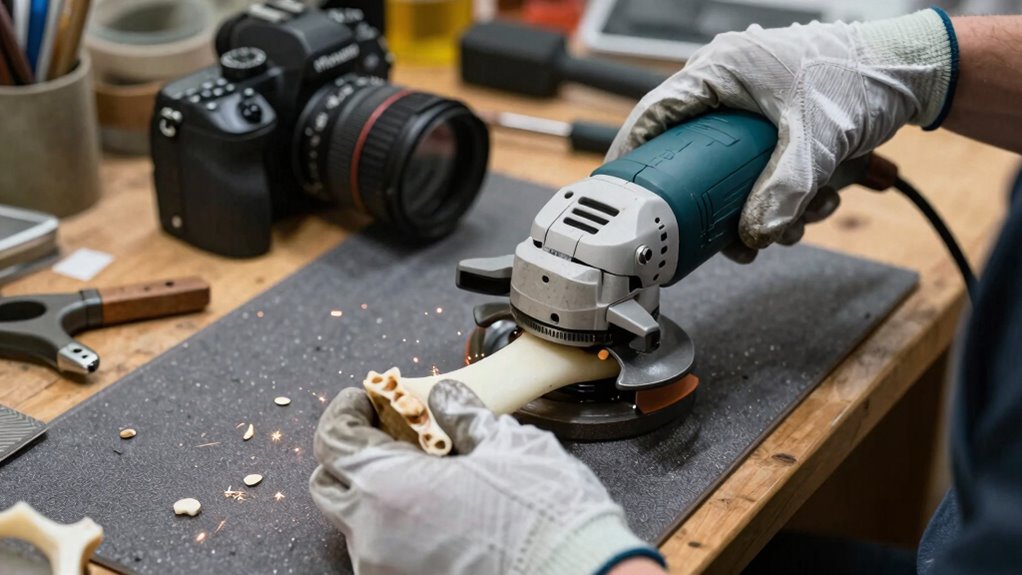
One common mistake is using the wrong equipment, which can cause safety risks or damage. You should also never ignore safety gear, as it protects you from potential hazards. Additionally, overlooking different bone types can lead to improper grinding and safety issues.
Using Wrong Equipment
Using the wrong equipment when grinding bones can lead to dangerous accidents and poor results. If you choose tools not suited for dense bones, you risk equipment failure or injury. For example, using a blade designed for soft tissue can crush bone marrow or struggle with high bone density, creating dangerous sparks or overheating.
Be cautious of these common mistakes:
- Using a blender or food processor not meant for bones, which can cause motor burnout or breakage.
- Relying on manual tools that can slip or crush bones unevenly, risking injury.
- Ignoring the hardness of bones, especially those with high density, leading to equipment damage and inconsistent grinding.
Always match your equipment to the bone’s density to ensure safety and quality results.
Ignoring Safety Gear
Ignoring safety gear while grinding bones substantially increases the risk of injury. Protective gear like gloves, safety goggles, and a dust mask is essential to shield you from bone splinters, dust, and debris. Skipping these safety protocols can lead to cuts, eye injuries, or respiratory issues. Always wear gloves to prevent cuts from sharp edges and goggles to protect your eyes from airborne particles. A dust mask helps prevent inhaling bone dust, which can irritate your respiratory system. Neglecting proper safety gear not only endangers your health but also increases the chance of accidents. Make it a habit to check your protective equipment before starting and follow safety protocols strictly. Staying protected ensures you can grind bones efficiently without risking your well-being.
Overlooking Bone Types
Failing to identify and differentiate bone types before grinding can lead to equipment damage and safety hazards. Bones vary in marrow density and porosity, affecting how they should be processed. Ignoring these differences risks clogging your grinder or causing dangerous jams.
Be cautious of:
- Grinding bones with high marrow density—these require different settings or tools to avoid overheating or equipment wear.
- Overlooking porous bones—these can break apart unpredictably, increasing safety risks.
- Assuming all bones are equal—each type demands a tailored approach to prevent damage and ensure safe operation.
Understanding bone porosity and marrow density helps you select the right technique, reducing accidents and extending your equipment’s lifespan. Never overlook bone types—your safety depends on it.
How Should I Store and Dispose of Bone Residues Safely?
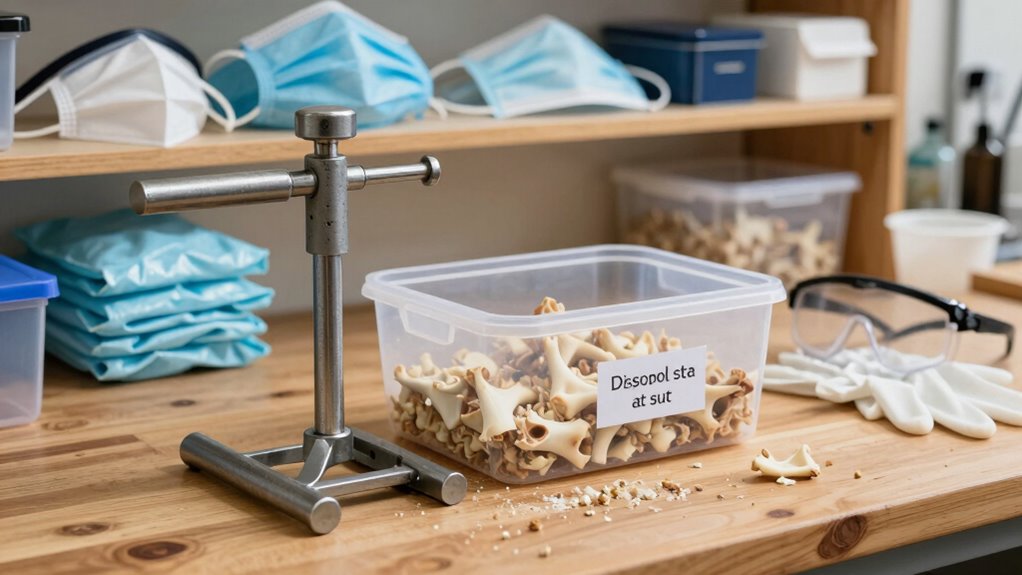
To store and dispose of bone residues safely, it’s essential to follow proper handling procedures to prevent health hazards and environmental contamination. Use designated containers for bone storage, ensuring they are leak-proof and labeled clearly. When residue disposal, avoid dumping bones in regular trash; instead, follow local regulations for bio-waste. Proper storage and disposal minimize risks like bacterial growth or odor. Here’s a visual guide:
| Bone Storage Method | Residue Disposal Method | Safety Precaution |
|---|---|---|
| Airtight containers | Biohazard bins | Seal tightly to prevent leaks |
| Cool, dry area | Certified disposal firms | Keep away from children |
| Labeled containers | Incineration (if allowed) | Handle with gloves |
Following these steps helps keep your environment safe and compliant.
When Should I Consult Professionals About Bone Grinding?
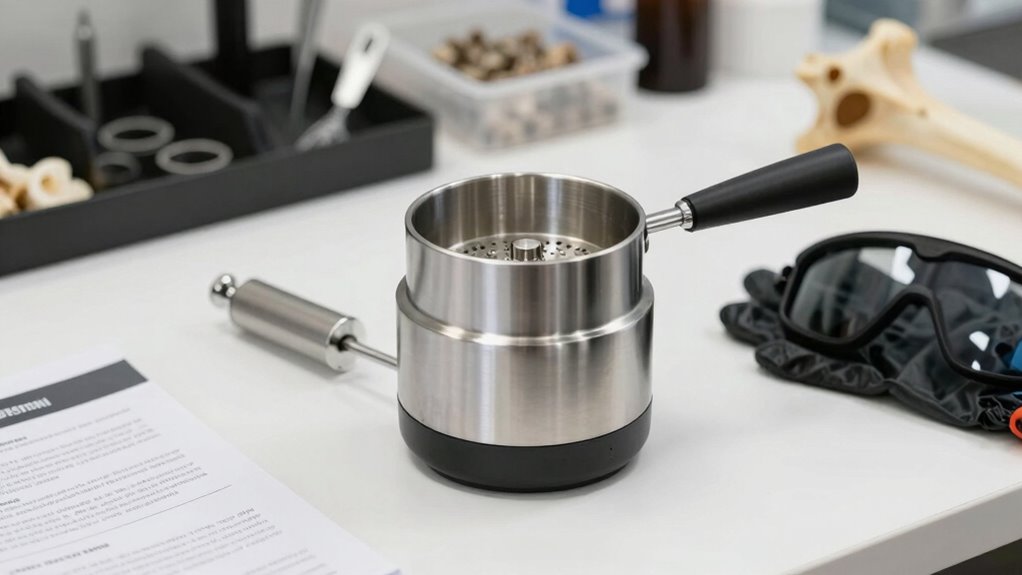
Knowing when to seek professional advice about bone grinding can help prevent complications and guarantee safety. If you encounter any of these situations, it’s time to contemplate a professional consultation:
Seeking professional advice on bone grinding helps prevent risks and ensures safety. Don’t hesitate to consult experts when in doubt.
- You’re unsure about the legality of your grinding process, risking legal considerations.
- You notice persistent pain, fractures, or unusual textures after grinding.
- You’re uncertain whether your technique is safe or if specialized equipment is needed.
Attempting to grind bones without expert guidance can lead to safety hazards and legal issues. Consulting professionals ensures you follow proper procedures, adhere to legal considerations, and minimize risks. Don’t ignore warning signs—reach out to experts when in doubt to protect your health and stay compliant with regulations.
Frequently Asked Questions
Can Children Safely Operate Bone Grinding Equipment?
Children should not operate bone grinding equipment due to safety concerns. You must prioritize child safety by ensuring proper equipment supervision at all times. Children lack the experience and understanding of the risks involved, and accidental injuries can occur easily. Always keep the equipment out of their reach and supervise any activity involving grinding tools. Preventing accidents is your responsibility to maintain a safe environment for everyone.
Are There Specific Safety Certifications for Bone Grinders?
Yes, there are specific safety certifications for bone grinders. You should guarantee your equipment meets professional standards and complies with certification requirements set by industry organizations. These certifications verify that the machinery and operators adhere to safety protocols, reducing risks. Always check for recognized certifications, such as OSHA compliance or industry-specific safety standards, to ensure safe operation. Staying certified helps protect you, your team, and those around you from potential hazards.
How Often Should I Maintain or Replace My Grinding Equipment?
Think of your grinding equipment like a trusted car; if you ignore maintenance, it’ll break down faster. You should inspect and clean your grinder after each use, and follow the manufacturer’s recommended maintenance schedule. Replace parts or the entire equipment when it shows signs of wear or if it’s nearing the end of its expected lifespan. Regular upkeep guarantees safety, efficiency, and prolongs your grinder’s life.
Is It Safe to Grind Bones Outdoors Versus Indoors?
Grinding bones outdoors is generally safer because of better ventilation and less risk of airborne particles inside. However, you still need to follow indoor precautions like wearing protective gear, ensuring proper disposal, and avoiding exposure to others. Always prioritize outdoor safety by grinding in well-ventilated areas, keeping children and pets away, and checking local regulations. Both environments require careful handling to prevent health hazards and ensure safe bone grinding practices.
What Are the Legal Regulations Surrounding Bone Grinding at Home?
Did you know that over 60% of home grinders aren’t aware of legal regulations? You need to check local laws to make certain home safety and legal compliance before grinding bones. Regulations vary by region, often restricting bone grinding to licensed facilities. Make sure you research federal, state, or municipal rules, and obtain necessary permits. Staying informed helps you avoid fines and ensures safe, legal practices when grinding bones at home.
Conclusion
By respecting the boundaries of safe bone grinding, you’re steering clear of hidden pitfalls lurking in the shadows. Think of your tools and techniques as trusted guides on a journey—staying vigilant keeps your path smooth and your safety intact. When you know what to grind, what to avoid, and how to handle residues wisely, you’re forging a trail of confidence and care. Ultimately, safe bone grinding becomes your craft, turning caution into a sturdy compass guiding every step.