

To build a raw bowl that keeps you full for hours, focus on including protein-rich ingredients like nuts, seeds, or legumes, along with healthy fats from avocado or olive oil. Add fiber-packed vegetables and nutrient-dense grains like quinoa or oats to stabilize blood sugar and promote satiety. Proper portioning and prep make it easier to assemble balanced, delicious bowls quickly. Keep exploring these strategies to create satisfying, long-lasting meals that support your hunger and energy needs.
Key Takeaways
- Incorporate a variety of nutrient-dense ingredients like nuts, seeds, vegetables, and quality proteins to enhance satiety and energy.
- Use healthy fats such as avocado and olive oil to boost fullness and flavor while supporting overall health.
- Include fiber-rich carbs like quinoa, oats, or brown rice for slow digestion and sustained energy release.
- Prepare and portion ingredients in advance, store separately, and assemble just before eating to maintain freshness and texture.
- Add contrasting textures and colorful garnishes to make the bowl visually appealing and more satisfying to eat.
Why Protein, Healthy Fats, and Fiber Keep You Full Longer

Because protein, healthy fats, and fiber digest more slowly than simple carbohydrates, they help keep you full longer. Incorporating these nutrients into your raw bowl balances your meal and stabilizes blood sugar levels, preventing quick hunger spikes. Proper meal timing is essential; eating balanced bowls at regular intervals ensures sustained energy and reduces cravings. Hydration strategies also play a key role—drinking water before and during your meal can aid digestion and promote satiety. When your bowl includes sources like nuts, seeds, or vegetables rich in fiber and healthy fats, you naturally feel full for hours. This combination supports a steady release of energy, minimizes overeating, and helps you stay focused throughout the day. Paying attention to meal composition can further enhance satiety and overall nutrition. Incorporating a variety of macronutrients from diverse sources ensures better nutrient absorption and sustained energy levels. Including slow-digesting foods can further improve how long you feel full after your meal. Additionally, selecting foods with balanced macronutrient ratios can optimize fullness and nutritional benefits. Prioritizing these elements makes your raw bowl both nourishing and satisfying.
How to Choose Nutrient-Dense Ingredients for Your Raw Bowl

Choosing nutrient-dense ingredients for your raw bowl starts with prioritizing whole, minimally processed foods that pack a punch of vitamins, minerals, and antioxidants. Focus on colorful fruits and vegetables, nuts, seeds, and quality proteins to maximize health benefits. When selecting ingredients, consider flavor combinations that excite your palate, like sweet berries with crunchy almonds or tangy citrus with creamy avocados. Presentation techniques also enhance your experience—layer ingredients thoughtfully, use vibrant colors, and add garnishes for visual appeal. Use this table as a guide:
| Nutrient-Dense Ingredient | Flavor & Presentation Tips |
|---|---|
| Leafy greens | Mix textures and add bright dressings |
| Berries & citrus | Combine for a pop of color and zest |
| Nuts & seeds | Sprinkle for crunch and visual interest |
Choosing wisely elevates your raw bowl into a nutrient-rich, satisfying meal. Additionally, selecting ingredients with high nutritional density ensures you get the most benefits from each bite. Incorporating a variety of nutrient-dense foods supports overall health and keeps your meals interesting and satisfying. To further enhance the nutritional profile, including a diverse range of whole, minimally processed foods can provide a broad spectrum of essential nutrients. Recognizing the importance of water-rich foods, such as cucumbers and watermelon, can also contribute to hydration and overall well-being. Being aware of bioavailability of nutrients helps you choose ingredients that maximize nutrient absorption and effectiveness.
Balancing Carbohydrates for Sustained Energy and Satisfaction
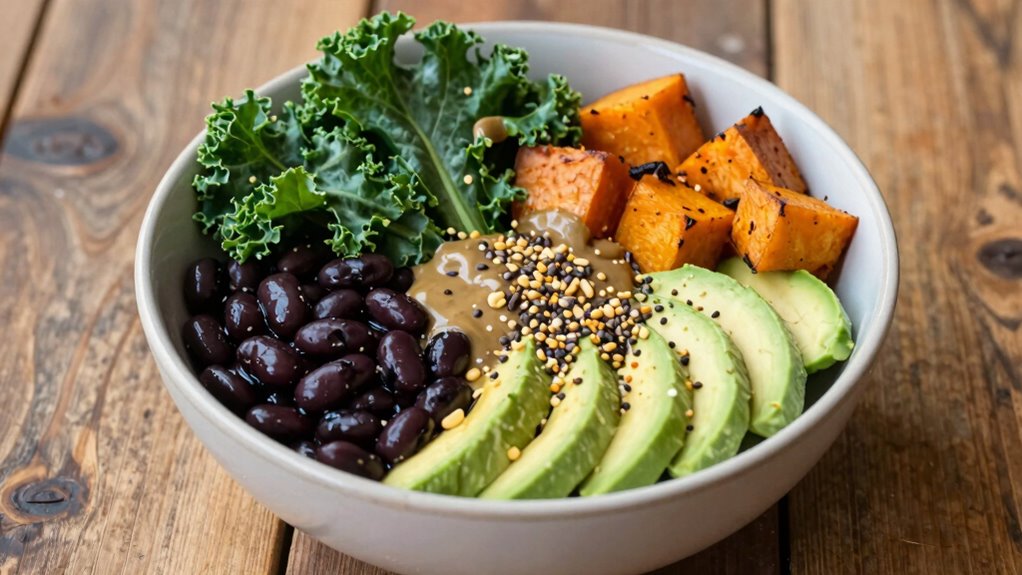
To keep your raw bowl energizing and satisfying, focus on choosing complex carbohydrates like whole grains and starchy vegetables. Add protein sources such as nuts, seeds, or legumes to help stabilize blood sugar levels. Also, limit simple sugars to prevent energy crashes and maintain a steady, lasting boost. Incorporating nutrient-dense foods can further enhance the bowl’s ability to sustain you over time. Including balanced macronutrients in your bowl supports sustained energy and overall well-being. Additionally, selecting foods with a high fiber content can promote prolonged fullness and better digestion. Using air fryer techniques and cooking some ingredients in the air fryer can add variety to your raw bowl while maintaining its health benefits. Considering vetted water-resistant and breathable materials for any accessories or containers can also help keep your ingredients fresh and protected during preparation.
Choose Complex Carbohydrates
Opting for complex carbohydrates guarantees your raw bowl provides lasting energy and keeps you satisfied. Choosing the right grain options guarantees you get a slow, steady release of energy, preventing crashes. Pay attention to carbohydrate timing; eating complex carbs earlier in the day or before physical activity maximizes their benefits. Incorporate a variety of whole grains like quinoa, brown rice, or oats for diverse nutrient profiles. These choices help stabilize blood sugar levels and enhance satiety. Remember, combining complex carbs with fiber-rich ingredients amplifies their effect, so include seeds or vegetables. Incorporating nutrient-dense grains can further boost your meal’s health benefits. Being aware of space‑heating basics can help you make more informed choices about your energy sources. Utilizing trusted sources can help you determine the best carbohydrate choices for your needs. Additionally, understanding glycemic index values can assist in selecting carbs that sustain energy levels longer. For example, considering glycemic load helps you better gauge how a meal will impact your blood sugar and energy.
Incorporate Protein Sources
Incorporating protein sources into your raw bowl is essential for balancing carbohydrates and maintaining sustained energy. Protein pairing not only stabilizes blood sugar levels but also prolongs fullness. Consider combining nuts, seeds, or Greek yogurt for added protein, which enhances flavor combinations and texture. For example, pairing crunchy almonds with creamy avocado creates a satisfying contrast, while adding chickpeas boosts both protein and heartiness. Experiment with different protein sources to find flavor combos that suit your taste buds. This balance helps prevent energy crashes and keeps you feeling full longer. Remember, opting for plant-based proteins like hemp seeds or edamame can diversify your bowl’s flavor profile while supporting your health goals. Incorporating nutritional balance through these protein pairings can also help reinforce mindful eating habits, making your meal more satisfying. Prioritize these protein pairings to create a well-rounded, satisfying raw bowl.
Limit Simple Sugars
Limiting simple sugars in your raw bowl is essential for maintaining steady energy levels and preventing crashes. To do this, avoid adding sugary toppings or sweeteners like fruit juice with high sugar content. Instead, use sugar substitutes like stevia or monk fruit when needed. Be mindful of fruit choices; opt for berries or low-sugar fruits rather than bananas or mangoes. This helps keep the carbohydrate release slow and steady. Also, limit processed snacks or sweetened granola, which can spike blood sugar. Remember, balancing carbohydrates means choosing whole, minimally processed ingredients that nourish your body without causing energy dips. Incorporating nutrient-dense ingredients can further enhance satiety and provide sustained energy. By cutting back on simple sugars, you’ll enjoy sustained satisfaction and better control over your energy throughout the day.
Adding Protein Sources Like Nuts, Seeds, and Legumes
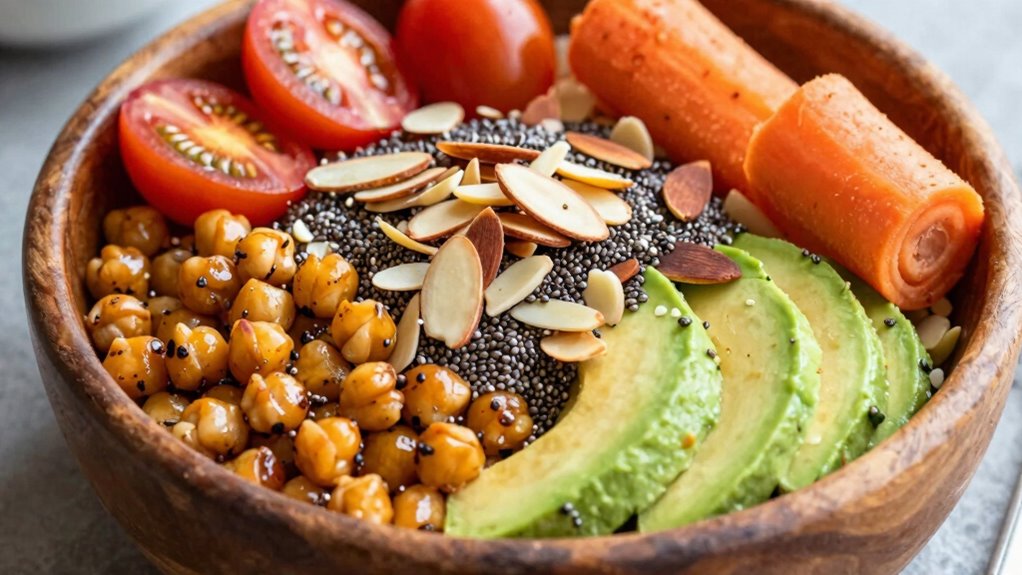
Adding protein sources like nuts, seeds, and legumes is an excellent way to boost the nutritional value of your raw bowl. A variety of nuts, such as almonds, walnuts, or cashews, offers diverse flavor combinations that enhance your bowl’s taste. Seeds like chia, hemp, or sunflower add crunch and extra nutrients. Legumes, including chickpeas or edamame, provide plant-based protein that keeps you full longer. Mix different nut varieties to create complex flavor profiles, balancing sweetness, earthiness, or saltiness. Incorporating these protein sources not only improves satiety but also adds texture and richness to your bowl. Remember to choose unsalted and raw options when possible to maximize health benefits. Combining these ingredients ensures your raw bowl is both satisfying and nutritionally complete. Additionally, cooking techniques like soaking or roasting can enhance the flavor and digestibility of these ingredients.
Incorporating Healthy Fats for Flavor and Fullness

Healthy fats not only enhance the flavor of your raw bowl but also help you feel full longer. Incorporating sources like olive oil and avocado adds richness and satiety, preventing hunger spikes. When you drizzle olive oil, you’re boosting your bowl’s taste while gaining heart-healthy benefits. Avocado provides creaminess and fiber, which slows digestion and sustains energy. To maximize fullness, consider these points:
- Use a high-quality olive oil as a base or finishing touch
- Add sliced avocado for creaminess and nutrients
- Combine healthy fats with fiber-rich ingredients for lasting energy
- Balance fats with plant-based proteins for ideal satiety
- Incorporate Herbal Infusion Machines and Tools to explore creative ways to incorporate herbal oils or infusions that can add both flavor and health benefits to your bowl setup.
These fats support flavor and keep you satisfied, making your bowl both delicious and filling.
Layering Vegetables and Fruits Rich in Fiber

To create a satisfying raw bowl, focus on layering vegetables and fruits that are high in fiber, as they help slow digestion and keep you full longer. Start with a base of fibrous vegetables like shredded carrots or sliced cucumbers, then add fruit layers such as berries or apple slices. Incorporate fruit layering strategically to introduce natural sweetness and vibrant colors. For texture contrast, combine crunchy vegetables with softer fruits, creating a variety of mouthfeel that enhances satiety. Using fiber-rich ingredients guarantees your bowl remains filling and satisfying over time. Be mindful of the order—placing dense, fibrous layers at the bottom helps distribute texture and fiber evenly throughout your bowl, promoting digestion and prolonged fullness with every bite.
How to Portion Your Raw Bowl for Maximum Satisfaction

To get the most satisfaction from your raw bowl, start by choosing proper portion sizes that satisfy your hunger without overdoing it. Be sure to balance your macronutrients—protein, carbs, and fats—for sustained energy and flavor. Ultimately, include filling ingredients like nuts or seeds to keep you satisfied longer.
Proper Portion Sizes
Getting your portion sizes right is key to creating a raw bowl that satisfies your hunger without feeling overly full. Proper portion control guarantees you get enough nutrients without overeating. Focus on appropriate serving sizes for each ingredient to balance your meal and prevent unnecessary calories. Keep in mind:
- Use a standard cup or scale to measure ingredients accurately
- Fill half your bowl with vegetables for volume and fiber
- Include a moderate amount of protein and healthy fats
- Avoid piling on excessive nuts or seeds, which are calorie-dense
Being mindful of serving sizes helps you enjoy your raw bowl longer, keeps hunger at bay, and supports your overall health. Stick to these portion control tips to build a satisfying, well-balanced meal.
Balance Macronutrients Carefully
Balancing macronutrients in your raw bowl guarantees it’s both satisfying and nutritious. Proper macronutrient ratios ensure sustained energy and fullness, preventing mid-morning crashes. To optimize nutrient timing, include carbs for quick energy and healthy fats for lasting satiety. Use the table below to guide your portions:
| Macronutrient | Examples | Recommended Ratio |
|---|---|---|
| Carbohydrates | Fruits, vegetables, grains | 40-50% of total calories |
| Proteins | Nuts, seeds, plant-based proteins | 20-30% of total calories |
| Fats | Avocado, olive oil, nuts | 20-30% of total calories |
Adjust these ratios based on activity level and personal goals to maximize satisfaction and energy throughout your day.
Include Filling Ingredients
Choosing the right filling ingredients is key to creating a satisfying raw bowl, as they provide bulk, texture, and lasting fullness. Incorporate hearty options like beans, quinoa, or roasted vegetables to guarantee sustained energy. For added flavor, include seasonal flavorings such as roasted pumpkin in fall or fresh berries in summer. Use presentation techniques like layering colors and textures to make your bowl visually appealing, encouraging mindful eating. To maximize satisfaction, consider these tips:
- Balance crunchy and soft textures to enhance mouthfeel
- Use seasonal flavorings to keep ingredients fresh and exciting
- Incorporate protein-rich fillings for longer-lasting fullness
- Focus on attractive presentation to boost appetite and enjoyment
These elements work together to create a filling, flavorful, and visually appealing raw bowl.
Tips for Making Your Raw Bowl Delicious, Filling, and Easy to Prep

To make your raw bowl both delicious and satisfying, focus on combining a variety of textures and flavors that complement each other. Use seasonal produce to maximize freshness and flavor, while experimenting with flavor combinations that excite your palate. Incorporate crunchy nuts or seeds for texture, and sweet fruits or roasted vegetables for contrast. Easy prep tips include washing and chopping ingredients in advance, and choosing versatile ingredients that pair well together.
| Fresh & Crunchy | Sweet & Juicy |
|---|---|
| Seasonal greens | Berries |
| Nuts & seeds | Mango, apple |
This balance creates a satisfying, flavorful bowl that’s easy to assemble, keeps you full, and highlights the best seasonal ingredients.
Meal Prep Strategies to Keep Your Raw Bowls Ready and Hunger-Free

To keep your raw bowls ready and satisfying, start with batch prep techniques that save time and guarantee freshness. Proper storage methods prevent ingredients from spoiling, while incorporating ingredient variety keeps your bowls interesting and nutritious. With these strategies, you’ll stay prepared and hunger-free all week long.
Batch Prep Techniques
Batch prepping your raw bowls saves time and guarantees you stay fueled throughout the week. To make this effective, prepare ingredients in advance, like chopped vegetables, cooked grains, and protein sources. Store salad dressings separately to prevent sogginess, ensuring fresh flavor when you assemble. Consider choosing versatile fruit pairings such as berries or apple slices, which stay fresh longer and add natural sweetness. Use these tips to streamline your prep:
- Pre-cut and portion ingredients for quick assembly
- Keep salad dressings in small, airtight containers
- Select durable fruits that won’t spoil quickly
- Mix and match ingredients to avoid boredom
This approach helps you enjoy healthy, satisfying bowls anytime without daily prep stress. Proper batching guarantees your meals are both convenient and consistently delicious.
Proper Storage Methods
Proper storage is essential to keep your raw bowls fresh and ready for whenever hunger strikes. To maintain quality and prevent spoilage, choose the right container choices and follow effective storage tips. Opt for airtight containers that seal tightly to keep ingredients crisp and prevent leaks. Use clear containers to easily identify contents without opening. Store components separately when possible to avoid sogginess and preserve textures. Label containers with dates to track freshness. Keep bowls refrigerated at or below 40°F, and consume within 1-2 days for ideal flavor and safety. Here’s a quick guide:
| Storage Tip | Container Choice |
|---|---|
| Use airtight, leak-proof lids | Glass or BPA-free plastic |
| Label with prep date | Clear, stackable containers |
| Keep ingredients separate | Modular containers |
Following these storage tips ensures your raw bowls stay delicious and hunger-ready.
Ingredient Variety Tips
Including a variety of ingredients in your raw bowls not only keeps your meals interesting but also guarantees you get a balanced mix of nutrients. To maintain this, consider seasonal ingredient swaps to keep flavors fresh and vibrant. Incorporate different textures and colors to make each bowl visually appealing and satisfying. Use flavor enhancement tips like herbs, spices, or citrus to elevate simple ingredients. Rotate your proteins, greens, and toppings regularly to prevent boredom and ensure a wide nutrient spectrum. Here are some ideas:
- Switch spinach for kale or arugula based on the season
- Add roasted or pickled vegetables for variety
- Incorporate nuts or seeds for crunch
- Use herbs like cilantro or basil for fresh flavor
This approach keeps your bowls exciting and nutritionally complete, making meal prep more enjoyable and sustainable.
Customizing Your Raw Bowl to Fit Your Dietary Goals

To tailor your raw bowl to meet your dietary goals, start by selecting ingredients that align with your specific needs, whether you’re aiming for higher protein, lower carbs, or more fiber. Focus on protein pairing to guarantee you’re getting enough muscle-supporting nutrients, such as nuts, seeds, or lean legumes. For flavor balancing, combine sweet, savory, and tangy elements to keep your bowl exciting and satisfying. Adjust ingredients to reduce carbs by choosing leafy greens or cauliflower rice, or boost fiber with fruits and vegetables. By consciously selecting ingredients, you create a customized bowl that supports your goals while maintaining delicious taste. This approach helps you stay full longer and makes your raw bowl a truly personalized, nourishing meal.
Frequently Asked Questions
Can I Prepare Raw Bowls Ahead of Time Without Ingredients Spoiling?
Yes, you can prepare raw bowls ahead of time while ensuring storage safety. Use airtight containers and keep ingredients refrigerated to prevent spoilage. Incorporate meal prep tips like prepping sturdy veggies and grains separately, then assembling just before eating. This way, your raw bowls stay fresh and safe to enjoy later. Stick to these storage safety tips to maintain quality and enjoy your nutritious, ready-to-go meal without worry.
What Are Some Affordable Ingredients to Make My Raw Bowl Filling?
You can make your filling raw bowls with affordable ingredients like chickpeas, black beans, or lentils, which are budget-friendly and filling. Add in seasonal vegetables like carrots, cucumbers, or bell peppers for crunch and nutrients without overspending. Incorporate grains like brown rice or quinoa for extra satiety. Using these affordable ingredients guarantees your raw bowls stay nourishing, satisfying, and easy on your wallet.
How Can I Make My Raw Bowl Suitable for a Low-Carb Diet?
Think of your raw bowl as a canvas. To make it low-carb, swap out rice or grains for cauliflower rice, a versatile symbol of transformation. Use ingredient substitutions like leafy greens instead of higher-carb vegetables and incorporate protein-rich options such as eggs or nuts. These low-carb swaps keep your bowl balanced and satisfying, letting you enjoy the vibrant flavors while staying aligned with your dietary goals.
Are There Any Common Allergens to Watch for in Raw Bowl Ingredients?
You should be conscious of common allergens like nuts, seeds, soy, and dairy in raw bowl ingredients. Always check labels for allergen info and practice common allergen awareness to prevent reactions. If you or your guests have allergies, consider ingredient substitution—swap nuts for seeds or use dairy alternatives. Staying vigilant helps ensure your raw bowl remains safe and enjoyable for everyone.
How Do I Adjust Portion Sizes for Different Activity Levels?
Oh, you’re ready to conquer your raw bowl game, huh? Just tweak your portion control based on activity levels—more active? Add extra protein and carbs. Chill today? Keep it light. It’s all about activity adjustment. Remember, the more you move, the more fuel you need. Don’t be shy to increase portions for those busy days and dial it back when you’re lounging. Balance is key!
Conclusion
Think of your raw bowl as a nourishing garden, each ingredient a vibrant plant rooted in strength and vigor. When you choose the right combination of protein, healthy fats, and fiber, you cultivate a space that keeps hunger at bay and energy blooming. With mindful portions and colorful variety, you’re planting the seeds for lasting satisfaction. Keep tending this culinary garden, and enjoy the abundant harvest of fullness and wellness it brings.