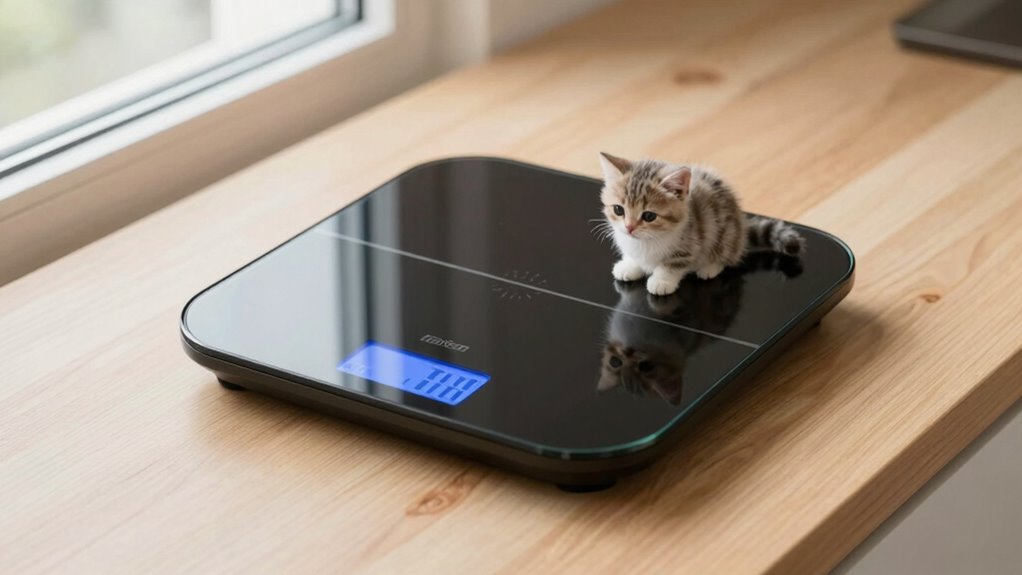
To calibrate your digital pet scale at home, start by placing it on a flat, stable surface away from drafts and vibrations. Turn it on and confirm it’s clean, then follow your scale’s instructions to enter calibration mode. Use known weights or calibration tools, like certified weights or household items, to verify accuracy. Regular checks and adjustments help keep your scale precise, and if you keep exploring, you’ll discover more tips to maintain it properly.
Key Takeaways
- Place the scale on a flat, level surface away from drafts and vibrations before calibration.
- Use certified calibration weights or known objects to set zero and verify accuracy.
- Follow the manufacturer’s instructions to enter calibration mode and perform the calibration process.
- Test the scale with various known weights to ensure consistent and accurate readings across different measurements.
- Regularly recalibrate the scale after moving, battery changes, or if readings become inconsistent.
Why Proper Calibration Is Essential for Pet Food Scales
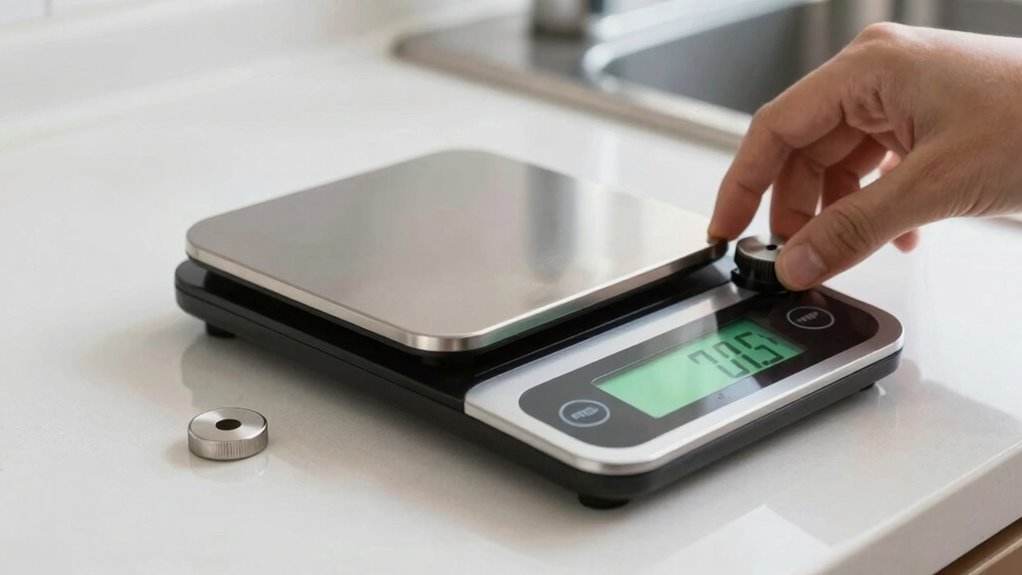
Proper calibration is essential because it guarantees your pet’s food portions are accurate and consistent. Without accurate scale calibration, your pet may receive too much or too little food, affecting their health and weight management. Scale accuracy depends on regular calibration, which ensures the measurements reflect true weight. The calibration importance lies in maintaining reliable readings, especially when precise portions matter for your pet’s diet. An uncalibrated scale can introduce errors, making it difficult to control portion sizes effectively. By calibrating your pet food scale correctly, you ensure every measurement is trustworthy. This consistency helps prevent overfeeding or underfeeding, supporting your pet’s well-being. Additionally, understanding scale calibration procedures is crucial for maintaining measurement accuracy over time. Regular calibration, guided by measurement accuracy principles, helps sustain the scale’s reliability and ensures your pet receives the proper amount of food. Implementing proper calibration techniques can significantly improve the precision of your measurements and safeguard your pet’s health. Ultimately, proper calibration safeguards the accuracy needed for responsible pet care and proper nutritional balance. Routine calibration also helps identify scale drift, which can occur due to environmental factors or wear and tear, further emphasizing the need for regular maintenance.
What Tools Do You Need to Calibrate Your Pet Scale?
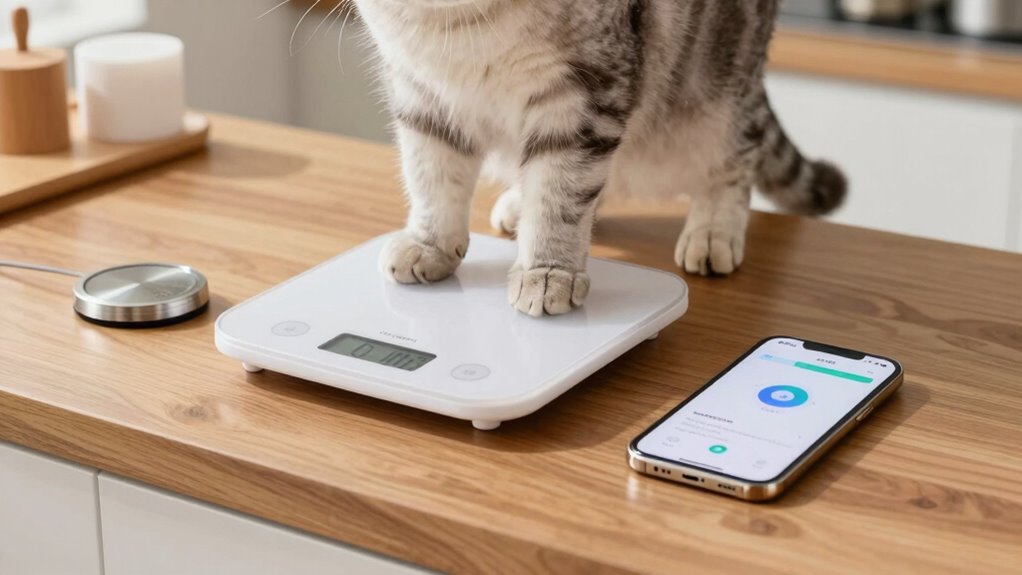
To calibrate your pet scale accurately, you’ll need specific tools like calibration weights or known reference objects. Sometimes, additional measurement accessories, such as measuring cups or containers, can help guarantee precise readings. Having the right tools on hand makes the calibration process straightforward and reliable. Incorporating Free Floating techniques can also help ensure your measurements are as accurate as possible. Additionally, understanding aviation regulations can assist in maintaining consistent calibration standards.
Necessary Calibration Tools
Calibrating your pet scale accurately requires the right tools to guarantee precise measurements. First, you’ll need a set of calibration weights or known standard weights to perform digital calibration effectively. These weights should be traceable and precise, ensuring your scale maintains accurate weight readings. A flat, stable surface is also essential to prevent any measurement errors during calibration. Some scales come with built-in calibration features, so check if your device requires specific tools or instructions. Additionally, keep a clean cloth nearby to wipe the scale’s surface before calibration, ensuring no debris skews the reading. Using the correct calibration tools helps maintain your scale’s weight accuracy over time, making sure you’re providing your pet with correctly portioned food.
Additional Measurement Accessories
Beyond calibration weights and a stable surface, there are additional measurement accessories that can help guarantee your pet scale provides accurate readings. Measuring cups are useful for verifying weight measurements of liquids or small items, ensuring your scale is precise across different types of measurements. Digital calipers are invaluable for checking the thickness or dimensions of calibration objects, helping you confirm their exact weight or size. Using these tools together allows you to cross-check your scale’s accuracy, especially when calibrating with objects of known measurements. Having measuring cups on hand makes it easier to perform quick, practical tests, while digital calipers give you detailed, precise measurements. Incorporating measurement standards into your calibration routine ensures consistency and reliability over time. Additionally, calibration procedures can be complemented by these accessories to enhance accuracy. These accessories enhance your calibration process, ensuring your pet scale remains reliable for portioning your furry friend’s food. Proper calibration techniques are essential for maintaining the accuracy of your measurements over time, especially when combined with regular testing to detect any deviations early. Regularly updating your calibration tools and verifying their precision with standard weights helps sustain the long-term accuracy of your pet scale.
How to Prepare Your Digital Scale for Calibration
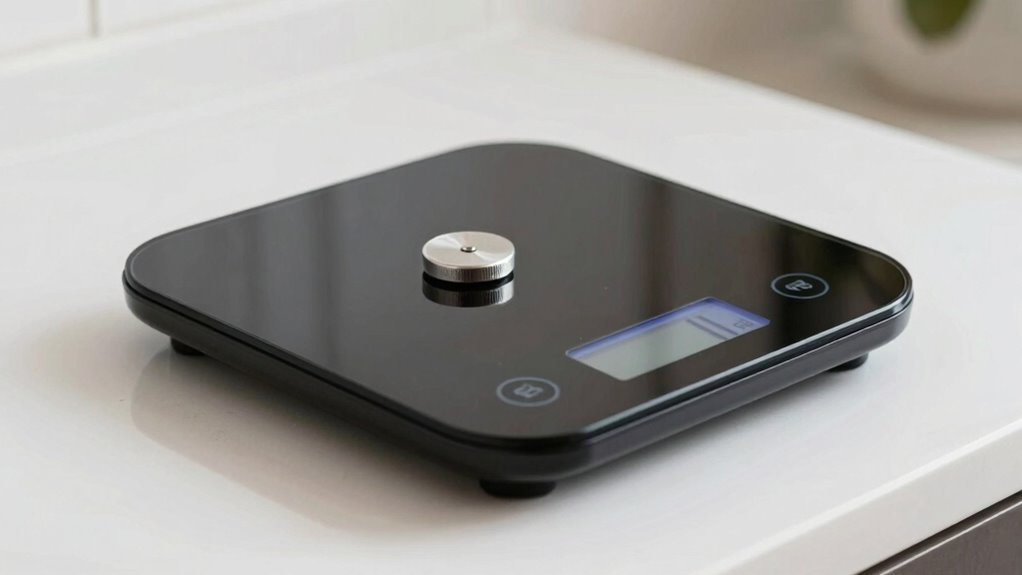
Before you start calibrating your digital scale, it’s important to prepare it properly to guarantee accurate results. First, choose a stable, level surface for ideal scale placement, avoiding uneven or vibrating areas. Confirm the calibration environment is free from drafts, vibrations, and temperature fluctuations, which can affect readings. Clear the scale of any objects or debris that might interfere with measurement. Turn it on and let it warm up for a few minutes if necessary. Use a clean, dry cloth to wipe the surface. Double-check the scale’s zero setting before calibration. Additionally, ensure you understand the accuracy requirements for your pet’s portioning to achieve consistent results. Being aware of the tolerance levels can help you determine when recalibration is needed. Proper calibration ensures your scale maintains its measurement precision, which is crucial for accurate pet feeding. Regularly checking the calibration status can help prevent inaccuracies over time. Incorporating local automation features, if available, can assist in maintaining consistent calibration checks. Here’s a quick overview:
| Step | Tip |
|---|---|
| 1 | Place on a flat, stable surface |
| 2 | Remove nearby objects |
| 3 | Ensure a steady environment |
| 4 | Power on and warm up |
How to Calibrate Your Pet Scale at Home: A Step-by-Step Guide
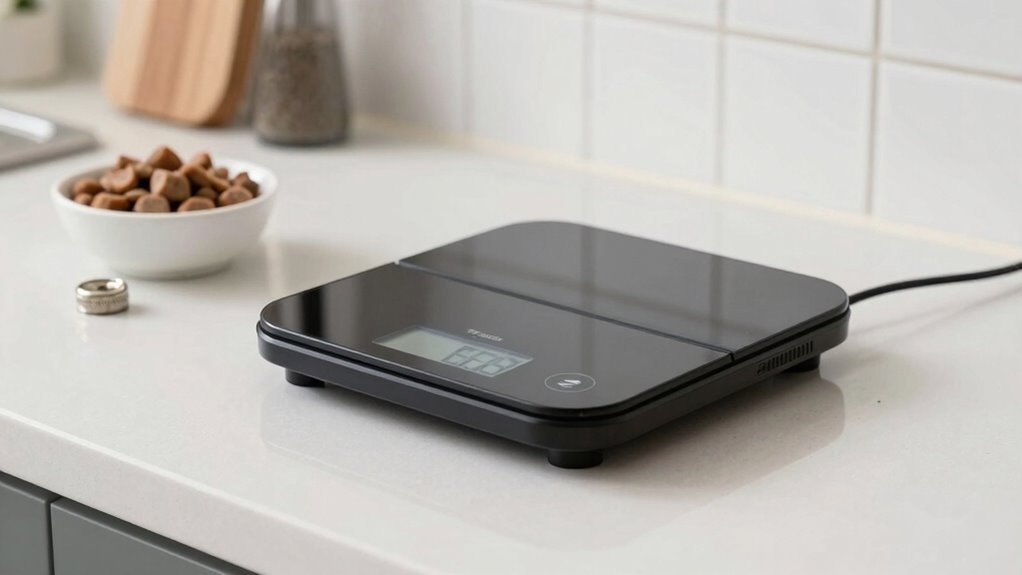
To guarantee your pet scale provides accurate weight measurements, you need to calibrate it properly at home. Start by selecting a flat, stable surface and turning on your digital scale. For calibration safety, ensure the scale is free from dust or debris. Follow these steps:
- Use calibration weights or a known, precise object to set the scale’s zero point.
- Carefully follow the manufacturer’s instructions for calibration mode.
- After calibration, gently test the scale with a known weight to confirm accuracy. Regular calibration practices are essential for maintaining connected home fitness and ensuring long-term measurement reliability. Proper calibration can also help prevent measurement errors that could impact your pet’s health or diet plan. Additionally, understanding the accuracy and precision of your scale is vital for trustworthy results.
- Maintaining your scale through proper calibration and care extends its lifespan and preserves measurement accuracy. By following this step-by-step guide, you’ll ensure your pet’s portions are always measured precisely. Incorporating proper maintenance can further enhance the longevity and performance of your scale.
How to Verify Your Scale Is Calibrated Correctly
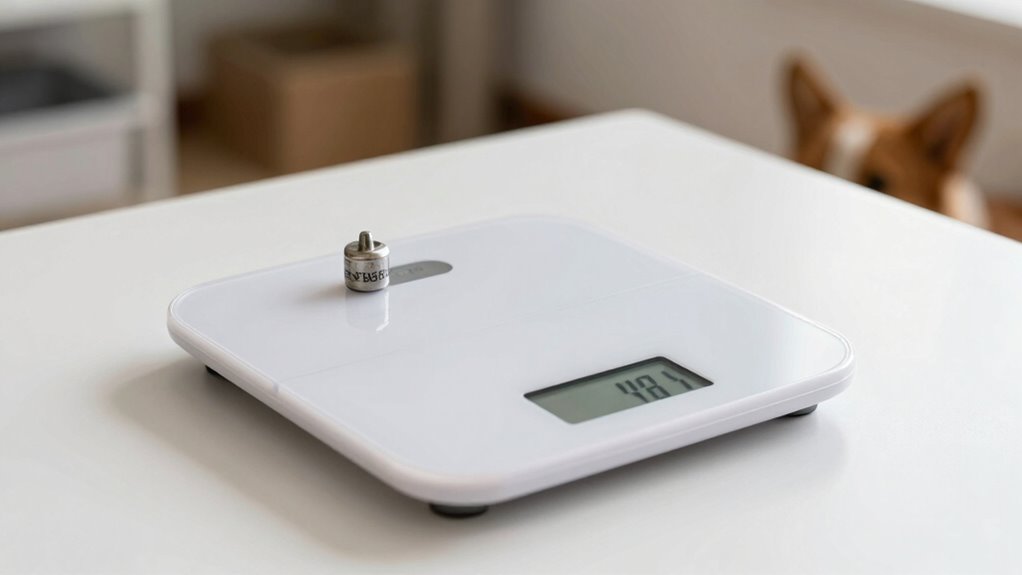
To guarantee your scale is accurate, start by using known weight items to test it. Check that the scale reads zero when empty, and try multiple weights to confirm consistency. These steps help verify your scale’s calibration and keep your pet’s portions precise. Regularly inspecting the measurement accuracy of your scale can help prevent miscalculations that may affect your pet’s health. For example, understanding the net worth of individuals like Kate from Breaking Amish can highlight the importance of accurate assessments, just as precise measurements are vital for your pet. Additionally, ensuring your scale maintains proper wave and wind calibration can improve its reliability over time. Proper device maintenance can also extend the lifespan and accuracy of your scale, ensuring consistent results. Being aware of cryptid mysteries and other legends can also remind us of the importance of verification and skepticism in evaluating claims, even in everyday tasks like calibrating a scale.
Use Known Weight Items
Using known weight items is one of the simplest ways to verify your scale’s accuracy. By testing with objects of established weight, you can confirm if your scale maintains proper weight accuracy and determine if calibration frequency is necessary. To do this, gather items like:
- A certified postage scale weight
- A metal washer or bolt of known weight
- A small bag of sugar or flour with a precise label
Place each item on the scale and compare the reading to the actual weight. If there’s a discrepancy, you may need to recalibrate. Regularly verifying with known weights helps ensure your scale remains accurate over time, especially if it’s used frequently or moved. This simple step keeps your pet portion measurements precise.
Check Zero Calibration
After verifying your scale with known weights, it’s important to check its zero calibration. To do this, turn on your scale and ensure nothing is on the platform. Press the tare function to reset it to zero. If the scale doesn’t read zero, you may need a zero adjustment. Here’s a quick guide:
| Step | Action | Expected Result |
|---|---|---|
| 1 | Turn on the scale | Reads zero or near zero |
| 2 | Tare the scale | Reads zero with no weight |
| 3 | Remove all items | Still reads zero |
| 4 | If not zero, adjust zero | Use zero adjustment feature |
Proper zero calibration guarantees accurate pet portion measurements and prevents errors in feeding.
Test With Multiple Weights
Testing your scale with multiple weights is essential to confirm it’s accurately calibrated across different measurements. This ensures your weighing accuracy remains reliable for pet portioning. Regularly performing this test helps determine if you need to adjust calibration frequency. When testing, use known weights like coins, small dumbbells, or calibration weights to verify consistency. If your scale shows discrepancies at various weights, it may need recalibration. To maintain accuracy, check the scale periodically, especially after moving it or changing batteries. Remember, consistent testing helps catch drift in weighing accuracy early, avoiding overfeeding or underfeeding your pet. Keep a record of test results to identify patterns and decide when recalibration is necessary, ensuring your scale stays precise for your pet’s health.
Common Calibration Problems and How to Fix Them
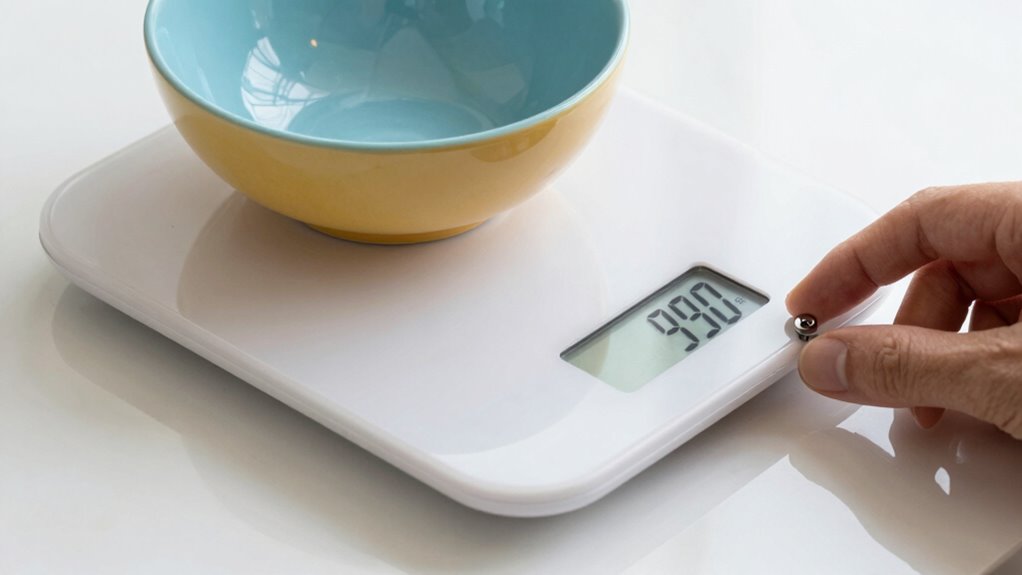
Calibration issues are among the most common problems that can affect the accuracy of your pet’s digital scale. Poor scale maintenance, such as dust buildup or loose connections, can lead to inaccurate readings. Make certain the scale is placed on a flat, stable surface and keep it clean. If calibration accuracy seems off, check the batteries; low power can cause inconsistent results. Over time, sensors may drift, requiring a recalibration or reset. Always follow the manufacturer’s instructions for calibration, as incorrect procedures can worsen inaccuracies. Regularly inspecting your scale and maintaining it properly helps prevent common calibration problems. If you notice persistent errors after troubleshooting, it might be time to contact customer support or consider replacing the device to ensure your pet’s portions are accurately measured.
How Often Should You Recalibrate Your Pet Scale?
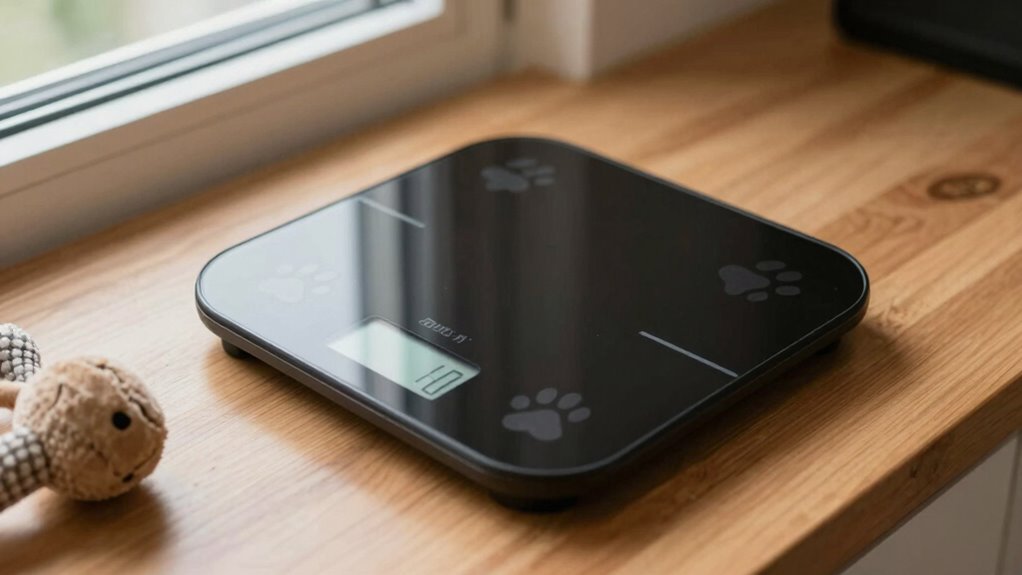
To guarantee your pet’s scale remains accurate, it’s important to recalibrate it regularly rather than waiting for noticeable errors. Maintaining proper calibration ensures ideal scale precision and accurate portioning. The calibration frequency depends on usage and environmental factors. Generally, you should recalibrate:
Regular recalibration keeps your pet’s scale accurate and reliable over time.
- After moving the scale to a new location
- When you notice inconsistent weight readings
- Every few months for regular maintenance
Frequent recalibration helps catch small inaccuracies before they affect your pet’s diet. If your scale is used daily or exposed to temperature changes, consider calibrating more often. Keeping calibration up-to-date ensures your pet’s portions stay precise and your measurements reliable. Regular checks are a simple way to avoid errors and maintain confidence in your scale’s accuracy.
When to Seek Professional Calibration or Replace Your Pet Scale
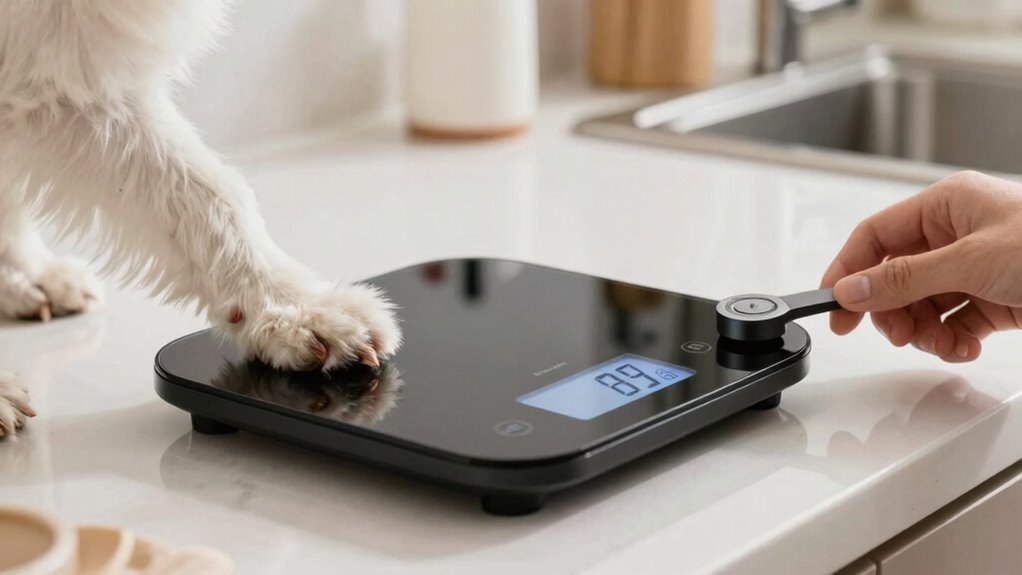
If your pet scale consistently gives inaccurate readings despite regular recalibration, it’s time to contemplate professional maintenance or replacing it. Persistent inaccuracies suggest the scale may have internal issues or wear that you can’t fix at home. Contact a professional calibration service to ensure precise measurements, especially if your scale is used for medication or dietary needs. Check your warranty considerations before opting for repairs; some brands offer free professional calibration or replacement within warranty periods. If the cost of professional maintenance exceeds the price of a new scale, or if the device remains unreliable after servicing, replacement becomes the best option. Ensuring your pet’s health depends on accurate weight, so don’t delay seeking expert advice or choosing a new, reliable scale.
Frequently Asked Questions
Can I Calibrate My Pet Scale Without Professional Help?
Yes, you can DIY calibration of your pet scale without professional help. First, verify the scale is on a flat, stable surface, then turn it on and reset it to zero. Use known weights, like household items or calibration weights, to check accuracy. If needed, follow the manufacturer’s instructions for pet scale maintenance, which often includes calibration steps. Regular DIY calibration keeps your pet’s portion measurements precise and reliable.
What Signs Indicate My Scale Needs Recalibration?
If your scale shows inconsistent or unexpected readings, it’s time to check for signs that your scale needs recalibration. You might notice accuracy issues, such as fluctuating weights or incorrect measurements, which suggest your calibration frequency should increase. To keep your pet’s portions precise, monitor for accuracy problems regularly. When these signs appear, recalibrate your scale promptly to ensure consistent, confident measurements every time.
Are There Specific Calibration Weights for Different Pet Scales?
Yes, there are specific calibration weights for different pet scale types. You should select calibration weights that match your scale’s weight capacity and precision. Using the correct calibration weights guarantees accurate readings, especially for small or large pet scales. Always check your scale’s manual for recommended weights, and use certified calibration weights for the best accuracy. This helps you maintain reliable measurements tailored to your pet’s size and scale type.
How Does Environmental Noise Affect Scale Calibration?
Environmental noise can seriously throw off your scale calibration, like a thunderstorm in a quiet room. Noise interference from nearby devices or vibrations caused by environmental factors can lead to inaccurate readings. To keep your scale precise, calibrate in a calm, stable environment, away from loud appliances and vibrations. This helps make sure your pet’s portion measurements stay consistent and reliable, no matter what environmental chaos surrounds you.
Is Digital Scale Calibration Safe for Pets?
Yes, calibrating your digital scale is safe for pets. Proper calibration guarantees scale accuracy, which is essential for maintaining your pet’s health. When you follow the manufacturer’s instructions carefully, you avoid any harm or stress to your pet. Regular calibration helps you measure their food portions precisely, supporting their well-being. So, calibrate confidently, knowing it benefits your pet’s health and keeps their diet on point.
Conclusion
By regularly calibrating your pet scale, you guarantee each meal is perfectly portioned, like fine-tuning a delicate instrument. Imagine your furry friend’s bowl, precisely filled, every time, as if guided by an invisible hand of accuracy. With proper care and attention, your scale becomes a trusted partner, quietly working behind the scenes. Keep it calibrated, and watch your pet thrive, their meals always just right, like a symphony playing in perfect harmony.