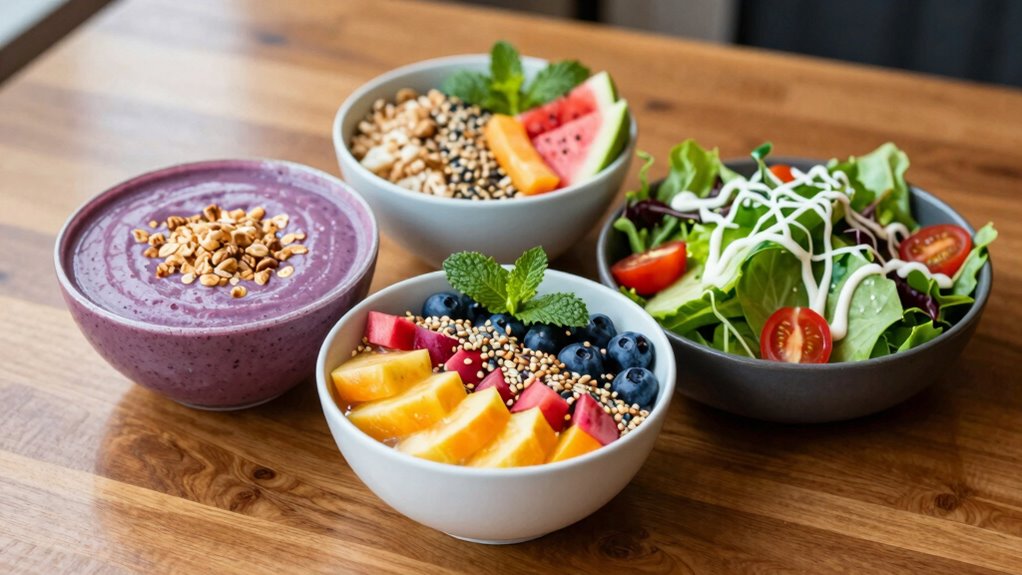

Choosing between smoothies, bowls, and salads is all about your cravings and needs. If you want a quick nutrient boost, go for a smoothie. For a filling meal, bowls combine grains, proteins, and toppings for a satisfying experience. If you’re after freshness and crunch, salads are your best bet. Remember to customize your choice for better taste and nutrition. Want to explore these options further and discover more about how to make the best choice?

Get health and wellness essentials delivered free with Prime
- Fast, free delivery on millions of items
- Prime Video, Amazon Music and more included
- Member-only deals all year
Key Takeaways
- Identify Cravings: Consider what you’re in the mood for—smooth, filling, or crunchy—to guide your choice between smoothies, bowls, or salads.
- Time Constraints: Opt for smoothies when short on time, as they are quick to prepare and consume.
- Meal Satisfaction: Choose bowls for a more substantial meal, combining grains, proteins, and toppings for a filling option.
- Nutritional Goals: Match your selection to your dietary needs: smoothies for quick nutrients, bowls for balanced meals, and salads for fiber and healthy fats.
- Flavor Preferences: Experiment with different combinations in smoothies, bowls, and salads to discover flavors that satisfy your palate.
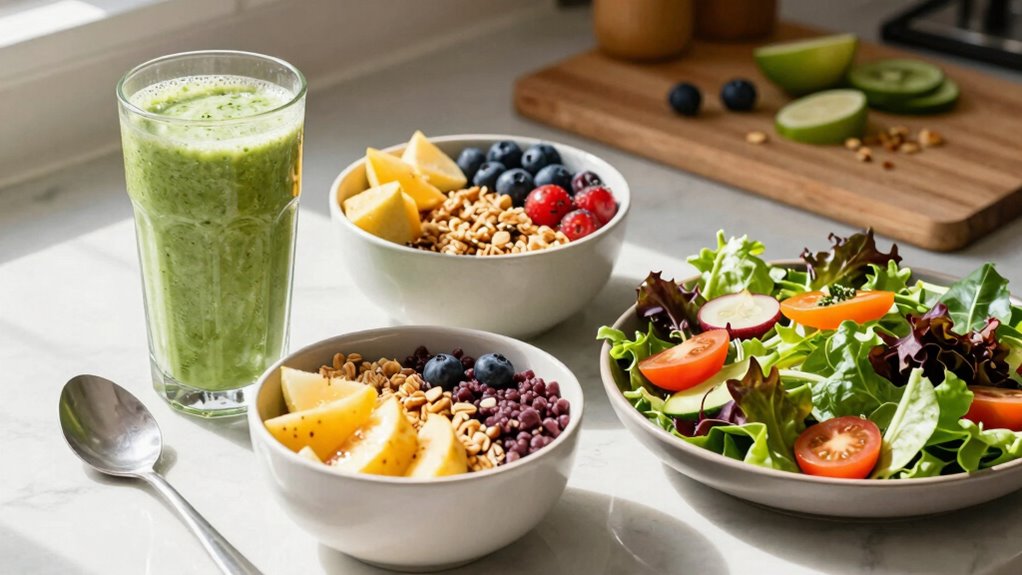
When it comes to choosing between smoothies, bowls, and salads, how do you decide which one to savor? Each option offers unique benefits, and as a beginner, it helps to understand what you’re in the mood for and what your body needs. You might find yourself craving something invigorating and portable or perhaps something hearty and filling. By learning about flavor combinations and nutrient balance, you can make more satisfying choices.
If you’re after a quick, nutrient-packed snack or meal, smoothies are a fantastic choice. They’re versatile, allowing you to mix fruits, veggies, and even proteins like yogurt or nut butter. When blending, think about flavor combinations that complement each other. For instance, a banana pairs well with spinach and almond milk for a creamy, sweet treat. You can also throw in some chia seeds or protein powder to enhance the nutrient balance. Smoothies can be as light or filling as you want, making them perfect for any time of day. Including nutrient-dense ingredients in your smoothies can help ensure you’re getting a well-rounded intake of vitamins and minerals.
Smoothies are a versatile, nutrient-packed option, perfect for any time of day with endless flavor combinations.
On the other hand, if you’re looking for something more substantial, bowls could be your best bet. They often combine grains, proteins, and a variety of toppings, offering an exciting array of textures and flavors. You might enjoy a grain bowl with quinoa, roasted veggies, and a drizzle of tahini. The beauty of bowls lies in their customization; you can play with flavor combinations to suit your palate. Plus, they can be incredibly nutritious, packing in fiber, protein, and healthy fats all in one dish. Incorporating hydration strategies such as adding hydrating ingredients like cucumber or citrus can boost their refreshing qualities.
Salads, while often seen as a side, can be incredibly satisfying if you know how to build them right. Start with a base of leafy greens, then layer in colorful vegetables, proteins, and a tasty dressing. The key is to focus on nutrient balance; include ingredients like nuts or avocado for healthy fats and proteins. You might try a classic Mediterranean salad with chickpeas, feta, and olives. This not only offers a satisfying crunch but also a diverse range of flavors that keeps every bite interesting. Using a variety of fresh herbs and flavorful oils can elevate the taste and make salads more appealing.
Ultimately, the choice between smoothies, bowls, and salads comes down to your cravings and nutritional needs. Are you in a rush? Go for a smoothie. Want something more filling? Opt for a bowl. Looking for an invigorating crunch? A salad might be your best option. By understanding flavor combinations and nutrient balance, you’ll be well on your way to making choices that nourish your body and delight your taste buds.
As an affiliate, we earn on qualifying purchases.
Frequently Asked Questions
How Do I Store Leftovers From Smoothies, Bowls, or Salads?
To store leftovers, you’ll want to follow some simple smoothie storage tips: use airtight containers and consume within 24 hours for best freshness. For bowl preservation methods, keep ingredients separate if possible, and store dressings in small containers. When it comes to salad keeping techniques, wrap leafy greens in a damp paper towel and place them in a sealed bag to maintain crispness. Always check for ingredient freshness before eating!
Can I Freeze Smoothies, Bowls, or Salads for Later Use?
Yes, you can freeze smoothies, bowls, and salads for later use! For smoothies, use airtight containers or freezer bags, ensuring you leave space for expansion. For bowls, portion them out and freeze individual servings, while salads are best frozen without dressings. When you’re ready to enjoy, just thaw them in the fridge overnight. Using these freezing techniques makes meal prep a breeze, so you always have delicious options on hand!
What Are the Nutritional Differences Between These Options?
Smoothies, bowls, and salads each offer different nutritional profiles. Smoothies often pack high nutrient density with fruits, veggies, and superfoods, but can be high in sugars. Bowls provide ingredient variety, combining grains, proteins, and veggies for a balanced meal. Salads are typically low in calories but rich in vitamins and fiber, depending on your toppings. Choosing one depends on your dietary needs and what flavors you enjoy most.
Are There Any Common Allergens in Smoothies, Bowls, or Salads?
Yes, there are common allergens in smoothies, bowls, and salads. You’ll often find nuts, dairy, and gluten as nutrient sources in these dishes. If you’re making a smoothie, watch for nut butters or yogurt. In bowls, grains like quinoa or barley might trigger allergies. Salads might include dairy-based dressings or croutons. Always check labels and ask about ingredients to guarantee allergen awareness, especially if you’re trying something new.
How Can I Make These Meals More Filling?
To make your meals more filling, add protein boosters and healthy fats. For instance, if you whip up a smoothie, toss in Greek yogurt and a tablespoon of almond butter. This not only enhances texture but packs in nutrients, keeping you satisfied longer. Similarly, for a bowl, quinoa and avocado can elevate the dish, providing lasting energy. Don’t underestimate the power of these additions—they transform your meals from light snacks to hearty delights!
Conclusion
Choosing between smoothies, bowls, and salads is like picking your favorite adventure—each offers its own unique journey. Smoothies are your quick, vibrant rides, while bowls invite you to savor the layers of flavor. Salads are a revitalizing stroll through fresh ingredients. As a beginner, embrace the exploration! Experiment with combinations, and you’ll soon discover your personal favorites. Remember, every choice is a step toward a healthier lifestyle, so immerse yourself and enjoy the ride!
Cold & flu season Picks
humidifiers
As an affiliate, we earn on qualifying purchases.