To keep your cold-pressed juice fresh and safe, store it immediately in airtight, UV-protected glass or stainless steel containers in your fridge at around 37°F. Consume within 3-5 days, and always check for signs of spoilage like off smell or separation before drinking. Freezing can preserve nutrients but may affect texture. Avoid warm environments and repeated thawing. If you want to maximize freshness and nutrients, there’s more to contemplate.
Key Takeaways
- Store cold-pressed juice in airtight, UV-resistant glass bottles immediately after squeezing and refrigerate at 37°F (3°C).
- Consume within 3-5 days for optimal freshness, flavor, and nutrient retention.
- Avoid leaving juice out at warm temperatures or in sunlight to prevent spoilage and nutrient degradation.
- Freeze juice in airtight containers to extend shelf life, but consume promptly after thawing and avoid refreezing.
- Check for signs of spoilage like cloudiness, off smell, or separation, and discard if any appear.
How Long Does Cold‑Pressed Juice Stay Fresh in the Fridge?
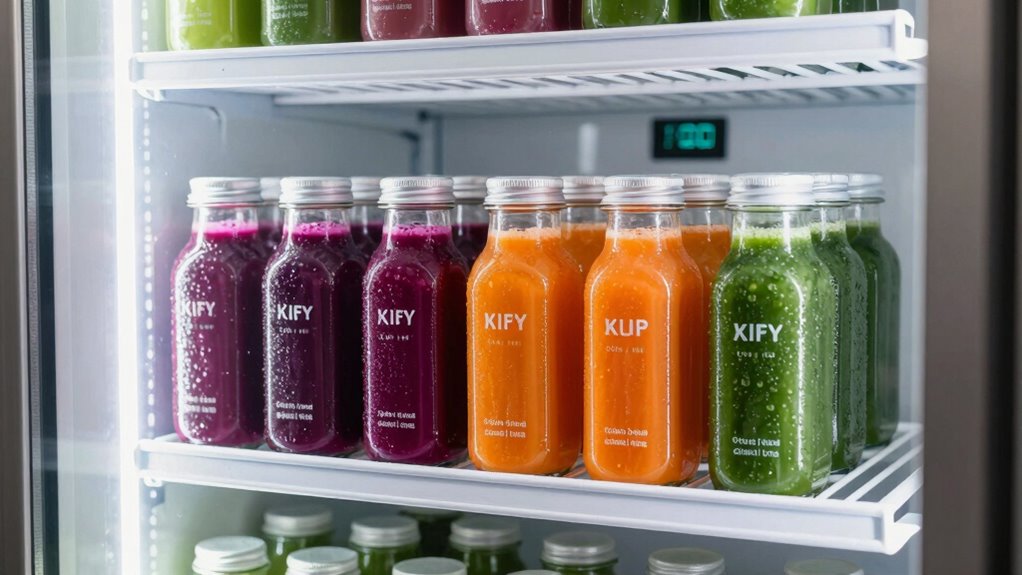
Cold-pressed juice typically stays fresh for about 3 to 5 days when stored properly in the refrigerator. To extend its freshness, you need to minimize juice oxidation, which occurs when the juice is exposed to air and light, speeding up spoilage. Ensuring your bottles are thoroughly sterilized before filling helps prevent bacterial growth and maintains quality. Proper bottle sterilization removes any contaminants that could accelerate oxidation or spoilage. Always fill bottles to the top to reduce air contact, and keep the juice cold. Check for signs of spoilage, like sour smell or changes in color, before drinking. Remember, even with good storage techniques, fresh cold-pressed juice is best enjoyed within a few days to preserve its nutrients and flavor. Additionally, understanding storage rules can help you better maintain the quality and safety of your juice over time. Using airtight containers also plays a crucial role in preventing oxidation and extending shelf life. Proper refrigeration and limiting exposure to light are other effective preservation methods to keep your juice fresh longer. Maintaining a consistent temperature in your fridge can further prevent spoilage and ensure maximum freshness.
What’s the Best Container to Keep Cold‑Pressed Juice Fresh?
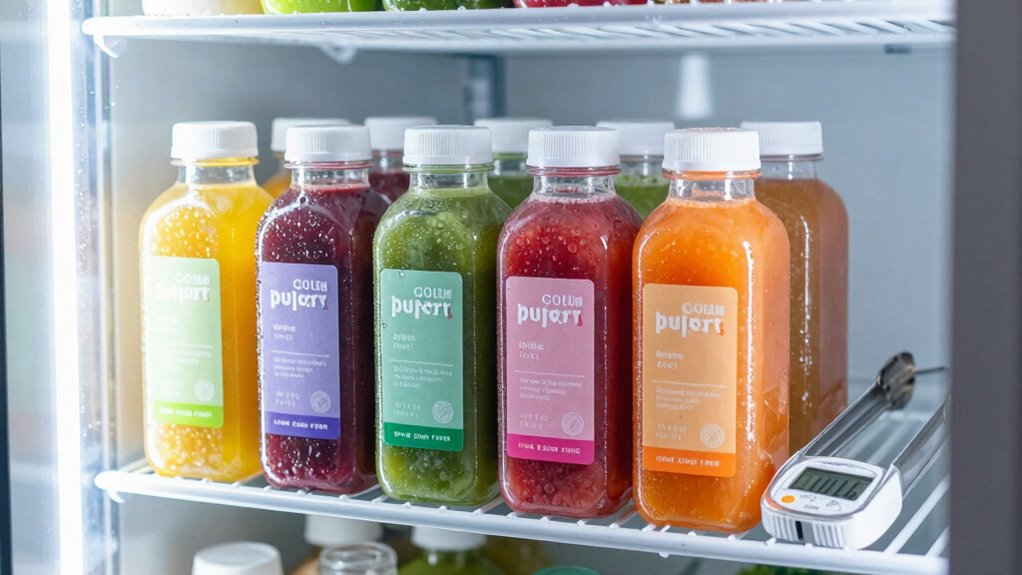
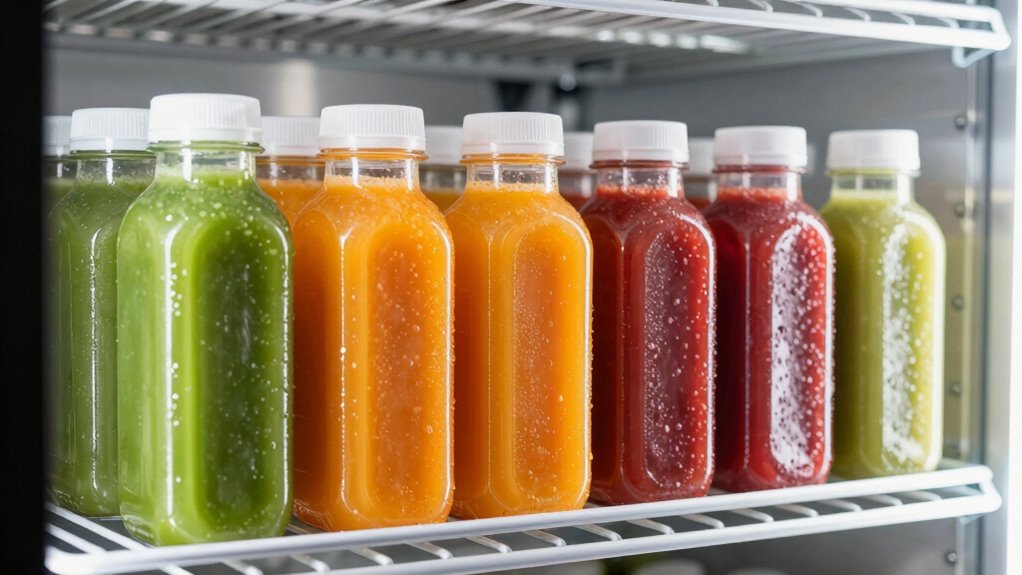
Choosing the right container is essential for keeping your cold-pressed juice fresh. Reusable glass bottles are an excellent choice because they’re non-reactive and won’t affect the juice’s flavor or quality. They also block light, which helps preserve nutrients. Additionally, light protection is crucial because exposure to light can degrade the juice’s vitamins and enzymes over time. Using containers that provide UV protection can further enhance the preservation process. Stainless steel containers are another great option—they’re durable, lightweight, and airtight, preventing oxygen from spoiling your juice. Both options are eco-friendly and safe for storing juice long-term. Avoid plastic containers, as they can leach chemicals and are more permeable to light and air, reducing freshness. When selecting your container, guarantee it’s airtight and clean to maintain the juice’s taste and nutrients. Proper storage in these containers helps extend freshness and keeps your cold-pressed juice tasting its best. Proper storage is a key factor in maintaining the nutritional quality of your juice over time. Additionally, choosing containers with airtight seals helps prevent oxidation and spoilage, ensuring your juice stays fresh longer. Being aware of storage guidelines can further improve how well your juice retains its health benefits.
How Do Temperature and Light Affect Your Juice’s Freshness?

Temperature and light play significant roles in maintaining your juice’s freshness after you’ve selected the right container. High temperatures accelerate spoilage, while temperature fluctuations can cause condensation and compromise quality. Sunlight exposure speeds up nutrient degradation and promotes bacterial growth, so store your juice in a dark, cool place. Avoid frequent temperature changes, as they can weaken the container and introduce contaminants. Use this table to understand how factors affect your juice:
| Factor | Effect |
|---|---|
| Sunlight exposure | Accelerates nutrient loss and spoilage |
| Temperature fluctuations | Cause condensation, affect flavor and freshness |
| Consistent cool temps | Maintain freshness and nutrients |
| Warm environments | Speed up spoilage and reduce shelf life |
Additionally, proper storage conditions help preserve your juice’s quality and extend its shelf life. To further ensure optimal freshness, choosing airtight containers can minimize exposure to external contaminants and oxygen. Properly sealed containers also help prevent oxidation, which can degrade nutrients and alter flavor. Using vacuum-sealed containers can provide additional protection against spoilage.
When Is It Time to Toss Your Cold‑Pressed Juice?

Knowing when to toss your cold-pressed juice is essential for both safety and flavor. Check the expiration date on the bottle; if it has passed, it’s safest to discard it. Even if the date hasn’t arrived, pay attention to juice clarity—cloudiness, separation, or an off-putting smell indicate spoilage. If your juice looks different from when you first bought it, it’s a sign it may no longer be safe to consume. Trust your senses: if it tastes sour or has an unusual odor, toss it immediately. Remember, consuming spoiled juice can lead to foodborne illness. Additionally, exposure to air and light can degrade the quality of nutrient-rich cold-pressed juice, so proper storage is vital. For optimal freshness, store your juice in a dark, airtight container to minimize nutrient loss. Proper storage practices can extend the shelf life of your juice and preserve its nutritional benefits, especially when combined with consistent refrigeration. When in doubt, it’s better to err on the side of caution and discard questionable bottles to protect your health.
Can You Freeze Cold‑Pressed Juice Without Losing Nutrients?

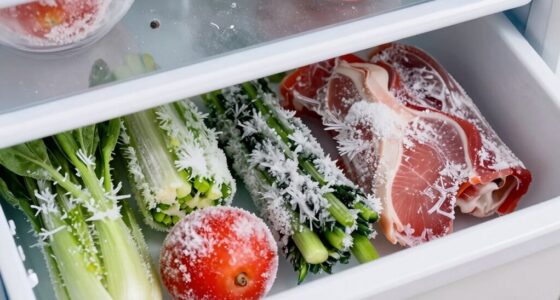
Freezing cold-pressed juice can help preserve nutrients, but it’s not without risks. You might lose some vitamins and enzymes during the process, affecting its nutritional value. Additionally, freezing can change the juice’s texture, making it less appealing when thawed. To maintain quality, understanding proper storage techniques is essential, such as how to prevent oxidation and nutrient loss during freezing. Properly sealing the juice in airtight containers can help slow oxidation and maintain freshness over time. Incorporating storage best practices can further enhance the preservation process and ensure the juice retains its nutritional benefits. Being aware of storage containers designed specifically for freezing can also make a significant difference in preserving freshness.
Nutrient Preservation During Freezing
While freezing cold-pressed juice can help extend its shelf life, it may also cause some nutrient loss if not done properly. Freezing slows enzymatic activity and oxidation processes that degrade nutrients. To maximize nutrient preservation:
- Freeze juice promptly after extraction to minimize enzymatic activity.
- Use airtight containers to limit oxygen exposure and slow oxidation.
- Leave some headspace in containers to accommodate expansion during freezing.
- Avoid fluctuating temperatures, as repeated thawing and refreezing accelerate nutrient loss.
- Proper storage techniques are essential to maintain the juice’s nutritional value and freshness.
- Additionally, regularly checking appliance maintenance helps ensure your freezer operates at optimal temperatures, preventing unexpected thawing that could compromise quality.
- Understanding oxidation processes can further aid in choosing the best storage methods to preserve nutrients effectively.
- Being aware of nutrient degradation mechanisms enables better decision-making for juice preservation.
Impact on Juice Texture
Freezing cold-pressed juice can cause noticeable changes in its texture, often leading to a loss of smoothness and an increase in pulp separation. When you thaw the juice, you might notice a decrease in juice clarity, with cloudiness or sediment forming. The pulp can separate more easily, resulting in a gritty or uneven consistency. These changes happen because freezing affects the suspension of pulp particles, causing them to settle or clump together. While the nutrients remain largely intact, the overall drinking experience may suffer due to altered texture. To minimize pulp separation and preserve juice clarity, it’s best to consume frozen juice quickly after thawing or stir it well before drinking. Proper storage and handling can help maintain a more desirable texture.
Common Mistakes That Shorten Your Juice’s Shelf Life
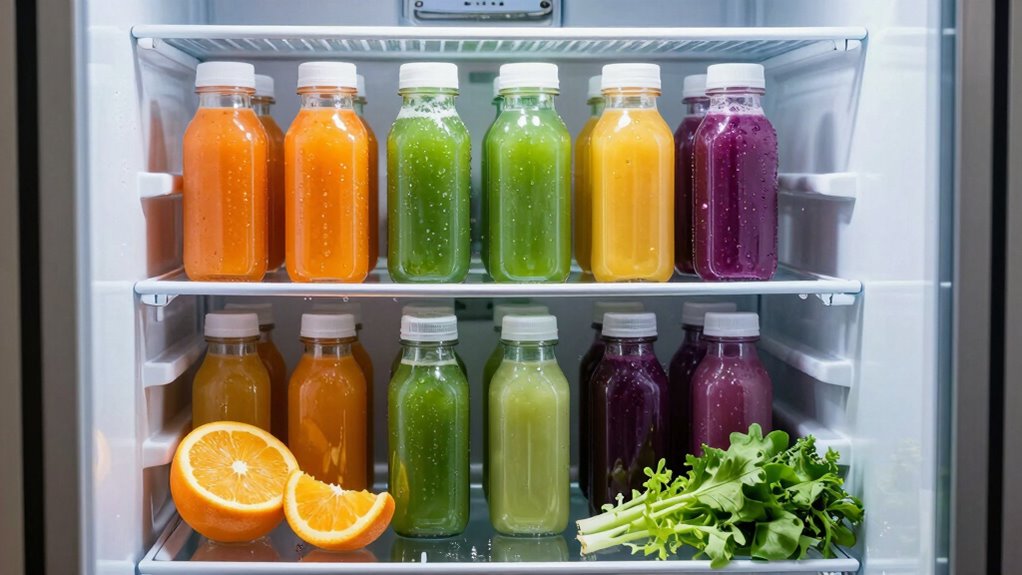
One common mistake that shortens your juice’s shelf life is exposing it to air. When oxygen contacts your juice, oxidation speed increases, degrading flavor and nutrients. To prevent this, watch out for:
- Using the wrong container material—plastic containers often accelerate oxidation compared to glass.
- Leaving the container open or loosely covered, which lets air seep in.
- Not sealing the juice tightly after each use, exposing it to oxygen every time.
- Storing in warm environments, which speeds up oxidation and spoilage.
Choosing airtight, UV-resistant glass bottles minimizes oxidation speed, keeping your juice fresher longer. Avoiding these common mistakes helps preserve the quality and extends your juice’s shelf life.
Tips to Keep Your Cold‑Pressed Juice Fresh and Nutritious Longer
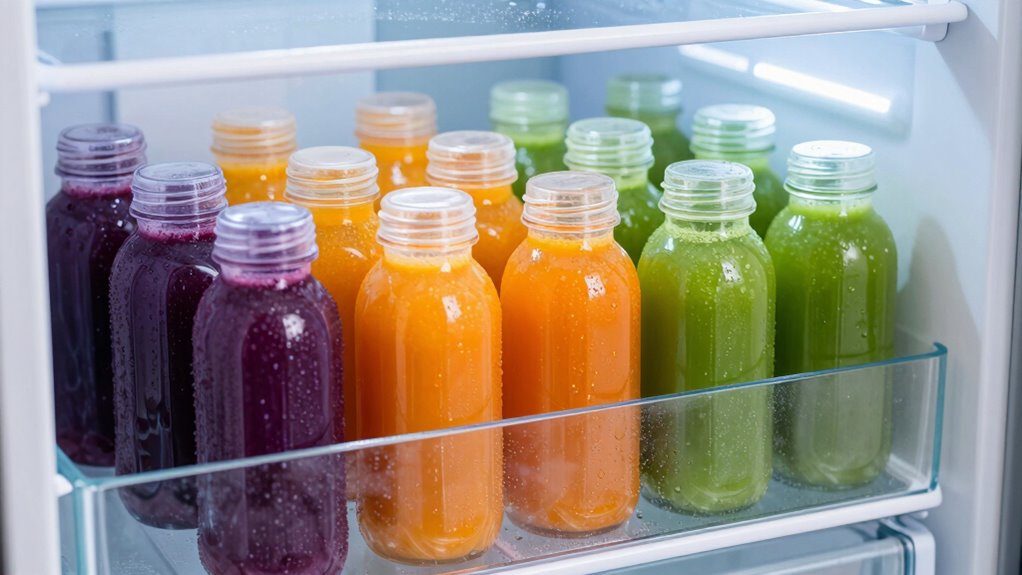
To keep your cold-pressed juice fresh and nutritious for as long as possible, you should store it properly immediately after squeezing. Use airtight containers to slow down juice fermentation and minimize exposure to air, which accelerates flavor degradation. Keep your juice refrigerated at consistently cold temperatures—ideally around 37°F (3°C)—to slow down microbial activity and preserve nutrients. Avoid leaving juice out in warm environments, as this speeds up fermentation and compromises flavor. Consume the juice within 24 to 48 hours for ideal freshness; beyond that, quality diminishes due to flavor degradation. Proper storage helps maintain the vibrant taste and health benefits of your juice longer, preventing spoilage and ensuring each sip is as nutritious as when it was freshly made.
Frequently Asked Questions
Can I Store Cold-Pressed Juice at Room Temperature?
You shouldn’t store cold-pressed juice at room temperature, as it can spoil quickly. Keep it in airtight juice containers made of glass or BPA-free plastic, and store it in the refrigerator at ideal temperatures between 32°F and 40°F. This helps preserve its freshness and prevents bacterial growth. Always check the expiration date and consume the juice within a few days of opening for safety and quality.
How Do Preservatives Affect Juice Shelf Life?
Imagine your vibrant, fresh juice shimmering in the sunlight—preservatives extend its life, like a shield that fights off spoilage. They impact shelf stability by slowing microbial growth and oxidation, keeping your juice fresh longer. Without preservatives, the juice’s shelf life shortens, risking fermentation or spoilage. So, preservatives play a vital role in maintaining quality, ensuring your cold-pressed juice stays safe, flavorful, and appealing for days longer.
Does Juice Potency Decline After Opening?
Yes, your juice’s potency declines after opening due to juice oxidation and nutrient degradation. When you expose it to air, oxygen interacts with the juice, causing oxidation, which reduces flavor, color, and essential nutrients. Over time, the nutrients break down, diminishing its health benefits. To keep your juice potent longer, store it tightly sealed in the refrigerator and consume it within a few days of opening.
Is It Safe to Add Fresh Ingredients Later?
Adding fresh ingredients later can compromise safety, so be cautious. While it might seem tempting to enhance your juice, adding preservatives or fresh produce after initial blending risks nutrient degradation and introduces potential contaminants. To keep your juice safe and nutritious, it’s best to consume it promptly or store it properly in the fridge for up to 72 hours. Don’t jeopardize your health by risking bacterial growth or losing essential vitamins.
How Do I Tell if Juice Has Gone Bad Quickly?
To tell if your juice has gone bad quickly, check for spoilage indicators like sour smell, off-taste, or cloudy appearance. Use shelf life tips: cold-pressed juice typically stays fresh 24-72 hours when refrigerated properly. If it’s past that window or shows any signs of fermentation or mold, it’s safest to discard it. Trust your senses—when in doubt, throw it out to avoid health risks.
Conclusion
Keep your cold-pressed juice vibrant and nutritious by following these simple rules. Think of your fridge as a treasure chest, where proper storage preserves its bright, fresh flavors like a secret recipe. Use the right container, keep it cool and dark, and avoid mistakes that fade its glow. With these tips, your juice remains a invigorating splash of health, ready to energize your day just as you imagined—full of life and vigor.