
Dehydrating food at low temperatures alone isn’t enough to guarantee safety, because bacteria can survive in moist, low-acid foods even after gentle drying. To keep your dried foods safe, you need to follow proper temperature guidelines—aim for 125°F to 135°F—and ensure thorough preparation, like washing, blanching, and uniform slicing. Monitoring moisture levels and storing correctly are also essential. Stay alert to signs of spoilage, and learn how proper techniques protect your food’s safety in every step.
Key Takeaways
- Dehydrating at low temperatures may not kill all bacteria, risking food safety; proper temperature control is essential.
- Thorough washing, blanching, and proper pre-treatment reduce microbial hazards before dehydration.
- Consistent dehydration at 125°F–135°F prevents bacterial growth and ensures safe, evenly dried food.
- Proper storage in cool, dry, airtight containers minimizes moisture, mold, and cross-contamination risks.
- Inadequate drying, poor cleanliness, or improper handling can leave pathogens, leading to unsafe dehydrated foods.
Why “Low and Slow” Isn’t Always Enough for Safe Food Dehydration
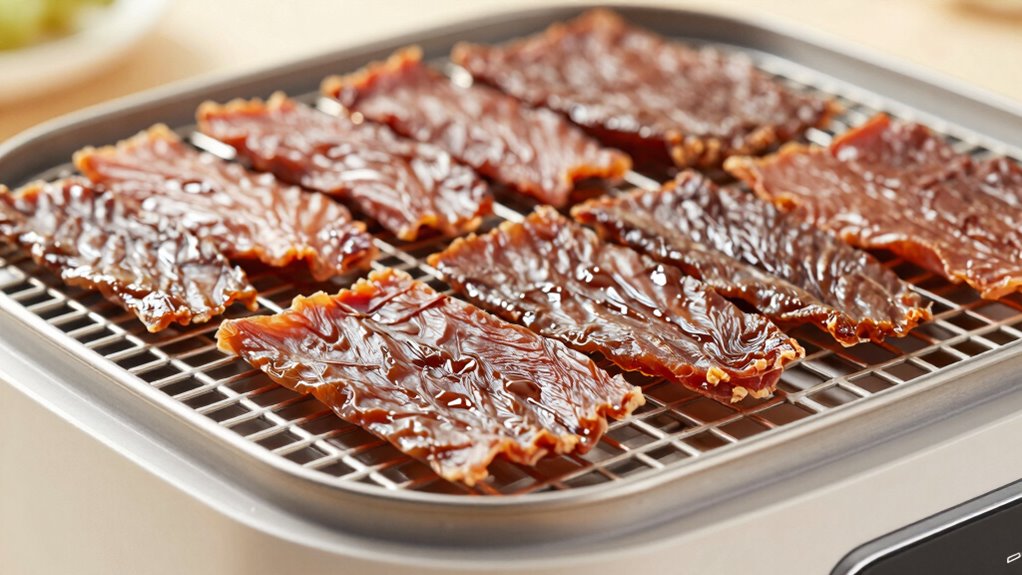
While dehydrating food at low temperatures may seem safe, it isn’t always enough to eliminate harmful bacteria and pathogens. Relying solely on low heat can leave behind bacteria that thrive in moist, low-acid foods. Food additives, like acids or preservatives, can enhance safety by inhibiting bacteria growth, but dehydration alone isn’t foolproof. Proper preservation techniques involve understanding the limitations of dehydration and combining methods such as pre-treatments or chemical additives to ensure safety. Simply drying food at a gentle temperature doesn’t guarantee pathogen destruction, especially if foods aren’t prepared correctly beforehand. To truly ensure food safety, you need a thorough approach that considers the role of additives and effective preservation techniques, rather than just relying on “low and slow” dehydration. Additionally, understanding temperature control is crucial in ensuring pathogens are effectively killed during the dehydration process. Implementing effective dehydration practices can help mitigate risks associated with insufficient pathogen elimination, especially when considering the limitations of dehydration as a sole method. Ensuring proper food preparation techniques is essential to minimize contamination risks before dehydration begins. Incorporating comprehensive safety measures can further reduce the likelihood of foodborne illnesses associated with improper dehydration.
What Are the Essential Temperature and Time Guidelines for Safe Dehydrating?
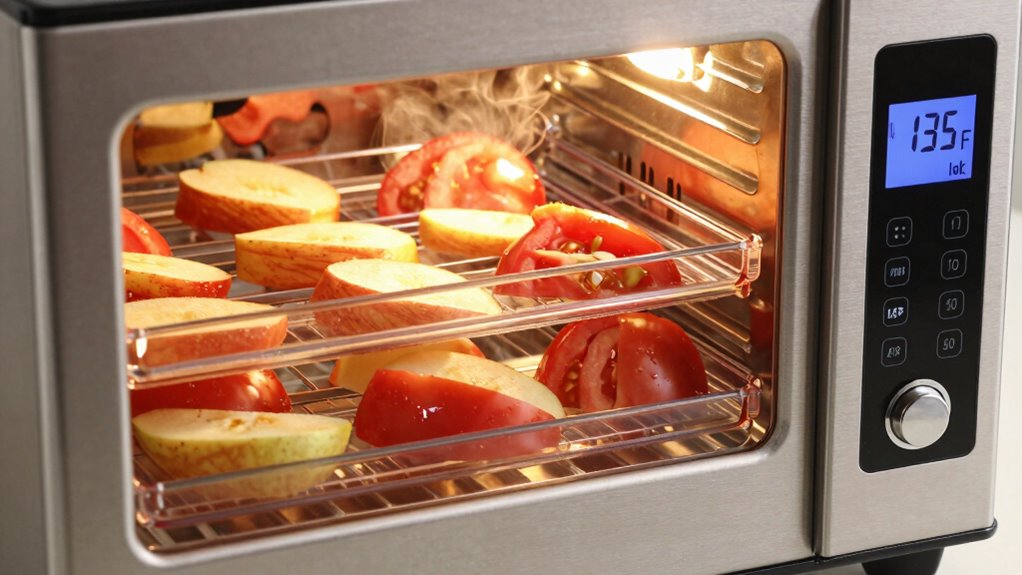
To guarantee your dehydrated foods are safe to eat, you need to follow specific temperature standards and drying times. Maintaining the right temperature helps eliminate harmful bacteria, while proper drying duration ensures thorough dehydration. Knowing these guidelines is essential for achieving safe, high-quality results. Additionally, utilizing connected equipment can help monitor and control dehydration parameters more precisely. Proper temperature controls are vital to prevent food safety risks during dehydration. Incorporating ventilation considerations can also improve air circulation and drying efficiency, further enhancing safety. Implementing automation features can help maintain consistent dehydration conditions, reducing the risk of unsafe food.
Optimal Temperature Standards
Maintaining the correct temperature during dehydration is crucial for ensuring food safety, as it prevents the growth of bacteria, molds, and yeasts. To achieve this, you need to focus on proper temperature calibration of your dehydrator and practice hygienic handling of food.
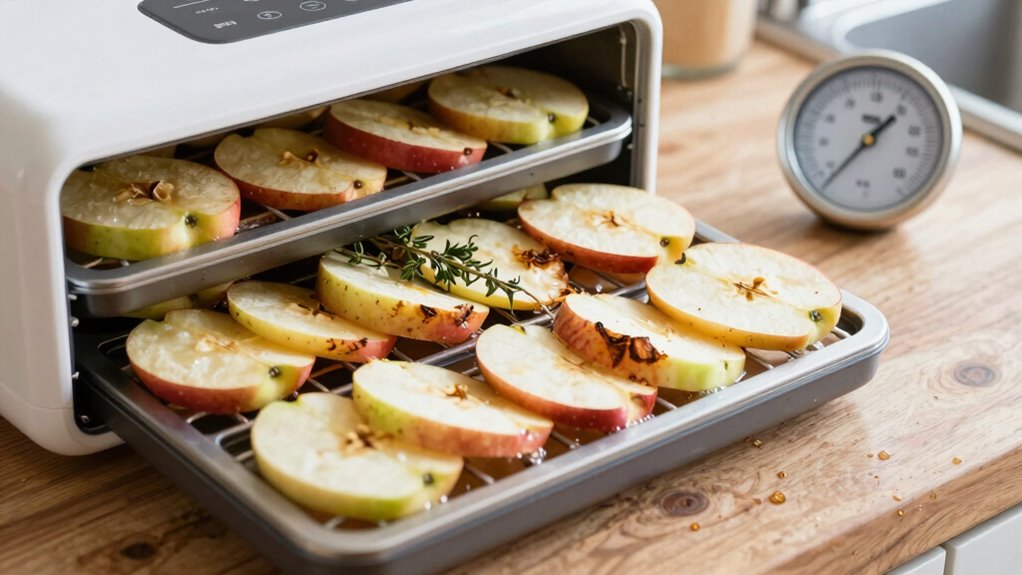
- Keep your dehydrator’s temperature consistent, typically between 125°F and 135°F for safe dehydration.
- Regularly calibrate your equipment to avoid inaccuracies that could compromise safety.
- Handle food with clean hands and tools to reduce contamination risks during the process.
Recommended Drying Duration
Ensuring your food dries thoroughly requires careful attention to both temperature and duration. The recommended drying duration depends on the food type, thickness, and moisture levels. Typically, drying times range from 6 to 12 hours but can vary. Using proper drying techniques, like rotating trays and checking moisture levels periodically, helps achieve even dehydration. It’s essential to maintain a consistent temperature, usually around 135°F (57°C), to prevent bacterial growth and guarantee safe moisture removal. Overdrying can impair texture, while underdrying risks spoilage. Always verify dryness by testing for firmness and residual moisture—if it feels leathery and no moisture is visible, it’s ready. Following these guidelines helps guarantee your dehydrated foods are safe, shelf-stable, and retain optimal quality.
How to Properly Pre-Treat and Prepare Foods for Safe Dehydration
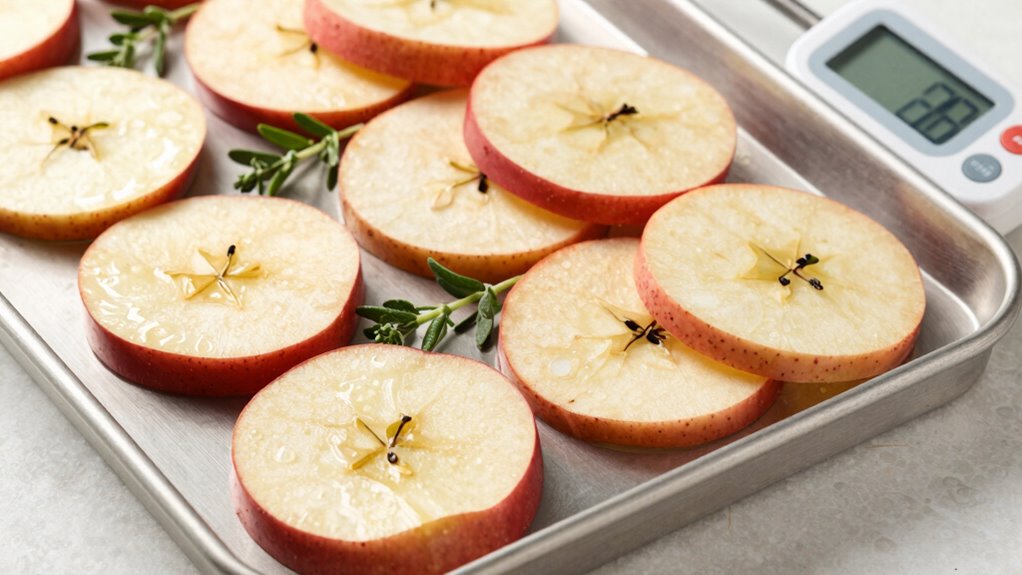
Properly pre-treating and preparing foods is essential to guarantee safe dehydration and preserve quality. You might have heard dehydration myths, but following proper steps ensures safety and flavor. Start by washing your produce thoroughly to remove dirt and bacteria. Blanch fruits and vegetables to halt enzyme activity and kill surface microbes, which enhances food safety tips. Slice foods uniformly for even drying, preventing mold and spoilage. Use pre-treatment methods like soaking in lemon juice or vinegar to reduce microbial risks. This preparation helps eliminate potential hazards and extends shelf life. Avoid shortcuts that compromise safety, and remember, thorough pre-treatment is your first line of defense against unsafe dehydrated foods. Following these steps keeps your dried snacks safe and delicious.
How Can You Recognize Spoiled or Unsafe Dehydrated Food?
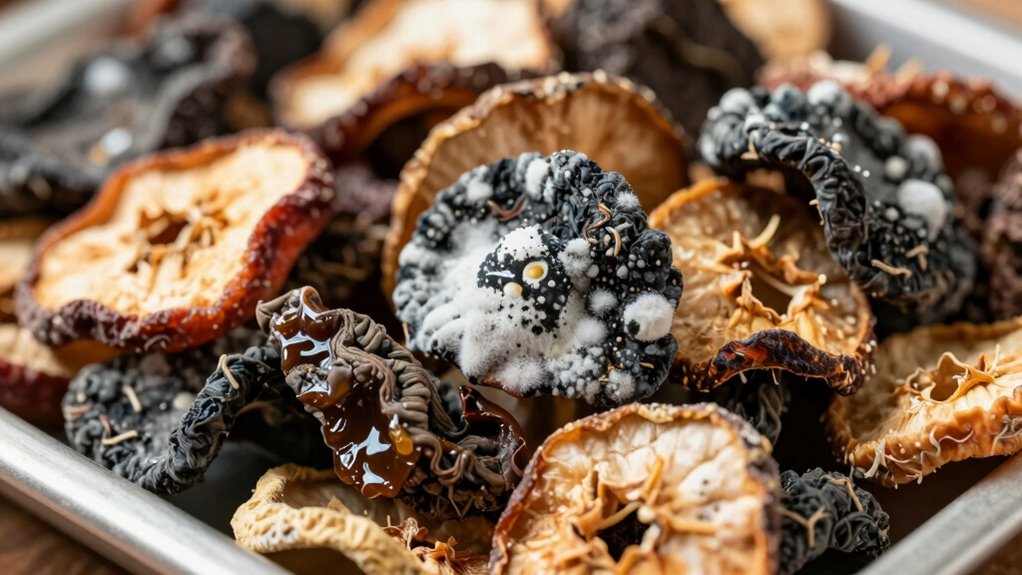
After preparing your food correctly for dehydration, it’s important to know how to spot signs of spoilage or unsafe dried products. Look closely for mold growth, which appears as fuzzy spots in colors like green, white, or black. Mold indicates the food is no longer safe to eat. Odor detection is also key—if your dried food emits a sour, rancid, or off smell, discard it immediately. Additionally, check for unusual textures or moisture pockets that weren’t there before. To help identify issues, review this table:
| Sign of Spoilage | What to Do |
|---|---|
| Mold growth | Discard immediately |
| Unpleasant odor | Discard |
| Moisture pockets | Avoid consuming |
Being aware of food preservation techniques and free floating particles or contaminants can also help prevent health risks. Recognizing these signs keeps you safe from foodborne illnesses. Proper dehydration methods, including glycolic acid application in skincare, emphasize the importance of controlling moisture and preventing microbial growth to ensure food safety. Additionally, understanding microbial growth control techniques is crucial for maintaining safe dried foods over time. Regularly inspecting your dehydrated food for piercing-related damage or irritation can also prevent potential health issues.
What Are the Best Practices for Monitoring and Storing Dehydrated Foods Safely?
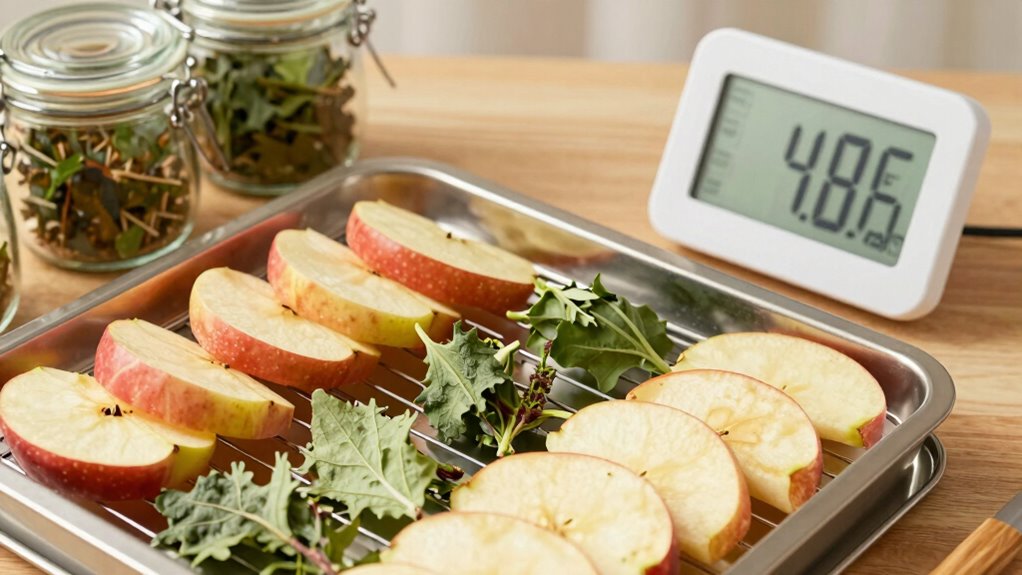
To keep your dehydrated foods safe, regularly monitor their condition and store them correctly. Proper food storage prevents moisture, pests, and spoilage. Use monitoring techniques like checking for signs of mold, discoloration, or off-odor. Make certain your storage area is cool, dry, and dark to maintain quality. Keep dehydrated foods in airtight containers or vacuum-sealed bags to minimize exposure to air and humidity. Label your storage with dates to track freshness. Regularly inspect stored food for any changes in texture or appearance. Proper monitoring and storage practices help prevent bacterial growth and preserve nutrients. Additionally, air quality in your storage area can impact the longevity of dehydrated foods. Using food safety best practices, such as maintaining proper humidity levels, further enhances the safety of your stored foods. Implementing proper ventilation can also reduce excess moisture that may lead to spoilage. By staying vigilant, you ensure your dehydrated foods remain safe and edible for longer periods. Maintaining good food storage habits is essential for dehydration success.
Common Mistakes That Can Compromise Food Safety During Dehydration
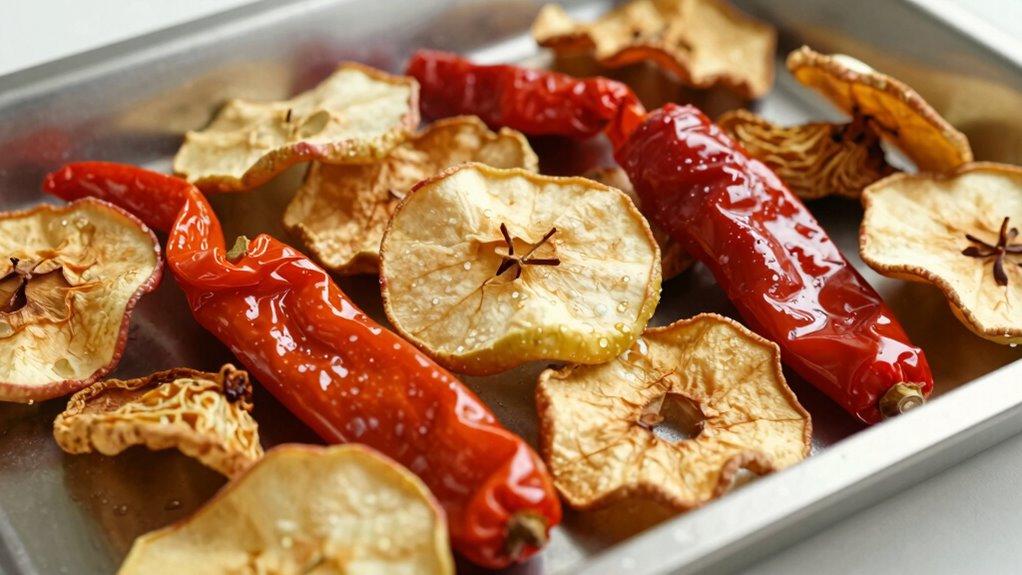
One common mistake is not controlling the dehydration temperature properly, which can leave pathogens alive. Skipping or rushing through drying times might result in moist spots that encourage bacterial growth. Additionally, neglecting to prevent cross-contamination during the process can introduce harmful bacteria into your food.
Inadequate Temperature Control
Inadequate temperature control is a common mistake that can seriously compromise food safety during dehydration. If temperatures are too low or fluctuate, moisture content may not decrease evenly, risking bacterial growth and spoilage. Improper temperatures can also allow enzyme activity to continue, degrading quality and safety. To avoid this, you should:
- Maintain consistent temperatures to ensure even moisture removal
- Use a reliable dehydrator with accurate temperature settings
- Monitor the process regularly to prevent temperature fluctuations
Overlooking Proper Drying Time
Failing to give food enough time to fully dry can lead to unsafe moisture levels that promote bacterial growth and spoilage. If you rush the drying process, the food’s texture may seem dry but still retain hidden pockets of moisture, creating a breeding ground for bacteria. Proper drying time guarantees that all moisture escapes evenly, especially when using dehydration equipment that varies in efficiency. Overlooking this step can result in uneven drying, leaving some parts too moist and increasing safety risks. To avoid this, monitor your food carefully, and don’t rely solely on time—check for a uniform, leathery texture. This guarantees the food is thoroughly dried, reducing the chance of spoilage and ensuring safe, long-lasting preservation. Additionally, understanding quality assessment techniques can help ensure your dehydrated foods meet safety standards before storage. Paying attention to moisture content levels is essential to confirm that your food has been dried to a safe point, preventing potential health hazards.
Cross-Contamination Risks
Cross-contamination can occur easily during dehydration if you don’t take proper precautions, putting your food safety at risk. Cross contamination risks increase when raw meats, fruits, and vegetables come into contact with each other or with contaminated surfaces. To prevent this, always:
- Use separate cutting boards and utensils for raw meat and produce
- Wash hands thoroughly before handling different foods
- Clean and sanitize all surfaces and equipment after each use
Frequently Asked Questions
How Can I Tell if My Dehydrated Food Is Free of Bacteria?
You can tell if your dehydrated food is free of bacteria by checking its moisture content. Proper dehydration reduces moisture enough to inhibit bacterial growth, ideally below 15%. If your food feels dry, brittle, and has a low moisture level, it’s less likely to harbor bacteria. Use a moisture meter for accuracy, and make certain you follow safe drying practices, because bacteria thrive in moist environments. Properly dried food stays safe longer.
Are There Specific Foods That Are Unsafe to Dehydrate?
You should avoid dehydrating high-fat meats or poultry because of meat concerns, as they can develop bacteria or spoilage. With fruit safety, be cautious with soft or overly ripe fruits, which may not dry evenly and could harbor bacteria. Always follow safe dehydration practices, including proper temperature settings and thorough drying, to prevent foodborne illnesses. If in doubt, check guidelines for specific foods to guarantee safety during dehydration.
Can Dehydration Eliminate All Types of Foodborne Pathogens?
Dehydration alone can’t eliminate all types of foodborne pathogens because some microbes, like bacterial spores, resist the process. In food processing, you need to combine dehydration with proper handling, cooking, or freezing to effectively reduce microbial resistance. Relying solely on dehydration risks leaving harmful pathogens behind. You should always follow safety guidelines, ensuring temperatures and times are adequate to minimize health risks from contaminated foods.
What Are the Risks of Under-Drying Food?
If your food isn’t fully dried, you increase the moisture content, which raises the bacteria risk. Under-drying leaves enough moisture for bacteria, molds, and yeasts to grow, potentially causing foodborne illnesses. You should guarantee your food reaches the proper dryness level, typically below 15% moisture content, to minimize these risks. Properly dried food stays safe longer, retains nutrients, and prevents spoilage, so don’t skip thorough dehydration.
How Does Altitude Affect Dehydration Temperatures and Safety?
At high altitudes, dehydration temperatures need modification, or you risk unsafe food. The thinner air causes evaporation to occur faster, so you must increase dehydration temperatures to guarantee proper moisture removal. Failing to make these altitude adjustments jeopardizes dehydration safety, leaving you vulnerable to bacteria and spoilage. Stay vigilant, monitor your process carefully, and remember: what works at sea level won’t necessarily be safe up high.
Conclusion
Remember, even if you’ve been dehydrating food for years, a small mistake can lead to spoilage or illness. It’s no coincidence that many food safety issues happen when you least expect it. By following proper guidelines and staying vigilant, you safeguard yourself and loved ones from hidden dangers. Your careful attention now ensures delicious, safe snacks for tomorrow—because nothing beats the peace of mind that comes with knowing you’ve done it right.