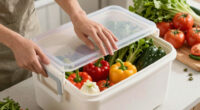
Start by organizing your fresh produce properly, wrapping leafy greens in damp cloths and storing them in the crisper, and keeping root vegetables in cool, dark places. Label your items with dates to track freshness and prioritize visible, accessible storage for fermented or preserved foods. Maintain clean, designated areas to reduce spoilage, and develop habits like proper washing and freezing excess produce. Staying consistent with these steps helps you enjoy fresh, flavorful food longer and sets a solid foundation for your raw eating journey.

Get health and wellness essentials delivered free — and shop member deals
- Fast, free delivery on millions of items
- Access to Prime Big Deal Days deals on October 6–7
- Prime Video, Amazon Music and more included
Key Takeaways
- Store leafy greens in damp cloth or perforated bags in the crisper to maintain freshness.
- Wrap root vegetables in a cool, dark, ventilated space to prevent spoilage.
- Label fermented and preserved foods with dates for easy rotation and freshness tracking.
- Keep fruits like berries in breathable containers, storing in the fridge only before use.
- Organize storage areas to enhance accessibility and reduce cross-contamination, supporting sustainable habits.
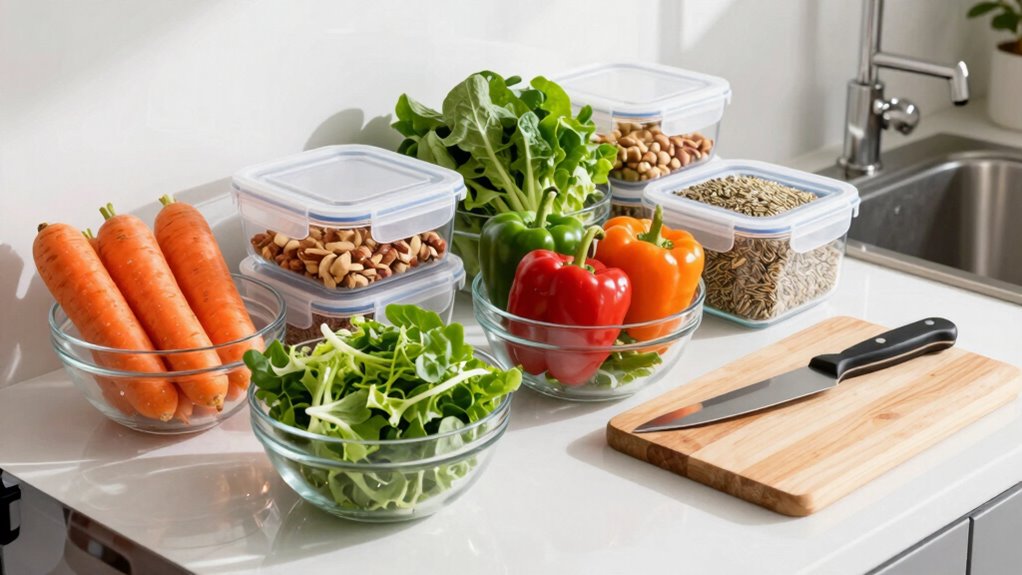
Starting your raw eating journey can feel overwhelming, especially when it comes to proper storage. You want your fresh produce to stay crisp, nutritious, and safe to eat, but figuring out how to store everything correctly takes some learning. One of the best first storage habits is understanding fermentation techniques, which can transform your produce while extending its shelf life. Fermentation isn’t just about preservation; it enhances flavors and boosts gut health. When you start fermenting, you’ll need simple tools like jars or crocks, and a basic knowledge of fermentation processes. For beginners, sticking to easy methods like fermenting cabbage into sauerkraut or vegetables into kimchi makes the process manageable. These techniques allow you to preserve seasonal produce, reduce waste, and enjoy tangy, probiotic-rich foods for weeks or even months. As you gain confidence, you can experiment with different vegetables and flavor profiles, but always guarantee cleanliness and proper fermentation times to prevent spoilage or harmful bacteria growth. Developing a good understanding of fermentation processes can help you troubleshoot issues and optimize flavor, especially by learning about proper fermentation environments.
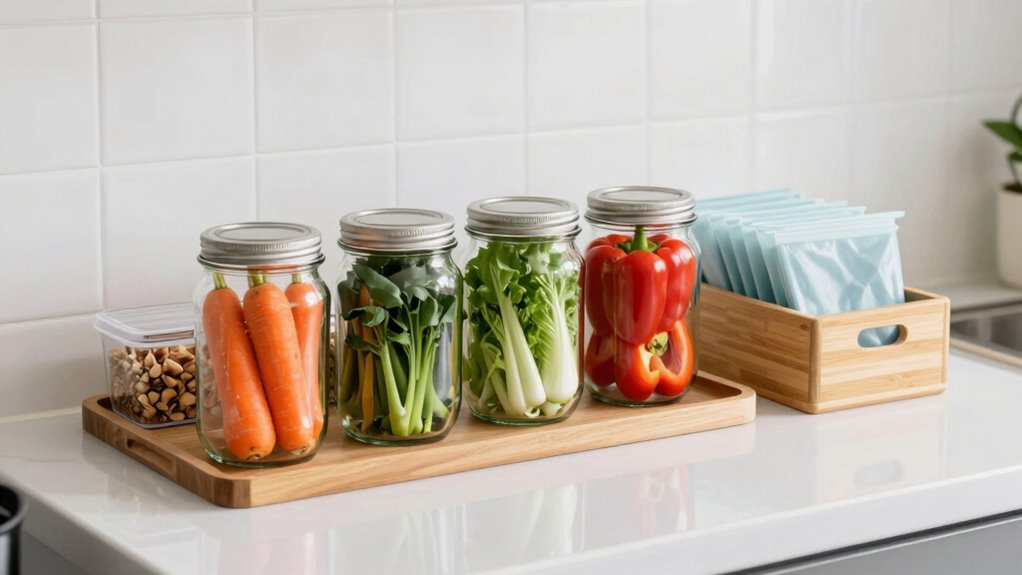
In addition to fermentation, mastering fresh produce preservation is key. You’re likely to buy in bulk or receive seasonal harvests, so storing produce properly becomes essential. For leafy greens, wrapping them in a damp cloth or paper towel and placing them in a perforated plastic bag in the crisper drawer keeps them fresh longer. Root vegetables like carrots and beets store well in a cool, dark, and ventilated space, such as a cellar or a dedicated drawer. Fruits like berries should be washed only before use, and stored in breathable containers to prevent mold. Freezing is another excellent preservation method for fruits and vegetables that you can’t consume immediately. Just make sure to blanch certain produce first to maintain texture and flavor. Proper storage conditions prevent spoilage and keep your produce tasting fresh, which encourages you to stick with your raw eating habits. Additionally, understanding storage conditions helps ensure your produce remains safe and nutritious over time. Being aware of storage environments can also help you select the ideal location for different types of produce, reducing spoilage and maximizing freshness. Keeping your storage areas organized and optimized can also reduce the likelihood of cross-contamination and spoilage.
Building these habits early on also means organizing your fridge and storage areas efficiently. Keep fermented foods and preserved items visible and accessible to remind yourself to incorporate them into your meals. Label everything with dates so you know how long it’s been stored. This organization helps you avoid waste and makes your raw diet sustainable. Remember, the more you understand fermentation techniques and fresh produce preservation, the easier and more rewarding your raw eating journey becomes. These habits not only keep your produce fresh but also deepen your appreciation for the art of raw food preparation. Over time, they become second nature, helping you enjoy a vibrant, healthy lifestyle rooted in fresh, properly stored foods.
As an affiliate, we earn on qualifying purchases.
Frequently Asked Questions
How Long Can I Store Raw Foods Safely?
You can store raw foods safely for 1 to 2 days in the refrigerator, depending on the item. For best food safety, keep raw meats on the bottom shelf to prevent cross-contamination and use airtight containers. Follow storage tips like maintaining the correct fridge temperature (below 40°F). Always check for spoilage signs before consuming, and when in doubt, discard to guarantee your health and safety.
What Are the Best Containers for Raw Food Storage?
To keep your raw foods fresh and safe, opt for airtight glass or BPA-free plastic containers. These containers prevent leaks and minimize contamination risks, supporting food safety. Storage tips include choosing containers with tight-fitting lids and clear sides to monitor freshness. Avoid porous materials that can harbor bacteria. By selecting the right containers, you guarantee your raw foods stay fresh longer and maintain their nutritional integrity.
How Do I Prevent Cross-Contamination in Storage?
To prevent cross-contamination, implement strict cleaning protocols for your storage containers and surfaces regularly. Use separate, clearly labeled containers for raw meats, seafood, and produce, and store them on different shelves or in designated drawers. Keep your storage organized so that raw foods are always separated from cooked or ready-to-eat items. This organization minimizes accidental contact, and consistent cleaning guarantees bacteria don’t transfer between items, keeping your food safe.
Should Raw Foods Be Refrigerated or Frozen Immediately?
Think of your raw foods as delicate treasures that need safeguarding. You should refrigerate them immediately to keep their freshness alive, like a gentle guardian preserving their natural essence. If you won’t use them soon, freezing is the next line of defense, acting as food dehydration’s partner in natural preservation. This quick action halts spoilage, ensuring your raw foods stay vibrant and safe, ready to be enjoyed later.
How Often Should I Check and Rotate Stored Raw Foods?
You should check and rotate your stored raw foods at least once a week to guarantee freshness and safety. Maintain proper storage temperature, ideally below 40°F, to prevent spoilage. Use clear labeling techniques, like date labels, so you know what needs to be used first. Regularly inspecting your storage helps catch any issues early, reducing waste and keeping your raw foods safe for consumption.
Conclusion
Now that you’ve embraced these first storage habits, you’re unstoppable—your raw foods stay fresher than ever, protected from the chaos of the outside world! With every crunchy carrot and juicy apple perfectly preserved, you’ll feel like a storage wizard wielding the power of freshness itself. Forget spoilage, forget waste—you’re now a hero of your kitchen, mastering the art of raw food storage with unstoppable confidence. Get ready to conquer your raw eating journey like a kitchen legend!
Fall Picks
fall essentials
As an affiliate, we earn on qualifying purchases.