

Hotel mini-fridges often struggle to keep raw foods at the safe temperature of 40°F or below, risking bacteria growth. To improve safety, monitor the internal temp with a reliable thermometer, keep foods on the bottom shelf, and avoid overloading the fridge. Use ice packs or portable coolers as backups when needed, and practice good hygiene to prevent cross-contamination. For more tips on maintaining food safety, keep exploring the essential strategies coming up.
Key Takeaways
- Regularly monitor fridge temperature with a reliable thermometer, aiming for 32°F–40°F for safe raw food storage.
- Ensure proper ventilation and avoid overloading to maintain consistent cooling and airflow.
- Keep raw foods on the bottom shelf, sealed and separated from cooked or ready-to-eat items.
- Clean condenser coils and check door seals regularly to optimize fridge performance.
- Use portable coolers or insulated containers with ice packs as backup storage when fridge temperatures are unreliable.

Mini Refrigerator Fridge 2 Pack Digital Freezer Thermometer Waterproof Room Thermometer with Hook, Large LCD Display
Easy Reading Screen – The fridge thermometer designed with large LCD display screen you can easily read current…
As an affiliate, we earn on qualifying purchases.
As an affiliate, we earn on qualifying purchases.
Why Are Hotel Mini‑Fridges Not Always Reliable for Keeping Raw Foods Safe?

Hotel mini-fridges often aren’t reliable for keeping raw foods safe because their temperature controls can be inconsistent or poorly maintained. You might notice the fridge’s internal temperature fluctuates, making it hard to ensure your raw foods stay at a safe level. The hotel decor and room amenities don’t usually prioritize food storage, so mini-fridges are often basic and poorly calibrated. Many units lack digital thermostats or precise controls, leaving you guessing whether your food stays cold enough. Additionally, some mini-fridges are older or haven’t been properly serviced, increasing the risk of temperature failures. Since these fridges aren’t designed with food safety in mind, depending on them to store raw foods can compromise your health. It’s best to find alternative ways to keep your food safe during your stay.
Mini Refrigerator Fridge 2 Pack Digital Freezer Thermometer Waterproof Room Thermometer with Hook, Large LCD Display
Easy Reading Screen – The fridge thermometer designed with large LCD display screen you can easily read current…
As an affiliate, we earn on qualifying purchases.
As an affiliate, we earn on qualifying purchases.
What’s the Right Temperature for Raw Food Safety?

Maintaining the right temperature is essential to keep raw foods safe. You need to monitor your fridge with a reliable thermometer to make sure it stays within the proper range. Otherwise, improper cooling can put you at risk of foodborne illness. Proper temperature management is a key step in food safety and ensuring your raw foods remain fresh and safe to eat. Using a backup power plan for your fridge can help prevent temperature fluctuations during outages, safeguarding your food supply. Regularly checking your fridge’s temperature with a proper thermometer can help detect issues early and prevent spoilage. Incorporating smart home technology like connected sensors can provide ongoing monitoring and alerts to maintain optimal temperatures automatically. Understanding temperature stability in refrigeration helps ensure consistent cooling performance and reduces the risk of food spoilage.
Proper Temperature Range
To keep raw food safe in your mini-fridge, it’s essential to set the temperature correctly. Proper temperature ranges rely on refrigeration technology to prevent bacterial growth and ensure food safety. The ideal temperature for raw foods is at or below 40°F (4°C). Imagine:
- Your fridge’s thermostat set precisely at this point, keeping everything cold enough.
- Cold air circulating evenly thanks to good refrigeration technology.
- Avoiding temperature fluctuations that could allow bacteria to multiply.
- Regularly checking that the temperature stays consistent, especially in a compact space. Smart gear can also help monitor and maintain optimal temperature settings.
- Ensuring proper airflow around the unit to enhance cooling efficiency and prevent hotspots, which is a key aspect of air purifier maintenance dos and don’ts.
- Proper airflow efficiency is vital to maintaining uniform temperatures throughout the mini-fridge, helping to prevent cold spots and spoilage. Additionally, understanding refrigeration technology can help you troubleshoot or choose the best mini-fridge for your needs. Investing in temperature control devices can further ensure consistent and safe storage conditions.
Monitoring With Thermometers
Using a thermometer to monitor your mini-fridge’s temperature guarantees that your raw foods stay safe. Regularly checking ensures you maintain the ideal range for raw food safety, typically below 40°F (4°C). To get accurate readings, calibrate your thermometer periodically, especially if it’s portable freezing or used in different environments. Proper calibration avoids false readings that could jeopardize food safety. Keep a record of temperature checks and adjust your fridge settings as needed. Here’s a quick reference:
| Temperature Range | Suitable for | Tips |
|---|---|---|
| 32°F – 40°F | Raw foods | Calibrate weekly |
| Below 32°F | Freezing | Use portable freezing |
| Above 40°F | Unsafe | Adjust fridge settings |
Monitoring with precise thermometers helps prevent spoilage and keeps your raw foods safe. Thermal stability is also important for maintaining consistent temperatures inside your fridge, which aligns with best practices from the Gold IRA markets that emphasize transparency and stability. Additionally, ensuring proper outdoor environment conditions can support the effectiveness of your cooling appliances. Regularly checking your fridge temperature helps you respond quickly to any fluctuations and ensures ongoing food safety.
Risks of Improper Cooling
If your mini-fridge isn’t kept at the proper temperature, you risk allowing bacteria to grow and spoil your raw foods. Poor temperature control can lead to unsafe food and potential illness. Here are the risks:
- Bacterial multiplication accelerates above 40°F (4°C), making food unsafe.
- Spoilage bacteria produce toxins that aren’t destroyed by reheating.
- Raw foods can develop unpleasant odors and slimy textures.
- Cross-contamination occurs when bacteria spread to other foods or surfaces.
- Using energy-efficient appliances helps maintain consistent temperatures and supports sustainable practices.
Maintaining the right temperature for food safety is vital. Use a thermometer regularly to ensure your mini-fridge stays below 40°F. Proper temperature control helps prevent foodborne illnesses and preserves the quality of your raw foods.

Cool Coolers by Fit & Fresh 4 Pack XL Slim Ice Packs, Quick Freeze Space Saving Reusable Ice Packs for Lunch Boxes or Coolers, Multi
EXTRA LARGE, SLIM & POWERFUL: Taking "extra chill" to the next level! Measuring at 5” x 2.5” x…
As an affiliate, we earn on qualifying purchases.
As an affiliate, we earn on qualifying purchases.
How to Test Your Hotel Mini‑Fridge’s Cooling Power

Testing your hotel mini-fridge’s cooling power is straightforward and helps determine if it’s functioning properly. Start by placing a thermometer inside, ideally near the back or on a middle shelf, to get an accurate reading. Wait at least 4-6 hours, or overnight, to see if the temperature drops to 40°F (4°C) or lower, which is ideal for raw foods. Keep in mind that the fridge’s performance can be affected by the room decor and overall room amenities, as poorly ventilated spaces may hinder cooling. If the temperature remains above the safe range, it’s a sign the fridge isn’t cooling adequately. Regular testing ensures your mini-fridge keeps raw foods cold enough and helps identify maintenance needs. Proper piercing care and hygiene can also help prevent contamination if you are storing perishable items. Additionally, ensuring adequate ventilation around the fridge can improve its cooling efficiency. Recognizing technological factors that influence fridge performance can help troubleshoot issues more effectively. Being aware of rhythm failure or other mechanical issues can aid in timely repairs.

CozyKit Set of 4, Collapsible Silicone Food Storage Container, Leftover Meal Box for Kitchen, Lunch Boxes with Clip-on Lid, Stackable, Space Saving, Dishwasher Safe, BPA Free
Simply flatten the container to free up a lot of space in a camper van, backpack, or cabinet….
As an affiliate, we earn on qualifying purchases.
As an affiliate, we earn on qualifying purchases.
Tips to Maximize Cold Storage in a Small Hotel Fridge

Maximizing cold storage in a small hotel fridge requires smart organization and efficient use of space. To optimize your mini fridge capacity, start by decluttering and removing unnecessary items. Use stackable containers to save space and keep things accessible. Keep raw foods in airtight, clear bins for easy visibility and to prevent cross-contamination. Place frequently used items near the front for quick access. Avoid overloading, as it increases power consumption and hampers cooling efficiency. Also, make certain the fridge isn’t plugged in near heat sources, which can strain the compressor. Proper organization not only extends the fridge’s lifespan but also helps maintain a consistent temperature, ensuring raw foods stay cold enough without wasting energy. Additionally, understanding heat distribution within the fridge can help you position items more effectively for optimal cooling performance. Being mindful of airflow can further enhance temperature regulation and prevent uneven cooling. Recognizing how air circulation impacts cooling efficiency can lead to better placement of items and more consistent temperatures throughout the fridge, and maintaining good ventilation around the appliance can also improve overall cooling effectiveness. Furthermore, ensuring proper insulation can help the fridge maintain its temperature more efficiently, conserving energy and keeping foods safer.
Best Practices for Storing Raw Meats and Seafood Safely in Hotels
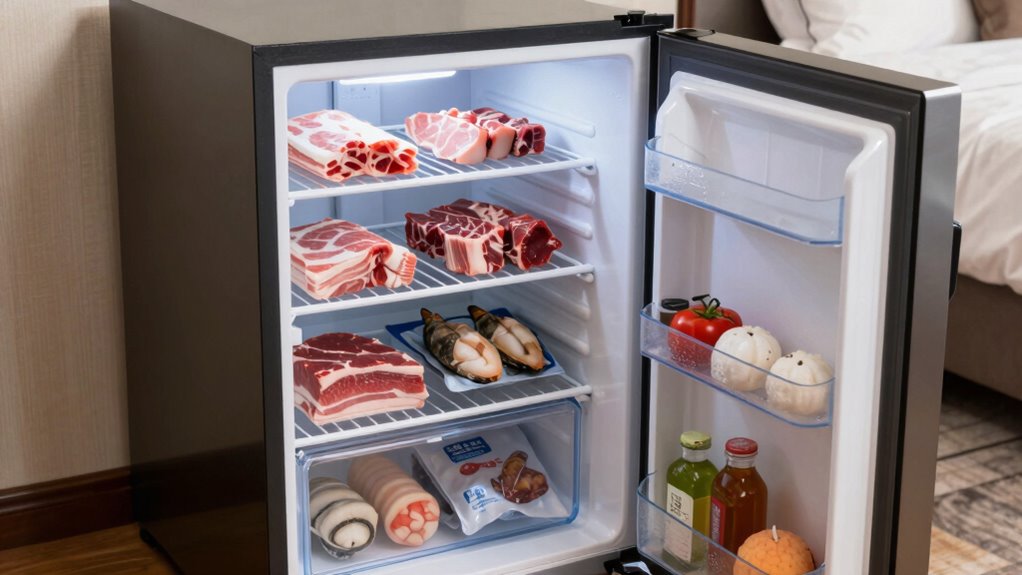
To keep raw meats and seafood safe, set your fridge to the proper temperature, ideally below 40°F. Always store these items separately from ready-to-eat foods to prevent cross-contamination. Following these best practices helps guarantee food safety during your hotel stay. Additionally, using temperature monitoring devices can help ensure your fridge maintains the correct coldness at all times. Regularly checking your fridge’s temperature settings can prevent unsafe temperature fluctuations that may compromise food safety.
Proper Temperature Settings
Ensuring raw meats and seafood are stored at the correct temperatures is essential for food safety in hotels. Proper temperature settings prevent bacterial growth and spoilage. First, regularly calibrate your fridge thermometer to guarantee accuracy, focusing on consistent temperature readings. Second, check that fridge insulation is intact, maintaining a stable cold environment. Third, set your mini-fridge to 32°F to 40°F (0°C to 4°C), the safe range for raw foods. Fourth, avoid frequent door openings that can cause temperature fluctuations. By maintaining proper calibration and insulation, you guarantee the fridge keeps foods cold enough. Monitoring these factors helps prevent dangerous bacterial growth, ensuring safety and freshness for your guests’ raw meats and seafood.
Avoid Cross-Contamination
Proper temperature settings are the foundation of food safety, but preventing cross-contamination is equally important when storing raw meats and seafood. To achieve this, always keep raw meats and seafood sealed and stored on the bottom shelves of your mini-fridge. Use separate containers or plates to prevent juices from dripping onto other foods. Practice good hygiene by washing your hands thoroughly before and after handling raw products. Regularly clean and sanitize shelves and storage areas to eliminate bacteria. Avoid placing cooked or ready-to-eat foods near raw meats to prevent accidental contamination. By following these hygiene practices, you minimize the risk of cross-contamination, ensuring your food remains safe and your food safety standards stay intact during your hotel stay.
What to Do If Your Mini‑Fridge Isn’t Cooling Properly

If your mini-fridge isn’t cooling properly, the first step is to check the power supply. Make certain it’s plugged in securely and that the outlet works. Next, consider these four steps:
- Clean the condenser coils to improve mini fridge maintenance and airflow.
- Adjust the thermostat to a colder setting, aiming for a temperature below 40°F (4°C).
- Verify that the fridge isn’t overcrowded, blocking vents and restricting cold air circulation.
- Confirm that the door seals tightly, as a loose seal can cause temperature fluctuations.
If these steps don’t resolve the issue, the fridge may need professional repair. Keeping it at the hotel room temperature is essential to prevent spoilage and ensure food safety.
Using Coolers and Ice Packs as Backup for Food Safety

When your mini-fridge fails to keep food cold, using coolers and ice packs can be effective backup options to maintain food safety. Pack travel snacks that require refrigeration in a sturdy cooler with enough ice packs to keep temperatures below 40°F. This ensures raw foods and perishables stay safe. Consider the following to optimize your setup:
| Item | Best Practice | Duration |
|---|---|---|
| Ice packs | Freeze before use | Up to 24 hours |
| Cooler type | Insulated, waterproof | 1-2 days |
| Food placement | Keep raw foods separate from ready-to-eat | Prevent cross-contamination |
Using hotel amenities like extra ice from the hotel staff can extend your cooling time. Always monitor the temperature to keep food safe.
How to Prevent Cross-Contamination in Your Hotel Room
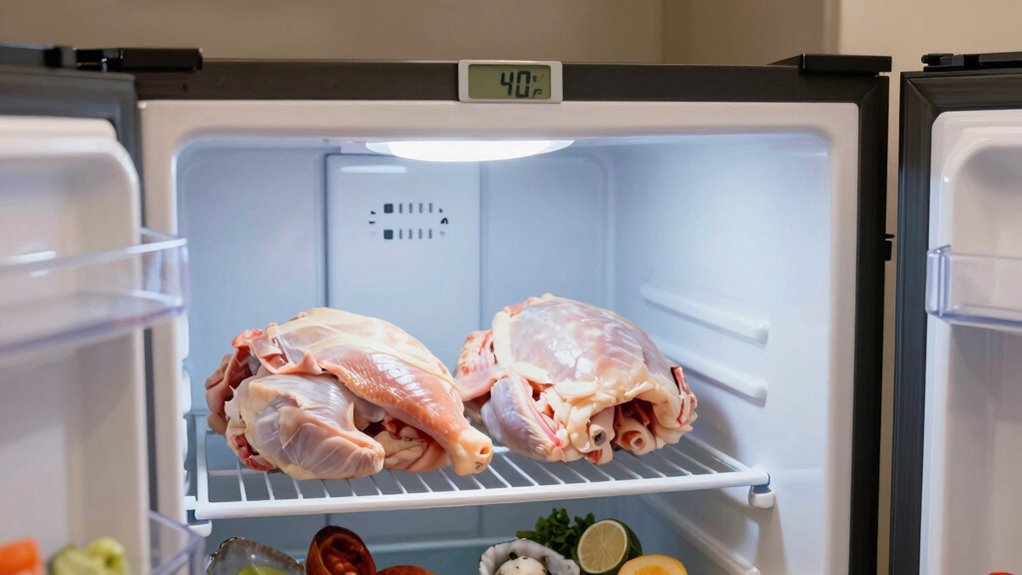
Cross-contamination can happen quickly in a hotel room if you’re not careful, especially when handling different types of food. To prevent this, keep your travel snacks separate from raw foods. Use the hotel amenities, like clean cutting boards or small containers, to organize your items. Here are four tips:
- Always wash your hands before handling food and after touching raw items.
- Use separate utensils and plates for raw and cooked foods.
- Store raw meats away from ready-to-eat snacks, like nuts or fruit.
- Keep raw foods on the bottom shelf of the mini-fridge to avoid drips onto other items.
When to Consider Alternative Cold Storage Options During Travel

Sometimes, standard mini-fridges in hotel rooms don’t provide enough space or temperature control for your perishable items, especially during longer trips or when traveling with specialized food. If you’re carrying travel snacks that require consistent cooling or have specific temperature needs, it’s time to contemplate alternative cold storage options. Hotel room amenities often fall short for maintaining raw foods or delicate items. In such cases, portable coolers, insulated bags, or even portable mini-fridges can keep your food fresh and safe. These options are especially useful if you’re staying in a hotel without reliable refrigeration or if you want to avoid risking spoilage. Knowing when to switch to these alternatives helps ensure your food stays fresh and your trip remains hassle-free.
Frequently Asked Questions
Can Hotel Mini-Fridges Maintain Consistent Temperatures for Raw Foods?
Your hotel mini-fridge can maintain consistent temperatures for raw foods if you set it correctly and keep it clean. Aim for a mini fridge temperature of 40°F or below for raw food safety. Regularly check the temperature with a thermometer, avoid overpacking, and keep raw foods on the lower shelves. This helps prevent cross-contamination and ensures your raw foods stay at a safe temperature during your stay.
How Often Should I Check My Mini-Fridge’s Temperature During Travel?
You should verify your mini-fridge’s temperature at least once a day during travel. This helps with fridge maintenance and guarantees your raw foods stay safe. Use a reliable thermometer to calibrate the temperature, aiming for 40°F or below. Regular checks prevent spoilage and keep your food fresh. If the temperature rises, adjust the settings promptly and continue monitoring to maintain proper cooling throughout your trip.
Are There Specific Types of Raw Foods That Require Special Storage in Hotel Rooms?
You’ll want to give special storage to delicate raw foods like seafood, raw meats, and unwashed produce. These specific raw foods are more prone to spoilage and need consistent, cold storage to stay safe. Think of your mini-fridge as a tiny, unreliable icebox—if you don’t keep these foods at the right temperature, they might turn into a science experiment faster than you can say “food poisoning.”
What Are Signs My Mini-Fridge Is Not Cooling Properly?
You’ll notice signs your mini-fridge isn’t cooling properly if the temperature fluctuates unexpectedly or if you hear unusual noises. Check if the fridge feels warm inside, especially around raw foods. If it cycles on and off frequently or makes loud hums, it might be malfunctioning. Address these issues promptly to keep your raw foods safe and prevent spoilage, ensuring your mini-fridge works effectively during your stay.
Is It Safe to Store Leftovers in a Hotel Mini-Fridge Overnight?
Yes, it’s generally safe to store leftovers in a hotel mini-fridge overnight if you maintain it properly. Make sure to check the mini fridge maintenance regularly to verify it’s cooling correctly, and avoid overloading it to prevent warm spots. Keep leftovers in airtight containers to prevent spoilage and odors. Prioritizing hotel room safety, don’t leave perishable foods out longer than recommended and always clean the fridge before use.
Conclusion
Remember, your hotel mini-fridge is like a fragile ice castle—delicate and easily melted away. To keep your raw foods safe, stay vigilant about temperature, test your fridge regularly, and use extra coolers when needed. By staying proactive, you hold the keys to food safety in your hands. Don’t let your travel plans melt away with spoiled food—protect your health like a fortress against the sweltering heat.