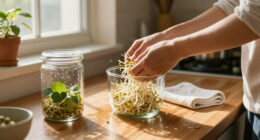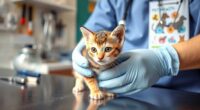
To keep your kitchen safe with pets around raw food prep areas, always designate specific zones for raw meat handling and use barriers like baby gates to restrict pet access. Keep raw meat off counters and clean all surfaces, utensils, and hands thoroughly afterward. Store raw foods securely in sealed containers on fridge shelves away from pets. Proper hygiene and strict boundaries protect your pets and family, and if you keep these tips in mind, you’ll discover even more ways to maintain a safe kitchen environment.

Get health and wellness essentials delivered free with Prime
- Fast, free delivery on millions of items
- Prime Video, Amazon Music and more included
- Member-only deals all year
Key Takeaways
- Designate specific areas for raw food prep and use barriers to prevent pet access.
- Never leave raw meat unattended on counters or tables within pet reach.
- Wash hands, surfaces, and utensils thoroughly after handling raw foods to prevent contamination.
- Store raw meats in sealed containers on the bottom fridge shelf to avoid drips and cross-contamination.
- Regularly disinfect prep surfaces and enforce strict boundaries to keep pets safe from bacteria and allergens.

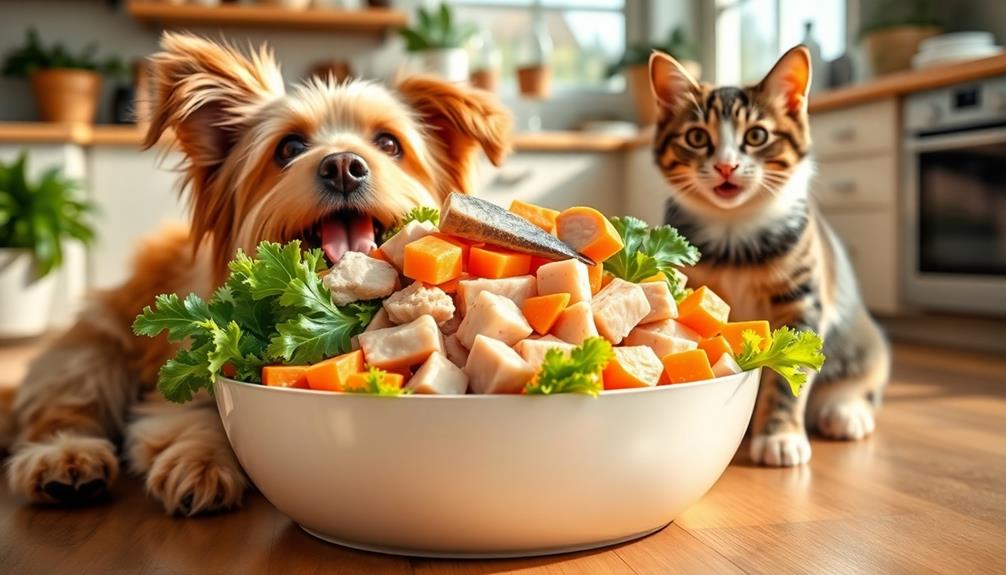
Keeping your pets safe in the kitchen requires more than just locking the door; it’s about creating a clean, secure environment, especially around raw food prep areas. Raw meat, poultry, and fish are common in many households, but they can pose serious risks if proper precautions aren’t taken. One of the biggest concerns is food contamination, which can occur if your pet wanders into the prep zone and accidentally ingests raw or contaminated foods. Not only does this risk making your pet sick, but it can also introduce bacteria like Salmonella or E. coli into your home, affecting everyone. To prevent this, designate specific areas for raw food handling and always keep pets out of these zones. Use barriers like baby gates or closed doors to restrict access, and never leave raw meat unattended on counters or tables where pets can reach.
Another important consideration is pet allergies. While many pet owners might not immediately think about allergies, some animals are sensitive to certain foods or ingredients present in raw diets. For example, some pets can develop skin irritations, digestive issues, or respiratory problems if exposed to specific proteins or additives. When preparing raw food, wash your hands thoroughly afterward, and clean all surfaces, utensils, and cutting boards immediately to remove any residue. This not only reduces the risk of food contamination but also helps prevent allergic reactions in pets that might come into contact with leftover particles. If your pet has known allergies, be especially cautious and consult with your veterinarian about safe handling practices and appropriate diets.
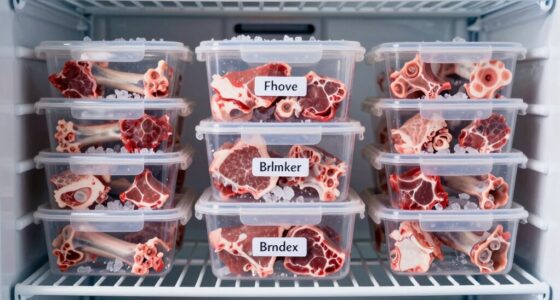
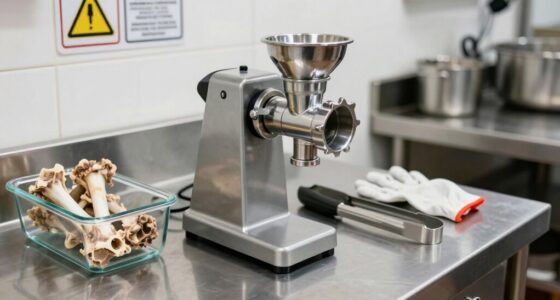
In addition to keeping raw foods separate, it’s essential to store pet foods properly. Raw meats should be kept in sealed containers and stored on the bottom shelf of the fridge to prevent drips or cross-contamination with other foods. Regularly disinfect countertops, cutting boards, and utensils used during raw food prep. This reduces the chance that bacteria or allergens will transfer onto surfaces your pet might lick or chew. Implementing automation in food safety practices, such as using specialized cleaning devices, can further enhance your home’s hygiene. Never leave raw food unattended for long periods, and always wash your hands thoroughly afterward. These precautions help protect your pet from accidental ingestion of harmful bacteria or allergens, which could lead to serious health issues.
As an affiliate, we earn on qualifying purchases.
Frequently Asked Questions
Can Pets Eat Raw Food Safely if They’Re Not Involved in Prep?
Pets can eat raw food safely if they’re not involved in prep, but you should still be cautious. Raw diets pose pet dietary risks like bacterial infections, so make sure the food is safe and properly handled. Keep raw food out of reach during prep to maintain kitchen pet safety, preventing cross-contamination. Always consult your vet before making raw food part of your pet’s diet to minimize health risks.
How Can I Prevent Pets From Accessing Raw Food During Cooking?
You can prevent pets from accessing raw food during cooking by pet-proofing your kitchen. Use kitchen barriers like baby gates or closed doors to restrict their access. Keep raw food on high counters or in sealed containers that pets can’t reach. Consistently supervise your pets and train them to stay away from food prep areas. These pet-proofing measures help make certain your pet’s safety and keep raw food uncontaminated.
Are Certain Pet Breeds More Prone to Raw Food-Related Health Issues?
Just as some flowers are more prone to certain weeds, certain pet breeds have breed susceptibility and genetic predispositions to raw food-related health issues. Breeds like Bulldogs or Boxers often face higher risks due to their unique physiology, making them more vulnerable. You should stay informed about your pet’s breed traits and consult your vet to minimize health risks, ensuring your furry friend stays safe and healthy while enjoying the raw food diet.
What Are the Signs of Poisoning From Raw Food Ingestion in Pets?
If your pet ingests raw food and shows toxic symptoms, act quickly. Look for emergency signs like vomiting, diarrhea, lethargy, tremors, seizures, or difficulty breathing. You might notice loss of appetite or excessive drooling. If any of these symptoms appear, contact your veterinarian immediately. Early intervention is critical to prevent serious health complications from raw food poisoning. Always keep raw food out of your pet’s reach to avoid these risks.
Should I Train Pets to Stay Out of the Kitchen Entirely?
Like a good captain, you should establish clear kitchen boundaries for your pets. Training your pets to stay out of the kitchen entirely is a smart move; it keeps them safe and prevents contamination. Consistent pet training helps reinforce boundaries, and using positive reinforcement encourages good behavior. While some pets might be trusted around food, setting firm limits minimizes risks, making your kitchen safer for everyone, including your furry friends.
Conclusion
Keeping your kitchen safe means being mindful of pets and raw food prep areas. By staying alert and implementing simple safety measures, you can protect your furry friends and enjoy cooking without worry. Remember, isn’t it worth taking a few extra steps to guarantee everyone stays healthy and happy? With a little care and planning, your kitchen becomes a safe haven for both your family and pets. So, why not make safety your top recipe for a worry-free cooking experience?
Fall Picks
fall essentials
As an affiliate, we earn on qualifying purchases.