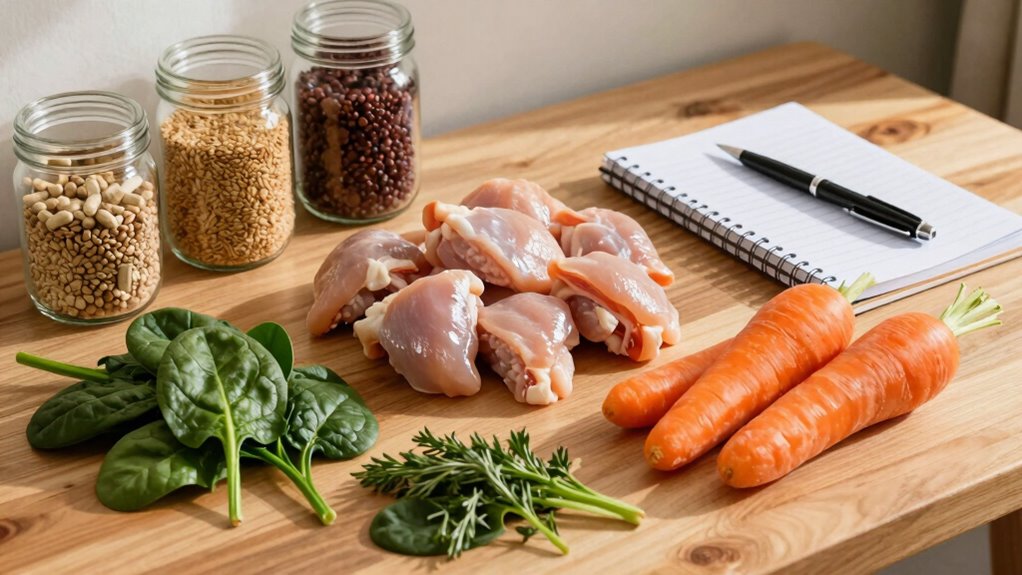

To plan a week of raw pet meals without guessing, start by focusing on the ideal nutritional balance: 70% protein, 20% fats, and 10% carbohydrates. Use chicken, beef, or fish as your main protein, and include organs like liver for nutrients. Portion daily meals at 2-3% of your pet’s body weight, splitting them into two servings. Prepare a shopping list and mix ingredients for variety. Stick with a routine, and you’ll discover even more tips to simplify meal prep.

Get health and wellness essentials delivered free with Prime
- Fast, free delivery on millions of items
- Prime Video, Amazon Music and more included
- Member-only deals all year
Key Takeaways
- Create a weekly meal plan template that includes protein, fats, and vegetables, ensuring a balanced nutritional ratio.
- Prepare a shopping list based on your meal plan, focusing on chicken, beef, fish, and organ meats.
- Portion ingredients into individual bags for easy access and to maintain variety in your pet’s meals.
- Gradually introduce new ingredients while monitoring your pet’s reactions to avoid digestive issues.
- Adjust portion sizes based on your pet’s weight, age, and activity level, consulting a vet for personalized advice.
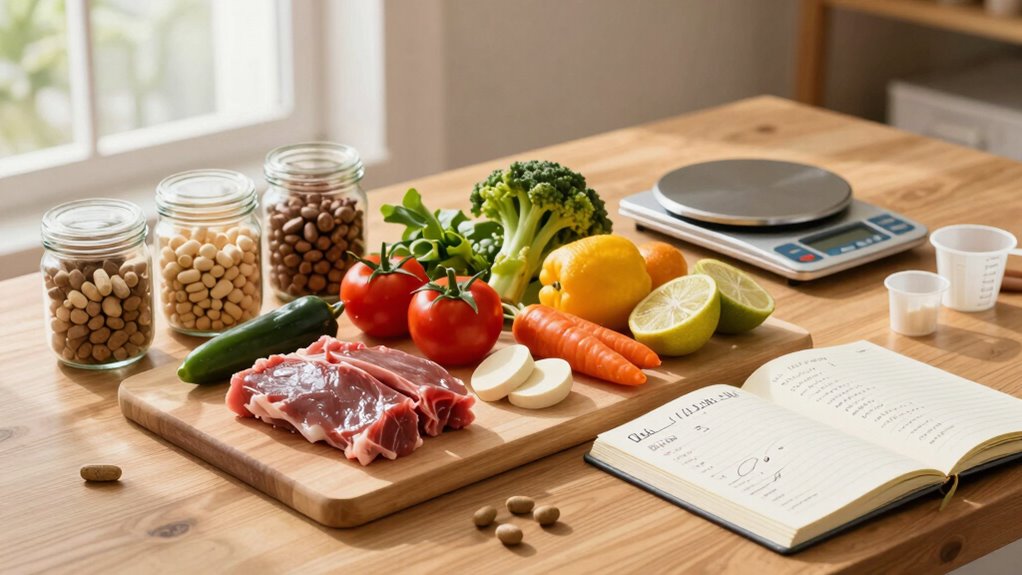
Planning raw pet meals can seem challenging, but with a bit of guidance, you can create a balanced diet for your furry friend. The raw food benefits are numerous, from improved coat condition to increased energy levels. You’ll notice how much happier and healthier your pet becomes when you make the switch. To get started, it’s crucial to understand the basics of meal portioning. This will guarantee your pet gets the right nutrients without overfeeding.
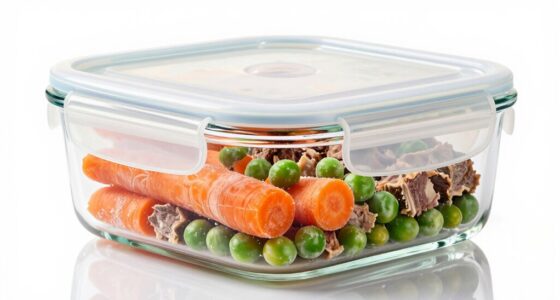
First, familiarize yourself with the ideal balance of proteins, fats, and carbohydrates. A common guideline is to aim for around 70% protein, 20% fats, and 10% carbohydrates. For instance, chicken, beef, or fish can be your primary protein sources. Incorporate organs like liver for added vitamins and minerals. As for fats, consider including fish oil or even a small amount of coconut oil. For carbohydrates, opt for veggies like carrots or spinach, which are great for digestion.
Familiarize yourself with the ideal balance: 70% protein, 20% fats, and 10% carbohydrates for a healthy raw diet.
Next, focus on portion sizes. A general rule of thumb is to feed your pet around 2-3% of their body weight daily. If you have a 50-pound dog, that’s roughly 1-1.5 pounds of raw food each day. You can divide this into two meals for convenience. Remember, these numbers can vary based on age, activity level, and health conditions. It’s always a good idea to consult with your vet to tailor the portions to your pet’s specific needs.
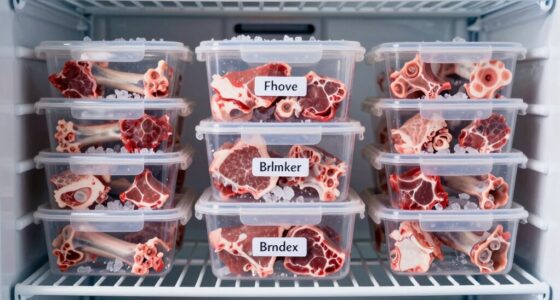
Planning a week of meals can be made easier with a simple template. Start by creating a shopping list that includes all the proteins, fats, and veggies you plan to use. When you get home, portion out each ingredient into individual bags or containers. This way, you won’t have to guess how much to use each time you prepare a meal. You can also mix and match ingredients to keep meals interesting for your pet. Understanding animal nutrition principles can help you make informed choices about meal composition.
Don’t forget to introduce new foods gradually. This helps your pet adjust to the raw diet without any digestive issues. Observing how your pet reacts to different ingredients can guide you in tweaking their meals. By planning ahead and sticking to a routine, you’ll find that preparing raw meals becomes more intuitive over time. Before you know it, you’ll be confident in providing a nutritious, well-balanced diet that brings out the best in your furry companion.
raw dog food meal prep containers
As an affiliate, we earn on qualifying purchases.
As an affiliate, we earn on qualifying purchases.
Frequently Asked Questions
Can I Mix Raw Pet Food With Kibble?
Yes, you can mix raw pet food with kibble, but it’s essential to do so carefully. While raw food offers benefits like improved digestion and healthier coats, kibble has its drawbacks, such as fillers and lower nutritional quality. If you choose to mix them, maintain a balanced ratio and monitor your pet’s reaction. Shifting gradually helps prevent digestive upset and guarantees they get the best of both worlds without compromising their health.
How Do I Transition My Pet to Raw Meals?
To shift your pet to raw meals, start with a gradual change over a week or two. Begin by mixing a small amount of raw food with their current diet, slowly increasing the raw portion while decreasing kibble. This helps minimize digestive upset and allows your pet to adjust. You’ll notice raw diet benefits like healthier skin and improved energy levels. Keep an eye on their stool and adjust accordingly for the best results.
Is Raw Food Safe for All Pets?
Sure, raw food isn’t a magical elixir that turns your pet into a superhero, but it can be safe for many pets when done right. You’ll find benefits of raw, like improved digestion and shiny coats, but beware of raw food myths. Make sure you balance nutrients and choose the right raw food types. Sourcing ingredients carefully is key, as not all pets thrive on raw diets. Always consult your vet before diving in!
What Are Common Signs of Food Allergies in Pets?
Common signs of food allergies in pets include itching, skin irritation, and gastrointestinal issues. If you notice your pet scratching more than usual or experiencing diarrhea, it could be food intolerance symptoms. Other pet allergy triggers might include certain proteins or grains in their diet. Keep an eye on any changes after introducing new foods, as these reactions can help you identify what’s causing the discomfort and adjust their meals accordingly.
How Should I Store Raw Pet Food?
Storing raw pet food is like orchestrating a symphony, where every note needs harmony. First, pack the food in airtight containers to keep it fresh and prevent contamination. Organize your refrigerator so raw meals sit on the lowest shelf, away from cooked foods. Label each container with the date and contents to track freshness. By maintaining a systematic approach to raw food storage, you guarantee your pet enjoys every meal like a gourmet feast.
Conclusion
As you commence on this journey of nourishing your furry friend, think of yourself as a skilled captain steering through a sea of nutrition. Each meal you craft is a sturdy sail, guiding your pet toward health and wellness. With each week’s plan, you chart a course through the waves of ingredients, steering clear of uncertainty. Trust your instincts, and soon, you’ll find the winds of confidence filling your sails. Bon voyage on this delicious adventure!
Halloween Picks
halloween
As an affiliate, we earn on qualifying purchases.