

When making nut butter at home, machines stall mainly because cold, unprepared nuts resist the blades or cause jams, straining your motor. Overloading the machine or processing too quickly without proper prep can also lead to stalls. To prevent this, warm or lightly roast nuts first, process in smaller batches, and occasionally stop to cool the machine. For more tips on keeping your machine running smoothly, keep exploring the best techniques.
Key Takeaways
- Cold or unroasted nuts cause blades to struggle and lead to stalls; warming or roasting improves flow.
- Overfilling the blender or food processor jams blades; process in smaller batches to prevent this.
- Processing nuts directly from the fridge introduces moisture and density, causing stalls; use room temperature nuts instead.
- Continuous operation without pauses causes overheating and stalls; take regular breaks to cool the machine.
- Neglecting to scrape down sides and stir oil separation leads to uneven texture and machine jams; frequent stirring helps maintain smooth processing.
Choosing and Preparing Nuts for Smooth Nut Butter
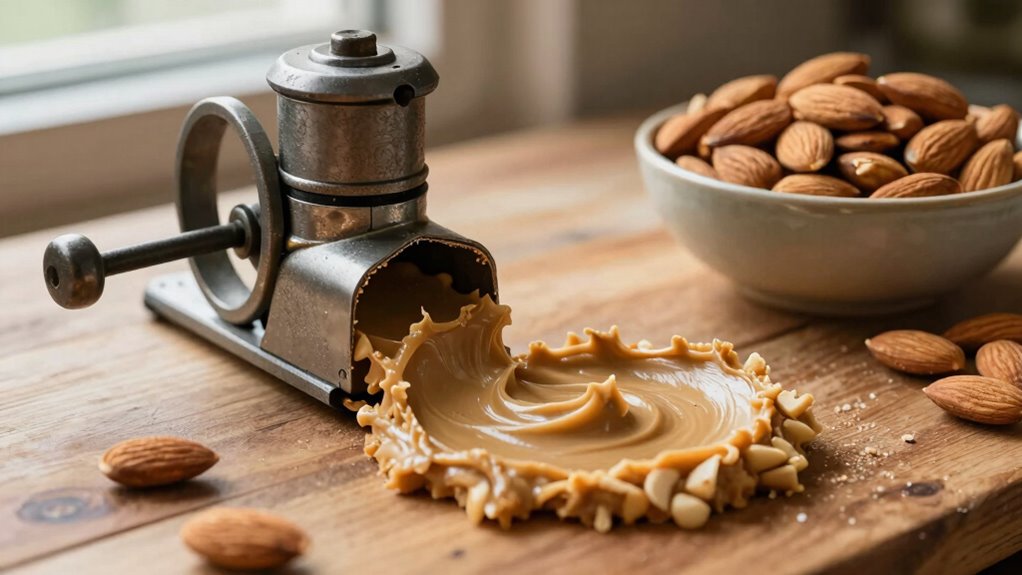
Before you start making smooth nut butter, it’s important to choose the right nuts and prepare them properly. Your nut selection can profoundly impact the texture and flavor of your butter. Opt for fresh, high-quality nuts, and avoid those with cracks or mold. Once you’ve selected your nuts, consider nut roasting; this process enhances flavor and releases natural oils, making them easier to blend. Lightly roasting nuts in the oven at 350°F for 10-15 minutes is ideal—just watch to prevent burning. After roasting, let the nuts cool before processing. Proper preparation ensures your nut butter turns out creamy and smooth, without stalls or uneven texture. Taking these steps saves you time and guarantees a delicious, homemade product. Incorporating AI-powered tools can also help you optimize your process for better results.
Tips for Using Your Blender or Food Processor Effectively
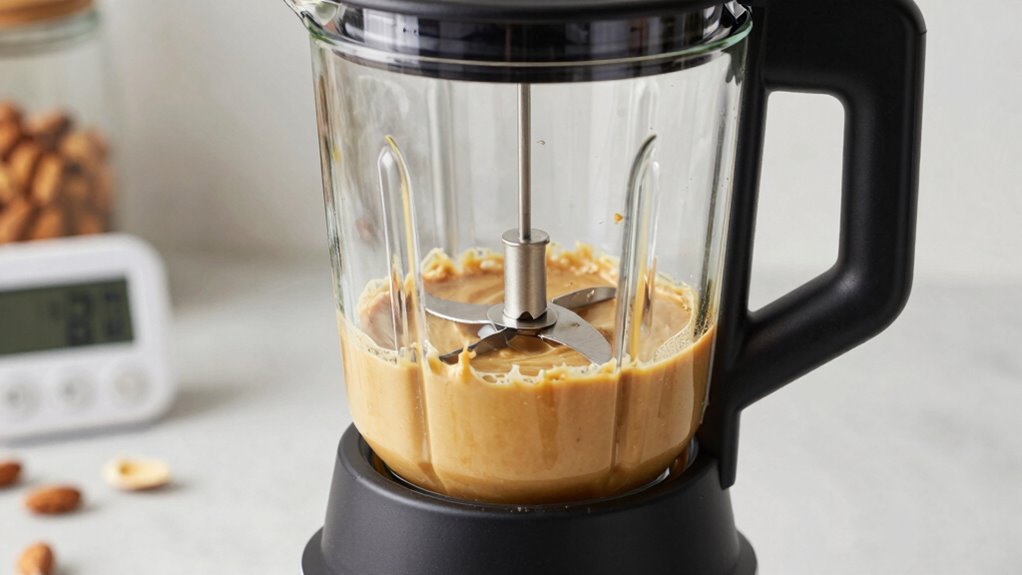
To achieve smooth, creamy nut butter, you need to use your blender or food processor effectively. Start by paying attention to nut density; processing smaller batches or adding a splash of oil can help the blades move more easily. Also, consider ingredient temperature—warming nuts slightly before blending softens them and reduces strain on your machine. If your nuts are too cold or dense, your appliance may stall or struggle. Pulse your ingredients gradually to break down large pieces, then blend continuously once the nuts start to break apart. Stop periodically to scrape down sides and check consistency. Patience is key: giving your machine breaks prevents overheating and guarantees a smoother, more uniform nut butter. Additionally, using a high-quality projector with sufficient power can help you better visualize your progress and troubleshoot issues during your nut butter-making process. Paying attention to the exfoliation process in your ingredients can also help improve the texture and uniformity of your final product. Recognizing the importance of blade sharpness can further improve processing efficiency and prevent stalls. Regularly checking and maintaining your appliance components ensures consistent performance and reduces the likelihood of stalls. Proper piercing care and hygiene, such as cleaning your equipment thoroughly, can also extend the lifespan and performance of your appliance.
Why Your Nut Butter Machine Gets Stuck: And How to Fix It
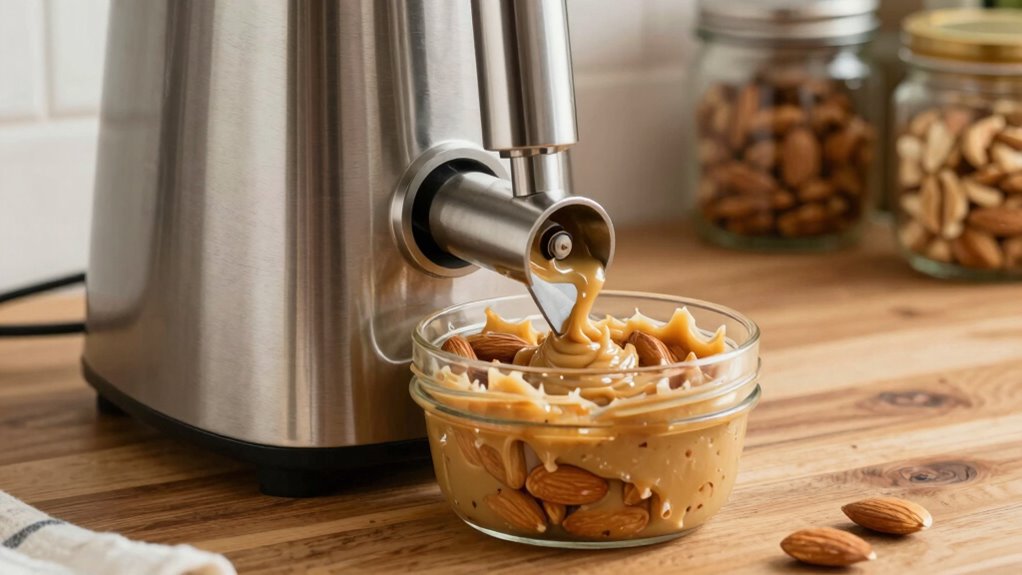
If your nut butter machine keeps getting stuck, it’s often because the nuts are too cold, dense, or clumped together, making it hard for the blades to move smoothly. This can result in inconsistent nut butter consistency and cause the machine to strain or overheat. When the nuts are frozen or packed tightly, the blades struggle to break them down efficiently, leading to jams. To fix this, let the nuts sit at room temperature for a while or warm them slightly before processing. Also, avoid pushing too hard or running the machine continuously for long periods, as this can lead to overheating. Regularly pausing to cool the machine and adjusting nut temperature helps maintain a smooth operation and prevents stalls.
Common Mistakes That Cause Stalls and How to Avoid Them

Have you been experiencing frequent stalls with your nut butter machine? Common mistakes include skipping proper nut roasting, which affects texture and consistency. Overloading the hopper can cause jams, while insufficient mixing leads to uneven oil separation. Also, neglecting to preheat your machine may cause it to stall when processing cold nuts. To avoid these issues, confirm nuts are roasted evenly and at the right temperature before blending. Don’t fill the machine beyond its capacity, and stir frequently to prevent oil separation from causing clogs. Additionally, understanding the importance of proper application techniques can significantly improve your results. Here’s a quick guide:
| Mistake | How to Avoid | Result of Ignoring |
|---|---|---|
| Skipping nut roasting | Roast nuts evenly beforehand | Poor texture, stalls |
| Overloading | Follow capacity guidelines | Jams, overheating |
| Ignoring oil separation | Stir regularly during processing | Machine stalls, clogs |
| Not preheating | Warm machine before use | Stalls from cold nuts |
| Inadequate mixing | Use pulse mode for even blending | Inconsistent butter |
Furthermore, understanding the role of oil separation in machine performance can help prevent common issues. Proper maintenance and understanding the natural properties of nuts can also contribute to smoother operation and better results. Being aware of the temperature sensitivity of nuts can help you optimize processing and prevent stalls.
Maintenance Tips for Better Nut Butter Results
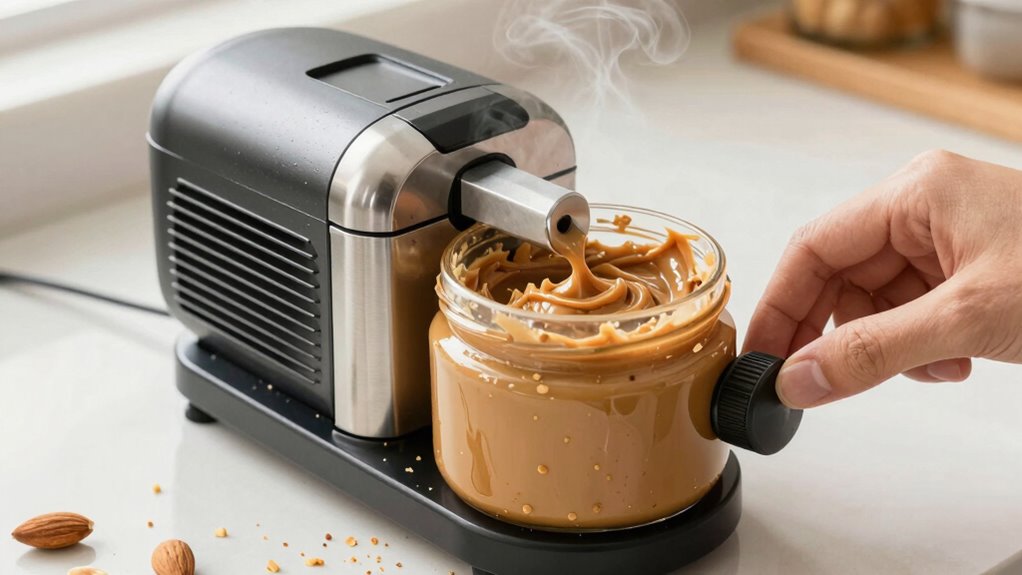
Regular maintenance is key to keeping your nut butter machine performing at its best. Proper upkeep prevents issues like oil separation and ensures smooth operation. To improve your results, consider these tips:
Regular maintenance keeps your nut butter machine running smoothly and prevents oil separation.
- Regularly clean your machine to remove residual oil and nut particles that can cause clogs.
- Keep nuts evenly roasted; uneven roasting can lead to inconsistent texture and oil separation.
- Check blades and burrs for wear, replacing them as needed to maintain efficient processing.
- Store nuts in airtight containers to prevent moisture absorption, which affects consistency and flavor.
- Using the correct kitchen tools and techniques can help minimize wear on your machine and prolong its lifespan. Additionally, understanding the home cleaning systems involved in maintenance can help you keep your equipment in optimal condition over time.
- Performing regular technical audits of your equipment can identify potential issues before they cause major problems. Incorporating ventilation considerations can also help reduce heat buildup and improve machine longevity.
- Being aware of mechanic shops for fuel injection cleaning can provide insights into specialized maintenance practices that may benefit commercial-grade nut butter machines.
Frequently Asked Questions
Can Adding Oil Prevent My Nut Butter Machine From Stalling?
Adding oil can help prevent your nut butter machine from stalling by improving machine lubrication. When you include a small amount of oil, it reduces friction between the blades and nuts, making the process smoother. Just be careful not to add too much, as it can alter the texture. Using oil addition strategically guarantees your machine runs efficiently without clogging or overheating.
What Are the Best Nuts for Smooth, Consistent Nut Butter?
For smooth, consistent nut butter, opt for high-quality nuts with even nut quality and proper nut roasting. Roasting enhances flavor and helps attain a creamy texture, making the nuts easier to process. Almonds, cashews, and peanuts are popular choices for smooth butters. Keep nuts at room temperature and choose fresh, well-roasted nuts to prevent machine stalls and guarantee a silky, uniform consistency in your homemade nut butter.
How Do I Clean My Machine to Prevent Future Stalls?
To keep your machine running smoothly, don’t let it get bogged down. Regularly clean your machine after each use with warm, soapy water, paying attention to blades and the bowl. Follow maintenance tips like lubricating moving parts if needed, and remove any leftover nut residues that could cause clogs. This simple routine helps prevent stalls and keeps your machine in tip-top shape—think of it as giving your gear a much-needed tune-up.
Is It Normal for Nut Butter to Heat up During Processing?
It’s normal for nut butter to heat up during processing, causing a temperature rise. This happens because the blades generate friction, which can increase the temperature and improve the texture. However, be cautious of safety concerns—excessive heat might damage the machine or affect the flavor. To prevent this, pause periodically to allow cooling and avoid overheating, ensuring safe and efficient processing every time.
What Type of Motor Is Ideal for Frequent Nut Butter Making?
Think of your nut butter machine as a race car—powerful and built to handle tough terrains. You want a motor with strong specifications and ideal gear ratios that can sustain frequent use without overheating or stalling. Look for a commercial-grade motor with high torque and durable components. This guarantees consistent performance, making your nut butter process smooth and efficient, even with frequent batches.
Conclusion
Now that you know why your nut butter machine stalls, you’re better equipped to prevent it. Remember to prep your nuts properly, give your blender or food processor the right breaks, and avoid common mistakes. Regular maintenance also keeps things running smoothly. Think of it as tending to your trusty steed—taking care guarantees it’ll serve you well. With these tips, you’ll be churning fresh, creamy nut butter faster than you can say “Great Scott!”