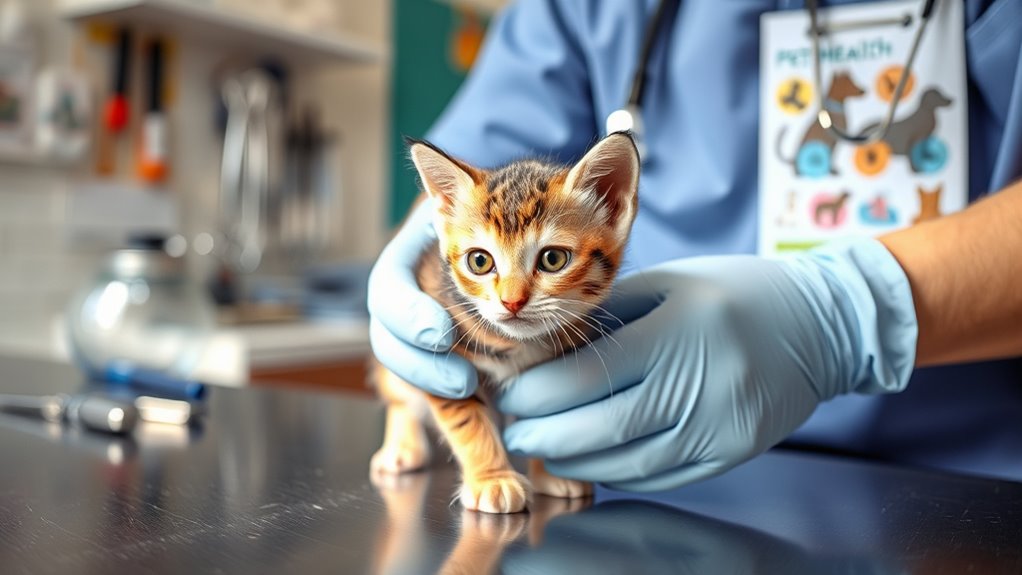

To make the most of your vet visit, prepare focused questions about your pet’s diet, health concerns, and prevention. Ask specific things like recommended nutrition, signs of illness, or early warning signals for common issues. Be clear and concise, and request advice in writing if needed. Building a collaborative relationship helps catch problems early and keeps your pet happy. Keep exploring to learn how to communicate more effectively with your vet.
Key Takeaways
- Prepare specific, focused questions about your pet’s health, nutrition, and behavior to ensure clear communication.
- Ask about recommended diets, feeding schedules, and signs of nutritional deficiencies or overfeeding.
- Inquire about early warning signs of health issues, preventive measures, and treatment options.
- Use concise questions to clarify next steps, recommended actions, and follow-up care.
- Foster a collaborative relationship by sharing concerns, requesting written advice, and maintaining ongoing dialogue.
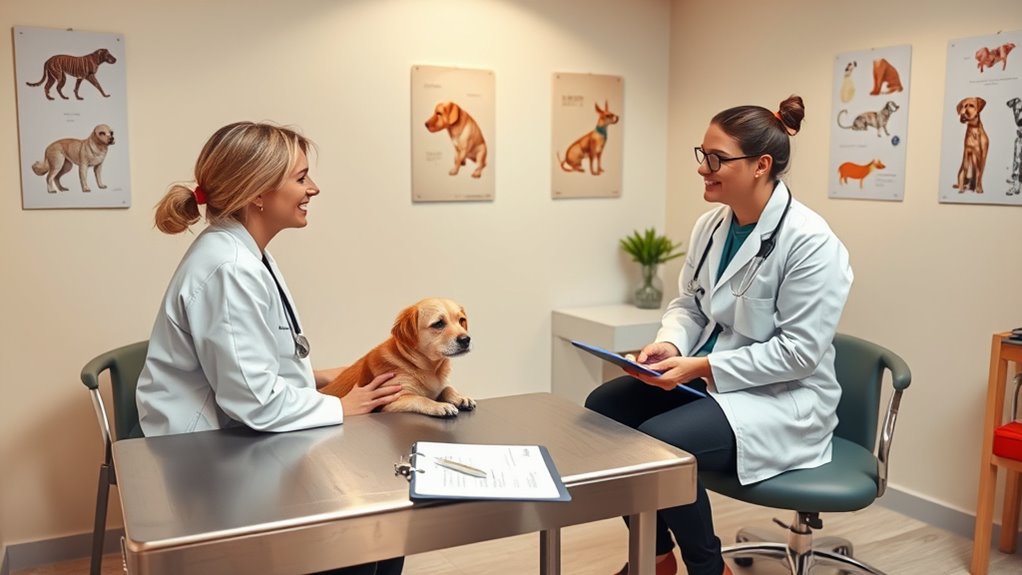
Ever wondered how to communicate effectively in veterinary Q&A settings? Knowing what questions to ask your vet can make a huge difference in keeping your pet healthy and happy. When you’re discussing your pet’s health, it’s important to be prepared with clear, focused questions. This helps guarantee you get the information you need and that your vet understands your concerns. One of the key areas to address is pet nutrition. Asking about the best diet for your pet’s age, breed, and activity level can prevent many health issues down the line. Your vet can recommend specific types of food, portion sizes, and feeding schedules. They might also advise on special diets if your pet has allergies or other health conditions. Understanding pet nutrition is crucial because it directly impacts their growth, energy, and overall well-being. Be sure to inquire about signs of nutritional deficiencies or overfeeding, which are common health concerns in pets today.
In addition to nutrition, it’s equally important to ask about common health concerns. Every pet is unique, but many face similar issues like obesity, dental problems, or skin irritations. Asking your vet about early warning signs helps you catch potential problems before they become serious. For instance, if your pet starts scratching excessively or shows signs of discomfort, knowing what to look for can lead to quicker treatment. Don’t hesitate to ask about preventive measures, such as vaccines or routine screenings, to keep common health concerns at bay. Also, inquire about behaviors or symptoms that might indicate underlying issues, so you can address them promptly.
To better understand how to address pet health concerns, you might want to learn about preventive care strategies used in veterinary practice. When you’re asking questions, keep them concise and specific. Instead of vague inquiries like “Is my pet okay?”, try questions like “What are the early signs of arthritis in senior dogs?” or “What should I do if my cat is vomiting frequently?” This approach helps your vet provide targeted, actionable advice. Make sure to take notes or ask for written recommendations, especially if your vet suggests dietary changes, medication, or follow-up tests. Remember, the goal is to establish an open dialogue where you feel comfortable sharing concerns and gaining clarity. The more prepared you are with precise questions about pet nutrition and common health concerns, the better equipped you’ll be to care for your furry friend and address potential issues early. Effective communication in veterinary Q&A settings is ultimately about building a partnership that supports your pet’s health and happiness.
Frequently Asked Questions
How Often Should I Schedule Wellness Exams for My Pet?
You should schedule wellness exams for your pet at least once a year, or more often if they’re older or have health issues. During these visits, your vet can check pet dental care and recommend grooming routines to keep your pet healthy and comfortable. Regular exams help catch problems early, ensuring your furry friend stays happy and active. Don’t forget to ask about dental care and grooming during each visit!
What Are Signs of Early Health Issues in My Pet?
Think of your pet like a car; early signs of health issues are like warning lights. You should watch for behavior changes, such as increased hiding or lethargy, and appetite loss, which can signal underlying problems. If you notice these signs, it’s like seeing a dashboard warning—don’t ignore them. Early detection helps your vet address issues before they become serious, keeping your furry friend happy and healthy.
How Can I Prepare My Pet for a Vet Visit?
To prepare your pet for a vet visit, make certain they’re well-groomed, which helps the vet assess their health more easily. Bring any recent health records and your pet’s favorite toys or blankets for comfort. If you’re traveling, do some travel preparations like securing a carrier and packing essentials. Stay calm and speak softly to keep your pet relaxed, making the visit smoother for both of you.
What Are the Latest Advancements in Veterinary Medicine?
You might be surprised by the latest advancements, like genetic testing and regenerative therapies, transforming veterinary care. These innovations allow for early disease detection and more effective treatments, offering hope for longer, healthier lives. You’ll find that vets now use cutting-edge techniques to personalize care, making your pet’s health a priority. Staying informed helps you make better decisions, ensuring your furry friend benefits from the most recent breakthroughs in veterinary medicine.
How Do I Choose the Right Type of Pet Insurance?
You should compare insurance options based on coverage details that match your pet’s needs. Look for plans that cover accidents, illnesses, and routine care. Read the fine print to understand exclusions and deductibles. Consider the reputation of the insurer, customer reviews, and whether they offer direct payment to vets. By doing this, you’ll find a policy that provides extensive coverage and peace of mind for your furry friend.
Conclusion
Knowing the right questions to ask your vet can make all the difference in your pet’s health. Did you know that over 60% of pet owners feel uncertain about how to discuss health concerns effectively? By using this Q&A style guide, you’ll feel more confident during visits and guarantee your furry friend gets the care they deserve. Remember, asking the right questions now can lead to healthier, happier pets for years to come.