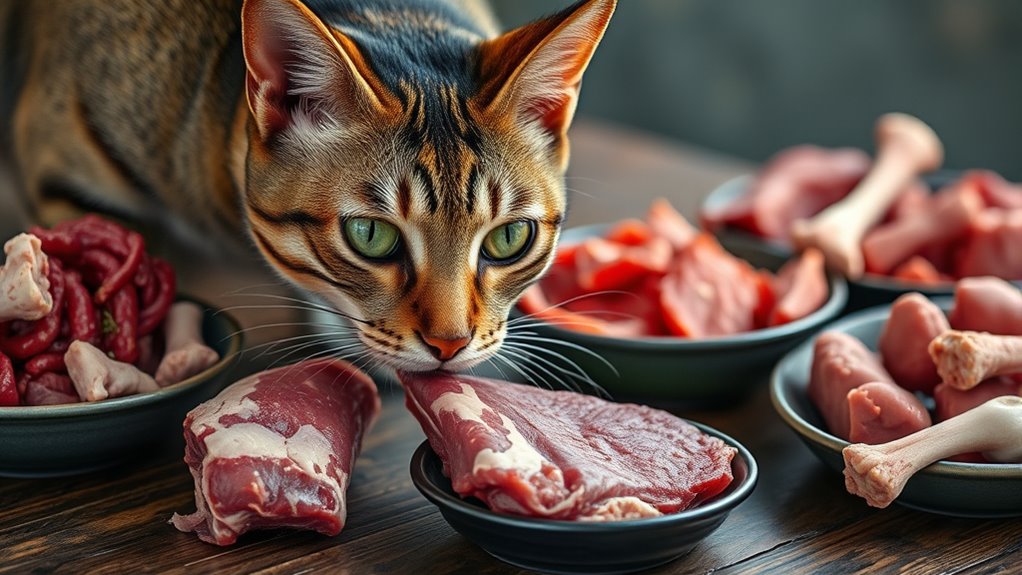

When feeding your cat raw, focus on safety, sourcing quality meat from reputable suppliers, and handling everything hygienically to prevent bacteria. Balance the diet with muscle meat, organs, and bones, and consider supplements if needed, with veterinarian guidance. Keep everything properly stored and monitor your cat’s health to catch any issues early. Mastering these basics helps guarantee your feline gets a safe, nutritious meal—continue on to learn how to perfect each step.
Key Takeaways
- Ensure raw meat is sourced from reputable suppliers and stored properly to prevent bacterial contamination.
- Provide a balanced mix of muscle meat, organs, and bones to meet feline nutritional requirements.
- Practice hygienic handling, including thorough hand washing and separate prep areas, to maintain feeding safety.
- Monitor your cat’s health regularly and adjust the diet as needed in consultation with a veterinarian.
- Properly prepare and portion meals to prevent overfeeding and support your cat’s overall well-being.

If you’re considering raw feeding for your cat, understanding the basics is crucial to guarantee your pet receives proper nutrition. One of the most important aspects is guaranteeing feeding safety. Raw diets can carry bacteria like Salmonella or E. coli, which pose health risks to both your cat and household members. To minimize these dangers, always handle raw meat carefully—wash your hands thoroughly after preparation, keep raw products separate from other foods, and clean all utensils and surfaces promptly. Storing meat at the correct temperature prevents bacterial growth, so refrigerate or freeze ingredients appropriately. Buying from reputable sources also helps guarantee the meat is fresh and free from contaminants. Following these precautions helps create a safe feeding environment while allowing your cat to enjoy the benefits of a raw diet. Maintaining feeding safety is essential for protecting both your pet and your household from potential health hazards.
Equally critical is maintaining nutritional balance. Cats are obligate carnivores, meaning their diet must be rich in high-quality animal proteins and fats. When planning a raw diet, you need to provide a variety of meats, including muscle meat, organs, and bones, to mimic their natural prey. Organ meats like liver supply essential vitamins and minerals, but too much can lead to imbalances, so moderation is key. Bones are a crucial source of calcium and other nutrients, but they must be appropriate in size and texture to prevent choking or digestive issues. Incorporating supplements might be necessary to fill nutritional gaps—consulting with a veterinarian experienced in feline nutrition ensures you’re meeting all of your cat’s dietary needs. Balancing these elements helps avoid deficiencies or excesses that can cause health problems over time.
Transitioning your cat to a raw diet involves more than just choosing ingredients; it requires understanding how to prepare and serve food safely. You’ll want to establish a routine for handling raw ingredients, keeping everything hygienic and well-organized. Monitoring portion sizes ensures your cat maintains a healthy weight and avoids overfeeding. Keep an eye on your cat’s health and behavior, as changes may indicate dietary issues or deficiencies. Regular veterinary checkups help catch potential problems early. Remember, a well-planned raw diet isn’t just about feeding raw meat; it’s about creating a complete, balanced meal that aligns with your cat’s natural dietary needs. Proper feeding safety and nutritional balance are the cornerstones of a successful raw feeding regimen, helping your feline friend thrive while reducing health risks associated with improper diet management.
Frequently Asked Questions
Can Raw Feeding Cause Nutritional Deficiencies in Cats?
Raw feeding can cause nutritional deficiencies if you don’t guarantee your cat gets balanced nutrients. You need to pay attention to ingredient sourcing to include all essential vitamins and minerals, like taurine and calcium, in the right amounts. Without careful planning, your cat may miss out on crucial nutrients, leading to health issues. Always research or consult a vet to create a well-rounded raw diet that meets your cat’s needs.
How Do I Safely Introduce Raw Food to My Cat?
You should shift gradually, blending raw food with your cat’s current diet over a week or two. This slow change helps prevent digestive upset. Safety precautions are essential—use fresh, high-quality ingredients, clean all utensils, and wash your hands thoroughly. Observe your cat closely for any adverse reactions. Patience and careful monitoring make the process smoother and safer, ensuring your feline friend happily adapts to the new diet.
What Are the Signs of Foodborne Illnesses in Raw-Fed Cats?
You should watch for signs of foodborne illnesses in your raw-fed cat, like vomiting, diarrhea, lethargy, or loss of appetite. If your cat eats spoiled meat or develops a bacterial infection, these symptoms may appear within a few hours to days. Promptly consult your vet if you notice any of these signs. Early detection helps prevent serious health issues related to contaminated raw food.
Is Raw Feeding Suitable for All Cat Breeds and Ages?
Think of raw feeding as a tailored suit—you need the right fit. Not all breeds and ages are appropriate for this diet. Breed compatibility varies; some cats have delicate stomachs or specific health issues, making raw feeding risky. Age considerations matter too—kittens and seniors may need special nutrients. Before diving in, consult your vet to guarantee your furry friend’s unique needs are met and the diet suits their life stage.
How Do I Balance Raw Diets for Optimal Feline Health?
To balance raw diets for ideal feline health, you should focus on proper portion control to prevent overfeeding and guarantee nutrition balance. Incorporate vitamin supplementation as needed, based on your cat’s specific needs, to fill any dietary gaps. Regularly consult your veterinarian to adjust portions and supplements, and include a variety of meats, organs, and bones to meet all nutritional requirements for your cat’s well-being.
Conclusion
Think of raw feeding as opening a treasure chest of your cat’s natural instincts. By providing unspoiled, whole foods, you’re guiding your feline friend back to their wild roots, where every meal was a carefully crafted balance of nutrients. Just like a seasoned captain steering through uncharted waters, you’re steering your cat toward health and vitality. Embrace this journey, and watch your feline companion thrive as their true, primal self emerges—strong, vibrant, and full of life.