
If you’re considering raw feeding for your dog, you’ll find two main approaches: BARF and PMR. BARF offers a balanced mix of muscle meat, bones, organs, and vegetables, giving flexibility for variety and supplements. PMR mimics prey with specific ratios of meat, bones, and organs, usually without vegetables. Both aim for natural, nutritious diets, but they differ in complexity and focus. Keep exploring to discover how to choose the best method for your dog’s health.
Key Takeaways
- BARF offers a balanced, varied diet including vegetables and supplements, mimicking natural hunting behavior.
- PMR simplifies feeding with specific ratios of muscle meat, bones, and organs, often excluding vegetables.
- Both methods require careful planning to ensure nutritional completeness and prevent deficiencies.
- Consulting with a canine nutritionist and regular health monitoring are essential for safe raw feeding.
- Flexibility in ingredients and approach allows customization to meet individual dog needs and preferences.
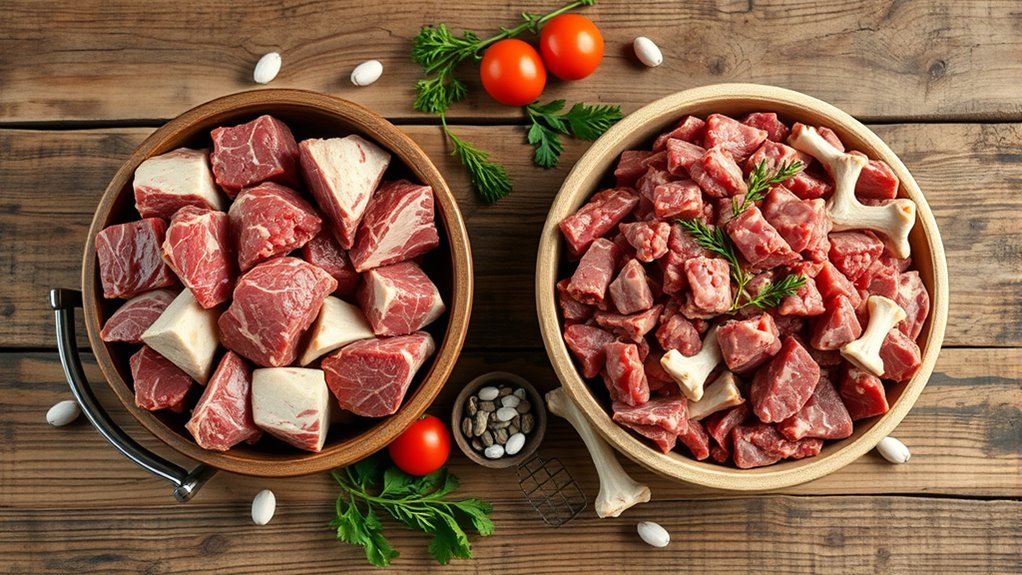
If you’re considering raw feeding for your dog, understanding the basics is crucial to guarantee their health and safety. Raw diets often involve feeding dogs homemade recipes that mimic their natural diet, focusing on fresh, uncooked ingredients. But before diving in, it’s essential to grasp the core principles, especially how to guarantee a nutritional balance. Without proper planning, your dog might miss out on vital nutrients or consume harmful substances.
Understanding raw feeding basics ensures your dog’s health and safety.
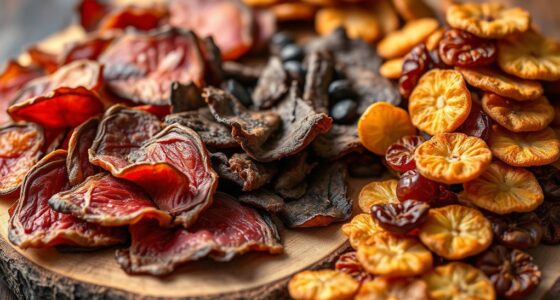
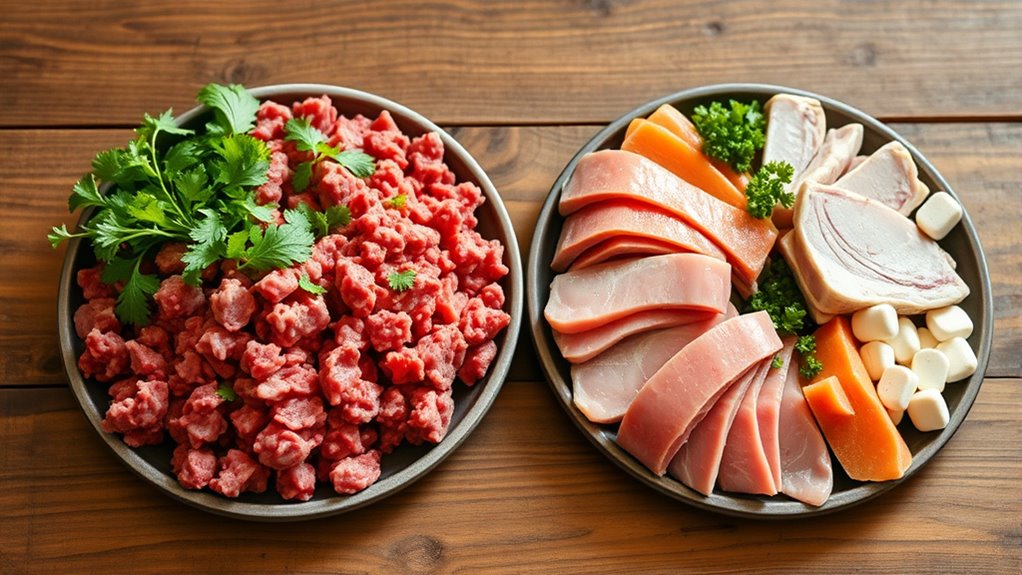
The two most popular approaches to raw feeding are BARF (Biologically Appropriate Raw Food) and PMR (Prey Model Raw). BARF emphasizes a diet that includes a variety of ingredients, such as muscle meat, bones, organs, vegetables, and supplements, aiming to replicate what a dog might hunt in the wild. The focus here is on creating homemade recipes that provide a complete range of nutrients, ensuring your dog’s diet remains balanced and whole. With BARF, you have to pay close attention to the proportions of different ingredients, regularly adjusting to meet your dog’s age, size, and health needs. This approach can be flexible, allowing you to tailor meals to your dog’s preferences and nutritional requirements.
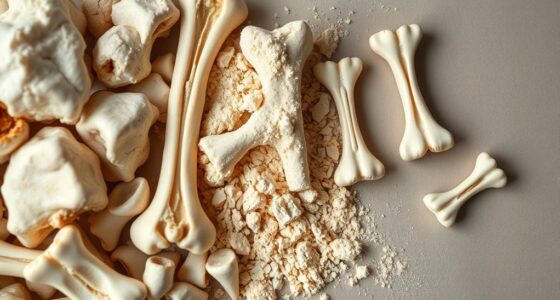
On the other hand, PMR simplifies the diet by mimicking the prey animals dogs would hunt naturally. It primarily involves feeding raw muscle meat, bones, and organs in specific ratios, often without added vegetables or supplements. This method is straightforward but requires a good understanding of prey anatomy to maintain proper nutritional balance. PMR can be easier to prepare because it involves fewer ingredients and less mixing, but it demands precise knowledge to avoid deficiencies or excesses.
Both methods aim to provide your dog with a diet that promotes health, vitality, and a natural lifestyle. However, they require careful planning and knowledge. When you choose homemade recipes, you must guarantee they are nutritionally balanced, offering all essential vitamins and minerals. Consulting with a canine nutritionist or veterinarian experienced in raw diets can help you develop a meal plan that keeps your dog healthy and thriving. Remember, the goal is to give your dog a diet that’s as close as possible to what their ancestors ate, but it must be done responsibly. Regularly monitoring your dog’s health and adjusting the diet as needed will help you successfully implement raw feeding without compromising their well-being. Additionally, understanding vetted sources of information can help ensure you’re following safe and effective feeding practices.

Smart Automatic Cat Feeder - 6-L Reliable Automatic Cat Food Dispenser with Display LCD Screen for Easy Set Up - (White)
RELIABLE FEEDING - The automatic pet feeder will ensure your pet is fed at the designated time even...
As an affiliate, we earn on qualifying purchases.
Frequently Asked Questions
Can Raw Feeding Improve My Dog’s Coat and Skin Health?
Raw feeding can definitely improve your dog’s coat shine and reduce skin irritation. By providing natural, raw nutrients, you support healthier skin and a shinier coat. You’ll notice fewer issues like dryness or itching, as raw diets often contain essential fatty acids and vitamins that promote skin and coat health. Switching to raw can make your pup’s fur look more vibrant and their skin feel smoother and less irritated.
How Do I Transition My Dog to a Raw Diet Safely?
Sure, shifting your dog to a raw diet is a breeze—if you enjoy patience and a good challenge. Start with a gradual changeover, slowly blending raw with their current food over a week or two. Keep a consistent feeding schedule, and watch for any signs of discomfort. This careful approach helps avoid stomach upset and guarantees your pup adapts smoothly, making raw feeding a rewarding journey rather than a stressful one.
Are There Specific Breeds That Benefit More From Raw Feeding?
Certain breeds, like working dogs and those with specific breed preferences, often benefit more from raw feeding due to their higher energy levels and unique health needs. You’ll notice improved coat quality, digestion, and overall well-being. Large breeds, in particular, may see reduced joint issues. Always consider your dog’s breed and individual health benefits, and consult your vet to create a balanced raw diet tailored to your dog’s specific needs.
What Are the Signs of a Raw Diet That’s Not Suitable for My Dog?
If your dog shows picky eating habits or experiences sudden weight loss, their raw diet may not be suitable. Watch for persistent refusal to eat, lethargy, or digestive issues like diarrhea or vomiting. These signs indicate your dog might not be coping with the diet well, and you should consult your vet. Adjusting the diet or switching to a different feeding plan could help ensure your dog stays healthy and happy.
How Do I Ensure My Dog Gets Balanced Nutrition From Raw Feeding?
Worried about your dog turning into a nutritional genius? Don’t fret! To guarantee balanced nutrition, stick to a proper feeding schedule and include essential nutritional supplements like calcium and vitamins. Rotate ingredients to cover all bases, and monitor your pup’s health for signs of deficiency. Remember, a well-planned raw diet isn’t just about meat; it’s about giving your dog a complete, balanced meal every time!

ANDOLL HOME Automatic Cat Feeder, 4L Cat Food Dispenser with 10s Voice Recorder, Pet Feeder up to 8 Meals per Day, Timed Dog Feeder with Dry Food Sealed Ring
【Smooth feeding, No food blockage】-Have you encountered any issues with the food cardholder not coming out while using...
As an affiliate, we earn on qualifying purchases.
Conclusion
Now you’re equipped with the basics of raw feeding, whether you choose BARF or PMR. Think of it as giving your dog a natural, wholesome meal straight from the wild, like a chef preparing a fresh, homemade dish. Remember, consistency and balance are key to keeping your pup happy and healthy. With the right approach, you’re nurturing your furry friend just like a gardener tending a vibrant, thriving garden.

VOLUAS Automatic Cat Feeders - Timed Pet Feeder for Cats and Dogs with Dry Food Dispenser, Desiccant Bag, Programmable Portion Control, 4 Daily Meals, 10s Voice Recorder
Easy Programmable Feeding Times: Reliably feed your beloved pet at your convenience any time during the day or...
As an affiliate, we earn on qualifying purchases.

PETLIBRO Automatic Cat Feeder, 5G WiFi Automatic Dog Food Dispenser with Freshness Preservation, 5L Timed Pet Feeder with Low Food Sensor, Up to 10 Meals Per Day, Granary Black
Smart APP Control: Wi-Fi fully automatic dog feeder is 5GHz and 2.4GHz WiFi-enabled allowing you to program your...
As an affiliate, we earn on qualifying purchases.