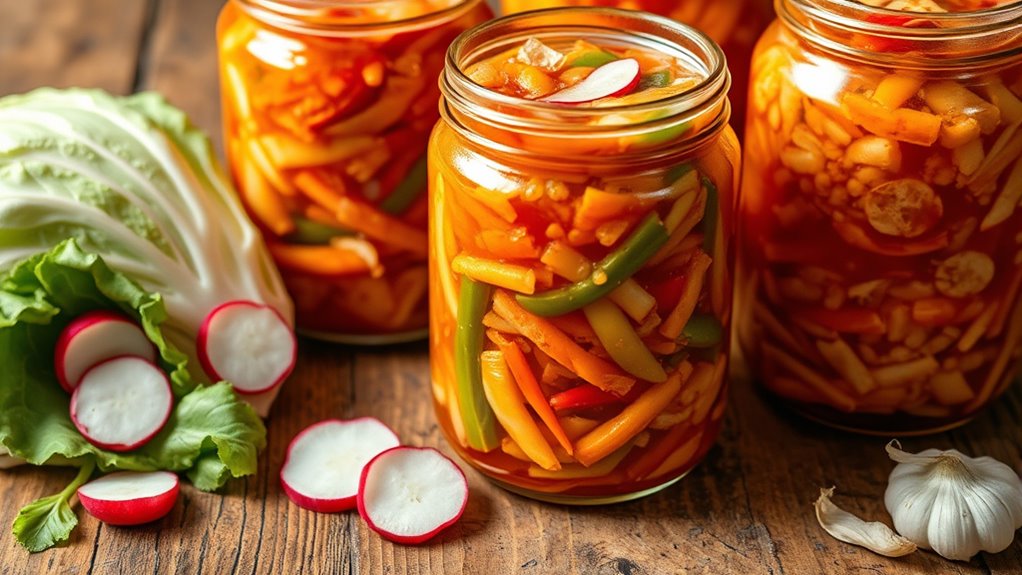

Fermentation transforms raw vegetables into tasty, probiotic-rich foods like sauerkraut and kimchi using beneficial microorganisms called lactic acid bacteria. You start by packing your veggies tightly in an appropriate vessel, adding salt to draw out moisture and promote beneficial microbes. Maintaining the right temperature and keeping the vegetables submerged creates ideal conditions for fermentation. As the process progresses, you’ll notice bubbles and tangy flavors—exploring these details can help you craft delicious, healthy ferments.

Get health and wellness essentials delivered free — and shop member deals
- Fast, free delivery on millions of items
- Access to Prime Big Deal Days deals on October 6–7
- Prime Video, Amazon Music and more included
Key Takeaways
- Fermentation uses beneficial microorganisms like lactic acid bacteria to transform raw vegetables into flavorful, probiotic-rich foods like sauerkraut and kimchi.
- Choosing the right fermentation vessel—such as glass jars or ceramic crocks—ensures an airtight environment that supports beneficial microbes.
- Proper preparation involves tightly packing vegetables with salt to activate natural lactic acid bacteria and produce lactic acid for preservation.
- Maintaining optimal conditions—such as temperature (65-75°F), submerged vegetables, and gas release—ensures successful fermentation.
- The process results in tangy, nutrient-dense foods that enhance gut health and preserve vegetables naturally through acid production.
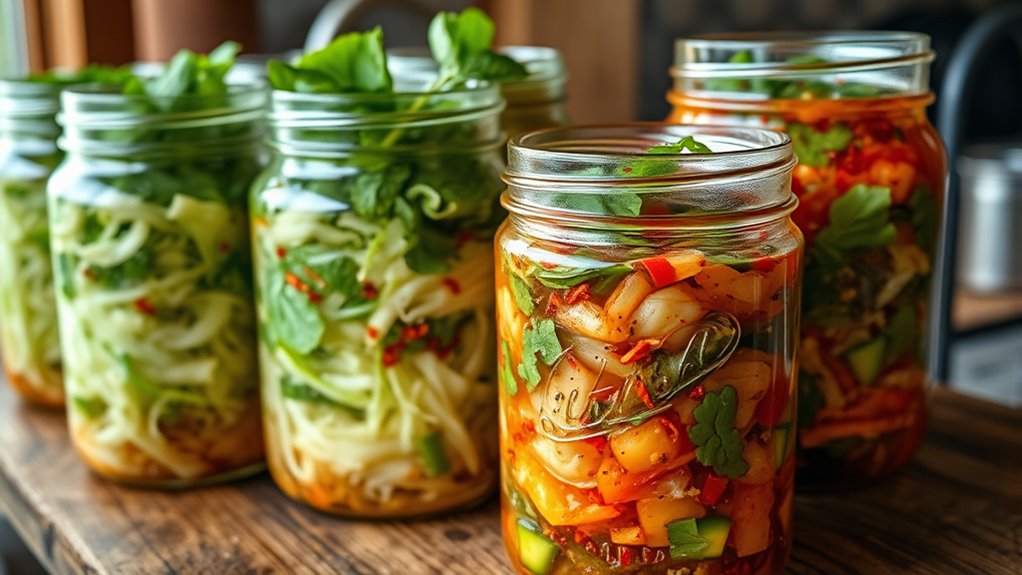
Have you ever wondered how foods like yogurt, sauerkraut, and kimchi develop their unique flavors? The secret lies in fermentation, a natural process where microorganisms transform food in ways that enhance taste, texture, and nutritional value. Central to this process are lactic acid bacteria, tiny yet powerful microbes that drive the fermentation. When you set out to make your own fermented foods, the choice of fermentation vessels becomes essential. These vessels—glass jars, ceramic crocks, or food-safe plastic containers—serve as the environment where the magic happens. They must be airtight enough to keep out unwanted bacteria but allow gases to escape, creating the perfect conditions for lactic acid bacteria to flourish.
Once you have your fermentation vessel ready, the process begins with preparing the vegetables, like cabbage for sauerkraut or Napa cabbage and radish for kimchi. You pack these tightly into your chosen vessel, often adding salt to draw out moisture and create an environment inhospitable to harmful bacteria. As you do this, the lactic acid bacteria naturally present on the vegetables start to become active. They feed on the sugars in the vegetables, producing lactic acid as a byproduct. This acid not only gives fermented foods their tangy flavor but also acts as a preservative, preventing spoilage.
Packing vegetables tightly with salt activates natural lactic acid bacteria for tangy, preserved fermentations.
Throughout fermentation, maintaining proper conditions is key. The temperature should ideally stay between 65-75°F (18-24°C), as this encourages the growth of beneficial bacteria while inhibiting pathogens. During this time, the lactic acid bacteria continue to multiply and produce acids, lowering the pH of your mixture. As the environment becomes more acidic, the flavors deepen, and the texture of your vegetables softens slightly. You’ll notice bubbles or fizz, signaling active fermentation. It’s important to keep the vegetables submerged under the brine to prevent mold or unwanted bacteria from taking hold. Using fermentation weights or a clean cloth secured with a rubber band can help keep everything submerged. Proper vessel selection ensures a successful fermentation process.
Over several days to weeks, your vegetables transform into flavorful, probiotic-rich foods. The lactic acid bacteria not only shape the taste but also contribute to your gut health. When you understand how fermentation vessels and lactic acid bacteria work together, you gain insight into creating delicious, healthy raw foods. Each step in this process is a careful balance of environment, ingredients, and patience, but the end result—a tangy, nutrient-dense food—is well worth the effort. Now, you’re equipped to explore the world of fermentation and enjoy the vibrant flavors of homemade sauerkraut, kimchi, and more.
As an affiliate, we earn on qualifying purchases.
Frequently Asked Questions
How Long Does Homemade Fermentation Typically Last?
Homemade fermentation usually lasts from a few days to several weeks, depending on the flavor you want. The fermentation timeline generally spans 1 to 4 weeks, but some ferments develop better over time. Once they’re ready, you can store them in the fridge for up to several months, maintaining their flavor and crunch. Keep an eye on taste and texture to decide the perfect storage duration for your ferment.
Can Fermented Foods Be Made Without Salt?
Yes, you can make fermented foods without salt, though it’s less common. Many salt alternatives, like seaweed, herbs, or spices, can support fermentation without traditional salt, but it may take longer or require more careful monitoring. Some people worry about safety, but fermentation without salt is possible if you keep everything clean and use proper fermentation techniques. Just be patient and attentive to the process.
Are There Safety Risks With Home Fermentation?
Home fermentation can be safe if you follow proper fermentation safety guidelines, but there are some homemade risks to watch out for. You might encounter mold, harmful bacteria, or spoilage if cleanliness isn’t maintained or if fermentation times are off. Always use fresh ingredients, keep everything sanitized, and monitor your ferment closely. Staying vigilant helps prevent unsafe conditions and guarantees your fermented foods are both delightful and safe to enjoy.
How Do I Troubleshoot Mold or Bad Odors?
If you notice mold or bad odors during fermentation, first remove any mold or spoiled sections immediately to prevent spread. Guarantee proper mold prevention by keeping your fermentation jars submerged and maintaining a clean environment. To remove odors, rinse the jar with vinegar or lemon water before resuming. Regularly check your ferment and adjust salt levels if needed, as proper mold prevention is key to avoiding bad smells.
What Are the Health Benefits of Fermented Foods?
Fermented foods boost your health by enhancing probiotic diversity, which supports your digestion and gut health. They also strengthen your immune system, helping you fight off illnesses more effectively. By consuming foods like sauerkraut and kimchi regularly, you introduce beneficial bacteria that improve nutrient absorption and reduce inflammation. These benefits make fermented foods a tasty, natural way to support your overall well-being and maintain a healthy balance in your body.
Conclusion
By now, you see that fermentation isn’t just a trendy buzzword—it’s a time-tested way to boost your health and flavor your meals. Some skeptics say fermentation’s benefits are exaggerated, but scientific studies consistently show it enhances digestion and boosts immunity. So, don’t dismiss this ancient practice; give it a try. The evidence supports that fermenting your foods, like sauerkraut and kimchi, can genuinely improve your well-being, making it a worthwhile addition to your raw cuisine journey.
Fall Picks
fall essentials
As an affiliate, we earn on qualifying purchases.