
To stay warm with raw foods in winter, focus on nutrient-dense options like nuts, seeds, and seasonal fruits, and incorporate warming spices such as cinnamon, ginger, and cloves into your dishes. Pair raw meals with warm drinks like herbal teas, and use creative presentation to make them cozy. Adding these simple tricks helps your body stay comfortable without needing to cook everything—learn more ways to enjoy raw winter foods today.
Key Takeaways
- Incorporate warming spices like cinnamon, ginger, and cloves into raw dishes to create comforting, heat-inducing flavors.
- Add seasonal fruits and crunchy nuts or seeds to raw meals for texture and natural warmth.
- Pair raw foods with warm beverages such as herbal teas or infused waters to enhance warmth.
- Use colorful layering and creative presentation techniques to make raw dishes visually appealing and cozy.
- Focus on nutrient-dense ingredients like greens, sprouted legumes, and raw nuts to support immunity and energy during colder months.
Why Raw Foods Can Keep You Warm During Winter
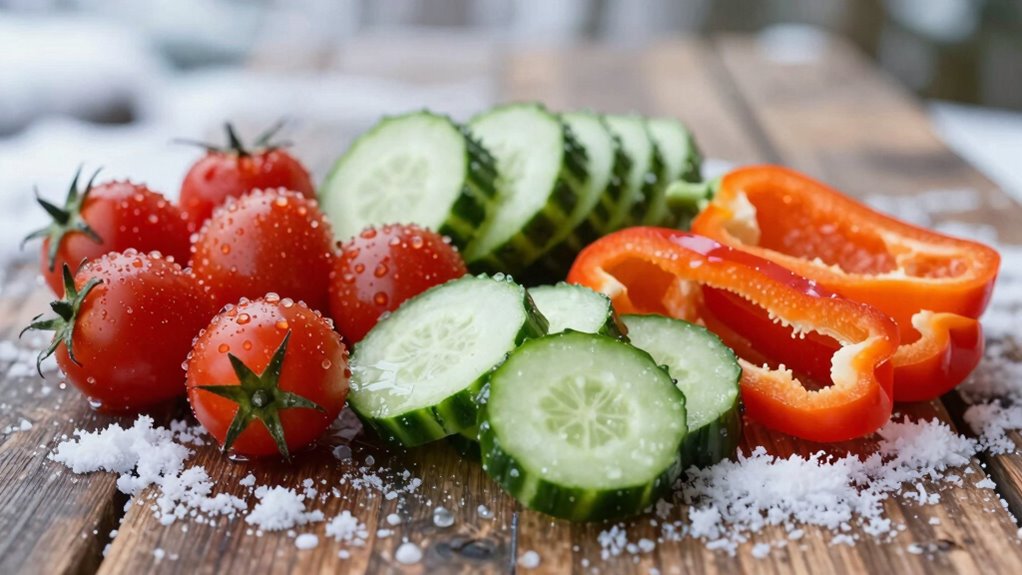
Although it might seem counterintuitive, eating raw foods during winter can actually help keep you warm. Many raw food myths suggest that cold foods will make you colder, but the truth is that raw foods are rich in enzymes and nutrients that support your body’s natural warmth and digestion. These foods are easier for your body to process, requiring less energy and heat to digest, which can help maintain your core temperature. Incorporating raw fruits and vegetables into your winter nutrition can boost your immune system and provide essential vitamins without adding unnecessary heat. By choosing raw over cooked, you’re supporting your body’s ability to stay warm and energized naturally, breaking the common misconception that raw foods are only suitable for summer. Additionally, raw foods contain digestive enzymes that can enhance your digestion and overall energy levels during colder months. Recognizing the benefits of raw foods can help you make smarter nutritional choices in winter, especially since their nutrient preservation remains intact when consumed raw. Embracing raw foods can also promote overall health benefits, making them a valuable addition to your winter diet.
Simple Raw Meal Ideas to Stay Cozy on Cold Days
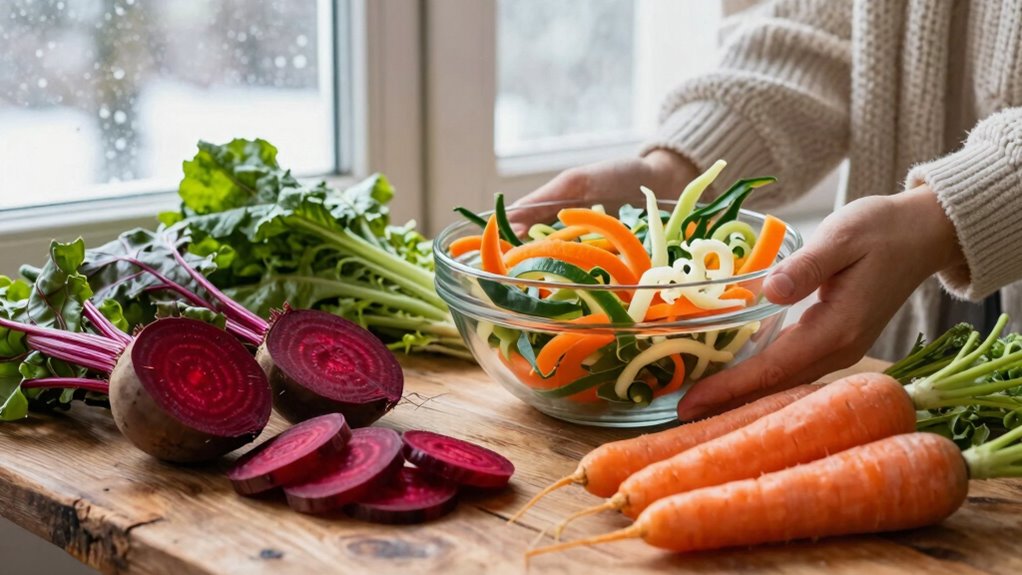
When the temperature drops, switching to simple raw meal ideas can help you stay cozy without sacrificing nutrition. Warm up with raw desserts like date and almond bars, or enjoy cold weather fruits such as apples, pears, and oranges. These options are satisfying and easy to prepare, keeping you energized without cooking. Incorporate textures and flavors to make raw dishes more comforting. Here’s a quick idea table:
| Raw Dessert | Cold Weather Fruits | Nut & Seed Mixes |
|---|---|---|
| Date energy balls | Sliced apples | Walnut and pumpkin seed trail mix |
| Banana ice cream | Pear slices | Sunflower seed clusters |
| Coconut macaroons | Orange segments | Cashew and sesame snack |
Adding nutritional balance through diverse ingredients can enhance the nutritional value of your meals during winter. Incorporating seasonal ingredients can further boost flavor and health benefits. Furthermore, experimenting with different presentation styles can make raw meals more appealing and inviting. These raw ideas keep you warm, nourished, and cozy throughout winter days, and exploring colorful presentation can make the experience even more inviting.
Tips to Make Raw Dishes Feel Warm and Comforting

You can make raw dishes feel warmer and more comforting by adding elements that enhance their texture and aroma. Incorporate seasonal fruit pairings, such as crisp apples or ripe pears, to bring a natural sweetness and a cozy feel. Using raw food presentation techniques, like layering colorful slices or arranging ingredients artfully, can elevate the dish’s visual warmth. Consider serving salads in small, rustic bowls or garnishing with toasted nuts or seeds for added crunch. These small touches make the dish feel more inviting and hearty. Combining the vibrant flavors of seasonal fruits with thoughtful presentation creates a sensory experience that feels comforting, even without heat. Paying attention to presentation techniques can enhance the overall perception of warmth and satisfaction in raw dishes. This approach helps your raw recipes feel more satisfying during colder months. Additionally, incorporating visual appeal through color contrast and creative plating can further amplify the cozy, warm feeling. Incorporating food styling tips can also make your dishes look more appealing and inviting. Furthermore, utilizing cultural presentation methods can help evoke a sense of warmth rooted in culinary traditions.
Adding Warm Spices to Your Raw Recipes

Adding warm spices can instantly make your raw recipes feel cozier during winter. You might try spice blends that bring comfort and depth, like cinnamon and nutmeg, or incorporate fresh ginger and cloves for a spicy kick. These simple swaps can transform your dishes into warming winter favorites. Incorporating essential oils for respiratory health into your kitchen routines, such as adding a few drops of eucalyptus or peppermint oil, can also help you breathe easier and enhance the cozy feeling. Using durable survival gear like a reliable flashlight or a weather-resistant shelter can ensure you stay safe and comfortable even in harsh winter conditions. When selecting spices, consider their origins and quality, which can influence both flavor and health benefits. Paying attention to spice freshness can further maximize their warming and health-boosting effects.
Spice Blends for Warmth
During the colder months, incorporating warm spices into your raw recipes can make them feel more comforting and satisfying. Spice blends are a simple way to add warmth and depth. You can create custom mixes or use pre-made blends for tea infusions and herbal remedies. Here are some ideas:
- Ginger and turmeric for a fiery, earthy flavor that boosts immunity. They also have anti-inflammatory properties, making your dishes both tasty and healthful.
- Cumin and coriander for a warm, aromatic touch.
- Cardamom and clove for a sweet-spicy aroma reminiscent of chai.
- Cinnamon and cayenne for a fiery, sweet balance.
Mix these spices into smoothies, salads, or dips, and enjoy the warming sensation they bring to raw dishes without cooking. Proper piercing care and hygiene help prevent irritation when adding spicy ingredients to your recipes, ensuring a safe and enjoyable experience.
Using Cinnamon and Nutmeg
Cinnamon and nutmeg are classic warm spices that instantly evoke cozy, comforting flavors in raw recipes. Cinnamon benefits include its anti-inflammatory properties and ability to help regulate blood sugar levels, making it a healthful addition to your dishes. Nutmeg has a rich history, dating back centuries as a prized spice used in traditional remedies and sweet treats. When adding these spices to raw recipes, start with a pinch of nutmeg and a dash of cinnamon to enhance flavors without overpowering. Their aromatic qualities can transform simple ingredients into comforting, winter-ready treats. Incorporating cinnamon and nutmeg not only boosts flavor but also offers health benefits, making your raw winter dishes more satisfying and warming without needing to cook. Additionally, using essential oils such as cinnamon or nutmeg in diffusers can enhance the cozy atmosphere in your home during the colder months. Including these spices in your kitchen routines can also contribute to immune support, helping you stay healthy throughout the winter season. Recognizing their thermogenic effects can further motivate you to incorporate these spices into your daily routine for natural warmth and comfort. For example, the solar energy harnessed by the sun can be seen as a metaphor for how these spices generate warmth internally. Plus, these spices can be used to create aromatherapy blends that promote relaxation and well-being during the chilly season.
Incorporating Ginger and Cloves
Have you ever noticed how a hint of ginger and cloves can instantly warm up raw winter recipes? These spices aren’t just flavorful; they also offer impressive health benefits. Ginger benefits include reducing inflammation and boosting digestion, while clove uses range from antimicrobial properties to relieving pain. To incorporate them effectively, try these tips:
- Grate fresh ginger into salads or smoothies for a spicy kick.
- Add a pinch of ground cloves to raw dressings or nut butters.
- Use sliced ginger and cloves in infused water for a warming beverage.
- Sprinkle a small amount of dried cloves on fruit salads for added depth.
- Understanding cybersecurity measures can help protect your devices from hacking attempts while enjoying your raw recipes at home.
- Additionally, being aware of investment risks can help you make safer choices if you decide to diversify your health and wellness routines with supplements or herbal remedies.
- Exploring authentic spices can enhance both flavor and health benefits in your recipes.
Balancing Nutrition and Comfort in Raw Winter Meals
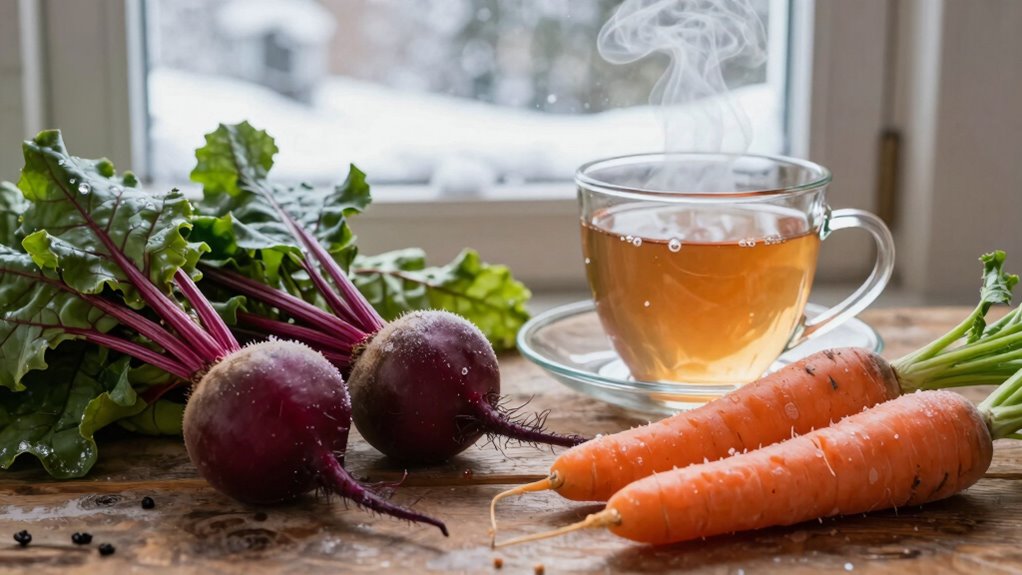
In winter, you can make raw meals both nourishing and comforting by incorporating warm spices and rich flavors. Choosing nutrient-dense raw options helps keep you energized and satisfied during colder months. Finding the right balance allows you to enjoy raw foods without sacrificing warmth or nutrition.
Warm Spices and Flavors
As winter’s chill sets in, incorporating warm spices and bold flavors into raw meals can provide both comfort and nutritional balance. Adding spices like cinnamon, ginger, cardamom, or nutmeg enhances flavor and offers health benefits. You can:
- Sprinkle cinnamon on fruit salads for a cozy touch.
- Mix ginger into herbal teas for warmth.
- Use nutmeg in raw holiday desserts like dairy-free puddings.
- Incorporate cardamom into smoothies for a fragrant boost.
These spices not only elevate your dishes but also help you feel warmer from within. They pair beautifully with seasonal ingredients and can make raw meals feel indulgent. Warm spices turn simple raw foods into comforting winter treats, keeping you cozy without sacrificing freshness or nutrition.
Nutrient-Dense Raw Options
When it’s cold outside, choosing nutrient-dense raw options can keep your body energized and balanced. Focus on raw snack ideas packed with vitamins, minerals, and antioxidants to boost your immunity and sustain warmth. Incorporate nutrient preservation techniques like dehydrating fruits or adding nutrient-rich greens to salads. Nuts, seeds, and sprouted legumes are excellent raw choices that provide healthy fats and protein, helping you stay full longer. Juicing or blending vegetables and fruits offers concentrated nutrients in a revitalizing way, perfect for winter days. By selecting raw options that maximize nutrient retention, you enjoy essential sustenance without sacrificing comfort. These nutrient-dense raw snacks keep your energy steady and your body nourished during the cold months, making raw eating both satisfying and practical.
Overcoming Challenges When Eating Raw in Cold Weather
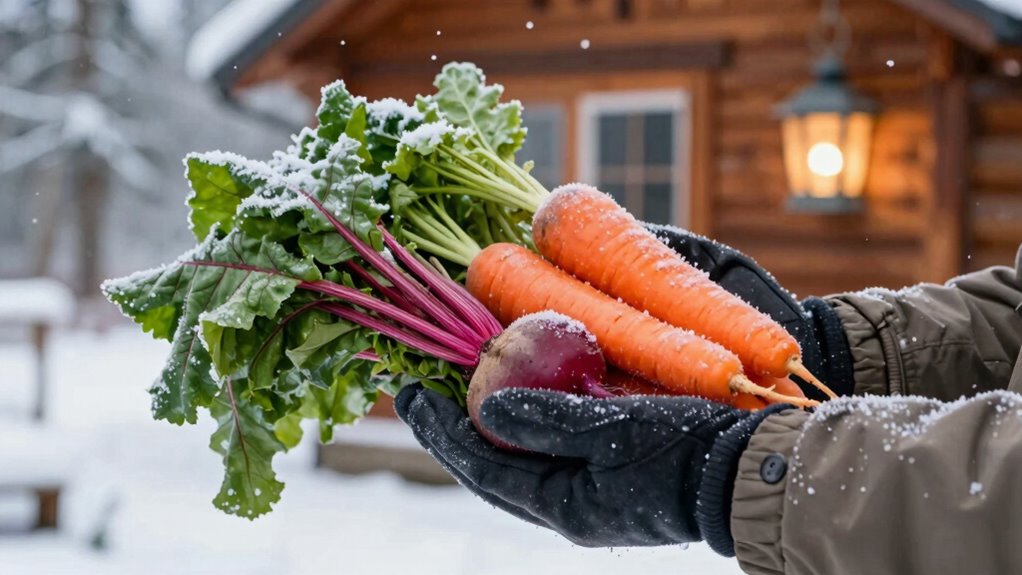
Despite the chilly temperatures, eating raw in winter can be enjoyable if you take the right precautions. Cold weather often makes raw food less appealing, but you can overcome this by:
- Keeping raw ingredients chilled or refrigerated until serving to prevent warming.
- Incorporating warming spices like ginger or cinnamon into your salads or dips.
- Choosing hearty, crunchy raw foods like carrots or apples that feel more satisfying.
- Consuming warm drinks like herbal teas or infused waters alongside your raw meals.
These strategies help you stay comfortable and enjoy raw food without feeling chilled. Remember, the key is balancing cold weather challenges with thoughtful preparation, ensuring you maintain energy and warmth while eating raw during winter.
Frequently Asked Questions
Can Raw Foods Help Prevent Winter Colds and Flu?
Raw foods can help prevent winter colds and flu by providing immune boosts through nutrient-dense options like citrus, leafy greens, and garlic. Eating raw preserves nutrients, ensuring better absorption, which strengthens your immune system. When you include these in your diet, you support your body’s natural defenses, making it easier to fend off infections. So, incorporating raw foods into your winter routine can be a smart way to stay healthier.
Are There Specific Raw Vegetables Better Suited for Winter?
You’ll want to focus on winter vegetables like kale, Brussels sprouts, and carrots, which are naturally hearty and nutritious. Incorporate these into hearty salads or raw veggie bowls to stay warm without cooking. These vegetables are packed with vitamins and fiber, helping you feel full and energized during colder months. Keep your salads colorful and varied to enjoy the benefits of seasonal produce while staying cozy and healthy.
How Can I Store Raw Ingredients to Keep Them Fresh in Winter?
Think of your ingredients as treasures needing special care. To keep raw ingredients fresh in winter, use effective refrigeration techniques like wrapping produce properly and maintaining consistent temperatures. Store seasonal produce in crisper drawers or cool, dark places to extend their freshness. Regularly check for spoilage and plan your storage based on the produce’s needs, ensuring your ingredients stay vibrant and ready for your raw winter dishes.
Is It Safe to Eat Raw in Extremely Cold Outdoor Conditions?
Eating raw in extremely cold outdoor conditions can be safe if you prioritize food safety and proper handling. Make sure your ingredients are fresh and stored correctly to prevent contamination. Cold temperatures can help preserve nutrients, but you should avoid exposing raw food to extreme elements for too long. Use insulated containers or coolers, and consume your raw foods promptly to minimize risks and maximize nutrient preservation.
Can Raw Foods Replace Hot Meals for Energy During Winter?
Raw foods can supplement your winter nutrition, but they shouldn’t replace hot meals entirely. While raw food benefits include preserving nutrients and boosting digestion, they may not provide enough warmth or energy in extreme cold. To stay energized, incorporate a mix of raw and warm dishes. This balance helps you enjoy raw food benefits while keeping your body warm and fueled throughout winter.
Conclusion
Embrace raw foods this winter as your cozy sanctuary, like a warm blanket wrapping around you. Let vibrant spices and comforting textures be your guiding stars through cold days, transforming raw ingredients into a soothing refuge. Remember, your raw journey is a flame that keeps winter’s chill at bay, brightening your days with nourishment and warmth. Stay steady, and let each bite be a reminder that even in coldest times, you hold the power to create your own warmth.