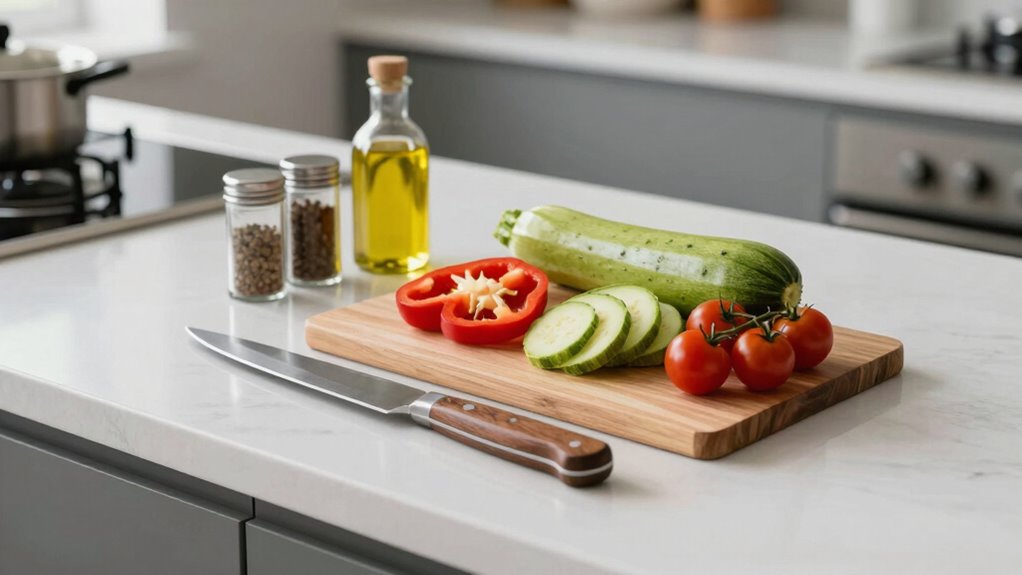
A simple raw kitchen starter kit includes essential tools like a sharp knife, grater, and cutting board to prep fruits and vegetables efficiently. A high-speed blender or food processor helps create raw sauces, smoothies, and spreads, while storage containers keep ingredients fresh and organized. Extra gadgets like dehydrators or spiralizers can enhance creativity but aren’t vital at first. Keeping clutter out of your space boosts efficiency—stick with what truly serves your goals, and you’ll discover more as you go.
Key Takeaways
- Prioritize essential tools like sharp knives, graters, and high-speed blenders for versatile raw food prep.
- Focus on minimal, multi-purpose equipment to reduce clutter and enhance efficiency.
- Storage solutions such as airtight glass containers help preserve freshness and organization.
- Non-essential items like decorative serveware or specialized gadgets can be added later as needed.
- Regularly evaluate your kit, keeping only reliable, high-quality tools to avoid unnecessary expenses.
Why You Don’t Need Every Gadget in Your Raw Kitchen
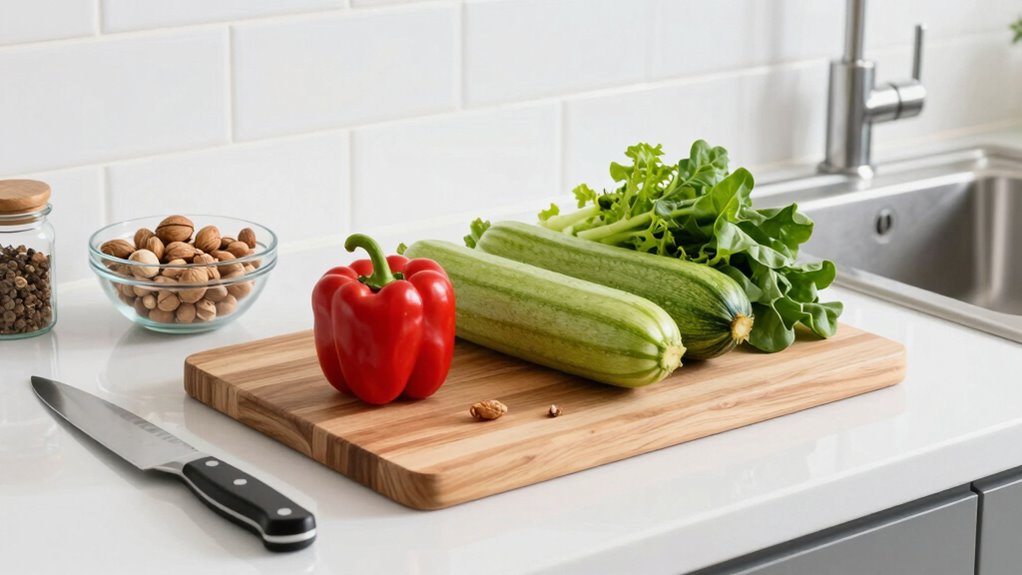
You might think you need every fancy gadget to create delicious raw meals, but that’s not true. Focus on what truly enhances your culinary aesthetics and supports raw ingredient sourcing. Basic tools like sharp knives and a quality grater can make a big difference without cluttering your space. Many gadgets promise convenience but often complicate the process or add unnecessary cost. Instead, prioritize simple equipment that helps you highlight fresh, raw ingredients’ natural flavors and textures. When you select tools thoughtfully, you’ll find that raw meal preparation becomes more intuitive and enjoyable. Remember, the key isn’t having the most gadgets but using the right ones to bring out the best in your ingredients and your culinary presentation. Incorporating minimalist design elements like natural decor can also elevate your raw kitchen environment without adding clutter. Paying attention to color harmony can further enhance the visual appeal of your raw dishes and overall kitchen aesthetic.
What Are the Must-Have Tools for Your Raw Food Kitchen?
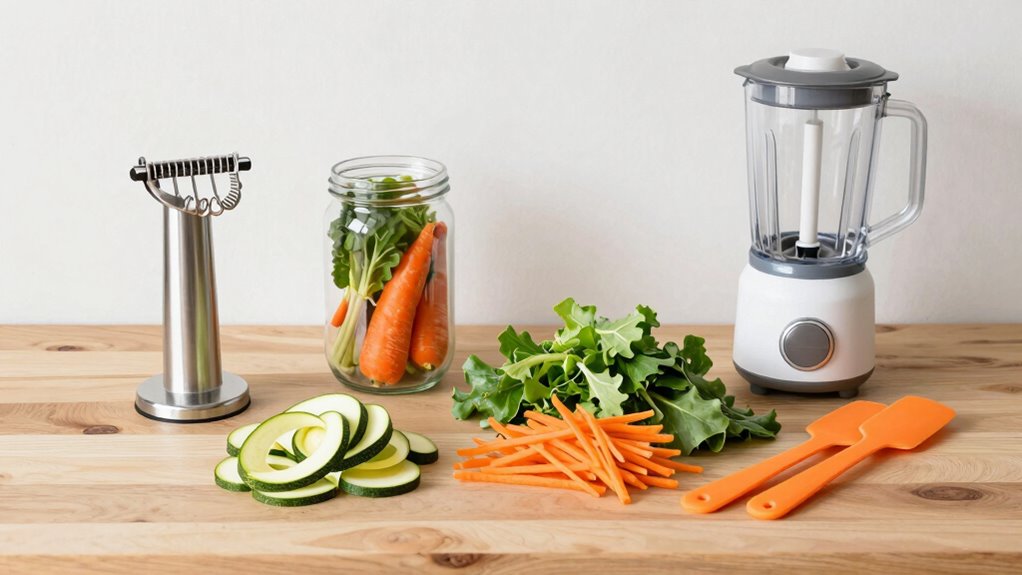
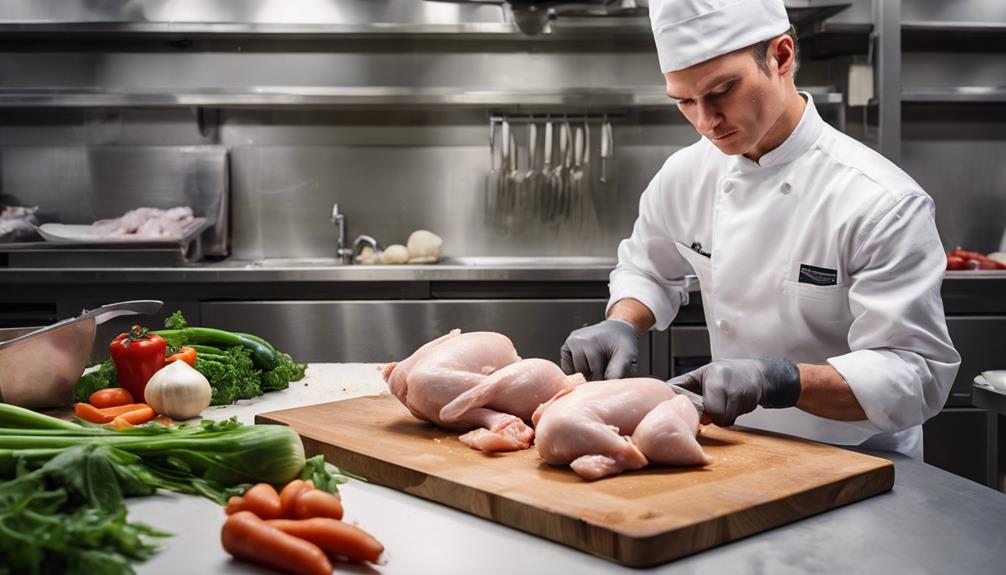
Focusing on the right tools can make your raw food preparation more efficient and enjoyable. Essential tools help streamline ingredient prep and ensure proper storage solutions. First, a sharp chef’s knife is crucial for slicing fruits and vegetables precisely. Second, a sturdy grater makes quick work of ingredient prep, such as zesting citrus or shredding vegetables. Third, glass or BPA-free storage containers keep your ingredients fresh and organized, preventing spoilage. Fourth, a dehydrator might not be essential but simplifies making raw snacks and preserves ingredients efficiently. These tools cover your basic ingredient prep needs and offer reliable storage solutions, helping you stay organized and efficient in your raw food kitchen without cluttering your space. Incorporating visual and auditory cues can also assist in mastering techniques like slicing and shredding for more consistent results.
Additional Kitchen Items for Raw Food Prep That Are Not Essential

While not strictly necessary, some extra food storage solutions can help keep your ingredients fresh longer. Specialized cutting tools can make specific tasks easier, but they’re not a must-have. You might also enjoy adding decorative servingware to elevate your presentation, even if it’s not essential. Incorporating kitchen ergonomics can lead to more comfortable and efficient food preparation. Additionally, investing in food preservation methods can extend the shelf life of your raw ingredients without complicating your routine. Proper kitchen organization techniques can further streamline your prep process and reduce clutter.
Extra Food Storage Solutions
Ever wonder how to keep extra food fresh and organized beyond basic containers? Extra storage solutions can enhance food preservation and pantry organization. While not essential, these items help extend freshness and make your raw food prep more efficient. Consider adding:
- Vacuum-sealed bags or containers for longer shelf life
- Stackable storage bins to maximize pantry space
- Glass jars for dry ingredients and snacks
- Over-the-door organizers for quick access to frequently used items
These solutions keep your raw foods fresh and tidy, reducing waste and clutter. They’re great for preserving produce, nuts, and seeds, helping you stay organized and prepared. Remember, these are extras—prioritize the basics first, then expand if you find them useful for your food storage needs.
Specialized Cutting Tools
Once you’ve organized your raw food storage with extra containers and bins, adding specialized cutting tools can further streamline your prep process. These unique kitchen gadgets aren’t essentials but can make tasks like julienning vegetables or spiralizing fruits faster and more consistent. For example, a spiralizer creates beautiful veggie noodles effortlessly, saving time and effort. Similarly, a mandoline slicer provides uniform slices, which can improve presentation and even cooking. While standard knives work for most jobs, specialized cutting tools can elevate your raw food prep by offering precision and convenience. Keep in mind, though, these tools are optional; focus on quality knives first, and add specialized gadgets only if they genuinely enhance your workflow or inspire your creativity in the kitchen.
Decorative Servingware
Decorative servingware adds a touch of elegance and creativity to your raw food presentation, making your dishes more visually appealing. While not essential, it can enhance your overall experience and impress guests. Consider these options for presentation enhancement:
- Colorful ceramic platters
- Artistic glass bowls
- Tiered serving trays
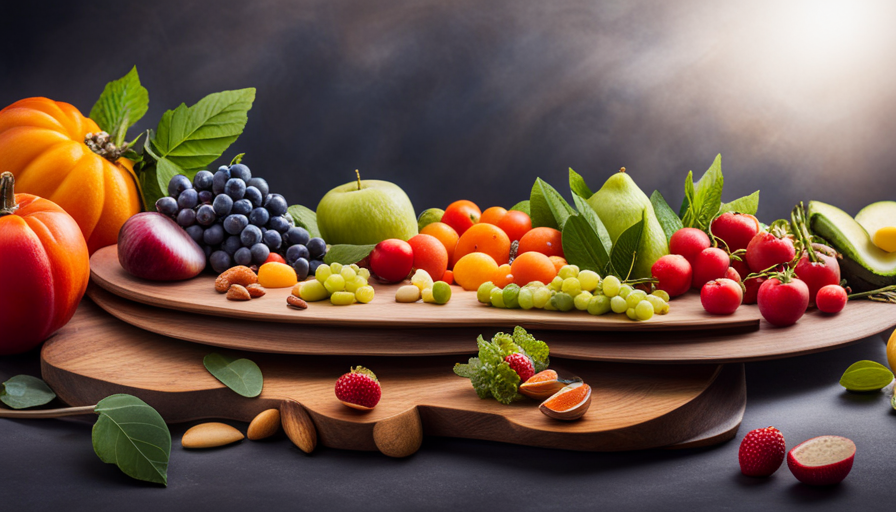
- Unique wooden boards
These items help showcase your raw creations beautifully, turning simple dishes into eye-catching displays. Decorative servingware allows you to experiment with different textures and colors, elevating your presentation without complicating prep. Remember, the goal is to enhance the visual appeal without overcomplicating your kitchen setup. Use these pieces sparingly to accentuate your raw food art, making your meals more inviting and memorable. Ultimately, decorative servingware is about adding personality and style to your raw food presentation, making it as delightful to see as it is to eat.
How to Choose the Best Food Processors and Blenders for Raw Meals
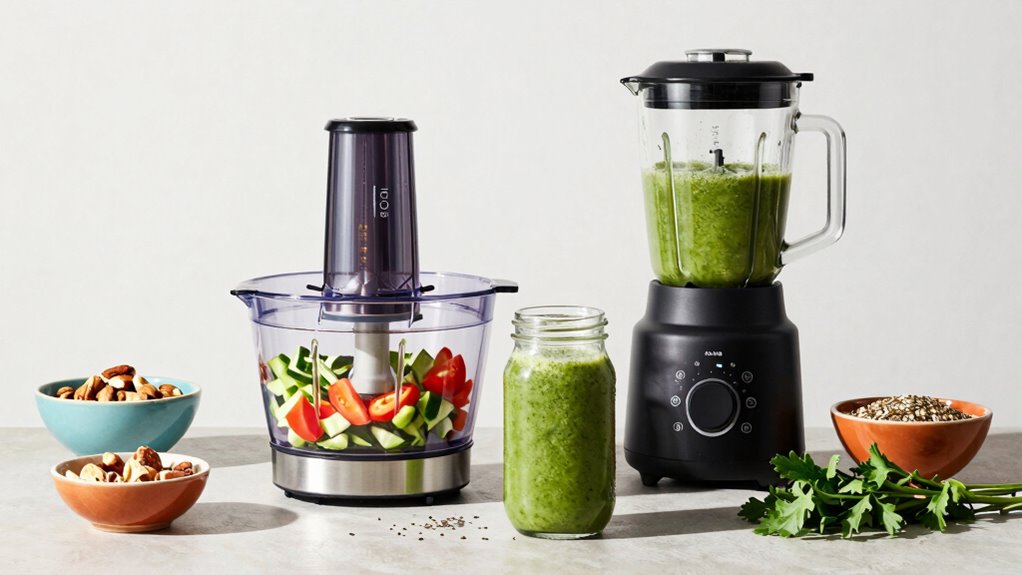
When selecting food processors and blenders for your raw meals, consider the size and capacity that best fit your typical batch. You’ll also want to evaluate their power and versatility to handle a variety of ingredients and textures. Choosing the right equipment guarantees efficiency and helps you create delicious, nutritious raw dishes with ease. For example, understanding net worth can give insight into the value and quality of certain high-end appliances, ensuring you invest in durable and effective tools. Additionally, paying attention to style and finish can impact the ease of cleaning and maintenance, which is important for keeping your equipment in top condition. Incorporating smart contract features in digital appliances or online recipe platforms can further enhance your raw food preparation experience. Moreover, understanding the evolution of arcade games can inspire you to select multifunctional appliances that combine several functions, making your kitchen setup more efficient and enjoyable.
Size and Capacity Choices
Choosing the right size and capacity for your food processor or blender is essential to guarantee it meets your raw meal preparation needs. Consider your available countertop space to ensure the appliance fits comfortably without cluttering your kitchen. Additionally, think about the storage capacity, especially if you prepare large batches or multiple ingredients at once. Here are some key points to guide your choice:
- Small (up to 3 cups) – ideal for single servings and limited countertop space
- Medium (3-7 cups) – versatile for most raw meal prep needs
- Large (7-14 cups) – perfect for batch cooking and family-sized portions
- Extra-large (over 14 cups) – suited for frequent large-scale preparations and extensive storage capacity
Matching size to your space and capacity needs ensures efficiency in your raw kitchen. Ice cream consumption can be a consideration if you plan to incorporate frozen ingredients or make homemade frozen treats.
Power and Versatility
Power and versatility are key factors to contemplate when selecting food processors and blenders for your raw meals. You need equipment that handles tough ingredients like nuts and seeds while maintaining a sleek kitchen aesthetic aligned with raw food trends. Look for models with strong motors and multiple speed options to blend smoothies, sauces, or dough effortlessly. Consider the versatility of attachments and functions, ensuring they suit diverse recipes. A powerful, adaptable machine not only enhances your culinary creativity but also streamlines your prep process. Additionally, choosing durable and reliable appliances ensures longevity and consistent performance in your raw food preparation.
Which Storage Containers Are Best for Raw Ingredients?
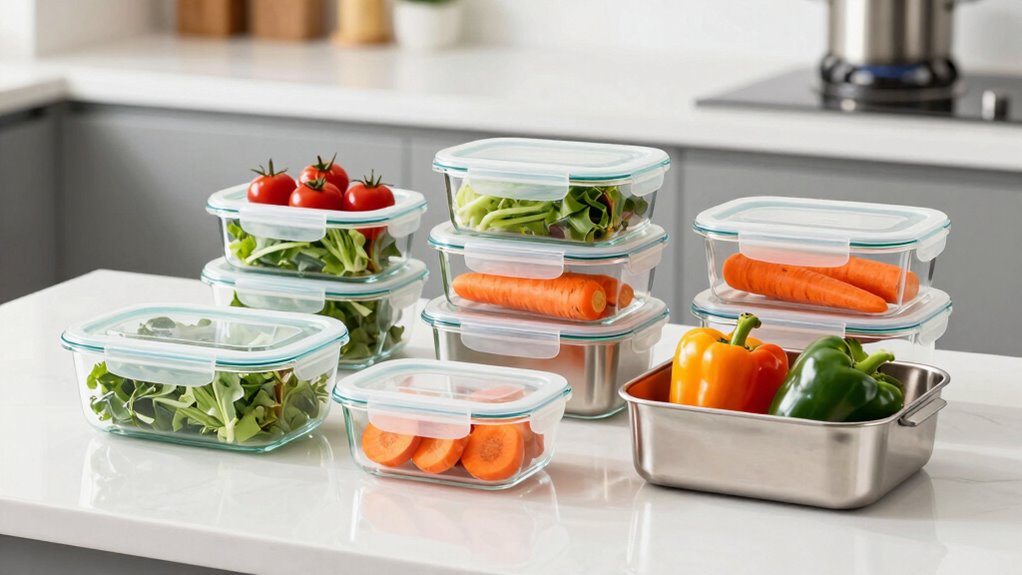
Selecting the right storage containers for raw ingredients is essential to keep them fresh and prevent spoilage. You want options that seal tightly and preserve flavor. Air tight containers are ideal because they prevent moisture and air from degrading your ingredients. Glass storage options are also excellent—they’re durable, non-reactive, and easy to clean. When choosing containers, consider these options:
- Airtight glass jars for herbs and spices
- Glass storage containers with silicone seals for chopped vegetables
- Stackable glass containers for grains and nuts
- Reusable silicone lids paired with glass bases for flexibility
These choices help maintain freshness, reduce waste, and offer a clean, eco-friendly way to organize your raw ingredients.
Essential Utensils to Make Raw Recipes Easier
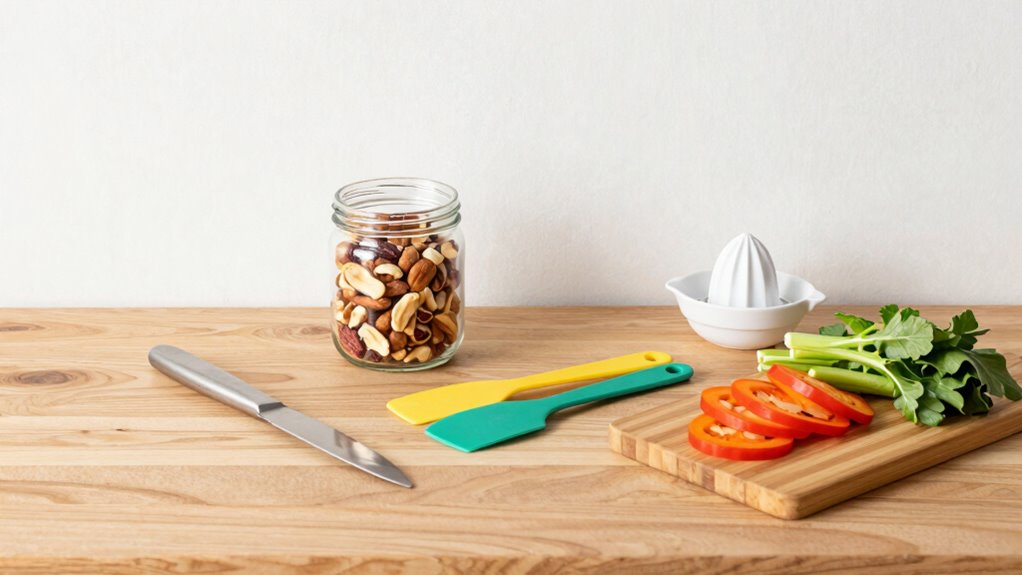
Having the right utensils on hand can make preparing raw recipes much more straightforward and enjoyable. A handheld spiralizer is essential for transforming vegetables like zucchini and carrots into noodles or decorative garnishes, adding variety and flair to your dishes. It’s simple to use and saves time compared to manual chopping. A citrus juicer is equally important, especially when recipes call for fresh lemon or lime juice. It extracts maximum juice with minimal effort, ensuring your dressings, dips, and smoothies have fresh, vibrant flavor. These utensils streamline your prep work, making raw cuisine more accessible and fun. Investing in these tools helps you stay organized and encourages experimentation, elevating your raw kitchen game without cluttering your space. Using proper utensils can also enhance your safety and efficiency in food preparation, making your raw culinary experience more enjoyable.
Budget-Friendly Items That Still Deliver Quality Results
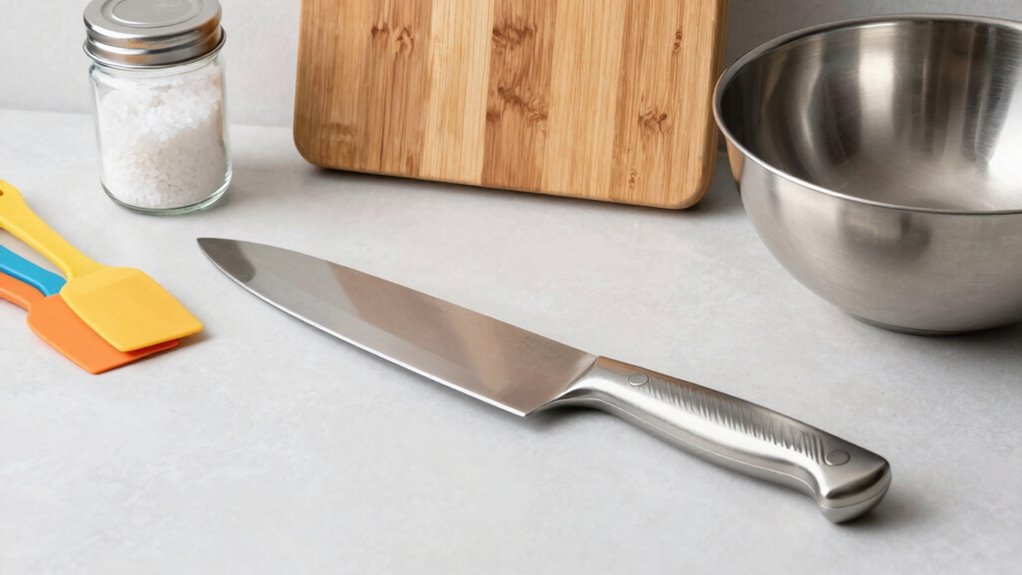
You don’t need to spend a fortune to get high-quality kitchen tools. Affordable essentials for beginners can handle a variety of raw recipes, saving you money without sacrificing performance. Multi-use tools make it easy to maximize your budget while building a reliable starter kit. Additionally, selecting durable and versatile tools ensures your investment pays off as your skills grow. Investing in quality over quantity helps you choose tools that will last longer and perform better over time. Incorporating multi-functionality into your selections can further streamline your kitchen and enhance your cooking experience. Emphasizing well-known brands can also ensure you’re investing in trusted and reliable products that stand the test of time. Understanding wood movement can help you select tools that remain effective despite environmental changes, ensuring long-term durability.
Affordable Essentials for Beginners
Getting started in the kitchen doesn’t have to break the bank. Embracing a minimalist approach helps you focus on essential tools that deliver quality results without overspending. To make the most of your budget hacks, choose versatile items that serve multiple purposes. Here are four affordable essentials for beginners:
- A sharp chef’s knife – vital for prepping everything from vegetables to meats.
- A sturdy cutting board – durable and easy to clean for daily use.
- A reliable non-stick skillet – perfect for sautéing, frying, and more.
- A set of measuring cups and spoons – guarantees accuracy in your recipes.
These items keep your setup simple and budget-friendly, setting a solid foundation for your culinary journey.
Multi-Use Kitchen Tools
Smart, multi-use kitchen tools can save you both space and money while still delivering high-quality results. Investing in multi-use tools enhances your kitchen versatility, allowing you to tackle various tasks with fewer gadgets. A good chef’s knife doubles as a slicing, dicing, and chopping tool, reducing the need for multiple knives. A versatile spatula can flip, stir, and serve, replacing several single-purpose utensils. A sturdy can opener is essential and can open cans, jar lids, and more. Consider a set of silicone spatulas and tongs that can handle different ingredients and temperatures. These multi use tools help streamline your kitchen, making food prep more efficient without cluttering your space or draining your wallet. Embracing space-saving techniques ensures your kitchen remains organized and functional, maximizing your efficiency while cooking. Additionally, selecting tools with safety features can prevent accidents and make your kitchen safer for everyday use. Incorporating multi-purpose gadgets can further reduce countertop clutter and simplify your cooking routines.
Quality on a Budget
Investing in high-quality kitchen tools doesn’t have to break the bank. With smart budget tips, you can find durable, reliable items that elevate your cooking without overspending. Focus on versatile tools that serve multiple purposes, reducing your overall spend. When sourcing ingredients, prioritize quality staples like fresh herbs or good olive oil—these make a big difference without costing a fortune. Here are some budget-friendly items that still deliver quality results:
- A sharp chef’s knife for precision chopping
- A sturdy cutting board for safety and durability
- A reliable set of mixing bowls for prep and presentation
- A good-quality silicone spatula for mixing and scraping
These essentials, combined with mindful ingredient sourcing, help you build a functional, budget-conscious kitchen.
How Can I Organize My Raw Kitchen to Keep It Clutter-Free?
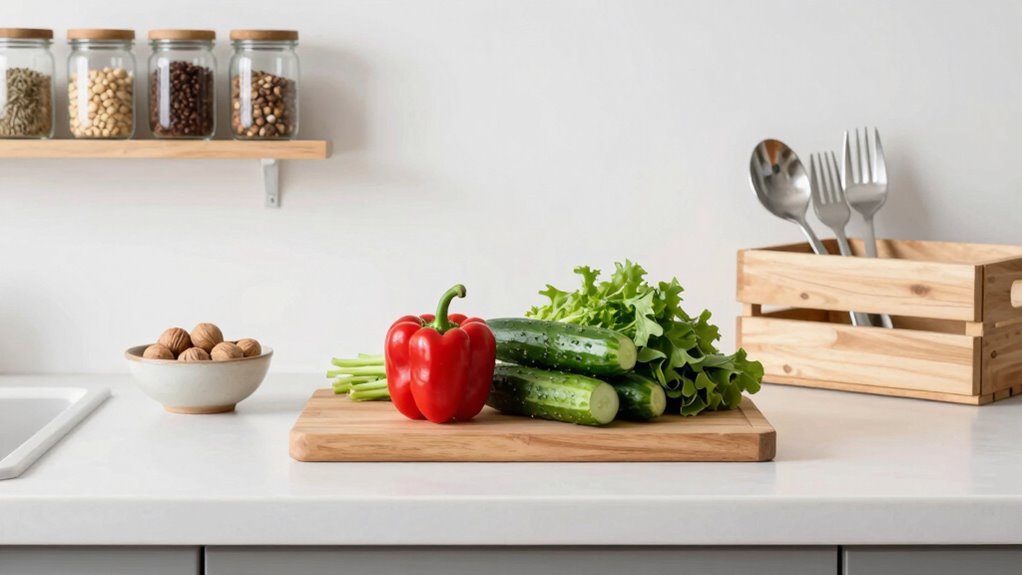
Organizing your raw kitchen starts with creating designated zones for different types of ingredients and tools. Use effective storage solutions like clear containers, baskets, and labeled jars to keep everything visible and accessible. Group similar items together—spices, vegetables, utensils—so you can find what you need quickly. To maintain clutter control, regularly declutter and discard expired products or duplicates. Install hooks or magnetic strips for frequently used tools to free up counter space. Use stackable shelves or pull-out drawers in cabinets to maximize vertical space. Keep countertops clear by storing rarely used items elsewhere. Additionally, employing filtration systems that optimize air quality and minimize dust can significantly enhance your kitchen’s efficiency. Consistent organization habits ensure your kitchen stays tidy and functional, making it easier to prep healthy meals and avoid the mess creeping back in.
Common Mistakes to Avoid When Setting Up Your Raw Kitchen
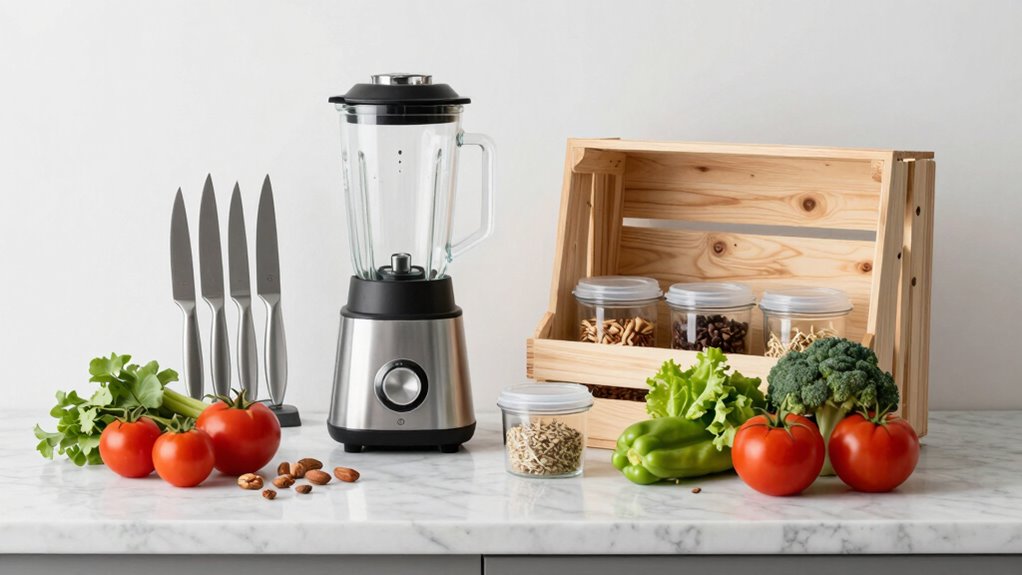
When setting up your raw kitchen, it’s easy to fall into common pitfalls that can hinder its organization and functionality. Avoid these mistakes to streamline your process:
- Overloading on unnecessary equipment, which complicates fruit dehydration and sprouting techniques.
- Ignoring proper storage, leading to spoilage or contamination of produce.
- Neglecting dedicated spaces for fruit dehydration, causing clutter and inefficiency.
- Skipping research on sprouting techniques, resulting in poor yields or mold issues.
How Can You Expand Your Raw Kitchen Equipment as You Grow?
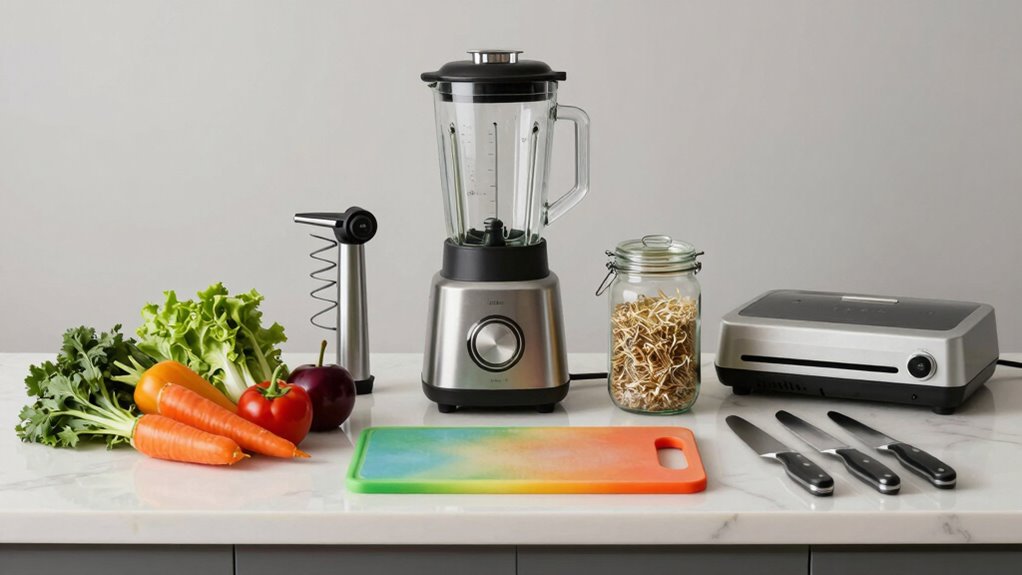
As your raw kitchen skills improve and your needs evolve, expanding your equipment becomes essential to keep up with your growing repertoire. You’ll find that investing in tools like a high-speed blender or food processor allows for more ingredient substitutions, opening up new recipe options. Adjusting your kitchen layout helps streamline your workflow, making it easier to access your increased equipment. Consider adding specialized items such as dehydrators or spiralizers to diversify your dishes. As you grow, prioritize versatile tools that can serve multiple functions, avoiding clutter. Keep in mind your space limitations and aim for a layout that promotes efficiency. By thoughtfully expanding your equipment, you’ll enhance your raw culinary possibilities without sacrificing organization or ease of use.
Frequently Asked Questions
What Are the Biggest Myths About Raw Kitchen Equipment?
The biggest myths about raw kitchen equipment often stem from misconceptions that you need expensive, specialized tools for everything. Myth debunking reveals that many equipment misconceptions are false; simple, versatile tools like good knives and a high-quality blender suffice. You don’t need fancy gadgets or a fully stocked kitchen. Focus on essential, durable equipment that helps you prep healthy raw meals without overspending or cluttering your space.
How Often Should I Replace Raw Food Prep Tools?
You should replace raw food prep tools when they show signs of damage or wear, typically every 1-3 years, depending on material durability. Regular cleaning frequency keeps tools in good shape and prevents contamination. For example, wooden utensils may need replacing sooner than stainless steel ones, which are more durable. Always inspect your tools regularly and replace them promptly to guarantee safety and efficiency in your raw food prep.
Can I Use Regular Kitchen Gadgets for Raw Recipes?
You can use regular kitchen gadgets for raw recipes, but consider a blender versus a food processor for different tasks—blenders are great for smoothies, while food processors handle chopping and mixing. When choosing containers, glass is preferable over plastic because it’s more durable and easier to clean, reducing contamination risks. Just guarantee all tools are thoroughly cleaned and food-safe, especially when working with raw ingredients.
What Safety Considerations Are There for Raw Kitchen Tools?
Think of your raw kitchen tools as the front line of defense against foodborne illness. You need to wash and sanitize them thoroughly after each use to prevent contamination. Avoid cross-contact by keeping raw ingredients separate. Always use food-safe, non-porous utensils and store tools properly. These safety steps help guarantee your raw dishes stay fresh and healthy, protecting you from harmful bacteria and keeping your kitchen a safe zone.
Are There Eco-Friendly Options for Raw Kitchen Containers?
Yes, you can choose eco-friendly raw kitchen containers by opting for biodegradable containers that decompose naturally and reduce waste. Additionally, look for recycled material options, like containers made from recycled plastics or glass, which help lower your environmental impact. These choices support sustainability and guarantee you’re using safe, environmentally responsible containers, perfect for raw ingredients and food storage.
Conclusion
Setting up your raw kitchen doesn’t mean filling every space with gadgets. Focus on the essentials, choose quality tools, and stay organized. Remember, a clutter-free space boosts your creativity and enjoyment. As you grow and experiment, you’ll discover what truly works for you. Are you ready to create a space that inspires healthy, delicious raw meals without the chaos? Your ideal raw kitchen is just a few thoughtful choices away.