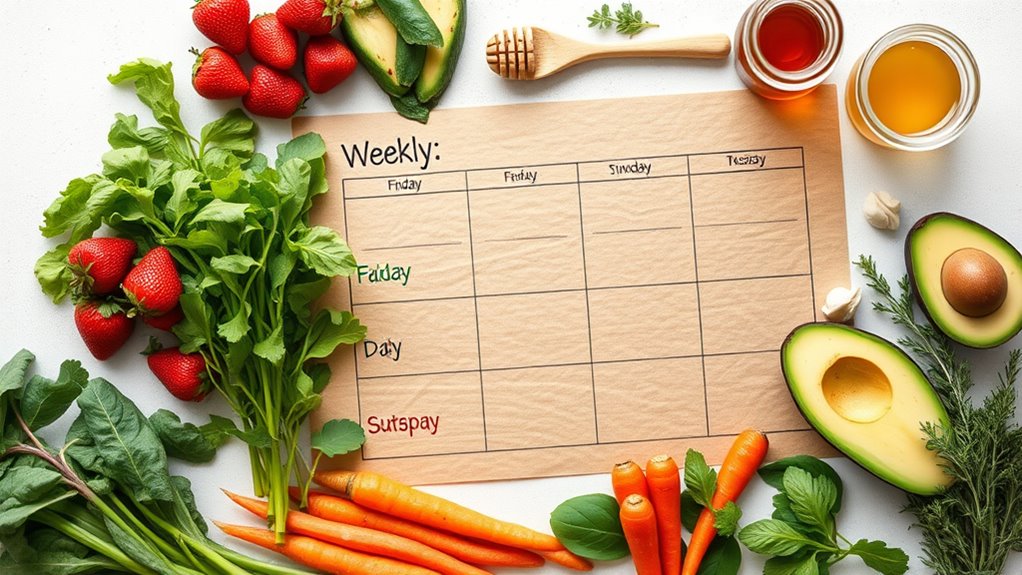

Establishing a consistent weekly meal planning rhythm can make your raw food routine simple and stress-free. By creating a flexible template, you can organize ingredients ahead, prep smoothies, chop vegetables, and assemble meals easily. Setting specific days for shopping and prepping keeps you on track and reduces last-minute decision-making. A steady routine boosts confidence and guarantees you stay committed to your healthy habits. Keep exploring ways to optimize your plan to stay inspired and well-nourished.

Get health and wellness essentials delivered free with Prime
- Fast, free delivery on millions of items
- Prime Video, Amazon Music and more included
- Member-only deals all year
Key Takeaways
- Establish a consistent weekly schedule for shopping, prepping, and assembling raw meals to build routine and reduce decision fatigue.
- Utilize a balanced meal template that includes salads, smoothies, and snack bowls, with ingredients prepped in advance.
- Create detailed shopping lists aligned with your meal plan to ensure freshness and prevent unplanned purchases.
- Incorporate meal prep tasks like chopping, portioning, and packing into designated days for efficiency and consistency.
- Adjust your routine seasonally and flexibly to keep raw eating engaging and sustainable over the long term.
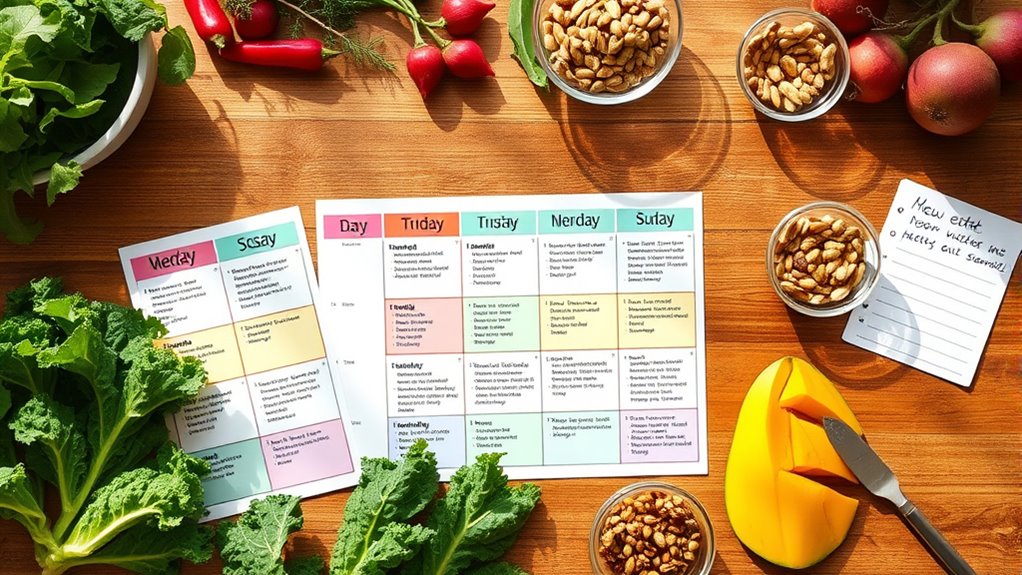
Have you ever wondered how some people effortlessly manage their weekly meals? The secret often lies in a solid meal planning rhythm that keeps things simple and stress-free. When you establish a consistent routine, you can save time, reduce last-minute decisions, and guarantee you’re eating nutritious, raw foods every day. One key to this is understanding how to integrate meal prep into your weekly schedule. Meal prep isn’t just about cooking in bulk; it’s about organizing your ingredients and preparing parts of your meals ahead of time, so you’re not scrambling when hunger strikes. This means dedicating a specific time during your week—maybe Sunday afternoons—to chop vegetables, portion out nuts, or prepare smoothie packs. Doing so streamlines your mornings and prevents you from resorting to less healthy options. Incorporating regular meal prep strategies can also boost your motivation and consistency by establishing a familiar routine.
Consistent meal prep routines make raw eating easy, stress-free, and enjoyable every week.
Creating a shopping list is another essential step that aligns with your meal planning rhythm. A well-thought-out shopping list ensures you have all the raw ingredients you need without multiple trips to the store. When you plan your weekly template, focus on the types and quantities of raw foods you’ll consume, such as fresh fruits, vegetables, nuts, and seeds. Writing out your shopping list based on these needs makes grocery shopping efficient and prevents impulse buys that don’t fit your raw eating goals. Plus, it helps you stick to a budget, avoiding unnecessary purchases that can clutter your kitchen and complicate your meal prep.
Once you’ve nailed your shopping list, it’s easier to stick to your meal plan throughout the week. Your template should reflect a balance of variety and consistency, making sure you’re getting all essential nutrients while keeping meal prep manageable. For example, you might decide on a rotation of different salads, smoothies, and snack bowls, preparing ingredients in advance to make each meal quick to assemble. Incorporate flexibility into your template so you can swap out ingredients or meals based on what’s fresh or in season. This approach keeps your raw eating routine exciting and sustainable.
Establishing a weekly rhythm also involves setting aside specific days and times for your meal prep activities. When you create a predictable schedule, shopping, prepping, and enjoying your raw meals become habits rather than chores. Over time, this consistency will build a natural flow, making raw eating feel effortless rather than overwhelming. Ultimately, a structured meal planning rhythm, supported by detailed meal prep and an organized shopping list, empowers you to stay committed to your raw eating journey with confidence and ease.
As an affiliate, we earn on qualifying purchases.
Frequently Asked Questions
How Can I Adapt Templates for Different Raw Diet Preferences?
You can customize templates by adjusting ingredients to match your specific raw diet preferences, whether you prefer fruits, vegetables, or nuts. Diversify ingredients to keep meals interesting and guarantee balanced nutrition. Swap out certain items, add new superfoods, or modify portion sizes as needed. This flexibility allows you to create a meal plan that fits your tastes and nutritional needs, making raw eating sustainable and enjoyable.
What Tools Are Best for Tracking Raw Meal Plans Weekly?
Think of tracking your raw meal plans like steering a ship—you need reliable tools. Digital apps like MyFitnessPal or Cronometer make it easy to log and analyze your meals daily. Printable charts offer a tangible way to visualize your weekly intake, helping you stay on course. Combining both gives you flexibility and control, so you can adapt your plan as your raw diet evolves.
How Do I Handle Meal Prep When Traveling or Away From Home?
When traveling or away from home, you handle meal prep by packing travel snacks like dried fruit, nuts, or veggie sticks, and using portable containers to keep your raw meals fresh. Plan ahead by pre-portioning your food into these containers, making it easy to grab and go. This approach guarantees you stay on track with your raw eating rhythm, even when you’re on the move.
Are There Specific Tips for Balancing Nutrition Weekly?
To balance your weekly nutrition, focus on including diverse calcium sources like leafy greens, nuts, and seeds, along with plenty of fiber-rich fruits and vegetables. Plan your meals to guarantee you’re meeting daily targets without overdoing any one nutrient. Keep snacks portable, like raw nuts or sliced veggies, and vary your foods to support overall health. This approach helps maintain energy levels and supports your raw eating goals effectively.
How Often Should I Revise My Weekly Raw Meal Templates?
You should revise your weekly raw meal templates every 1 to 2 weeks to maintain ideal meal frequency and recipe variety. Regular updates help you incorporate fresh ingredients, adapt to seasonal changes, and prevent boredom. By adjusting your templates, you guarantee your diet stays balanced and exciting. Listen to your body’s cues and experiment with new recipes, keeping your raw eating routine dynamic and nourishing.
Conclusion
By embracing this meal planning rhythm, you turn chaos into calm, transforming your weekly routine into a well-choreographed dance. Think of your templates as the steady drumbeat guiding your raw eating journey, making each day feel like a harmonious step forward. With confidence and consistency, you’ll find that nourishing yourself becomes less of a chore and more of a celebration—your own personal symphony of health and energy.
Cold & flu season Picks
humidifiers
As an affiliate, we earn on qualifying purchases.