
To keep your raw pet food safe and fresh, set your freezer to at or below 0°F (-18°C), ideally between -10°F and 0°F (-23°C to -18°C). Regularly check and verify the temperature with a reliable thermometer, ensuring it stays consistent. Proper organization and monitoring help prevent spoilage or bacteria growth. If you want to understand how to maintain the right temperature and troubleshoot issues, continue exploring these key tips.
Key Takeaways
- Store raw pet food at or below 0°F (-18°C) for optimal safety and preservation.
- Maintain a consistent temperature between -10°F and 0°F (-23°C to -18°C).
- Regularly check and calibrate thermometers to ensure accurate temperature readings.
- Avoid frequent door openings and overpacking to prevent temperature fluctuations.
- Use backup power sources during outages to keep the freezer within the ideal temperature range.
Why Does Freezer Temperature Matter for Raw Pet Food Safety?

Maintaining the correct freezer temperature is vital for keeping raw pet food safe. Proper storage guidelines depend on effective temperature regulation to prevent bacterial growth and spoilage. When your freezer is too warm, bacteria can multiply rapidly, increasing the risk of contamination and foodborne illnesses for your pet. Additionally, temperature fluctuations can compromise the safety and quality of stored food, making consistent monitoring essential. Fluctuating temperatures can also cause food spoilage, which deteriorates the nutritional value of the raw pet food. Conversely, temperatures that are too low can cause freezer burn, which affects food quality. Consistent temperature control ensures raw pet food remains fresh and safe from pathogens. It also helps preserve nutrients and flavor, making sure your pet gets the best nutrition. By monitoring and maintaining the right freezer temperature, you’re actively protecting your pet’s health and extending the shelf life of their raw food. Proper temperature management is a vital step in safe raw pet food storage. Temperature regulation is essential for maintaining optimal food quality and safety.
What Is the Ideal Freezer Temperature Range for Raw Pet Food?

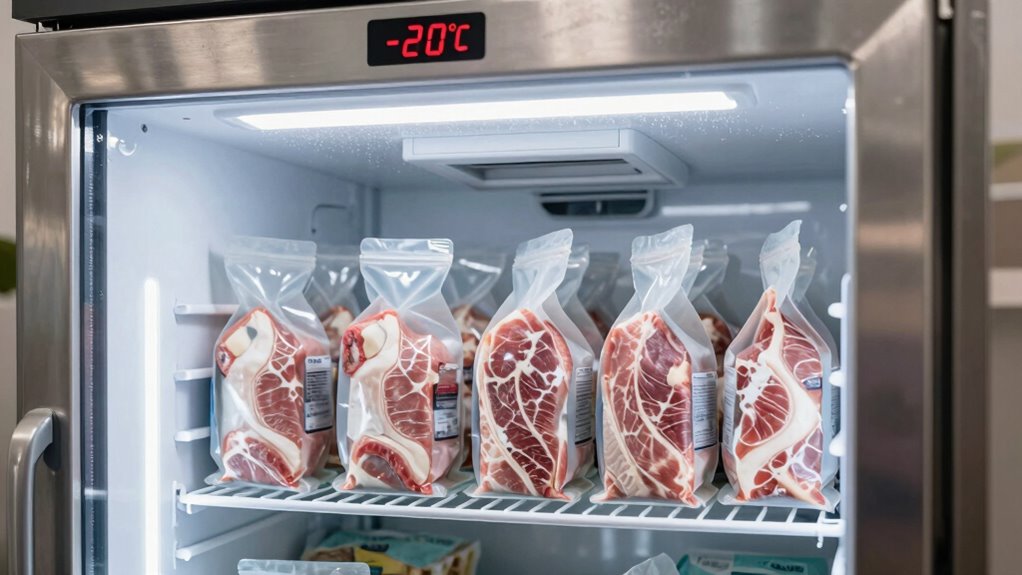
To keep raw pet food safe and fresh, you need to set your freezer within the ideal temperature range. Food safety standards recommend maintaining it at or below 0°F (-18°C). Staying within this range helps guarantee your pet’s food stays properly frozen and free from bacteria. Additionally, ensuring consistent temperature regulation is crucial for optimal preservation. Proper freezer organization can help prevent temperature fluctuations and maintain the correct environment. For added safety, using a reliable backup power source can ensure your freezer stays cold during outages, protecting your pet’s food quality. Being aware of trusted business resources near you can also assist in finding reliable solutions for freezer maintenance and safety equipment. Maintaining a safe electrical setup is essential to prevent outages and ensure continuous operation of your freezer during power disruptions.
Optimal Freezing Temperatures
For raw pet food to stay safe and preserve its quality, setting your freezer to the right temperature is essential. The ideal freezing temperature range for raw pet food is between -10°F and 0°F (-23°C to -18°C). Maintaining this range prevents bacterial growth and keeps the food fresh longer. Proper freezer organization helps ensure consistent temperatures and easy pet food storage, reducing the risk of cross-contamination. Keep the thermostat steady and avoid frequent temperature changes, which can compromise food safety. Use a reliable thermometer to monitor your freezer’s temperature regularly. By controlling the temperature within this range, you protect your pet’s health and maintain the quality of their raw food. Innovative European Cloud Servers can provide reliable solutions for managing your pet food storage data. A well-organized freezer makes it easier to keep everything at the right temperature, and paying attention to temperature stability is crucial for optimal storage conditions. Additionally, understanding crypto market trends can help you make informed decisions about your investments. Ensuring consistent freezing conditions is vital for maintaining the safety and nutritional integrity of raw pet food over time.
Food Safety Standards
Ensuring your raw pet food stays safe requires sticking to the recommended freezer temperature range. Maintaining a temperature of 0°F (-18°C) or lower is crucial to meet food safety standards. Proper food handling and storage techniques help prevent bacterial growth and contamination. Always use a reliable thermometer to monitor your freezer’s temperature regularly. Keep raw pet food separate from cooked or ready-to-eat items to avoid cross-contamination. Label and date packages to track freshness and guarantee proper rotation. Avoid overpacking the freezer, which can hinder proper airflow and temperature consistency. Temperature stability is vital for maintaining the safety and quality of stored pet food, especially since temperature fluctuations can lead to bacterial proliferation. Regularly inspecting your freezer and understanding outdoor conditions can help prevent temperature fluctuations that compromise food safety. Additionally, understanding the recommended temperature range ensures optimal storage conditions for raw pet food. Following these guidelines guarantees your pet’s food remains safe, nutritious, and free of harmful bacteria. Consistent temperature control and proper storage techniques are essential for pet health and safety.
How Can I Set My Freezer to the Correct Temperature?
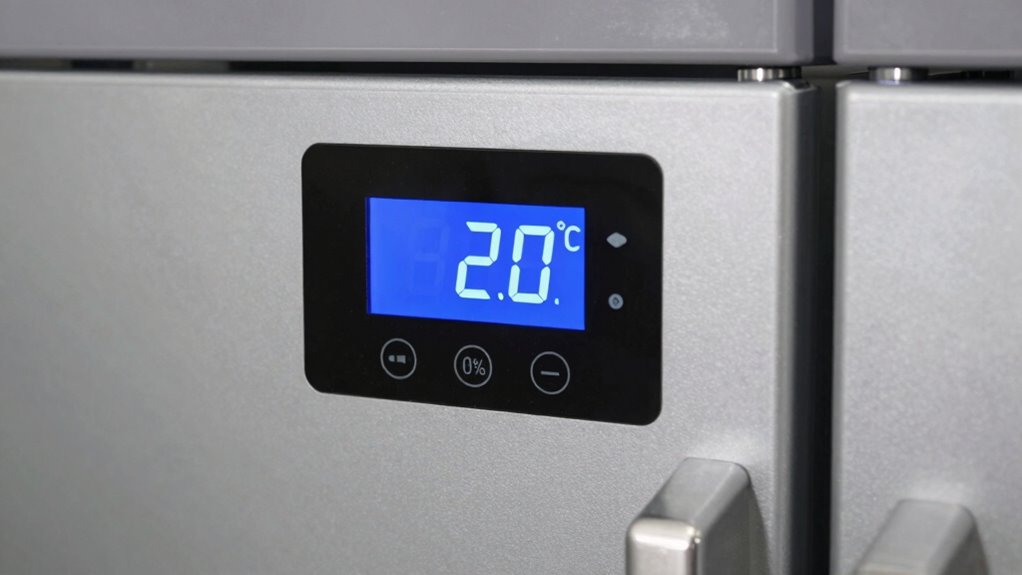
To set your freezer to the right temperature, start by using a reliable thermometer to check the current setting. You’ll need to adjust based on your freezer type to keep the temperature consistent. Regularly monitoring and maintaining this temperature guarantees your pet food stays safe and fresh. Additionally, utilizing proper storage techniques can help preserve the quality of your raw pet food over time. Ensuring the correct temperature range is maintained is essential for preventing bacterial growth and keeping your pet food nutritious. Using a vetted temperature setting can also help prevent spoilage and ensure your pet’s health. For those interested in more precise control, understanding deep-sky imaging concepts like temperature regulation can offer insights into maintaining optimal conditions in various environments.
Use a Reliable Thermometer
Using a reliable thermometer is essential to setting your freezer to the correct temperature for raw pet food. To guarantee accuracy, regularly calibrate your thermometer so it provides precise readings. This step is vital because even small errors can lead to improperly stored food. Once calibrated, place the thermometer in different areas of the freezer, especially near the door and the back, to check for temperature zones. These zones can vary, so it’s important to confirm that the entire freezer maintains a consistent temperature. A dependable thermometer helps you monitor conditions accurately, allowing you to make adjustments as needed. Accurate readings ensure your pet’s food stays safely frozen, preventing bacterial growth and spoilage. Consistent thermometry is key to maintaining a safe storage environment. Additionally, understanding the cost of ownership of your freezer can help you choose a model with reliable temperature control features. Regularly inspecting your freezer’s temperature stability can prevent unexpected fluctuations that compromise food safety.
Adjust for Freezer Type
Different freezer types may require different methods for setting and maintaining the correct temperature. For example, chest freezers often have a manual dial or digital control, while upright freezers may feature more precise temperature adjustment options. To guarantee proper temperature adjustment, consult your freezer’s user manual for specific instructions. Always set your freezer to around 0°F (-18°C), but be aware that some models may need fine-tuning. Use a reliable thermometer to verify the actual temperature, as built-in gauges aren’t always accurate. Adjust the temperature controls accordingly, keeping in mind your freezer’s design. Regularly check and recalibrate to maintain a consistent temperature, especially if you notice fluctuations or if your freezer type has limited adjustment options. Additionally, understanding your freezer’s temperature regulation features can help optimize performance and prevent temperature fluctuations. Being aware of thermostat accuracy can further ensure that your freezer maintains the ideal environment for raw pet food. Correct calibration procedures are essential for maintaining the safety and quality of your pet’s food.
Maintain Consistent Temperature
Maintaining a consistent freezer temperature requires regular monitoring and adjustments. You should check your freezer’s temperature at least once a week with a reliable thermometer. If you notice fluctuations, recalibrate the freezer to guarantee temperature consistency. Proper freezer calibration involves following the manufacturer’s instructions or using a calibration tool to verify accuracy. Keep the temperature steady around 0°F (-18°C) for raw pet food safety. Avoid frequent door openings, which can cause temperature spikes, and store food in airtight containers to help maintain a stable environment. Consistent temperature is vital to prevent bacterial growth and preserve food quality. By monitoring regularly and calibrating your freezer as needed, you’ll keep the temperature within the safe range and ensure your pet’s food remains fresh and safe.
How Do I Verify My Freezer’s Temperature?
To guarantee your freezer is maintaining a safe temperature for raw pet food, you need to verify it regularly. Start by using a reliable thermometer placed inside the freezer, ideally near the center. Check the temperature at least once a week and record it. Proper freezer organization helps, so keep pet food labeling clear and accessible, making it easy to identify and monitor different items. Here’s an example of how to visualize your setup:
| Freezer Zone | Temperature Reading |
|---|---|
| Top Shelf | 0°F |
| Middle Shelf | 0°F |
| Bottom Drawer | 0°F |
This ensures consistent readings across the freezer, confirming your pet food stays frozen at the ideal range.
What Are the Signs My Freezer Isn’t Maintaining the Right Temperature?

When your freezer isn’t keeping the right temperature, there are clear signs that something’s wrong. You might notice food freezing unevenly or developing ice crystals, which indicate temperature fluctuations. If food starts to thaw or freezer burn appears more quickly, it’s a sign that your freezer isn’t maintaining consistent cold. Unusual noises or frequent compressor cycles can also point to issues with freezer maintenance. To ensure proper temperature calibration, regularly check your freezer’s settings and verify the actual temperature with a reliable thermometer. If these signs persist, it’s time to troubleshoot and adjust your freezer to prevent spoilage of raw pet food. Keeping a close eye on these signs helps maintain the correct temperature and ensures your pet’s food stays safe.
What Are the Best Ways to Monitor Freezer Temperature?

Monitoring your freezer’s temperature accurately is essential to keeping raw pet food safe. To do this effectively, regularly check your thermometer’s accuracy through temperature calibration. Digital thermometers often provide quick, precise readings and are easy to read, making them a popular choice. Analog thermometers, on the other hand, are simple and reliable but may require more careful reading and occasional calibration to guarantee accuracy. Whichever type you choose, place the thermometer in the center of the freezer, away from the walls and door, to get an accurate reading. Consistent monitoring helps you catch temperature fluctuations early, so you can adjust your freezer settings or troubleshoot issues promptly. Proper tools and calibration are key to maintaining the ideal freezing environment for raw pet food.
What Risks Come With Freezing Raw Pet Food at Incorrect Temperatures?
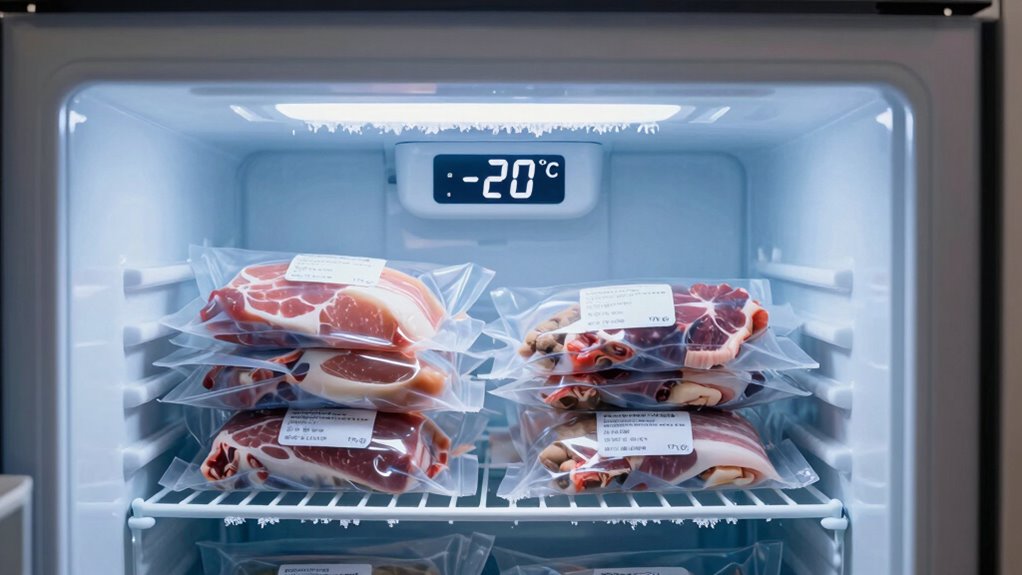
Freezing raw pet food at the wrong temperature can pose serious health risks for your pet. If the freezer isn’t cold enough, the food becomes susceptible to freezer burn, which damages the texture and flavor. Freezer burn also exposes the food to air, increasing the risk of bacterial growth and spoilage. Additionally, improper freezing temperatures lead to nutrient loss, reducing the food’s nutritional value and potentially compromising your pet’s health. Over time, these issues can weaken your pet’s immune system and cause digestive problems. Consistently maintaining the correct freezer temperature guarantees the raw food stays safe, preserving its nutrients and preventing freezer burn. Proper temperature control is essential for keeping raw pet food fresh, nutritious, and safe for your furry friend.
How Do Temperature Fluctuations Impact Raw Pet Food Safety and Nutrition?

Temperature fluctuations can considerably compromise the safety and nutritional quality of raw pet food. When temperatures rise above recommended levels, bacteria can multiply rapidly, increasing the risk of spoilage and foodborne illness. Conversely, unexpected drops can cause partial freezing, damaging the food’s texture and nutrients. To minimize these risks, follow proper storage tips and maintain consistent temperature control in your freezer. Avoid frequent door openings and keep the freezer well-organized to prevent temperature swings. Using a reliable thermometer will help you monitor fluctuations and guarantee the food stays within the safe temperature range. Consistent temperature control preserves the nutritional integrity of the raw pet food and keeps it safe for your pet’s consumption.
How Can I Troubleshoot Freezer Temperature Problems?
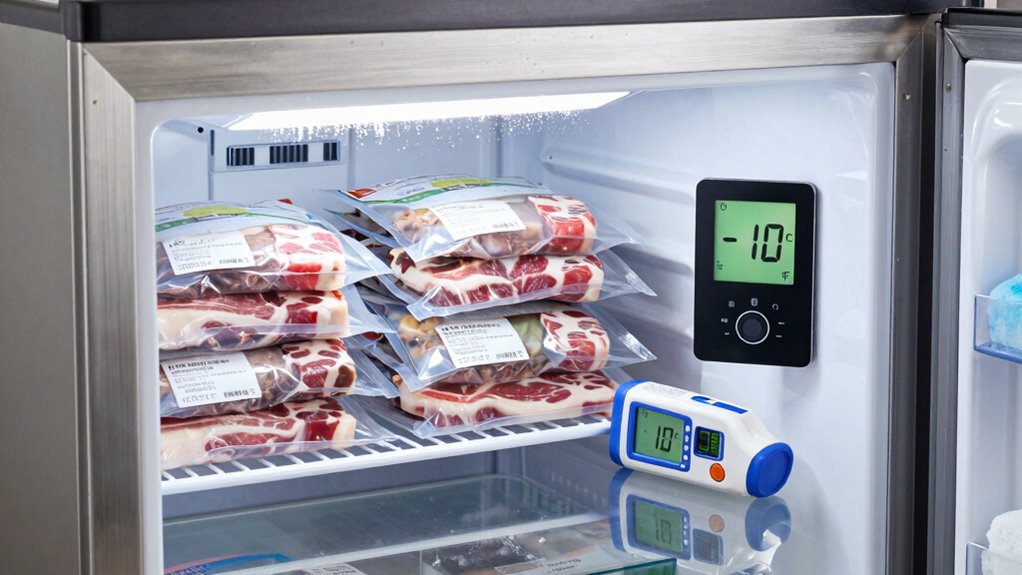
When you notice fluctuations in your freezer’s temperature, it’s important to identify and address the cause promptly to keep raw pet food safe. Start by checking the freezer’s insulation; worn or damaged insulation can lead to temperature instability. Next, examine the door seals for gaps or tears, as faulty seals allow warm air to enter and disrupt proper cooling. Ensure the door closes tightly every time, and clean the seals regularly to maintain a proper seal. Additionally, avoid overloading the freezer, which can block airflow and cause uneven temperatures. If your freezer still isn’t maintaining the right temperature, consider using a thermometer to monitor fluctuations and consult a professional if needed. Proper maintenance and inspection help keep your freezer functioning efficiently.
Frequently Asked Questions
How Often Should I Check My Freezer’s Temperature?
You should check your freezer’s temperature at least once a month to guarantee proper freezer maintenance. Regular checks help catch any temperature fluctuations early, protecting your raw pet food’s quality. Always calibrate your thermometer regularly to keep readings accurate. If you notice any irregularities, adjust the thermostat or seek professional help. Consistent monitoring and calibration keep your freezer working efficiently and your pet’s food safe.
Can Temperature Fluctuations Harm My Pet’s Health?
Imagine your pet eats partially thawed raw food, which could happen if temperature fluctuations occur. These shifts threaten food safety by encouraging bacteria growth. Fluctuations can compromise temperature stability, increasing health risks for your pet. To keep your furry friend safe, maintain consistent freezer temperatures and monitor regularly. Proper temperature management guarantees raw food stays safe, reducing the risk of illness caused by unsafe bacteria levels.
What Tools Are Best for Monitoring Freezer Temperature?
You should use digital thermometers to monitor your freezer’s temperature accurately. Place a reliable thermometer inside to get real-time readings and guarantee consistent coldness. Additionally, keep temperature logs to track any fluctuations over time, helping you spot issues early. Regularly checking these tools allows you to maintain the ideal freezing conditions, safeguarding your pet’s raw food quality and health.
How Long Can Raw Pet Food Safely Stay Frozen?
You can safely store raw pet food in the freezer for about 3 to 6 months, ensuring ideal food safety and quality. While it might seem like a gentle pause, sticking to this storage duration helps prevent nutrient loss and spoilage. Keep your freezer at the right temperature, monitor regularly, and your pet’s food remains fresh and safe during this time, giving peace of mind and healthy meals.
Is a Regular Household Freezer Suitable for Raw Pet Food Storage?
Yes, a regular household freezer is suitable for pet food storage. You can confidently store raw pet food in your home freezer, guaranteeing it stays frozen and safe. Just make sure your freezer maintains the ideal temperature of 0°F (-18°C) or lower. Proper pet food storage helps preserve freshness, prevent spoilage, and keep your pet healthy. Regularly check the temperature to ensure excellent storage conditions.
Conclusion
Keeping your freezer at the right temperature is like tending a delicate garden—each degree matters to preserve the importance and safety of your pet’s raw food. When you stay vigilant and fine-tune your freezer settings, you’re shielding your furry friend from unseen threats. Think of it as forging an icy fortress, where every frostbitten moment guards your pet’s health and nutrition, ensuring their well-being blossoms in every bite.