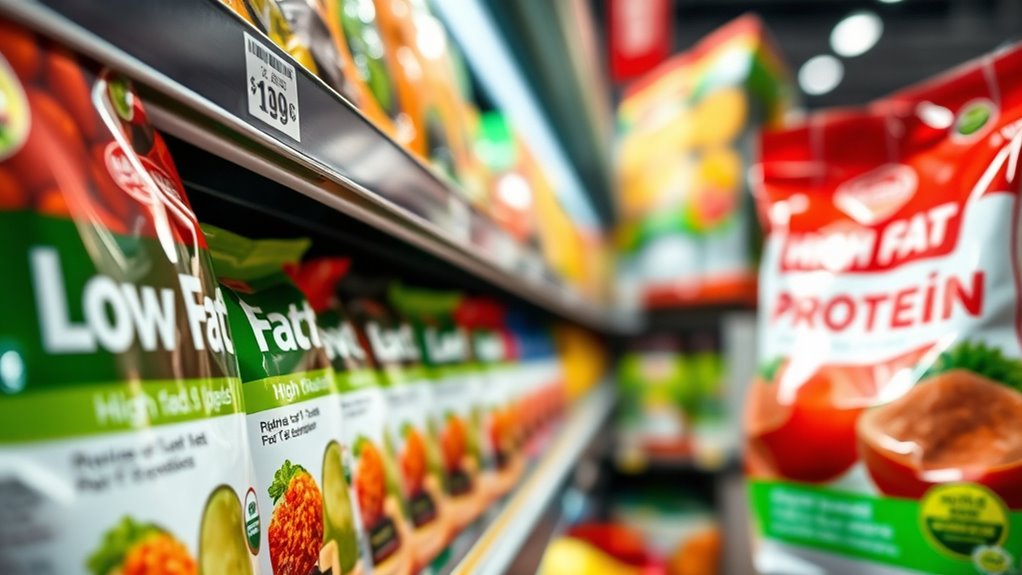

When evaluating food labels, don’t be fooled by claims like “gluten-free” or “low fat” alone. These can create a health halo that distracts from the real nutritional content. Instead, scrutinize the ingredient list for recognizable, whole foods and check the nutrition facts for added sugars, unhealthy fats, or artificial ingredients. Paying attention to these details helps you make better choices and avoid marketing tricks. Keep exploring to learn how to spot misleading labels with confidence.
Key Takeaways
- Don’t rely solely on front-of-package claims; review the nutrition facts panel for accurate information.
- Recognize that labels like “gluten-free” or “low fat” can be misleading without considering overall ingredients.
- Check ingredient lists for recognizable, whole foods; avoid products with unfamiliar chemicals or artificial additives.
- Understand regulatory standards to assess the legitimacy of health claims and identify potential marketing tricks.
- Critically evaluate all label components to avoid falling into the “health halo” trap and make informed dietary choices.

Have you ever glanced at a food label and wondered what all those nutrition claims really mean? It’s easy to get caught up in the hype, especially when marketing strategies make products seem healthier than they actually are. Many food companies use clever claims to attract your attention—like “low fat,” “gluten-free,” or “all-natural”—but these phrases don’t always tell the full story. That’s where ingredient transparency becomes essential. When you look beyond the front-of-package claims and examine the ingredient list, you gain a clearer picture of what you’re actually consuming. Sadly, many marketing strategies are designed to create a health halo around a product, making it appear better for you than it really is. This can lead to misinformed choices and unintended overconsumption of less nutritious foods.
Understanding how to critically read nutrition claims means recognizing that labels often aim to catch your eye, not necessarily inform you accurately. For example, a snack might be labeled “gluten-free,” which sounds healthy, but it could still be loaded with sugar, salt, or unhealthy fats. The claim distracts you from examining the more detailed nutrition facts and ingredient list. Similarly, a product labeled “low-fat” might compensate with high sugar or artificial additives, undermining its supposed health benefits. These marketing strategies are crafted to appeal to health-conscious consumers, but they aren’t a substitute for thorough scrutiny.
Being aware of the regulatory standards that govern food labeling helps you better understand what claims are legitimate and which are potentially misleading. To avoid falling into the health halo trap, it’s vital to look past the claims and scrutinize the ingredient transparency. Check the ingredient list for recognizable, whole foods and avoid overly processed components. Ingredients are listed in order of quantity, so the first few should be the main ingredients. If you see unfamiliar chemicals, artificial sweeteners, or preservatives, it’s a sign that the product isn’t as wholesome as the marketing suggests. Remember, claims on the front can be misleading, but the ingredient list and nutrition facts provide the real story.
Frequently Asked Questions
How Can I Identify Misleading Health Halo Claims?
To spot misleading health halo claims, start by checking ingredient lists for added sugars, unhealthy fats, or artificial additives that may contradict the health message. Be cautious of portion sizes—just because a product claims to be healthy doesn’t mean a small portion isn’t loaded with calories or sugar. Always compare the nutrition facts and ingredients to get a clear picture, and don’t rely solely on eye-catching labels.
Are There Specific Labels to Watch for Misleading Nutrition Info?
Imagine a bright, eye-catching label that draws you in like a magnet. Look closely at ingredient lists and serving size clarification—these are key to spotting misleading info. Watch for labels claiming “low fat” or “natural” without backing details. Always check the fine print; sometimes, the real story is hidden in small print or misleading serving sizes. These clues help you see past the marketing haze.
What Role Do Marketing Tactics Play in Health Claims?
Marketing tactics substantially influence health claims through clever product placement and advertising strategies. You might notice products placed prominently with bright labels or in appealing settings, making them seem healthier than they are. Companies use these tactics to catch your attention and create a health halo, encouraging you to buy based on perceived benefits. Always stay alert to how advertising strategies can subtly shape your perception of a product’s true nutritional value.
How Do I Verify the Accuracy of Nutrition Claims?
Imagine you’re a detective searching for truth in a mystery. To verify nutrition claims, you look for ingredient transparency—check the label for clear, honest ingredient lists. Trust claims backed by scientific evidence, like peer-reviewed studies, rather than marketing hype. Comparing products, researching reputable sources, and consulting registered dietitians help you uncover the facts. Stay curious, question bold statements, and become your own nutritional investigator.
Can Packaging Design Influence My Perception of Healthfulness?
Yes, packaging design can influence your perception of healthfulness through visual cues and color psychology. Bright, green, or natural-looking colors often suggest healthiness, while bold fonts or images of fresh ingredients reinforce positive impressions. These design elements trigger subconscious associations, making you believe a product is healthier than it may actually be. Being aware of these cues helps you make more informed choices, rather than relying solely on packaging appearances.
Conclusion
Remember, don’t take nutrition claims at face value; they can be like shiny apples hiding a worm. Always read the labels carefully, look beyond the buzzwords, and ask yourself if the product truly lives up to its promises. Staying vigilant helps you avoid falling for health halo traps. By being cautious and informed, you steer clear of false promises and make smarter choices—because in the world of nutrition, appearances can be deceiving.