Many homes skip sanitizing after handling raw meat and washing vegetables, but this step is essential for food safety. Bacteria like Salmonella and E. coli can hide on surfaces, utensils, and cutting boards, risking cross-contamination. Washing alone isn’t enough—proper sanitizing kills lingering germs. To keep your kitchen safe, you need to follow the right steps and use effective tools. If you want to learn how to do it correctly, keep exploring this guide.
Key Takeaways
- Many homes skip proper sanitizing after handling raw meat, increasing cross-contamination risk.
- Washing alone doesn’t eliminate all bacteria; sanitizing is essential for thorough disinfection.
- Proper sanitizing involves using disinfectants like diluted bleach solutions and following contact time guidelines.
- Failing to sanitize surfaces and utensils after raw prep allows bacteria to spread to cooked foods.
- Time pressures and misconceptions often lead to overlooked sanitizing steps in home kitchens.
Why Sanitizing After Raw Meat and Veggies Is Crucial for Food Safety
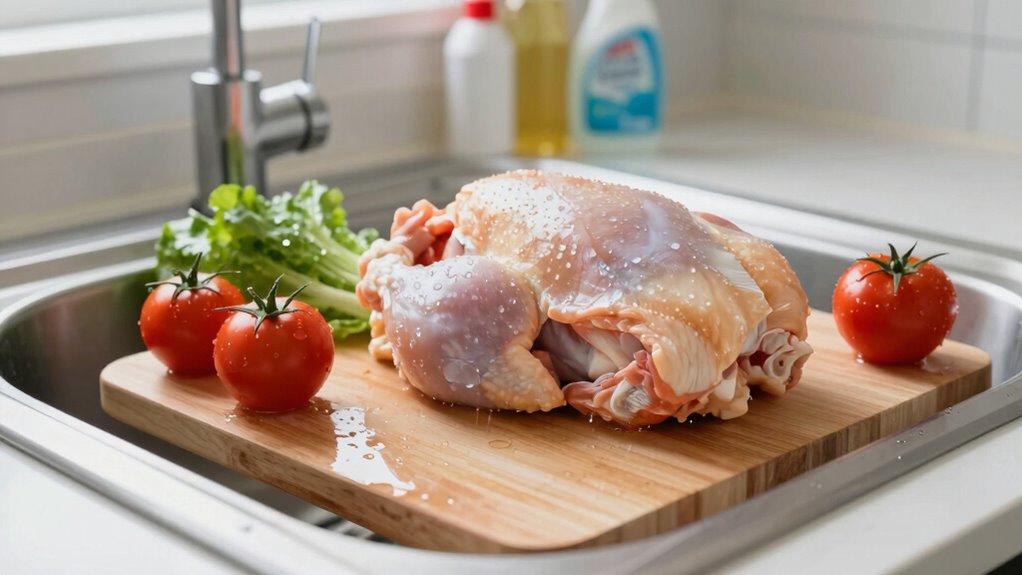
Since raw meat and vegetables can carry harmful bacteria, sanitizing after handling them is essential for food safety. During meat handling, bacteria like Salmonella and E. coli can transfer to surfaces and utensils. Veggie washing removes dirt and microbes but doesn’t eliminate all germs. Without proper sanitizing, these bacteria can spread to other foods or surfaces, increasing the risk of foodborne illnesses. Sanitizing kills lingering bacteria that washing may miss, ensuring your kitchen stays safe. It’s especially important after touching raw meat or washing vegetables to prevent cross-contamination. Regular sanitizing after raw prep helps protect you and your family from potential infections. Additionally, using proper sanitizing techniques can effectively eliminate bacteria that might otherwise survive initial cleaning, further reducing health risks. Employing the right sanitizing agents can enhance the overall safety of your food preparation process. Proper sanitation practices are also supported by understanding the role of effective disinfectants in controlling bacterial contamination. For optimal safety, it’s recommended to follow proper cleaning protocols consistently to maintain a hygienic kitchen environment. Failing to do so compromises food safety, making sanitizing a crucial step in every meal preparation process.
Common Reasons People Skip Sanitizing: and Why That’s Risky
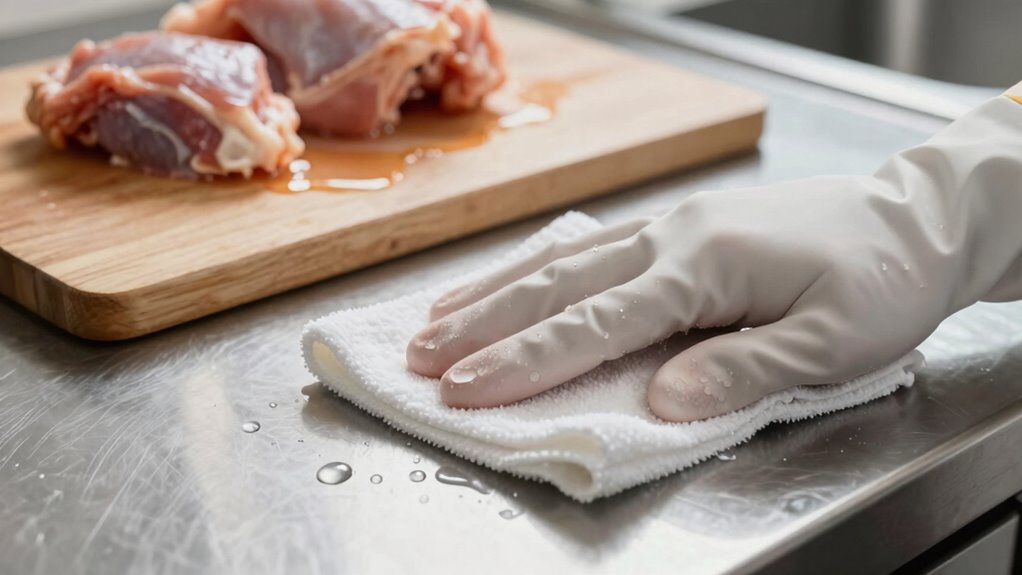
Many people skip sanitizing because they underestimate how easily bacteria can spread from raw ingredients. Time pressures often lead to shortcuts, making sanitizing seem less urgent. However, thinking that a quick wipe is enough can put you at serious risk of foodborne illness. Modern kitchen technology offers automated solutions that can help ensure thorough sanitization without adding extra steps to your routine, especially since proper hygiene practices are crucial for preventing cross-contamination. Incorporating automatic cleaning devices can further enhance safety and efficiency in maintaining a hygienic kitchen environment. Understanding the importance of sanitation is essential to prevent the spread of harmful bacteria during food prep.
Underestimating Bacterial Risks
People often skip sanitizing after handling raw ingredients because they underestimate the bacterial risks involved. Many believe that only visible dirt or spills matter, overlooking how easily bacteria can spread and multiply through bacterial growth. This hygiene misconception leads to the false sense that rinsing or wiping surfaces is enough. In reality, bacteria like Salmonella and E. coli can survive on cutting boards, knives, and countertops, posing serious health risks. Failing to sanitize creates a breeding ground for bacteria, increasing the chance of cross-contamination. You might think your food is safe without proper cleaning, but bacteria are invisible and can cause illness even when nothing looks or smells off. Recognizing these risks is vital to maintaining a truly hygienic kitchen environment. Proper sanitation is also essential for preventing bacterial contamination, especially in homes that handle raw ingredients regularly.
Time Constraints Prioritized
Time constraints often lead cooks to skip sanitizing surfaces and utensils after handling raw ingredients, especially when they’re in a hurry. This rush can compromise food safety and weaken kitchen hygiene. Many believe they can save time by skipping this step, but bacteria from raw meat or poultry can easily spread to other foods or surfaces. Without proper sanitizing, you risk cross-contamination that might cause foodborne illnesses. Prioritizing quick meals over thorough cleaning increases the chance of bacteria lingering on cutting boards, knives, or countertops. While it may seem like a small step, neglecting sanitizing under time pressure can have serious health consequences. Additionally, food safety guidelines emphasize the importance of proper sanitizing to prevent illness. Implementing simple routines like dedicated cutting boards for raw meat can further minimize risks. Protect your family’s health by making sanitizing a non-negotiable part of your kitchen routine, even during busy moments.
Perceived Cleanliness Suffices
You might think that a quick wipe with a cloth or a rinse with hot water is enough to keep your kitchen safe after handling raw ingredients. This perceived cleanliness often leads people to believe superficial cleaning is sufficient. But surface appearance can be deceiving; bacteria and germs can hide in cracks, crevices, or lingering moisture. Relying on perceived cleanliness ignores the fact that pathogens like Salmonella or E. coli aren’t visible to the naked eye. Skipping proper sanitizing increases the risk of cross-contamination and foodborne illnesses. Superficial cleaning might remove visible dirt, but it doesn’t eliminate harmful microbes. To truly protect yourself and your family, it’s essential to go beyond perceived cleanliness and adopt thorough sanitizing practices after raw prep. Proper sanitization ensures that hidden microbes are effectively eliminated, reducing health risks. Additionally, using disinfectants proven to target microorganisms can provide an extra layer of safety. Incorporating sanitizing techniques with appropriate cleaning agents is crucial for comprehensive hygiene. Regularly disinfecting high-touch surfaces with effective cleaning agents can further minimize contamination risks. Implementing evidence-based cleaning methods can help ensure all microbial threats are addressed effectively.
How Bacteria Spread and Cross-Contaminate Your Kitchen
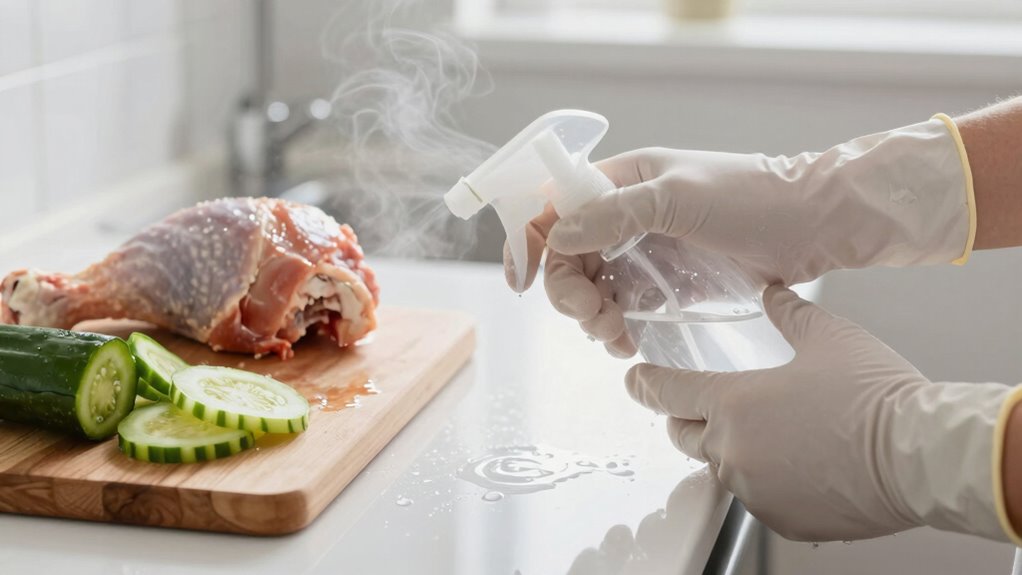
Bacteria can spread quickly through your kitchen via direct contact, contaminated surfaces, and utensils. When you handle raw meat, germs can transfer to cutting boards, knives, and even other foods. Understanding these pathways helps you prevent cross-contamination and keep your kitchen safe. Proper kitchen hygiene practices are essential to minimize the risk of spreading bacteria during food preparation. Additionally, many people overlook the importance of heat pump maintenance, which is crucial for ensuring your heating and cooling systems operate safely and efficiently, indirectly supporting a healthy environment in your home. Regular cleaning and sanitizing of food contact surfaces can further reduce bacteria transfer and promote a safer cooking environment. Incorporating protective styling benefits, like those from crochet styles for locs, can also help reduce the need for excessive handling and washing, thereby decreasing bacterial spread. Staying informed about technological integration in household appliances can also aid in maintaining higher standards of cleanliness and safety.
Cross-Contamination Pathways
Cross-contamination occurs when harmful bacteria transfer from raw foods to ready-to-eat items or surfaces, often without obvious signs. Understanding cross contamination pathways helps you identify how microbial transfer can happen unexpectedly, risking your health. Bacteria can spread through direct contact, shared utensils, contaminated cutting boards, or even your hands. Small lapses in hygiene or overlooked surfaces facilitate the silent spread of germs. Proper cleaning techniques are essential to disrupt these pathways and keep your kitchen safe. Bacteria can also spread through surface contamination when surfaces are not properly sanitized after contact with raw meats. Touching raw meat and then handling veggies without washing hands. Using the same knife for raw chicken and cooked vegetables. Placing cooked food on surfaces contaminated by raw meat juices. Failing to sanitize sponges or cloths, allowing bacteria to multiply. Regularly disinfecting your kitchen cleaning practices can help prevent these unseen pathways from leading to foodborne illnesses.
Bacteria Transfer Methods
Bacteria can spread quickly through a kitchen when proper hygiene isn’t maintained, often moving from raw foods to other surfaces or utensils. Bacteria transfer methods include touching raw meat and then handling other ingredients without washing hands, or using contaminated cutting boards and knives. Dishwashing techniques are vital; thoroughly cleaning utensils and surfaces after raw prep prevents cross-contamination. Regularly updating your cleaning schedule ensures bacteria don’t linger or spread. For example, sanitize countertops and cutting boards immediately after use, and avoid using the same utensils for raw and cooked foods. Bacteria transfer easily through contact, so understanding these methods helps you break the chain. By implementing effective dishwashing techniques and adhering to consistent cleaning schedules, you considerably reduce the risk of bacterial cross-contamination in your kitchen.
Step-by-Step Guide to Sanitizing Kitchen Surfaces and Utensils

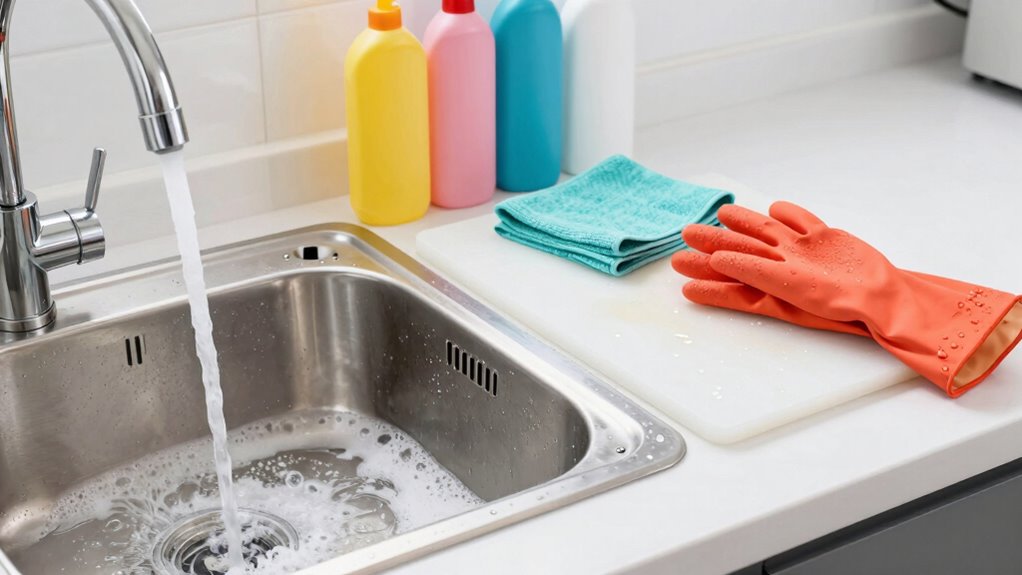
To effectively sanitize your kitchen surfaces and utensils after handling raw ingredients, you need to follow a clear, step-by-step process. First, remove any visible debris and dirt, then wash with hot, soapy water. Next, disinfect using a solution of bleach and water or a commercial sanitizer, ensuring contact time. Finally, dry surfaces with a clean cloth to prevent bacteria growth. Proper kitchen organization helps streamline this process, making it easier to incorporate into your routine. Establishing regular cleaning schedules ensures no surface is overlooked, reducing bacteria transfer risks. Staying consistent keeps your kitchen safe and hygienic. Remember, neglecting sanitation can lead to cross-contamination. Make sanitizing a priority, and enjoy peace of mind every time you prepare food. Your health depends on it.
The Best Tools and Products for Effective Kitchen Sanitizing
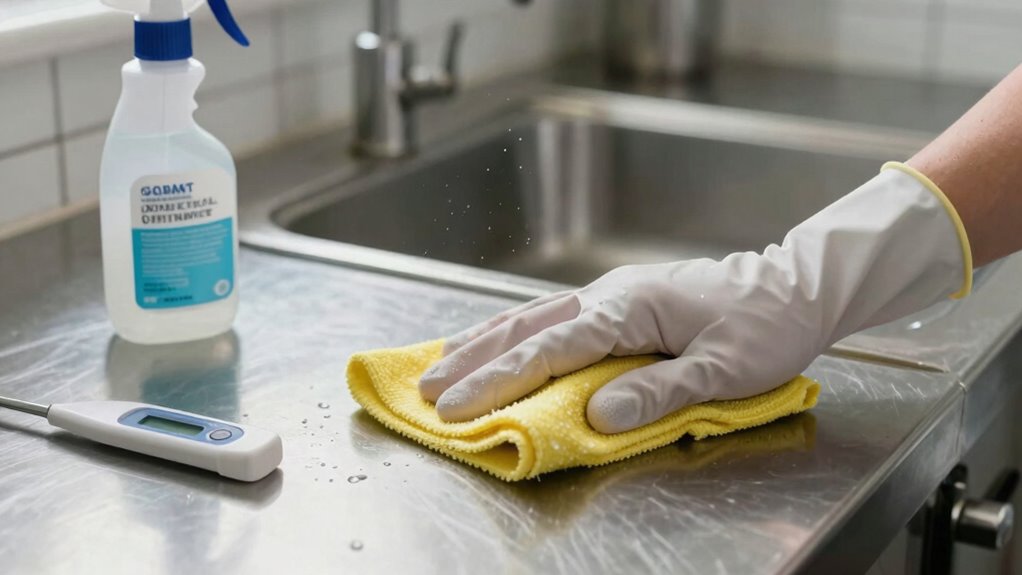
Having the right tools and products makes sanitizing your kitchen surfaces more effective and efficient. Start with a good-quality dish soap, which helps remove grease and dirt while breaking down bacteria. Use a microfiber cloth or scrub brush for wiping down counters and appliances; they’re gentle yet thorough. Kitchen sponges are essential, but choose ones that are easy to sanitize or replace regularly to prevent bacterial buildup. Consider antimicrobial sponges or those with textured surfaces for better cleaning. For disinfecting, keep a spray bottle of a proven sanitizer, like diluted bleach or commercial disinfectant, within reach. Always read labels and follow instructions for safe and effective use. With these tools and products, you’ll make sure your kitchen stays clean and safe after raw food prep.
When and How Often Should You Sanitize During Cooking?
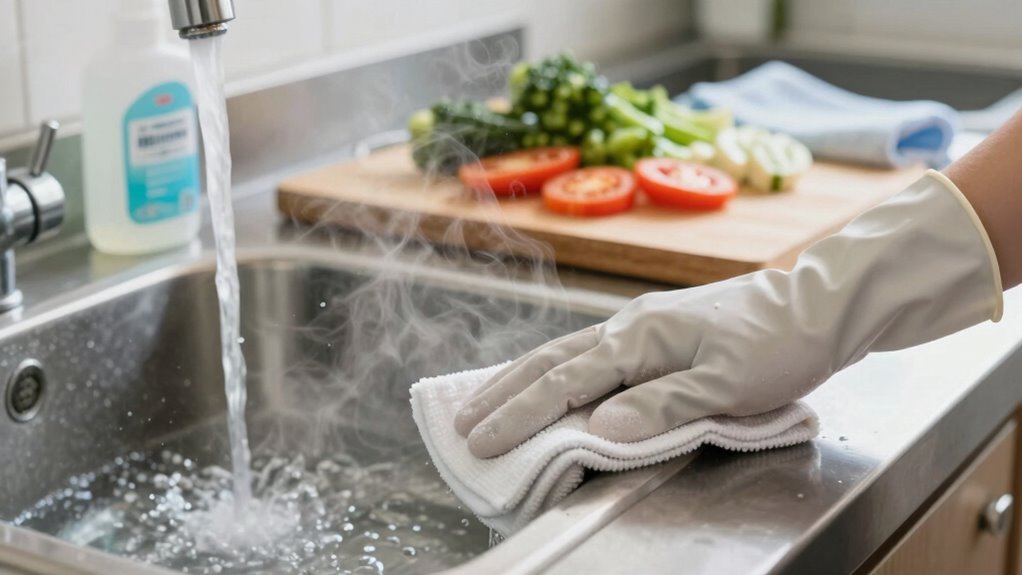
Sanitizing during cooking is essential to guarantee cross-contamination and assure food safety. Regularly updating your cleaning routines and using effective sanitizer techniques help prevent bacteria spread. You should sanitize:
- After handling raw meats or eggs, before moving to other ingredients
- Between different preparation stages to avoid cross-contact
- When switching from raw to cooked foods
- After touching surfaces or utensils that contact raw ingredients
Tips to Make Sanitizing a Regular Cooking Habit
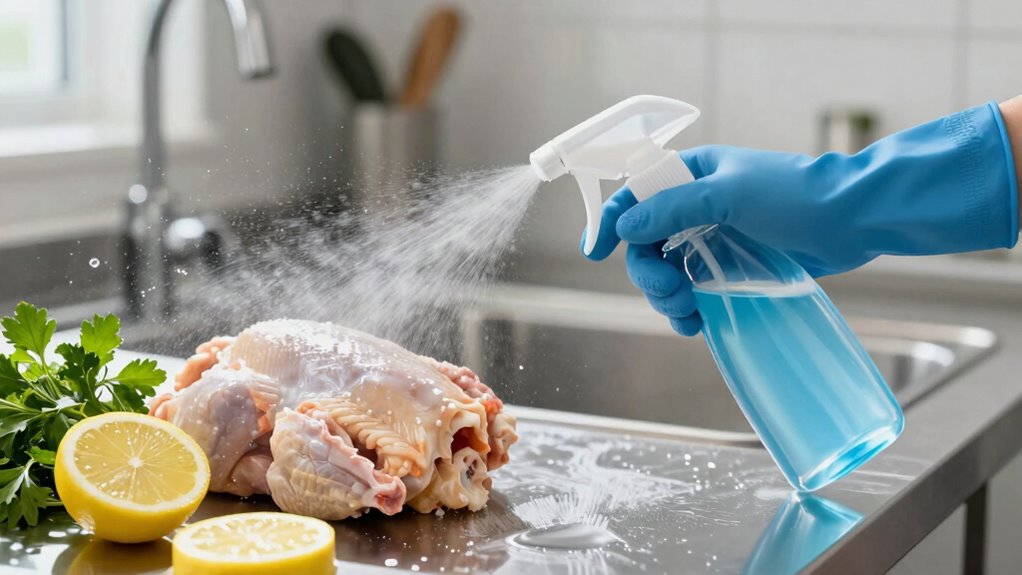
Making sanitizing a consistent part of your cooking routine requires setting clear habits and reminders. Incorporate regular cleaning schedules and keep your kitchen organized to make sanitizing effortless. Establish designated times for wiping down surfaces, especially after raw prep, so it becomes second nature. Use visual cues like sticky notes or timers to prompt you. Staying organized helps you quickly identify what needs sanitizing, reducing the chance of skipping steps. Implement a routine checklist to ensure all areas are covered, and keep sanitizing supplies accessible. By integrating these tips, sanitizing becomes a seamless part of your cooking process, protecting your family and maintaining a hygienic kitchen environment.
| Idea | Implementation |
|---|---|
| Set regular reminders | Use alarms or notes to prompt cleaning |
| Keep supplies handy | Store sanitizers and cloths within reach |
| Maintain organization | Use labeled containers and designated areas |
| Create a cleaning schedule | Dedicate specific days/times for deep cleaning |
| Use visual cues | Sticky notes or signs as reminders |
Troubleshooting: What to Do if Sanitizing Isn’t Working
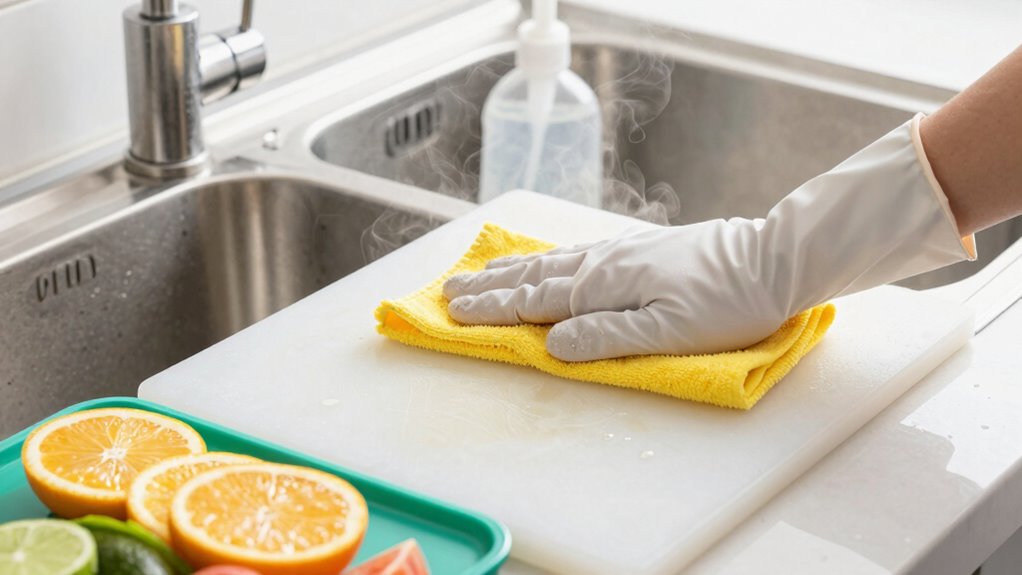
If your sanitizing efforts aren’t effectively reducing bacteria or preventing cross-contamination, it’s important to identify the root cause. Soap residue can interfere with sanitizer effectiveness, leaving surfaces less protected. Additionally, using too little sanitizer or not allowing enough contact time can render the process ineffective.
To troubleshoot:
- Check for soap residue on surfaces and rinse thoroughly before sanitizing.
- Ensure you’re using an appropriate amount of sanitizer and following the instructions.
- Use fresh sanitizer solutions; old or diluted ones lose effectiveness.
- Confirm you’re letting surfaces stay wet with sanitizer for the recommended time.
Addressing these issues immediately will improve your sanitizing results and keep your kitchen safer. Don’t overlook the importance of proper technique—small mistakes can compromise your efforts.
How Regular Sanitizing Boosts Kitchen Hygiene and Food Safety
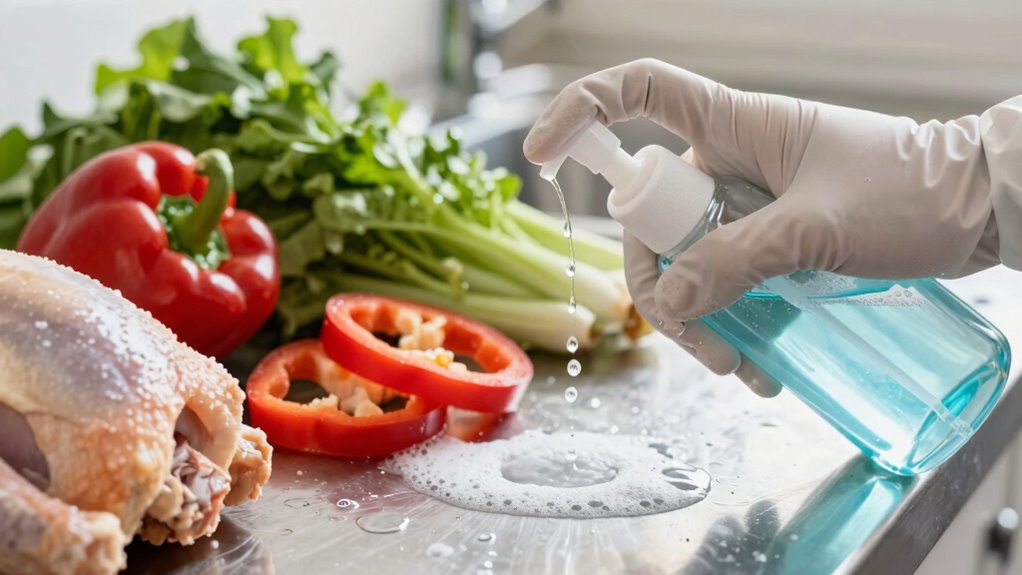
Regularly sanitizing your kitchen surfaces and utensils is essential for maintaining high standards of hygiene and preventing foodborne illnesses. When you keep your kitchen clean, you reduce the risk of bacteria and viruses contaminating your food. Consistent sanitizing guarantees that harmful pathogens don’t linger after raw food prep, protecting you and your family. Good kitchen hygiene isn’t just about appearance; it’s a critical line of defense against illness. By making sanitizing a routine, you eliminate germs that could cause food poisoning or other health issues. This proactive approach not only keeps your kitchen safer but also promotes healthier eating habits. Regular sanitizing transforms your kitchen into a safer space, giving you peace of mind every time you prepare or serve food.
Frequently Asked Questions
Can I Sanitize With Household Cleaning Products Instead of Specialized Tools?
Yes, you can use household alternatives like diluted bleach or vinegar to sanitize after raw prep. These options are effective for cleaning and killing germs when used properly, ensuring good cleaning effectiveness. Just make sure to follow recommended dilution ratios and rinse surfaces thoroughly afterward. Avoid mixing chemicals, and always use clean cloths or paper towels. This way, you maintain safety and sanitation without needing specialized tools.
How Long Should I Wait After Sanitizing Before Using Surfaces Again?
You should wait at least 1 to 3 minutes after sanitizing before using the surface again. This waiting period guarantees the sanitizer has enough contact time to effectively kill germs and bacteria. During this time, avoid touching or placing items on the surface. Once the waiting period is over, the surface is ready for use. Always follow the instructions on your sanitizer for best surface readiness and safety.
Is It Necessary to Sanitize Cutting Boards After Every Use?
Think of your cutting board like a battlefield where cross contamination risks lurk. Yes, you should sanitize after every use, especially when switching between raw meat and vegetables. This frequent sanitizing acts as your shield, preventing bacteria from spreading. Skipping this step increases health risks, so make it a habit to sanitize regularly. The more consistent your sanitizing frequency, the safer your kitchen stays for everyone.
Are There Any Food-Safe Sanitizers for Use on Fruits and Vegetables?
Yes, you can use food-safe disinfectants and natural sanitizers on fruits and vegetables. Look for options like vinegar solutions or produce washes labeled as food-safe sanitizers. These natural sanitizers effectively diminish bacteria without harmful chemicals. Always rinse thoroughly after using them, and follow the product instructions. Incorporating these sanitizers into your routine helps ensure your produce is safe to eat and free of contaminants.
What Are the Signs That Sanitizing Isn’T Effectively Eliminating Bacteria?
Did you know that up to 20% of kitchen surfaces still harbor bacteria after cleaning? Signs that sanitizing isn’t working include a sticky or slimy surface, lingering bad odors, or visible dirt and debris. If bacteria presence persists, contamination can spread to other foods. Always make certain you’re using proper sanitizers and following instructions carefully, and re-sanitize if you notice any of these signs.
Conclusion
Skipping sanitizing after raw prep might save a moment, but it risks cross-contamination and illness. Imagine chopping raw chicken, then immediately preparing a salad without cleaning your knife—bacteria can transfer easily. Regular sanitizing acts like a shield, keeping your kitchen safe and your family healthy. Make it a habit, and you’ll see that a quick wipe or spray isn’t just extra effort—it’s peace of mind every time you cook.