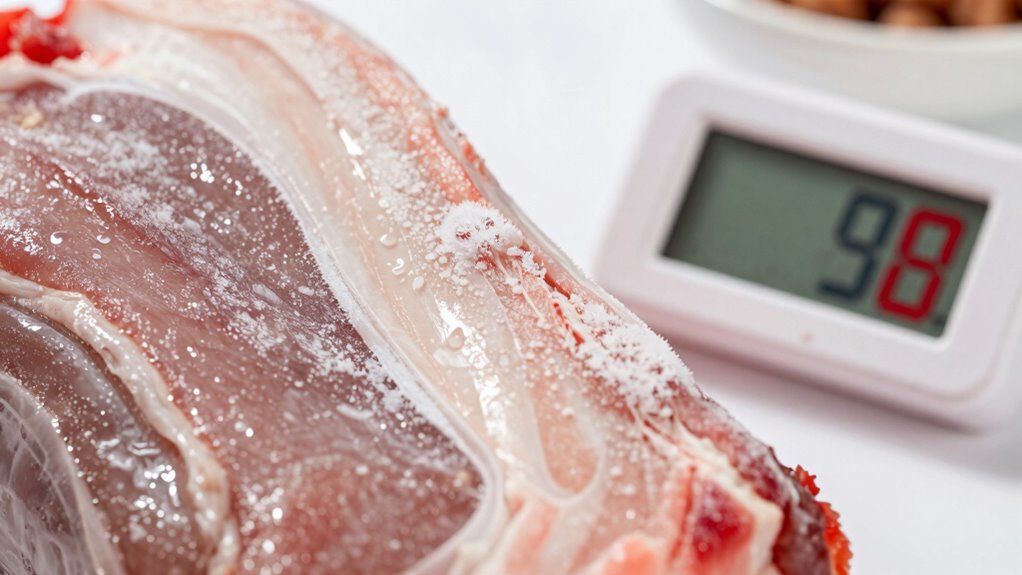

Thawing raw pet food too fast creates problems because it can cause uneven temperatures, which promote harmful bacteria growth. When food thaws rapidly, some parts might warm up while others remain frozen, increasing the risk of foodborne illnesses. This jeopardizes your pet’s health and can affect the nutritional quality of the food. It’s important to follow safe thawing methods to protect your furry friend. Want to know the best thawing techniques? There’s more to explore!

Get health and wellness essentials delivered free with Prime
- Fast, free delivery on millions of items
- Prime Video, Amazon Music and more included
- Member-only deals all year
Key Takeaways
- Rapid thawing can lead to uneven temperatures, creating hot spots that promote bacterial growth in raw pet food.
- Thawing too quickly may partially cook the food, affecting its nutritional value for pets.
- Quick thawing methods, like microwaving, require rigorous temperature checks to ensure safety.
- Leaving raw pet food out for extended periods increases the risk of bacteria development.
- Proper thawing methods are vital to maintain food safety and prevent health issues in pets.
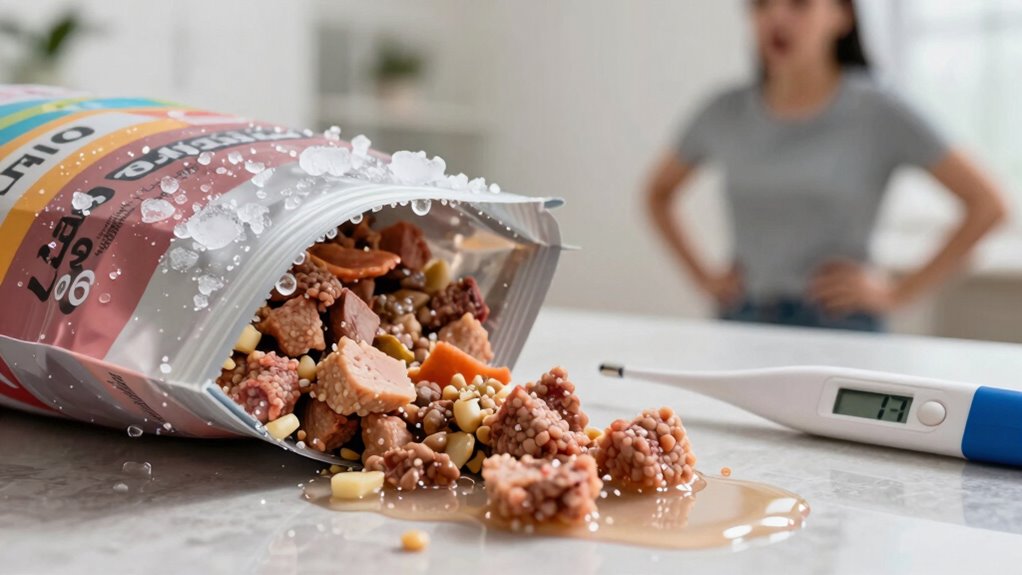
Using safe methods to thaw your pet’s food is essential. The safest way to do this is in the refrigerator. It may take longer, but it keeps the food at a consistent, safe temperature. If you leave raw food out on the counter, the outer layers can reach temperatures that promote bacteria growth, while the inside remains frozen. This uneven thawing can lead to food safety issues, making your pet vulnerable to illnesses that could have been easily avoided. To ensure the food remains safe, always monitor the thawing process carefully.
Another common thawing technique is using cold water. Submerging the sealed package of pet food in cold water can speed up the process while minimizing the risk of bacteria. Just remember to change the water every 30 minutes to keep it cold. While this method is faster than refrigerator thawing, it’s still important to monitor the temperature to guarantee that the food remains safe for your pet.
Microwave thawing might seem like a quick fix, but it’s not often recommended. While it does thaw the food rapidly, it can create hot spots that can lead to uneven temperatures. This method can also partially cook the food, compromising both its nutritional value and safety. If you must use the microwave, make sure to check the temperature thoroughly and allow it to cool before serving it to your pet.
Always keep food safety in mind. Even after thawing, raw pet food should never be left out for extended periods. If your pet doesn’t finish their meal, it’s best to refrigerate leftovers promptly. Toss any uneaten food after a couple of hours to prevent any risk of bacteria growth. Proper food safety practices are essential for maintaining your pet’s health.
pet food thawing in refrigerator
As an affiliate, we earn on qualifying purchases.
As an affiliate, we earn on qualifying purchases.
Frequently Asked Questions
Can I Refreeze Raw Pet Food After Thawing?
Yes, you can refreeze raw pet food after thawing, but it’s vital to follow safe thawing techniques. If you’ve thawed it in the fridge, it’s generally safe to refreeze. However, if you’ve thawed it at room temperature, you should discard it for pet food safety. Always verify the food hasn’t been left out for too long to avoid any harmful bacteria. Keeping your pet’s food safe is essential for their health!
How Long Can Thawed Raw Pet Food Be Stored?
Imagine thawed pet food as a ticking clock, each second counting down its freshness. You can store thawed raw pet food in the fridge for about 1 to 2 days. Using proper thawing techniques helps maintain its quality, but once it’s thawed, that storage duration becomes vital. After two days, it’s time to say goodbye. Always prioritize your pet’s health by keeping an eye on how long it’s been stored.
What Are the Signs of Spoiled Raw Pet Food?
You can tell if raw pet food’s spoiled by using a few simple checks. First, do the smell test; any sour or off odors signal spoilage. Next, look for color changes; fresh food should have a consistent hue. Finally, evaluate the texture—if it’s slimy or overly dry, it’s a no-go. Always check the expiration date, too, to guarantee it’s still safe for your pet. Trust your instincts and play it safe!
Is It Safe to Thaw Raw Pet Food in Hot Water?
No, it’s not safe to thaw raw pet food in hot water. While it might seem like a quick solution, this method can create uneven temperatures, risking bacteria growth and compromising food safety. Instead, opt for safer thawing methods like refrigerating or using cold water. These approaches help maintain a consistent temperature, ensuring your pet’s meal stays fresh and safe. Always prioritize your pet’s health by using proper thawing techniques.
Can I Microwave Raw Pet Food to Thaw It?
You shouldn’t microwave raw pet food to thaw it. Microwaving can create hot spots, which might not kill harmful bacteria and can compromise the food’s quality. Instead, use safer thawing methods like leaving it in the fridge overnight or submerging it in cold water. These methods guarantee even thawing and help maintain microwave safety. Always prioritize your pet’s health by following proper thawing techniques!
Conclusion
Thawing raw pet food too quickly is like trying to rush a butterfly from its cocoon—impatience can lead to chaos. When you expose it to high temperatures, you’re inviting harmful bacteria to the party, turning a nutritious meal into a health risk. Just as a butterfly needs time to emerge, your pet’s food deserves a gentle thaw. So, take a moment, let it shift naturally, and guarantee your furry friend enjoys a safe and wholesome feast.
Cold & flu season Picks
humidifiers
As an affiliate, we earn on qualifying purchases.