
A grain mill makes sense in a raw or low-heat kitchen when you want to preserve essential nutrients and enzymes that degrade with commercial processing and heat. It allows you to control the freshness and quality of your flours, enhancing flavor and digestibility. Manual mills are especially useful for minimal heat and mindfulness in food prep. If you keep exploring, you’ll discover how using a mill can transform your approach to healthy, whole foods.

Get health and wellness essentials delivered free with Prime
- Fast, free delivery on millions of items
- Prime Video, Amazon Music and more included
- Member-only deals all year
Key Takeaways
- When preserving nutrients and enzymes is critical, a grain mill allows for fresh, minimally processed flour without heat exposure.
- If maintaining raw food principles and avoiding heat degradation is a priority, manual mills are ideal.
- For customizing flour textures and experimenting with different grains, a grain mill provides enhanced control.
- When supporting sustainable, ethical sourcing and promoting biodiversity, milling at home offers transparency and choice.
- If a mindful, hands-on approach to food preparation aligns with your lifestyle, using a grain mill enriches the experience.
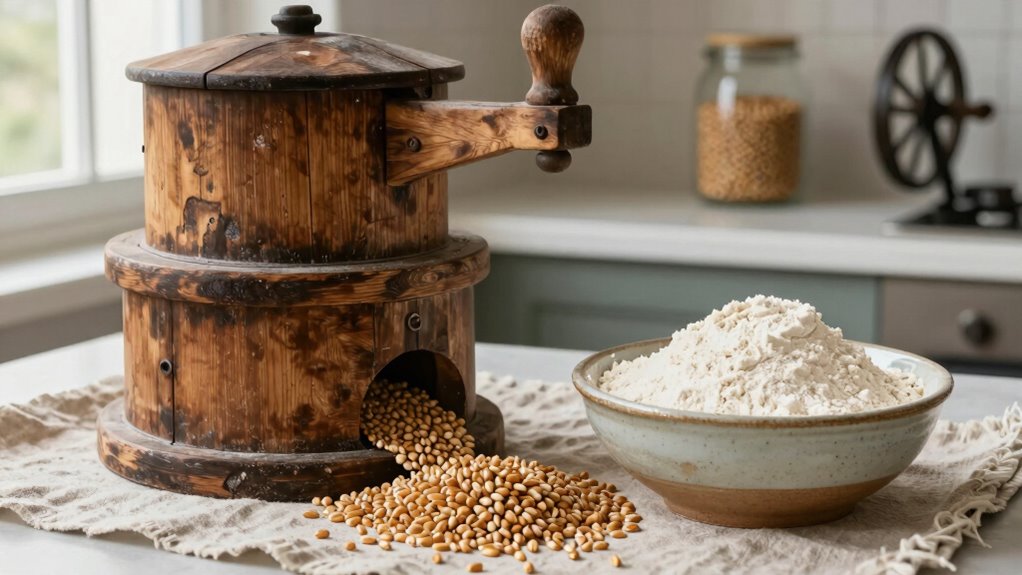
If you’re committed to maintaining the nutritional integrity of your grains, using a grain mill in a raw or low-heat kitchen is an excellent choice. When you grind grains yourself, you preserve essential nutrients and enzymes that often degrade during commercial processing. This approach is especially beneficial if you’re into gluten-free baking, as grinding your own grains allows you to control the freshness and quality of your flour. You can choose specific gluten-free grains like rice, buckwheat, or millet, ensuring your baked goods are as nutritious and flavorful as possible.
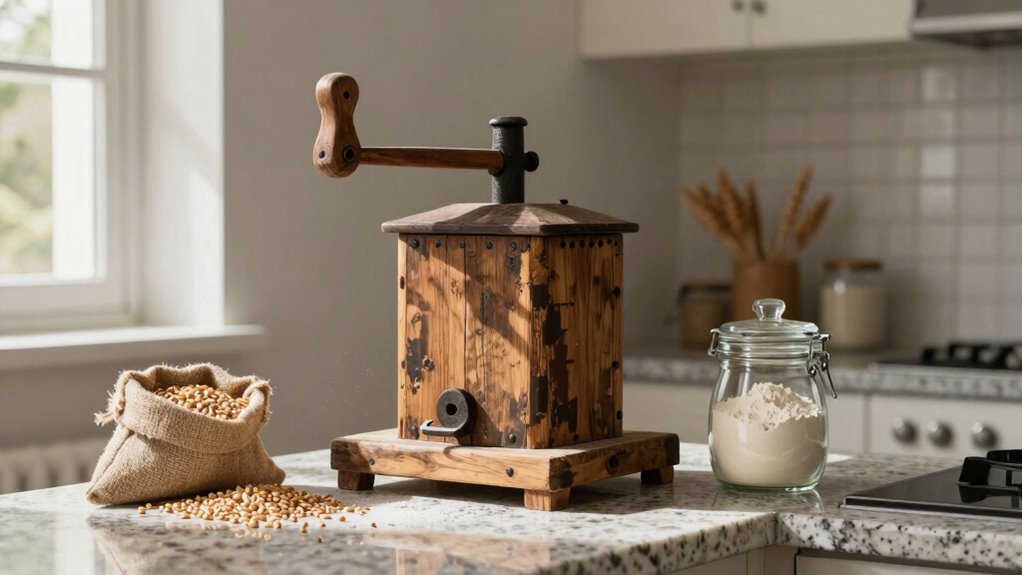
Manual milling offers a practical solution for those dedicated to raw food preparation or avoiding heat exposure. Unlike electric mills, manual mills don’t generate heat during the grinding process, which helps preserve delicate nutrients and enzymes that can be lost with higher temperatures. This method aligns well with a low-heat or raw kitchen setup, enabling you to produce freshly ground flour without compromising raw food principles. Plus, manual mills are often compact, durable, and easy to operate, making them ideal for small spaces or minimalist setups.
Using a grain mill in your raw or low-heat kitchen also gives you flexibility. You can experiment with different grains and milling textures, from coarse to fine, to suit your baking or cooking needs. For gluten-free baking, freshly milled flour can markedly improve the taste and texture of your baked goods. The freshness of the flour means better flavor, better rise, and improved digestibility. Since you’re controlling the entire process, you avoid additives or preservatives found in store-bought alternatives, supporting a cleaner, more natural diet.
Furthermore, manual milling encourages a mindful, hands-on approach to food preparation. It allows you to connect with the grains, understand their properties, and appreciate the effort involved in producing flour. This process can be both satisfying and educational, reinforcing your commitment to whole foods and raw food principles. Additionally, manual mills are often more affordable than electric counterparts, making them accessible whether you’re just starting or have a dedicated raw kitchen setup.
Using a grain mill also helps you understand grain processing, giving you insight into the nutritional differences between homemade and commercial flours. Incorporating knowledge about biodiversity can inspire you to explore a wider variety of grains and support sustainable farming practices. This awareness can deepen your appreciation for raw food principles and motivate a more conscious approach to your diet. Moreover, understanding nutritional preservation emphasizes the importance of minimal heat during processing to retain maximum nutrients. Recognizing the environmental impact of your grain choices can further promote sustainable and ethical food sourcing.
As an affiliate, we earn on qualifying purchases.
Frequently Asked Questions
Can Any Type of Grain Be Ground With a Mill in Low-Heat Kitchens?
Not all grains can be ground with a mill in low-heat kitchens, as some require specific grinding techniques to preserve nutrients and flavor. Harder grains like wheat or corn may need more powerful mills, risking heat buildup. You should also consider proper grain storage to prevent moisture or spoilage. Using a gentle grinding approach helps maintain the raw quality, ensuring your grains stay fresh and nutritious without overheating.
How Often Should I Clean and Maintain My Grain Mill?
Ever wondered how often you should clean your grain mill? You should perform regular grain mill maintenance by cleaning it after every few uses or weekly, depending on your frequency. Stick to a consistent cleaning schedule to prevent buildup and guarantee peak performance. Regularly inspect and clean all parts, especially grinding surfaces, to keep your mill in top shape and extend its lifespan. Wouldn’t you want your mill to work smoothly every time?
Is a Manual Mill Better Than an Electric One for Raw Kitchens?
A manual mill is better if you prefer control and minimal automation, especially in a raw or low-heat kitchen. It allows you to avoid automated grinding that might generate excess heat, preserving nutrients. An electric mill offers greater electric efficiency and faster grinding, making it ideal for larger batches. Choose based on your priorities: manual for control and heat preservation, electric for convenience and efficiency.
What Are the Noise Levels Typically Associated With Grain Mills?
You’ll find that grain mills can sound like a roaring storm or a gentle whisper, depending on the model. Sound comparison shows electric mills often produce louder noise levels, while manual ones stay surprisingly quiet. To tame the noise, noise reduction techniques like rubber mats or enclosures work wonders. So, if quiet is your priority, opt for a manual mill or apply simple soundproofing, and enjoy your milling serenely.
How Does Grinding Affect the Nutritional Content of Grains?
Grinding grains can slightly reduce nutrient preservation, especially if heat is generated during the process. However, if done carefully, enzyme activity remains mostly intact, preserving essential nutrients like vitamins and minerals. You’ll want to avoid excessive heat and grinding too long, as this can degrade nutrients. Using a gentle, low-heat mill helps guarantee you maintain most of the grain’s nutritional benefits, making your flour healthier and more nutritious.
Conclusion
In a raw or low-heat kitchen, a grain mill isn’t just a tool—it’s your secret weapon for freshness and control. Imagine transforming whole grains into wholesome flour at your fingertips, turning every loaf into a masterpiece. Don’t let this opportunity slip through your fingers like grains of sand. Embrace the possibility—because, in the end, a grain mill isn’t just an accessory; it’s the heart of truly nourishing, vibrant food.
Halloween Picks
halloween
As an affiliate, we earn on qualifying purchases.