
The best fiber supplements for IBS depend on the fiber type, your symptoms, and how easily you can adjust your dose. I rank Tomorrow’s Nutrition Sunfiber as the best overall for its soluble-fiber focus and unflavored format, while Metamucil Sugar-Free stands out for familiar psyllium and Natural Factors Reliefiber for shoppers seeking a product labeled low FODMAP. The main tradeoffs are powder versus capsules, simple fiber versus blended formulas, and how much control you want over serving size. Fiber can affect people with IBS differently, so gradual changes matter more than choosing the biggest serving. Read on for the full comparison and a guide to matching a product to your needs.

Get health and wellness essentials delivered free with Prime
- Fast, free delivery on millions of items
- Prime Video, Amazon Music and more included
- Member-only deals all year
Key Takeaways
Fiber type separates the picks: psyllium appears in several options, while Sunfiber, Benefiber, Reliefiber, and FiberMend offer different soluble or prebiotic fiber approaches.
Powder gives more dose control: it can be easier to start with a smaller amount than a fixed-dose capsule, though it requires mixing and carrying a container.
Capsules trade flexibility for convenience: the standalone psyllium capsules and the IBS-focused blends suit people who prefer not to mix powder, but serving sizes and added ingredients vary.
Low-FODMAP labeling is a useful filter, not a guarantee: Reliefiber is the explicit low-FODMAP option in this group, but personal tolerance and serving size still matter.
Simple formulas are easier to evaluate: a single-fiber product gives buyers a clearer starting point than blends with enzymes or other ingredients when they are trying to identify what they tolerate.
| Metamucil Sugar-Free Psyllium Husk Fiber Supplement, Orange, 180 Teaspoons |  | Best Overall Psyllium Powder | Form: Powder | Flavor: Orange | Sweetener: Sugar-free | VIEW LATEST PRICE | See Our Full Breakdown |
| Psyllium Husk Fiber Supplement, 1,450 mg, 240 Capsules |  | Best for Portable Dosing | Active ingredient: Psyllium husk | Amount per serving: 1,450 mg | Serving size: 2 capsules | VIEW LATEST PRICE | See Our Full Breakdown |
| NOW Supplements Psyllium Husk 500 mg, 200 Veg Capsules | 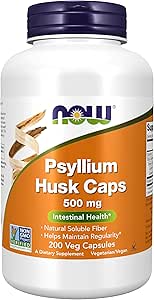 | Best for Vegan Capsule Shoppers | Form: 200 veg capsules | Serving suggestion: 3 capsules with 8 oz of liquid, 2 to 3 times daily | Certifications and classifications: Non-GMO Project Verified, kosher, vegan/vegetarian, soy-free, made without gluten, corn-free, keto-friendly | VIEW LATEST PRICE | See Our Full Breakdown |
| Super Naturals IBSolution Gut Health Supplement with Psyllium, 60 Capsules |  | Best for Multi-Ingredient Formulas | Count: 60 capsules | Suggested use: 1 capsule in the morning and 1 around dinner | Maximum daily dose: 2 capsules | VIEW LATEST PRICE | See Our Full Breakdown |
| Benefiber Unflavored Prebiotic Fiber Supplement Powder, 17.6 oz |  | Best for Taste-Free Mixing | Net weight: 17.6 oz | Fiber type: Wheat dextrin | Flavor: Unflavored | VIEW LATEST PRICE | See Our Full Breakdown |
| IBS Clear Digestive Support Supplement with Enzymes and Psyllium Fiber, 180 Capsules |  | Best Multi-Ingredient Capsule | Form: Vegan capsules | Count: 180 capsules | Suggested use: 2 capsules daily with a meal; beginners can start with 1 capsule daily | VIEW LATEST PRICE | See Our Full Breakdown |
| Benefiber Unflavored Prebiotic Fiber Supplement Powder, 8.7 oz |  | Best for Clear, Grit-Free Mixing | Form: Powder | Net weight: 8.7 oz | Fiber source: Wheat dextrin | VIEW LATEST PRICE | See Our Full Breakdown |
| Tomorrow’s Nutrition Sunfiber Soluble Fiber, Unflavored |  | Best Low-FODMAP Daily Powder | Form: Soluble fiber powder | Fiber per serving: 6 grams | Flavor: Unflavored | VIEW LATEST PRICE | See Our Full Breakdown |
| Natural Factors Organic Low FODMAP Reliefiber Fiber Powder, 30 Servings |  | Best for Ingredient and Testing Transparency | Form: Unflavored powder | Servings: 30 | Serving size: 5 g | VIEW LATEST PRICE | See Our Full Breakdown |
| Thorne FiberMend Prebiotic Fiber Powder, 30 Servings |  | Best for Third-Party Label Verification | Form: Powder | Servings: 30 | Type: Prebiotic fiber | VIEW LATEST PRICE | See Our Full Breakdown |
| fiber supplements for IBS | Form | Servings |
|---|---|---|
| Metamucil Sugar-Free Psyllium | Powder | — |
| Psyllium Husk Fiber Supplement | — | 120 |
| NOW Supplements Psyllium Husk | 200 veg capsules | — |
| Super Naturals IBSolution Gut | — | — |
| Benefiber Unflavored Prebiotic | — | 250 teaspoons |
| IBS Clear Digestive Support Su | Vegan capsules | — |
| Benefiber Unflavored Prebiotic | Powder | 124 teaspoons |
| Tomorrow’s Nutrition Sunfiber | Soluble fiber powder | — |
| Natural Factors Organic Low FO | Unflavored powder | 30 |
| Thorne FiberMend Prebiotic Fib | Powder | 30 |
More Details on Our Top Picks
Metamucil Sugar-Free Psyllium Husk Fiber Supplement, Orange, 180 Teaspoons
For shoppers seeking a familiar, mixable psyllium option, this sugar-free orange powder is my strongest all-around pick. Each serving supplies 2.4 grams of soluble fiber, and its smooth texture may be easier to work into a daily routine than capsules. Compared with the Psyllium Husk Fiber Supplement capsules, it avoids swallowing several pills, though it does require measuring and mixing. Psyllium is a soluble fiber that can support regularity, but people with IBS may respond differently to added fiber, so I would start gradually and follow the label’s directions for fluids. The tradeoff is convenience: this large tub takes more preparation than capsules, and the product is not described as low-calorie. Its orange flavor also makes it less discreet than unflavored Benefiber.
Pros:- Psyllium husk provides plant-based soluble fiber
- Provides 2.4 grams of soluble fiber per serving
- Sugar-free orange flavor offers an alternative to plain powder
- Smooth texture is designed to mix easily
Cons:- Requires measuring and mixing rather than swallowing a ready-made capsule
- Orange flavor may not suit people who prefer an unflavored supplement
- Not described as a low-calorie food
Best for: Adults with IBS who want a recognizable psyllium powder, prefer a flavored drink over capsules, and can make time to mix each serving.
Not ideal for: People who need a grab-and-go capsule, dislike flavored supplements, or want to avoid the measuring and mixing routine.
- Form:Powder
- Flavor:Orange
- Sweetener:Sugar-free
- Fiber source:Plant-based psyllium husk
- Soluble fiber per serving:2.4 grams
- Quantity:180 teaspoons
Our verdict“Choose this if you want a flavored, mixable psyllium powder with a stated soluble-fiber amount and do not mind preparing each serving.”
Psyllium Husk Fiber Supplement, 1,450 mg, 240 Capsules
This capsule option suits buyers who want psyllium without a powder routine. A two-capsule serving contains 1,450 mg, and the 240-count bottle provides 120 servings. Compared with Metamucil Sugar-Free Psyllium Husk, it is easier to carry and needs no scoop or shaker, but it gives up the powder’s stated soluble-fiber amount per serving. The directions call for adequate water, and the label describes it for occasional use only, so I would not treat it as a daily IBS-management plan without guidance from a healthcare professional. That limitation matters for buyers seeking a consistent routine. Its capsule format is convenient, but anyone who dislikes swallowing pills or struggles to drink enough fluid may find the format a poor fit.
Pros:- Portable capsule format needs no mixing or scooping
- Plant-based psyllium husk provides dietary fiber
- Two-capsule serving and 120 servings are specified
- Can be taken at home, work, or on the go
Cons:- Label specifies occasional use only
- Requires adequate water with each dose
- Does not state soluble fiber grams per serving
Best for: Adults who want occasional, portable psyllium use at work or while traveling and are comfortable taking capsules with plenty of water.
Not ideal for: People seeking a clearly stated daily IBS fiber routine, those who dislike capsules, or anyone unable to take each dose with adequate water.
- Active ingredient:Psyllium husk
- Amount per serving:1,450 mg
- Serving size:2 capsules
- Capsule count:240
- Servings:120
- Suggested use:1–2 capsules twice per day with at least 8 oz of water, or as directed by a healthcare professional
- Use:Occasional use only
Our verdict“Pick these capsules for portable, occasional psyllium use, not as a substitute for a clinician-guided daily IBS fiber plan.”
NOW Supplements Psyllium Husk 500 mg, 200 Veg Capsules
For buyers who prefer capsules and place a premium on stated dietary and manufacturing attributes, NOW offers a vegan psyllium option with non-GMO, kosher, soy-free, gluten-free, and corn-free classifications. The suggested dose is three capsules with 8 oz of liquid, taken two to three times daily. That routine can be less convenient than the two-capsule serving in the Psyllium Husk Fiber Supplement, and more demanding than mixing the Metamucil powder once. Psyllium swells when added to liquid, which is why the water instruction is central rather than optional. This product may suit shoppers who want a capsule-based fiber source and value its listed classifications, but repeated dosing and the lack of a stated fiber amount per full serving make it less straightforward for dose planning.
Pros:- Vegan and vegetarian capsule format
- Psyllium husk provides soluble fiber
- Listed as non-GMO, kosher, soy-free, gluten-free, and corn-free
- Manufacturing quality assurance includes NPA A-rated GMP certification
Cons:- Requires three capsules per dose
- Suggested use involves dosing two to three times daily
- Each dose must be taken with 8 oz of liquid
Best for: Vegan or vegetarian adults who want a psyllium capsule and value the listed non-GMO, kosher, soy-free, gluten-free, and corn-free classifications.
Not ideal for: People who want fewer capsules per dose, cannot reliably take each serving with 8 oz of liquid, or need a clearly stated soluble-fiber amount per serving.
- Form:200 veg capsules
- Serving suggestion:3 capsules with 8 oz of liquid, 2 to 3 times daily
- Certifications and classifications:Non-GMO Project Verified, kosher, vegan/vegetarian, soy-free, made without gluten, corn-free, keto-friendly
- Quality assurance:NPA A-rated GMP certification
- Packaging:Packaged in the USA
- Fiber source:Psyllium husk
Our verdict“Choose NOW if you want a vegan psyllium capsule and accept a more involved dosing schedule than the two-capsule alternative.”
Super Naturals IBSolution Gut Health Supplement with Psyllium, 60 Capsules
IBSolution combines psyllium with inulin and botanicals, including slippery elm, aloe, ginger, and papaya. That broader formula sets it apart from single-source picks such as NOW Supplements Psyllium Husk, but it also creates a more complex choice for people with IBS who are tracking food and supplement triggers. The product contains inulin and is not low FODMAP, so it is a poor match for someone following a low-FODMAP approach or testing individual fibers. Its twice-daily schedule and option to open capsules into juice or applesauce add flexibility, though the capsules are about an inch long and the directions call for water. I would consider this only if the added ingredients fit your plan; the simpler psyllium products are easier to evaluate one fiber at a time.
Pros:- Combines psyllium with inulin and a range of botanicals
- Capsules can be opened and mixed into juice or applesauce
- Vegan, non-GMO, and gluten-free
- Two-capsule daily maximum is clearly stated
Cons:- Contains inulin and is not low FODMAP
- Multiple ingredients make it harder to identify individual triggers
- Requires twice-daily dosing with water, and capsules are about 1 inch long
Best for: Adults who want a multi-ingredient plant-based formula, are not following a low-FODMAP diet, and are comfortable introducing several ingredients together.
Not ideal for: People following a low-FODMAP diet, those identifying individual IBS triggers, or anyone who prefers a simple, single-fiber supplement.
- Count:60 capsules
- Suggested use:1 capsule in the morning and 1 around dinner
- Maximum daily dose:2 capsules
- Suggested duration:At least 30 days
- Capsule length:About 1 inch
- Key ingredients:Psyllium husk, inulin, acai, slippery elm, aloe, ginger, papaya, chlorella, walnut hulls, hyssop leaf, lycopene
- Dietary attributes:Vegan, non-GMO, gluten-free
- FODMAP information:Contains inulin; not low FODMAP
Our verdict“Choose IBSolution only if you want its broader blend and are not avoiding inulin; skip it for low-FODMAP or single-ingredient testing.”
Benefiber Unflavored Prebiotic Fiber Supplement Powder, 17.6 oz
Benefiber is the lineup’s most discreet powder: its unflavored wheat dextrin dissolves clear and completely in noncarbonated drinks and soft foods. That makes it easier to add to a routine than orange-flavored Metamucil when taste or texture is a concern. The difference is the fiber source: Benefiber uses wheat dextrin as a prebiotic, while Metamucil and the capsule picks use psyllium. For IBS, those are not interchangeable choices, and an individual response can vary. This product is not recommended for carbonated beverages, and its suggested serving is 4 teaspoons once daily for digestive health. The large supply may suit regular users, but wheat dextrin may not be the right match for everyone, and shoppers seeking psyllium should choose another option.
Pros:- Unflavored and designed to dissolve clear and completely
- Can be mixed into noncarbonated beverages and soft foods
- Plant-based prebiotic fiber made with wheat dextrin
- Sugar-free, gluten-free, and free of artificial flavors
Cons:- Not recommended for carbonated beverages
- Uses wheat dextrin rather than psyllium
- Requires measuring a 4-teaspoon serving
Best for: Adults who want an unflavored powder that disappears into noncarbonated drinks or soft foods and prefer wheat dextrin over psyllium.
Not ideal for: People who specifically want psyllium, need a supplement for carbonated drinks, or want to avoid wheat dextrin.
- Net weight:17.6 oz
- Fiber type:Wheat dextrin
- Flavor:Unflavored
- Servings:250 teaspoons
- Sugar:Sugar-free
- Gluten:Gluten-free
- Artificial flavors:None
- Mixing guidance:Dissolves in noncarbonated beverages and soft foods
- Suggested serving:4 teaspoons once daily for digestive health; 4 teaspoons twice daily for feeling fuller longer
Our verdict“Choose Benefiber for taste-free mixing if wheat dextrin suits your IBS plan; choose Metamucil or a capsule option if you specifically want psyllium.”
IBS Clear Digestive Support Supplement with Enzymes and Psyllium Fiber, 180 Capsules
IBS Clear combines psyllium, 10 digestive enzymes, and several herbs, making it a fit for someone who wants more than a standalone fiber supplement in capsule form. Its unflavored vegan capsules avoid the mixing and texture issues of powders such as Benefiber Unflavored Prebiotic Fiber. Beginners can start with one capsule daily, while the suggested routine is two with a meal. That flexibility may suit people easing into a supplement, but the product does not list the amounts of each ingredient, so it is harder to judge how much psyllium or each enzyme a serving provides. Compared with a single-source powder like Tomorrow’s Nutrition Sunfiber, this formula offers more ingredient variety but less clarity about its fiber dose. The herbal blend also makes it a poor match for shoppers seeking a simple, one-ingredient approach.
Pros:- Combines psyllium fiber, 10 digestive enzymes, and several herbs in one product
- Vegan, unflavored capsules avoid gritty texture and drink preparation
- Beginners can start with one capsule daily before following the suggested two-capsule routine
- Description states that it contains no additives, fillers, colors, or preservatives
Cons:- Amounts of psyllium and individual enzymes or herbs are not specified
- Requires daily capsule-taking rather than allowing fiber to be mixed into food or drinks
- The broader blend may not suit shoppers who want to introduce one ingredient at a time
Best for: People who prefer unflavored capsules and want psyllium alongside digestive enzymes and herbs in one formula.
Not ideal for: Shoppers who need a clearly stated fiber amount, want a single-ingredient product, or prefer to adjust a powder serving gradually.
- Form:Vegan capsules
- Count:180 capsules
- Suggested use:2 capsules daily with a meal; beginners can start with 1 capsule daily
- Stated supply:3 months when taken as directed
- Digestive enzymes:10, including lipase, protease, amylase, lactase, and bromelain
- Fiber:Psyllium husk; amount not specified
- Herbs:Peppermint, perilla leaf, fennel, ginger, aloe vera, cumin, and turmeric
- Other listed ingredients:Vitamin D and Bioperine black pepper extract
- Manufacturing:Made in the USA
Our verdict“Choose IBS Clear if you want psyllium in a capsule alongside enzymes and herbs, but skip it if a precise fiber dose is your priority.”
Benefiber Unflavored Prebiotic Fiber Supplement Powder, 8.7 oz
Benefiber’s wheat dextrin dissolves clear and grit-free, which makes it an easy-to-hide option for people who dislike the texture of some fiber powders. It can go into non-carbonated drinks or soft foods without adding a noticeable flavor, unlike a flavored psyllium option such as Metamucil Sugar-Free Psyllium Husk. That convenience comes with a different fiber source: this is wheat dextrin, not psyllium, so it is not the choice for buyers specifically seeking psyllium. The product is described as gluten-free, though it still uses wheat dextrin; shoppers with wheat-related dietary concerns should check suitability rather than relying on that label alone. Compared with Tomorrow’s Nutrition Sunfiber, Benefiber does not have a stated low-FODMAP feature, which may matter to people following that approach for IBS.
Pros:- Dissolves clear and grit-free in non-carbonated beverages and soft foods
- Taste-free formula can fit into a daily routine without changing food flavor
- Plant-based prebiotic fiber
- Sugar-free and described as gluten-free
Cons:- Uses wheat dextrin rather than psyllium
- Not recommended for carbonated beverages
- No low-FODMAP designation is provided in the product information
Best for: People who want an unflavored, nearly invisible fiber powder for non-carbonated drinks or soft foods and do not specifically require psyllium.
Not ideal for: People seeking a specifically low-FODMAP product, avoiding wheat-derived ingredients, or wanting to mix fiber into carbonated drinks.
- Form:Powder
- Net weight:8.7 oz
- Fiber source:Wheat dextrin
- Servings:124 teaspoons
- Flavor:Unflavored
- Dietary attributes:Sugar-free and gluten-free
- Mixing:Dissolves in non-carbonated beverages and soft foods
Our verdict“Pick Benefiber for discreet, smooth mixing if wheat dextrin suits your needs; choose a specifically low-FODMAP option if that is your deciding factor.”
Tomorrow’s Nutrition Sunfiber Soluble Fiber, Unflavored
Tomorrow’s Nutrition Sunfiber pairs a stated 6 grams of soluble fiber per serving with a low-FODMAP formula, giving IBS shoppers clearer dose information than IBS Clear, whose ingredient amounts are not specified. The unflavored powder dissolves clear without changing a beverage’s taste or texture, so it can fit into drinks, smoothies, or recipes. Its slow-fermenting design is described as gentle, though individual digestive responses can differ; the low-FODMAP label is not a guarantee that every person will tolerate it. Compared with Natural Factors Organic Low FODMAP Reliefiber, this shares the low-FODMAP positioning and clear-mixing format, while Natural Factors provides a specified 5 g serving and more detail about its organic guar source and testing. Here, the missing package quantity and serving-size instructions make planning a routine less straightforward.
Pros:- Provides 6 grams of soluble fiber per serving
- Low-FODMAP formula is positioned for sensitive digestion
- Dissolves clear without changing beverage taste or texture
- Can be mixed into beverages, smoothies, and recipes
Cons:- Serving size and package quantity are not specified in the supplied product details
- Digestive effects may vary between individuals
- Product information offers fewer sourcing and testing details than Natural Factors Organic Low FODMAP Reliefiber
Best for: People following a low-FODMAP approach who want a taste-free soluble fiber powder with a stated 6-gram fiber amount per serving.
Not ideal for: Buyers who need package quantity, serving instructions, or a clearly described amount of powder per serving before choosing a supplement.
- Form:Soluble fiber powder
- Fiber per serving:6 grams
- Flavor:Unflavored
- Dietary feature:Low FODMAP
- Solubility:Dissolves clear
- Fiber type:Prebiotic fiber
- Package quantity:Not specified in the product information
Our verdict“Choose Sunfiber if a low-FODMAP powder with a stated fiber amount matters most, provided the missing package and serving details are acceptable.”
Natural Factors Organic Low FODMAP Reliefiber Fiber Powder, 30 Servings
Natural Factors Reliefiber is the most clearly specified low-FODMAP powder in this group: it identifies organic guar beans as its Sunfiber source, gives a 5 g serving size, and provides mixing directions. That level of detail helps a buyer establish a repeatable routine, unlike Tomorrow’s Nutrition Sunfiber, whose supplied details omit serving size and package quantity. Reliefiber is also described as organic, non-GMO, free from a long list of common allergens and animal products, and third-party tested by ISURA. The tradeoff is that it must be mixed into a beverage, and its directions limit use to once or twice daily rather than offering a capsule option like IBS Clear. Its low-FODMAP designation may appeal to IBS shoppers, but personal tolerance can still vary.
Pros:- Uses organic guar beans as its Sunfiber source and is labeled low FODMAP
- Provides a 5 g serving size and clear mixing directions
- Free from several listed allergens, animal products, and other ingredients
- Third-party tested by ISURA for over 800 contaminants and adulterants
Cons:- Must be mixed into water or another non-carbonated beverage
- Directions specify use once or twice daily
- The listed 5 g serving size does not state the amount of fiber per serving
Best for: People seeking a clearly labeled low-FODMAP soluble fiber powder who value organic sourcing, allergen exclusions, and third-party contaminant testing.
Not ideal for: People who dislike mixing powders, want capsules, or need a product with a stated number of grams of fiber rather than a 5 g serving size.
- Form:Unflavored powder
- Servings:30
- Serving size:5 g
- Directions:Mix 1 serving in 8 fl oz of water or a non-carbonated beverage 1–2 times per day, or as directed by a physician
- Fiber source:Organic guar beans (Sunfiber)
- Dietary attributes:Organic, Low FODMAP, non-GMO
- Free from:Sugar, wheat, gluten, yeast, soy, corn, egg, fish, shellfish, animal products, and tree nuts
- Testing:Third-party tested by ISURA for over 800 contaminants and adulterants
Our verdict“Choose Reliefiber if you want a well-documented organic low-FODMAP powder, and skip it if you prefer capsules or need a stated fiber gram amount.”
Thorne FiberMend Prebiotic Fiber Powder, 30 Servings
Thorne FiberMend’s clearest differentiator is third-party testing and certification to verify that package contents match the label, paired with a prebiotic fiber powder intended to promote bowel regularity. That verification detail gives it a distinct role beside Natural Factors Organic Low FODMAP Reliefiber, which specifies its fiber source, serving size, and contaminant testing. FiberMend’s supplied product information is much sparser: it does not state the fiber amount per serving or identify the fiber source, so shoppers cannot readily compare its dose or ingredients with Tomorrow’s Nutrition Sunfiber, which lists 6 grams of soluble fiber per serving. With 30 servings listed, it offers a defined serving count, but not enough detail here to judge its fit for someone following a low-FODMAP plan or avoiding particular ingredients.
Pros:- Prebiotic fiber powder formulated to promote bowel regularity
- Third-party tested and certified to verify package contents against the label
- Product information lists 30 servings
Cons:- Fiber amount per serving is not specified
- Fiber source and ingredient details are not provided in the supplied information
- No low-FODMAP designation is stated
Best for: People who prioritize third-party label verification and want a prebiotic fiber powder for a regularity-focused routine.
Not ideal for: IBS shoppers who need a stated fiber dose, named fiber source, or low-FODMAP designation to guide their choice.
- Form:Powder
- Servings:30
- Type:Prebiotic fiber
- Stated use:Formulated to promote bowel regularity
- Testing:Third-party tested and certified to verify package contents match the label
- Fiber amount per serving:Not specified in the product information
Our verdict“Consider FiberMend if label verification is your main priority, but choose a more fully specified option if you need dose or low-FODMAP details.”

How We Picked
I compared these products around the questions that matter most for IBS: what kind of fiber they provide, whether the formula is simple or blended, how easily a buyer can adjust the serving, and whether the format fits daily use. I also considered practical details such as powder mixing, capsule burden, flavoring, and the usefulness of a specific positioning such as low-FODMAP labeling. Since people with IBS can respond differently to the same fiber, I did not treat any product as a guaranteed symptom fix.
The order gives priority to options with a clear fiber focus, practical dose adjustment, and fewer barriers to regular use. Sunfiber leads as a versatile unflavored powder; psyllium options rank well for buyers seeking that specific fiber, with format and serving details distinguishing them. Blended supplements sit lower because extra ingredients make it harder to isolate what suits an individual. Benefiber’s two sizes are separated by convenience and supply needs rather than formula type. These rankings are a shopping framework, not a clinical judgment or a substitute for advice from a healthcare professional.
Factors to Consider When Choosing Best Fiber Supplements For IBS
Before choosing a product, I would match the fiber and format to the way you plan to use it, then make changes slowly. These broader points can help prevent common buying mistakes that a product label alone cannot resolve.
Match Fiber Type to Your Starting Point
“Fiber” covers ingredients that behave differently, so do not assume two powders are interchangeable. Psyllium is a soluble, gel-forming fiber, while other products in this group use prebiotic fibers such as partially hydrolyzed guar gum or wheat dextrin. If you already know you tolerate a particular fiber, that history may be more useful than a broad claim on the front of a package. If you are starting fresh, a single-fiber product can make it easier to spot a relationship between a dose change and your symptoms. Avoid switching fiber types and changing several other diet habits at the same time; that makes the results harder to interpret. A clinician or dietitian can help if your symptoms are persistent or your diet is already restricted.
Choose a Format That Supports Small Adjustments
Powders often let you measure less than a full serving, which can be helpful when you want to increase gradually. Capsules avoid mixing and may fit travel or a busy routine, but the labeled serving can involve several pills and may offer less convenient dose increments. Think about the whole routine: whether you can keep a scoop dry, mix a drink consistently, or take capsules with enough fluid as directed. Do not choose a format based only on convenience if it makes gradual use unlikely. A product you can take consistently at a manageable amount may suit you better than one with a more appealing ingredient list. Follow the package directions and ask a healthcare professional about an appropriate plan if unsure.
Use Low-FODMAP Claims as One Part of the Decision
A low-FODMAP label can help shoppers who are following a structured low-FODMAP approach, but it does not predict each person’s response to every serving. The whole serving and the rest of your diet can affect tolerance, so a product label cannot replace individualized guidance. Some buyers may prefer a product with explicit low-FODMAP positioning, while others may prioritize a familiar fiber or a simpler ingredient list. Check whether the claim applies to the recommended serving rather than assuming any amount is suitable. If you are working with a dietitian, bring the full ingredient panel and serving directions into that conversation. Avoid making long-term food restrictions based on a supplement label alone.
Decide Whether You Want Fiber Alone or a Blend
Standalone fiber products give you a clearer way to evaluate one ingredient at a time. Blends with enzymes or additional digestive-support ingredients may appeal to people seeking an all-in-one product, but they also make it harder to tell which component agrees with you. More ingredients do not automatically mean better IBS support. Review the full label for allergens, sweeteners, flavorings, and other components that matter to your diet or medications. If you are already taking supplements or prescription treatments, ask a pharmacist or clinician about possible interactions and timing. For a first trial, many people find a simpler formula easier to track.
Plan for Gradual Changes and Symptom Tracking
A common mistake is starting at the full labeled serving and increasing again before seeing how the first change feels. Follow the label, consider discussing a slower introduction with a healthcare professional, and avoid treating a supplement as a quick fix. Keep a short record of product, amount, timing, fluids, and symptoms so you can notice patterns rather than relying on memory. Give your routine enough consistency to evaluate it, but stop and seek professional advice if you have a concerning reaction. IBS symptoms can have multiple causes, and a fiber supplement may not address all of them. If symptoms are severe, new, or worsening, get medical guidance rather than continuing to adjust supplements alone.
Pay for Fit, Not Extra Claims
A larger container can be convenient if you already know the fiber suits you, while a smaller size can reduce commitment when you are still figuring out tolerance. Premium positioning, added ingredients, or a specialized label may matter to a particular buyer, but they are not proof of better results. Compare the amount of fiber per serving, serving directions, ingredient list, and how easily you can use the product as planned. A powder that is awkward to mix or a capsule serving you dislike can become poor value even if the formula looks appealing. For a first purchase, prioritize a manageable trial and a clear label over buying the largest container. Once you know what works for your routine, convenience and supply size can carry more weight.
Frequently Asked Questions
Should I choose psyllium or a prebiotic fiber if I have IBS?
There is no single fiber type that works for everyone with IBS. Psyllium and prebiotic fibers have different ingredients and may feel different in use, so your prior tolerance can guide the choice. If neither is familiar, a simple product and a gradual approach can make your response easier to track. Do not judge a fiber by another person’s experience or switch several products quickly. Ask a clinician or dietitian for help if symptoms are significant or you are unsure which type fits your health needs.
Is a low-FODMAP fiber supplement automatically safer for IBS?
No label can promise that a supplement will suit every person with IBS. Low-FODMAP positioning can be helpful if you are following that approach, but tolerance depends on the specific product, serving, and your overall diet. Check the claim’s serving basis and read the entire ingredient panel. If you are in an elimination or reintroduction phase, coordinate supplement choices with a dietitian where possible. Do not use a label as a reason to ignore new or worsening symptoms.
Are capsules better than powder for managing IBS symptoms?
Capsules can be easier to take when mixing a drink is inconvenient, while powders may make it easier to adjust the amount in smaller steps. The better format is the one you can use consistently while following its directions. Check how many capsules make up a serving and whether you can comfortably take them with the required fluid. Powders also differ in taste, texture, and how well they mix, which can affect regular use. Neither format is inherently more effective for every person.
Can I take a fiber supplement with my current medication?
Do not assume a fiber supplement can be taken at the same time as every medicine. Fiber products may affect how some medicines are absorbed, and timing advice can differ by medication and product. Show your pharmacist or prescriber the exact supplement label and ask whether you need to separate doses. This is especially useful if you take several medicines or have a condition that affects digestion. Follow the professional’s advice and the product directions rather than guessing at a schedule.
How can I tell whether a supplement is helping or making symptoms worse?
Keep the product and routine steady enough to notice a pattern, and record the serving, timing, fluids, and symptoms. Avoid adding a second fiber or making several major diet changes during the same trial, since that can obscure the cause of a change. Follow label directions and discuss a gradual plan with a healthcare professional, especially if you have a history of strong reactions. If symptoms worsen or you develop concerning symptoms, stop self-adjusting and seek medical advice. A supplement trial cannot diagnose the cause of IBS symptoms.
Conclusion
My best overall pick is Tomorrow’s Nutrition Sunfiber for shoppers who want an unflavored soluble-fiber powder with a straightforward role in the routine. For best value and familiar psyllium format, compare Metamucil Sugar-Free with the standalone psyllium capsules, choosing powder for adjustable servings or capsules to skip mixing. Beginners may prefer a single-fiber product and a small, gradual start rather than a multi-ingredient blend. For a specific low-FODMAP need, Natural Factors Reliefiber is the clearest match in this group, though the label does not guarantee personal tolerance. Buyers seeking a premium or broader formula can compare Thorne FiberMend and the IBS-focused blends, but should weigh added ingredients against the benefit of a simpler formula. The best choice is the one that fits your known tolerances, routine, and clinician’s advice.