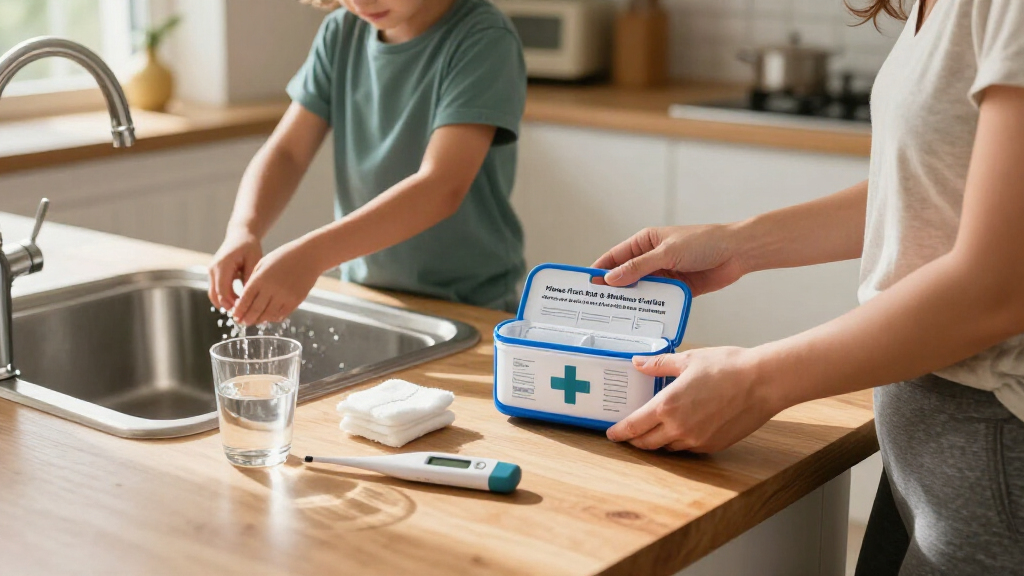
This checklist is for households putting together a practical home collection of first aid and wellness supplies. It covers tools for routine checks, basic preparedness, and everyday organization, with each slot tied to the product name provided. Choose for your household and the way you expect to use each item.

Get health and wellness essentials delivered free with Prime
- Fast, free delivery on millions of items
- Prime Video, Amazon Music and more included
- Member-only deals all year
The sections follow the six requested categories: thermometer, first aid kit, blood pressure monitor, pulse oximeter, reusable hot and cold pack, and pill organizer. Each includes a shopping perspective and a verdict for its listed pick. Check the product details before buying, especially where the name leaves the intended use or compatibility unclear.
Use the checklist to compare the item’s stated purpose with your needs, then confirm size, included components, and instructions on the product listing. For health monitoring devices, review the manufacturer’s guidance and consult a healthcare professional about use or interpretation. Fit and clear instructions matter as much as the category label.
Digital thermometer
A thermometer belongs on a home checklist because it gives you a dedicated tool for taking temperature readings. The listed pick is called a digital candy thermometer and names a pot clip and a 10-inch stainless steel probe. Those details point to a cooking-oriented product name, so verify that its instructions specifically support the kind of body temperature measurement you need before treating it as a health thermometer.
A common buying mistake is relying on a category label or a familiar word like “thermometer” without checking the intended application. Probe length, clip design, and material do not establish medical suitability. Read the listing and manual for measurement range, accuracy information, cleaning instructions, and whether it is designed for human use. Confirm intended use before adding it to a first aid kit.
Also consider who will use the device and whether its display and controls are easy for them to operate. Check how it is powered, how readings are shown, and what cleaning or storage is recommended. If the listing does not clearly identify it as a body thermometer, choose a product explicitly made for that purpose.
What to look for:
- Explicit confirmation that it is intended for human body temperature measurement
- Measurement range and accuracy details in the listing or manual
- Readable display and straightforward controls
- Cleaning and storage instructions appropriate for the intended use
- Power requirements and included accessories
Digital Candy Thermometer with Pot Clip and 10-Inch Stainless Steel Probe

This digital thermometer has a pot clip, a large LCD display, and a 10-inch stainless steel probe for cooking, baking, frying, and candy making. It reads temperatures in 3–5 seconds across a range of -58°F to 572°F, and its IP65-rated design can be rinsed under running water.
Pros:
- Pot clip attaches to the cookware and leaves hands free.
- Large digital display presents readings in clear digits.
- Long stainless steel probe is durable and avoids the breakage and leakage risk of glass.
- IP65-rated design can be rinsed under running water.
Cons:
- Product care instructions say not to soak it.
- Requires an LR44 battery.
Best for: Shoppers who can confirm the product is suitable for body temperature checks
Not ideal for: Anyone seeking a clearly identified medical thermometer without further verification
Bottom line: The product name describes a candy thermometer, so confirm human-use suitability before selecting it for a health checklist.
First aid kit
A first aid kit gives household supplies a single place to live, making it easier to locate them when needed. The listed pick is named the SurviveX Large Pro First Aid Kit and identifies itself as an emergency kit for 5–6 people. Check the full contents list to see whether its supplies match your household, the situations you are preparing for, and any items you already keep on hand.
A common mistake is assuming that a large kit automatically contains every supply a household needs. The name alone does not specify individual contents, quantities, expiration dates, or storage layout. Review the inventory before buying, and consider whether the case can be stored accessibly while keeping items protected. Read the inventory rather than relying on the kit title.
Think about the people who may use it: supplies and instructions should be understandable to the intended users. Check whether the kit’s contents can be replenished and whether the manufacturer provides care or inspection guidance. For medicines, specialized supplies, or personal medical needs, verify suitability with an appropriate professional rather than assuming the kit includes them.
What to look for:
- A complete itemized contents list and quantities
- Storage case dimensions and organization details
- Expiration or inspection guidance for included supplies
- Clear instructions and labeling for household users
- Availability of replacement supplies for items used or expired
SurviveX Large Pro First Aid Kit, Emergency Kit for 5-6 People

The SurviveX Large Pro First Aid Kit is designed for outdoor adventures, travel, and emergencies, providing comprehensive supplies to treat injuries for 5-6 people. It features innovative wound closure methods, organized compartments, and mounting options for versatility and quick access.
Pros:
- Suitable for large groups and outdoor activities
- Innovative wound closure reduces scarring and speeds healing
- Organized compartments for quick access in emergencies
- Mountable and MOLLE compatible for versatile attachment
Cons:
- May be larger and heavier to carry
- Specific contents not detailed, may need customization
- Price not specified
Best for: Households checking the stated 5–6-person scope against the contents list
Not ideal for: Shoppers who need specific supplies not confirmed in the listing
Bottom line: Compare the actual inventory with your household’s needs before relying on the kit’s size description.
Blood pressure monitor
A blood pressure monitor can support at-home checks when used according to its instructions and a healthcare professional’s guidance. The listed pick is an automatic upper arm monitor with a large backlit display, as stated in its name. Before choosing it, confirm that the monitor and cuff are appropriate for the person who will use it and that the instructions explain setup and measurement clearly.
A frequent buying mistake is overlooking cuff fit. Check the cuff’s stated arm circumference range and measure the intended user’s arm as directed; a cuff that does not fit can make the device unsuitable. Also review how the monitor is powered, how readings are displayed or stored, and whether the controls are manageable for the user. Verify cuff sizing against the listing before purchase.
Look for manufacturer instructions covering posture, timing, and repeat measurements, plus guidance on cleaning and storage. A home device does not replace clinical advice. Ask a healthcare professional which monitor features or measurement routine suit the intended user, and follow the manual rather than making decisions from a single reading.
What to look for:
- Cuff circumference range that fits the intended user
- Clear setup and measurement instructions
- Power requirements and included components
- Readable backlit display and accessible controls
- Manufacturer guidance for cleaning, storage, and interpreting readings
Invaxe Automatic Upper Arm Blood Pressure Monitor with Large Backlit Display

This automatic upper arm monitor stores up to 199 readings for each of two users and averages the last three measurements. It has a 4.5-inch backlit display, an adjustable cuff for arm circumferences of 9–17 inches, and detects irregular heartbeats.
Pros:
- Stores readings for two users
- Large backlit display and one-button operation
- Includes batteries, USB cable, and carrying bag
- Detects irregular heartbeat
Cons:
- AC adapter is not included
- Cuff may not fit arms outside the 9–17 inch range
Best for: People whose arm measurement falls within the stated cuff range
Not ideal for: Users whose cuff size or device compatibility is not confirmed
Bottom line: Confirm cuff fit and follow the manual and healthcare guidance for at-home measurements.
Pulse oximeter
A pulse oximeter is a dedicated finger-worn device category for checking the measurements described in its product listing. This pick is named the CMI Health Finger Pulse Oximeter for adult use, with its name referring to blood oxygen saturation. Confirm the device’s stated intended use, included instructions, and display information before deciding whether it fits your household’s needs.
Do not assume that every finger device fits every user or that its reading alone provides a complete picture of health. Check the manufacturer’s guidance on who the device is designed for, how to position a finger, and any factors that can affect readings. The product name specifies adult use, so it may not be appropriate for children. Match the intended user to the product’s stated scope.
Review how the device is powered, what information the display provides, and how it should be cleaned and stored. Ask a healthcare professional whether home readings are useful for the intended user and what steps to take if a reading or symptoms are concerning. Follow the supplied instructions and do not use a consumer device as a substitute for professional care.
What to look for:
- Clear statement of intended users and use
- Instructions for finger placement and taking a reading
- Details about the measurements shown on the display
- Power requirements and included components
- Cleaning, storage, and guidance for concerning readings
CMI Health Finger Pulse Oximeter for Adult Use – Blood Oxygen Saturation & Pulse

This portable pulse oximeter is designed for adult use, providing accurate blood oxygen saturation and pulse rate readings. It features a rechargeable battery, a bright color LCD display, and comes with a comprehensive accessory kit including sensors, cables, and a carry case for convenient use on the go.
Pros:
- Compact and portable design for easy transport
- Bright color LCD display for clear measurement readings
- Includes comprehensive accessories for immediate use
Cons:
- Limited details on device accuracy and calibration
- No specific information on battery life or replacement
- Potential compatibility issues with sensors not included in the package
Best for: Adults seeking a finger pulse oximeter with instructions they can follow
Not ideal for: Children or anyone whose intended use is not supported by the listing
Bottom line: The name specifies adult use; confirm the instructions and intended user before selecting it.
Reusable hot and cold pack
A reusable hot and cold pack can be a useful home comfort item when the product is actually designed for that purpose. The listed pick is named Reusable ABS Concrete Molds for Flagstone Pavers, a description that indicates molds rather than a therapeutic pack. Its name does not establish that it can be heated, chilled, or safely applied to the body.
A critical buying mistake would be choosing this item for a wellness slot based on the word “reusable” alone. Check the listing for explicit instructions identifying it as a hot or cold pack, including safe temperature limits, preparation steps, and whether a barrier is required between the item and skin. The product name instead refers to concrete molds, so do not infer body use from the requested category. Verify the product purpose before considering it for this slot.
For a hot or cold pack, look for a product clearly labeled for body application, with size, material, and care instructions that fit the intended use. Confirm how it is warmed or cooled and whether its shape suits the area where it will be used. If the listing does not give those details, select a purpose-made pack instead of treating a mold as a health accessory.
What to look for:
- Explicit labeling as a reusable hot and cold pack for body use
- Safe warming and cooling instructions with temperature guidance
- Size and shape suited to the intended area
- Material and skin-contact guidance
- Care, storage, and reuse instructions
Reusable ABS Concrete Molds for Flagstone Pavers, 6-Pack

This set includes six reusable ABS plastic molds for making textured concrete flagstone pavers for garden paths, patios, and lawn borders. The molds cover 4 sq.
Pros:
- Six distinct textures mimic natural rock.
- Reusable flexible ABS is designed for smooth release.
- Can be used to make pavers for paths, patios, and lawn borders.
- Simple pour-and-lift process requires no masonry skills.
Cons:
- Requires concrete mixing and ground leveling.
- Release oil is recommended for easier removal.
Best for: Shoppers who verify a product is explicitly intended for body use
Not ideal for: Anyone seeking a ready-to-use therapeutic hot or cold pack from this listing
Bottom line: The listed product is named as concrete molds, so choose a purpose-made pack for this checklist slot.
Pill organizer
A pill organizer can help keep a household’s medication routine organized, provided its design fits the user’s needs and the product’s instructions. The listed pick is called a waterproof pill organizer set with a removable pouch system. Review the compartment layout and the way pieces attach or separate so you can tell whether it suits the schedule and items the intended user needs to organize.
A common mistake is assuming that “waterproof” explains every protection or storage condition. Check the manufacturer’s exact claims and care instructions, and confirm whether the organizer is meant for pills, supplements, or both. Inspect the compartment labels, closures, and capacity details in the listing. Check the layout against the user’s routine rather than relying on the set description alone.
Consider dexterity, vision, and portability: the user should be able to open the compartments, identify their contents, and reassemble the pouch system correctly. Confirm how it should be cleaned and whether it is suitable for the particular medications involved. Ask a pharmacist or healthcare professional about medication storage requirements; an organizer may not meet every product’s storage needs.
What to look for:
- Compartment count and labeling that match the intended routine
- Clear details about the removable pouch system and closures
- Specific explanation of the waterproof claim and its limits
- Ease of opening, identifying, and reassembling compartments
- Cleaning guidance and compatibility with medication storage instructions
Waterproof Pill Organizer Set with Removable Pouch System

This waterproof travel pill organizer features a durable, leather-look exterior with a removable binder-style system containing 14 sealed pill pouches. It offers flexible storage for pills, vitamins, and small first-aid items, with color-coded labels and mesh pockets for easy organization and portability.
Pros:
- Waterproof and durable design keeps medications secure and discreet
- Removable binder system allows flexible organization for up to 14 days
- Color-coded labels and writable pouches enhance sorting and identification
- Includes mesh pockets for additional storage of small items
Cons:
- May be bulky for minimalists or those with limited space
- Relies on manual labeling, which may require extra effort
- Not suitable for large pill quantities or bulk medication storage
Best for: Users who want a removable pouch system and can verify the compartment layout
Not ideal for: Anyone needing storage conditions not supported by the organizer’s instructions
Bottom line: Check the layout and medication storage guidance before transferring items into the organizer.
Build the checklist in a practical order: first choose products whose intended use is clear, then confirm sizing, fit, contents, and instructions. Verify the thermometer and hot and cold pack especially carefully because their listed product names point to different uses than the requested health categories. Confirm purpose and fit before adding an item to your household supplies.
Once you have the right products, keep their instructions accessible and review supplies periodically according to manufacturer guidance. Ask a healthcare professional or pharmacist when you need help choosing or using monitoring devices, organizers, or first aid supplies. A well-matched checklist is easier to use with confidence when each item’s purpose is clear.