

If you eat raw, you should know that plant-based sources of iron and zinc, like spinach and pumpkin seeds, work best when combined with vitamin C-rich foods such as citrus or peppers to boost absorption. Be aware that calcium and phytates can inhibit these minerals’ uptake, so timing matters. Since B12 mainly comes from animal products, consider fortified foods or supplements to stay adequate. Keep exploring to discover how proper food pairings and preparation can optimize your nutrient intake.
Key Takeaways
- Combine plant-based iron and zinc sources with vitamin C to enhance absorption and reduce phytate interference.
- Fortified foods or supplements are often necessary for adequate B12 intake on raw vegan diets.
- Avoid consuming calcium-rich foods or beverages during iron and zinc-rich meals to prevent absorption inhibition.
- Soaking, sprouting, and fermenting improve mineral bioavailability from plant foods.
- Regular blood tests help monitor and prevent deficiencies in iron, zinc, and B12 for raw eaters.
If you’re considering a raw food diet, understanding how it supplies essential nutrients like iron, zinc, and vitamin B12 is pivotal. These nutrients play fundamental roles in maintaining energy, supporting your immune system, and preventing deficiencies. Since raw foods often have different bioavailability compared to cooked foods, paying attention to food pairing and absorption factors becomes key to guaranteeing you’re meeting your nutritional needs.
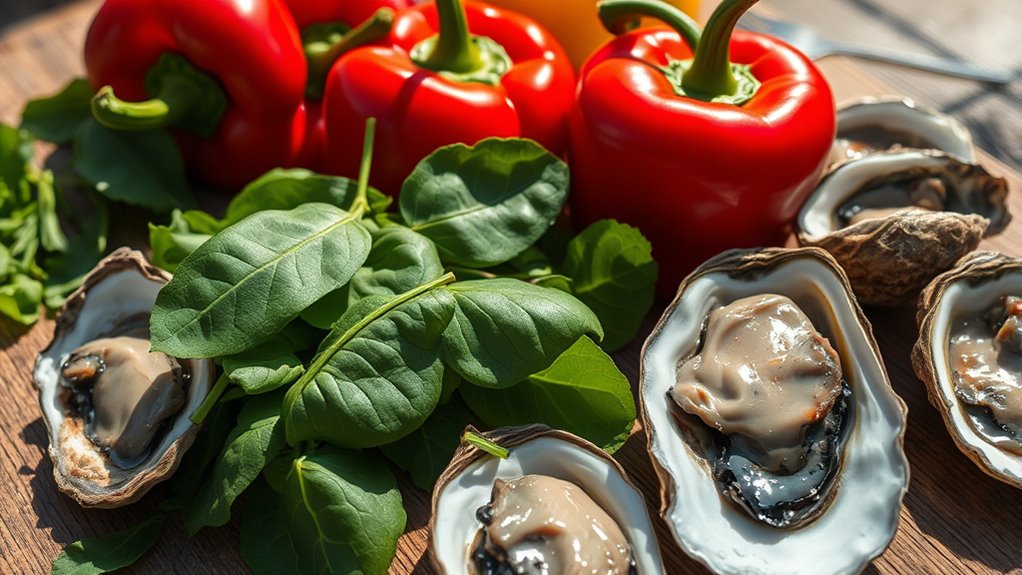
Iron, especially the non-heme type found in plant-based foods, can be tricky to absorb. To maximize absorption, combine iron-rich foods like spinach, lentils, or pumpkin seeds with vitamin C sources such as bell peppers, citrus fruits, or tomatoes. This food pairing boosts iron uptake because vitamin C reduces non-heme iron to a more absorbable form. Avoid consuming calcium-rich foods or beverages like dairy or fortified plant milks simultaneously with iron-rich meals, as calcium can inhibit absorption. Also, be mindful of phytates in nuts, seeds, and grains, which can bind to iron and zinc, reducing their bioavailability. Soaking, sprouting, or fermenting these foods can help lessen phytate levels and improve nutrient absorption.
Combine iron-rich foods with vitamin C sources to boost absorption and improve your nutrient intake.
Zinc absorption in raw foods follows similar principles. Foods like pumpkin seeds, cashews, and chickpeas are good sources, but their zinc bioavailability can be hampered by phytates, as mentioned. Again, food pairing with vitamin C-rich foods enhances zinc absorption, although to a lesser extent than iron. Avoiding high-calcium foods at the same meal can also help improve zinc uptake. Keep in mind that raw veggies and fruits generally have lower zinc levels, so including a variety of nuts and seeds can help meet your daily needs.
Vitamin B12 is unique because it naturally occurs almost exclusively in animal products, making it a concern for raw vegans or vegetarians. To guarantee adequate intake, many raw eaters rely on fortified foods or supplements. If you’re consuming raw dairy or eggs, those can provide B12, but for plant-based raw diets, food pairing isn’t as relevant here; supplementation is often necessary. It’s also important to note that B12 absorption depends on intrinsic factor and overall gut health, which can be affected by your diet and lifestyle. Regularly checking B12 levels through blood tests can help you determine if your intake is sufficient.
Additionally, the use of home theater projectors with high color accuracy and contrast ratios can enhance your viewing experience, making it more immersive and true to life.

NATURELO Vegan Iron Supplement with Vitamin C and Organic Whole Foods – Gentle Iron Pills for Women & Men with Iron Deficiency Including Pregnancy, Anemia and Vegan Diets – 90 Mini Capsules
- Gentle Vegan Iron Formula: 25 mg Iron with Organic Vitamin C
- Organic Whole Food Blend: Includes Beet, Spinach, Kale, Swiss Chard, Pumpkin Seed
- Enhanced Absorption: Ferrous Bisglycinate Chelate with Vitamin C
As an affiliate, we earn on qualifying purchases.
As an affiliate, we earn on qualifying purchases.
Frequently Asked Questions
Can Raw Foods Provide Sufficient B12 Without Supplements?
Raw foods generally can’t provide enough B12 without supplements because of raw food myths suggesting they do. B12 is mainly found in animal products, which are usually cooked. If you’re eating a raw diet, you need to be aware of the supplementation necessity to avoid deficiency. Relying solely on raw foods for B12 isn’t enough; consider fortified foods or supplements to meet your needs safely.
How Do Cooking Methods Affect Mineral Bioavailability?
Cooking techniques greatly impact mineral absorption; studies show that proper cooking can increase mineral bioavailability by up to 40%. When you cook foods, especially methods like steaming or boiling, you break down cell walls, making minerals more accessible for your body. Conversely, overcooking or frying may reduce mineral content. So, choose cooking methods wisely to maximize mineral absorption and guarantee you’re getting the most nutritional benefit from your meals.
Are There Plant-Based Sources of Bioavailable Zinc?
Yes, plant-based zinc sources like legumes, seeds, nuts, and whole grains can be bioavailable, but you should be aware of bioavailability concerns. Phytates in plants can bind zinc, reducing absorption. To improve bioavailability, soak, sprout, or ferment these foods, which helps break down phytates. Including a variety of zinc-rich plant foods and preparing them properly guarantees you get enough zinc for your health.
What Are Signs of Deficiencies in Raw Eaters?
You might notice symptoms like fatigue, weakness, pale skin, or dizziness if you’re deficient in essential nutrients. Recognizing these signs early helps with deficiency prevention. Pay attention to changes in your energy levels, mood, or physical health, and consult a healthcare professional for proper assessment. Staying aware of symptom recognition guarantees you address deficiencies promptly, maintaining your health and supporting your raw eating lifestyle effectively.
How Do Age and Health Conditions Influence Mineral Needs?
Think of your body as a garden, where age and health conditions are seasons shaping growth. As you age, your body’s absorption of minerals like iron, zinc, and B12 slows, making you need more nourishment to flourish. Health issues can also block nutrient uptake, like weeds choking plants. Staying aware of these factors helps you adjust your raw diet, ensuring your garden stays vibrant and healthy throughout every season.
Conclusion
Embracing raw foods can be a delightful journey, offering vibrant flavors and nourishing benefits. Just keep in mind the gentle art of balancing your plate with subtle sources of iron, zinc, and B12—like secret ingredients that keep your vitality shining. By paying a little extra attention, you’re gently ensuring your body’s needs are met without missing a beat. Enjoy your raw adventure with confidence, knowing you’re nourishing yourself in the most natural, flavorful way.