To dehydrate herbs without turning them brown, start by harvesting them at their peak and handle with clean, sharp tools. Use gentle methods like air drying in shaded, well-ventilated areas or a dehydrator on low heat to preserve vibrant color. Briefly blanch herbs or dip them in vinegar or lemon water before drying to lock in green hues. Store your herbs in airtight, dark containers to prevent oxidation. Keep these tips in mind, and you’ll maintain beautiful, fresh-looking herbs every time.
Key Takeaways
- Harvest herbs early in the morning and choose healthy, lush plants for vibrant drying.
- Dry herbs in shaded, well-ventilated areas to protect chlorophyll from light and heat damage.
- Use low-temperature dehydrators or air drying to minimize oxidation and browning.
- Briefly blanch herbs before drying to preserve green color and halt enzyme activity.
- Store dried herbs in airtight, opaque containers in a cool, dark place to prevent color loss.

FOHERE Food Dehydrator, 5 BPA-Free Tray Dehydrators for Food and Jerky, Fruit, Herbs, Meat, Dog Treats, 48H Timer and 95-158°F Temperature Control, 400W Dehydrator Machine, 11.42" Stackable Trays
- Powerful 400W Dehydrator: Fast, even drying for various foods
- Digital Temperature & Timer: Adjust from 95°F to 158°F, up to 48 hours
- Quiet Operation: Ideal for overnight drying sessions
As an affiliate, we earn on qualifying purchases.
As an affiliate, we earn on qualifying purchases.
Why Do Dehydrated Herbs Turn Brown and How to Prevent It
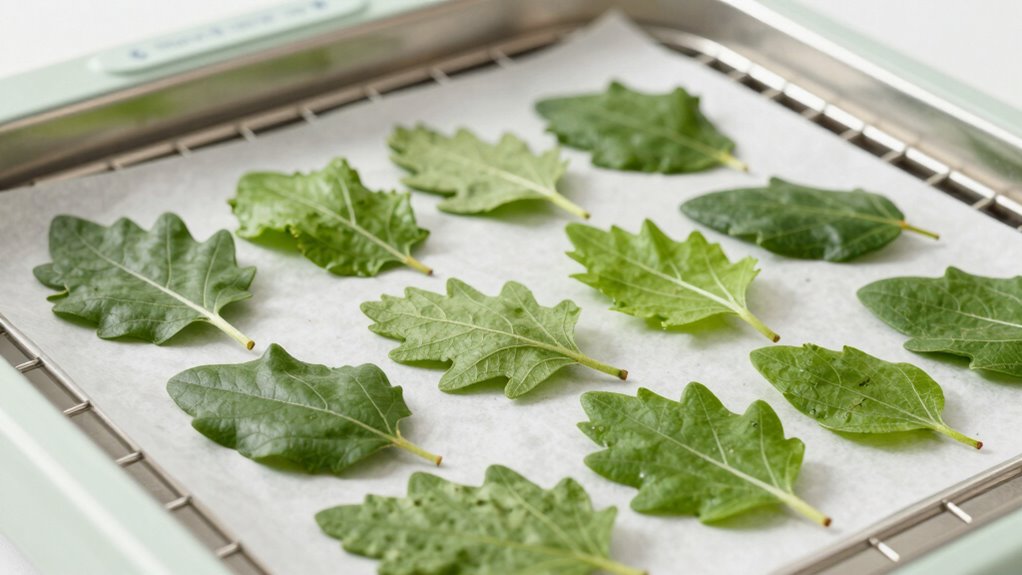
Dehydrated herbs often turn brown due to exposure to oxygen, light, and heat, which cause the natural chlorophyll in the leaves to break down. This breakdown affects herb color stability, making your herbs look dull and less appealing. To prevent browning, consider using antioxidant treatments like ascorbic acid or lemon juice, which help preserve vibrant color by neutralizing free radicals. Proper drying techniques—such as controlling airflow and drying in low-light environments—also minimize oxidation. Storing dried herbs in airtight, opaque containers further protects their color stability. Additionally, understanding how oxidation impacts herb color can help you choose the best preservation methods. Research into herb preservation techniques highlights the importance of combining antioxidants with proper drying to extend shelf life and maintain vibrant appearance. Incorporating antioxidant treatments during the drying process can significantly reduce browning and keep herbs looking fresh. Using controlled drying environments can also help preserve both flavor and color during dehydration. By combining antioxidant treatments with careful drying and storage practices, you can keep your herbs looking fresh, vibrant, and full of flavor for longer. Implementing proper storage methods ensures that the herbs retain their color and potency over time, making your efforts worthwhile.
How to Pick and Harvest Fresh Herbs for Vibrant Drying
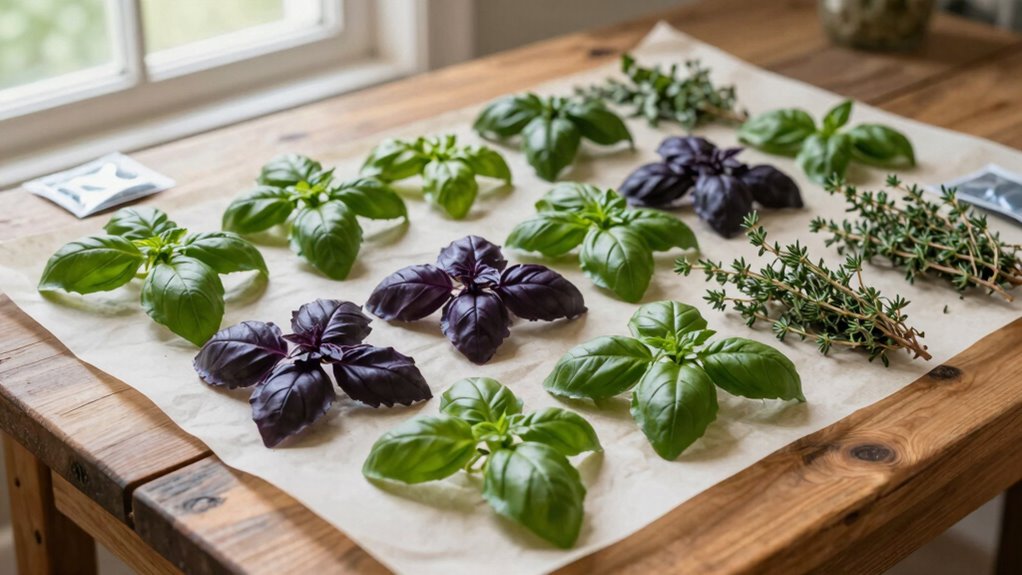
To guarantee your herbs dry vibrantly, start by choosing the right time to harvest them—preferably when they’re at their peak flavor and color. Proper harvest timing ensures you capture the freshest herb flavor and vibrant appearance, which translates into lively dried herbs. Look for healthy, bushy plants with lush leaves, avoiding any with signs of disease or wilting. Harvest in the morning after dew has dried but before the sun gets too hot, preserving color and essential oils. Snip herbs with clean, sharp scissors or shears, cutting just above a leaf node for continuous growth. Be mindful of the herb’s growth pattern to optimize flavor and color retention during drying. Proper picking sets the foundation for beautifully vibrant dried herbs. Additionally, understanding vetted techniques for drying herbs on water can help maintain their color and potency during the dehydration process, especially when considering piercing or piercing care methods to prevent damage to delicate herbs during handling. Ensuring proper drying conditions is also essential to prevent browning and preserve vibrant hues.
Pre-Treat Your Herbs to Keep Them Green When Drying
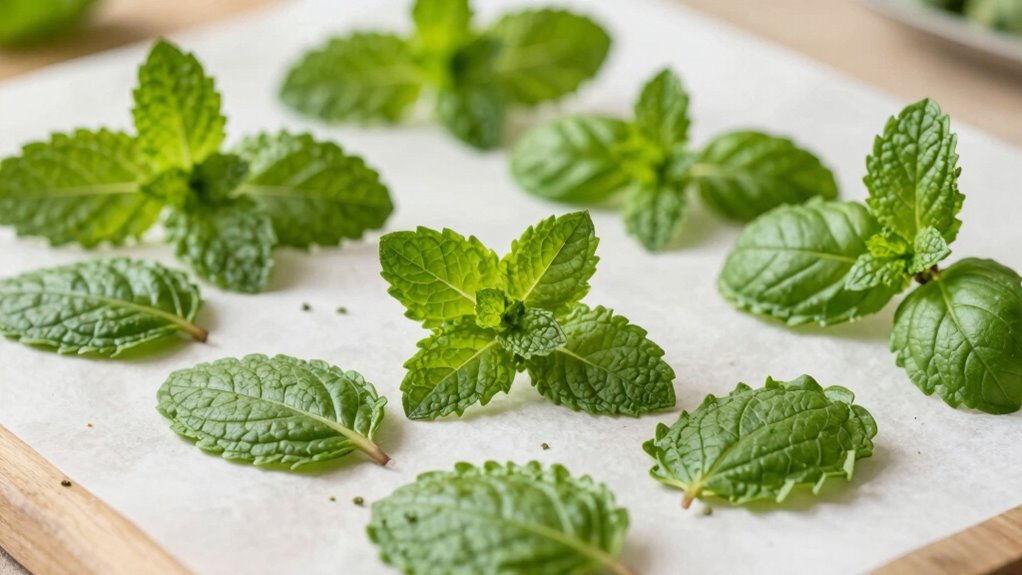
Pre-treating your herbs before drying helps preserve their vibrant green color and essential oils. Herb pre treatment involves using specific techniques to prevent browning and maintain freshness. One effective method is blanching, where you briefly immerse herbs in boiling water, then cool them rapidly in ice water. This process halts enzyme activity that causes discoloration. Alternatively, you can dip herbs in a mixture of water and vinegar or lemon juice, which acts as a natural preservative. These color preservation techniques help lock in the herbs’ bright hue and aromatic oils. Additionally, understanding the scientific skepticism surrounding some claims about herbal preservation can guide you in choosing effective methods. Using the proper drying methods ensures your herbs retain their flavor and appearance. To enhance preservation, you might also consider using herb drying aids, which can help maintain color and aroma during the drying process. By applying the right pre-treatment, you can also improve the herbs’ overall shelf life, making them more attractive and flavorful for your culinary uses.
Best Drying Methods to Avoid Browning and Keep Herbs Bright
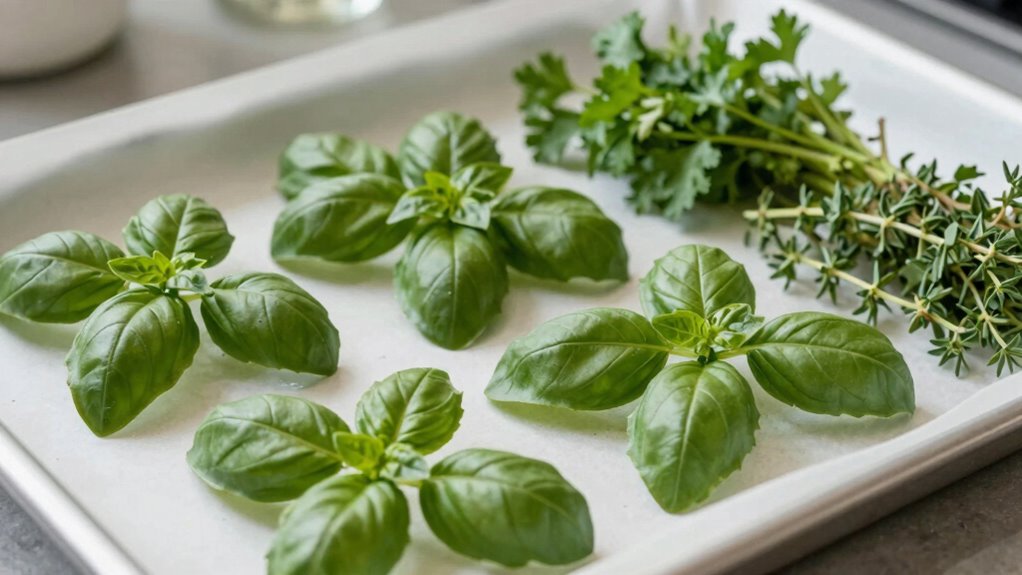
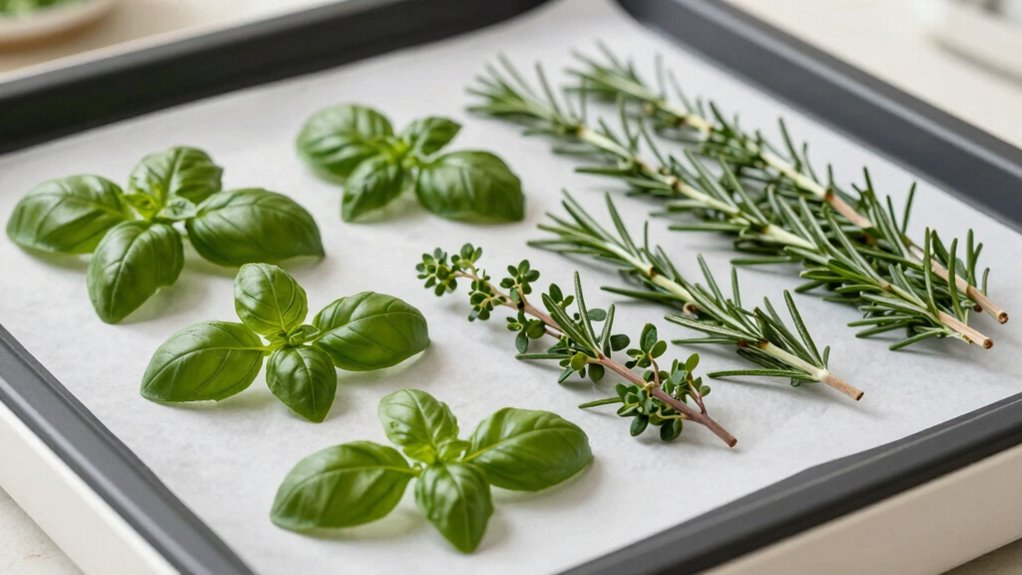
Choosing the right drying method is essential for preventing browning and keeping your herbs bright. To preserve flavor and vibrant color, opt for gentle techniques that maintain quality. Air drying in a well-ventilated, shaded area minimizes heat exposure, reducing browning. Using a dehydrator at low temperatures quickly preserves flavor and color without risking damage. For delicate herbs, dry them flat on a screen, avoiding direct sunlight. Proper storage techniques after drying are vital for maintaining brightness—keep herbs in airtight containers away from light and moisture. Additionally, understanding air quality is important, as pollutants can affect the preservation process and final herb appearance. Maintaining good airflow around the herbs during drying also helps prevent mold and preserves their visual appeal. Ensuring proper humidity levels during drying further aids in preventing mold growth and color loss. Being aware of humidity control techniques can significantly improve drying results and herb longevity, especially when combined with ventilation practices.
How to Store Dried Herbs to Maintain Their Bright Green Color
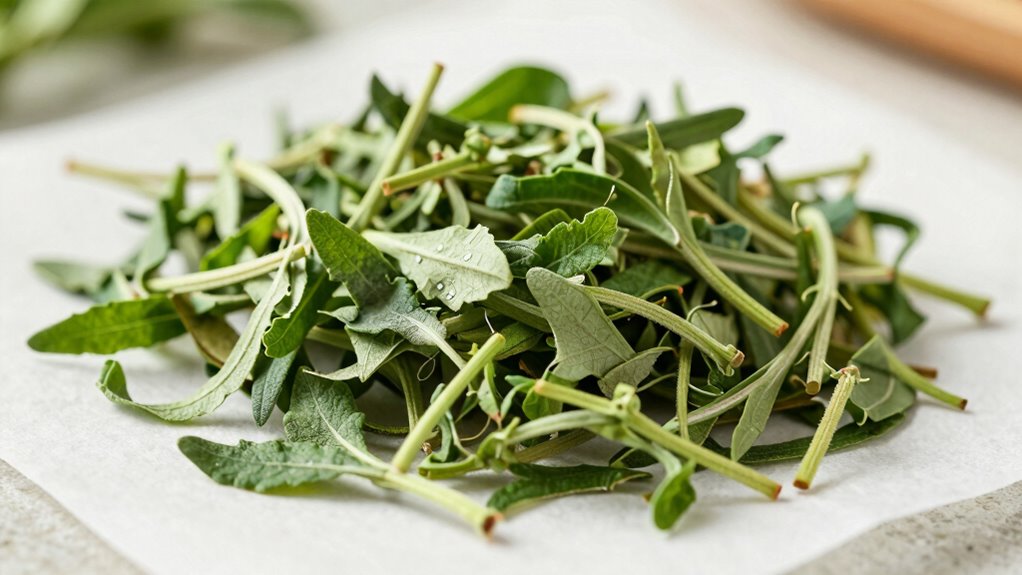
After drying your herbs properly, storing them correctly is key to preserving their vibrant green color. To maintain herb flavor preservation and color retention, keep herbs in airtight containers away from light and heat. Avoid moisture, which can cause browning and mold. Use color retention techniques like storing herbs in dark, cool places to prevent chlorophyll breakdown. Proper storage not only maintains their appearance but also ensures you get the most flavor out of your dried herbs by preventing oxidation. Additionally, choosing containers with airtight seals can further protect herbs from environmental factors that accelerate color loss. Incorporating proper storage conditions such as low humidity and minimal air exposure can significantly extend their bright color and potency. Implementing these storage methods helps maintain the herbs’ visual appeal and aromatic quality over time.
Frequently Asked Questions
Can Artificial Heat Sources Cause Herbs to Brown During Dehydration?
Yes, artificial heat sources can cause herbs to brown during dehydration. When you use high or uneven heat, it speeds up the drying process but risks herb browning, which can diminish flavor and appearance. To avoid this, opt for gentle, controlled heat like a dehydrator set to a low temperature, or air dry in a warm, well-ventilated space. This way, you preserve the herbs’ color and quality.
Is It Better to Dry Herbs With Stems or Without for Color Retention?
Imagine you’re drying fresh basil; leaving the stems on helps retain color and flavor better. Generally, for ideal drying methods, you should dry herbs without stems, focusing on the leaves for vibrant color. Stems can trap moisture, risking browning. Removing stems ensures quicker, more even drying, preserving color and aroma. So, for best results, strip off stems and hang or spread the leaves for perfect drying.
Do Different Herb Varieties Require Specific Drying Techniques to Prevent Browning?
Yes, different herb varieties need specific drying techniques to prevent browning and preserve their flavor. For delicate herbs like basil, drying quickly in low heat helps retain vibrant color and flavor. Thicker herbs like rosemary or thyme can be dried more slowly at moderate temperatures. Adjusting your drying speed based on herb type guarantees you maintain their herb flavor and avoid browning, resulting in better-preserved herbs.
How Does Humidity Impact the Color of Herbs During Dehydration?
Humidity control plays a vital role in preserving herb color during dehydration. Too much humidity causes moisture buildup, which can lead to browning and mold, while low humidity helps maintain vibrant hues. By keeping humidity levels steady, you guarantee ideal conditions for color preservation. You prevent browning by avoiding excess moisture, so your herbs stay bright and flavorful. Proper humidity management makes all the difference in achieving beautifully dried herbs.
Are There Natural Additives That Help Preserve Herb Color When Drying?
You can use natural preservatives like lemon juice or vinegar as color stabilizers when drying herbs. These additives help maintain vibrant green hues by preventing oxidation and browning. Simply lightly coat herbs with a diluted lemon juice solution before drying, or add a splash of vinegar to your drying environment. This method preserves the herbs’ color naturally, giving you fresh-looking herbs long after dehydration.
Conclusion
Now that you know how to prevent browning, you can enjoy vibrant, flavorful herbs all year round. With proper harvesting, pre-treating, and drying techniques, you’ll keep your herbs bright and appealing. Isn’t it worth the effort to preserve that fresh green color and rich aroma? Just imagine opening your jar and being greeted by those lively herbs—every time, you’ll feel proud of your DIY drying skills and the delicious flavors you’ve preserved.