Freezer burn isn’t random—it’s caused by exposure to air, moisture loss, and improper storage. To prevent it, always wrap food tightly with moisture-resistant materials, like vacuum-sealed bags or foil, and keep your freezer at 0°F (-18°C). Avoid overloading the freezer, check the temperature regularly, and organize items to minimize air exposure. Keep your food fresh and freezer burn-free by mastering these techniques—you’ll find all the details to protect your food inside.
Key Takeaways
- Properly wrap and seal foods using moisture-resistant materials to prevent air exposure and ice crystal formation.
- Maintain a consistent freezer temperature of 0°F (-18°C) and regularly check and adjust the thermostat.
- Use airtight packaging like vacuum bags or heavy-duty foil to reduce moisture loss and freezer burn risk.
- Store food in small portions and avoid overfilling the freezer to ensure even cooling and reduce thawing cycles.
- Thaw food safely in the refrigerator, cold water, or microwave to preserve texture and prevent freezer burn from reoccurring.
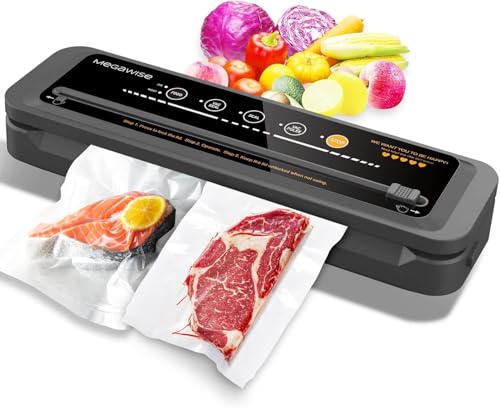
MegaWise Vacuum Sealer Machine | 80kPa Suction Power| Bags and Cutter Included | Compact One-Touch Automatic Food Sealer with External Vacuum System | Dry Moist Fresh Modes for All Saving needs
*80kpaSuction Power* Updated 2023 vacuum sealer uses a DC motor pump with electromagnetics and pure copper for enhanced…
As an affiliate, we earn on qualifying purchases.
As an affiliate, we earn on qualifying purchases.
What Causes Freezer Burn and How It Affects Your Food
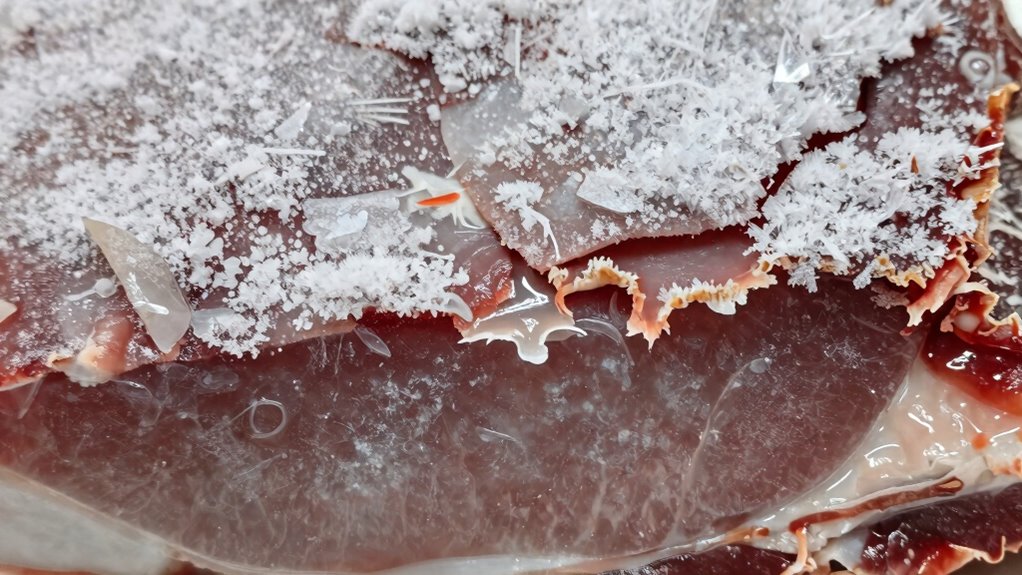
Freezer burn occurs when moisture inside your food evaporates due to exposure to air, causing dehydration and ice crystal formation on the surface. This process results from moisture migration, where water moves from the food’s interior to its surface, then sublimates into ice crystals. These crystals damage cell walls, leading to a dry, tough texture and compromised flavor. As moisture escapes, the food loses its juiciness and freshness. Ice crystal formation is a key sign of freezer burn, indicating that moisture has migrated and evaporated. The damage isn’t just surface-deep; it affects the entire food item, making it less appetizing and shortening its shelf life. Understanding how moisture migration and ice crystal formation occur helps you recognize the causes of freezer burn. Proper storage techniques and airtight packaging can significantly reduce moisture loss and help preserve your food’s quality. Additionally, energy-efficient storage solutions can help minimize moisture loss and protect your food quality.

Lerine 6 Pack Reusable Gallon Freezer Bags Dishwasher Safe, BPA Free Reusable 1 Gallon Bags, Leakproof Food Storage Bags for Marinate Meats, Cereal, Vegetables, Home Organization(Gray, 6Gallon)
DISHWASHER SAFE & EASY TO CLEAN: These reusable freezer bags are suitable for dishwasher. While put the reusable…
As an affiliate, we earn on qualifying purchases.
As an affiliate, we earn on qualifying purchases.
How to Wrap and Seal Food Properly to Prevent Ice Crystals
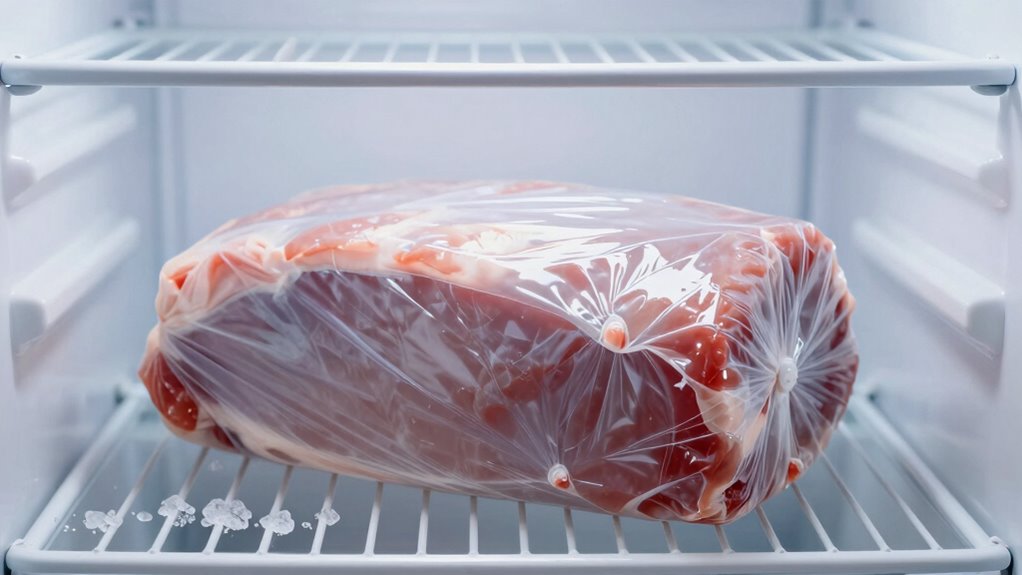
Properly wrapping and sealing your food creates a barrier that prevents moisture from escaping and air from entering, which are key factors in freezer burn. Vacuum sealing is one of the most effective methods, removing air to prevent ice crystal formation and preserving freshness. When using vacuum sealers, make sure to eliminate as much air as possible for ideal results. Portion control also plays a crucial role; dividing food into smaller, manageable portions helps prevent repeated thawing and refreezing, reducing the risk of freezer burn. Wrap items tightly with moisture-resistant materials like heavy-duty plastic wrap, foil, or specialized vacuum bags. Proper sealing and careful portioning keep your food fresher longer, maintaining quality and flavor while avoiding those unwanted ice crystals.

Heavy Duty Aluminum Foil Roll 18 Inch x 500 Feet, Extra Thick Commercial Grade Tin Foil, Durable Food Service Foil for Cooking, Grilling, Catering & Restaurant Use
HEAVY DUTY THICK FOIL – Extra strong aluminum foil resists tearing, punctures, and leaks
As an affiliate, we earn on qualifying purchases.
As an affiliate, we earn on qualifying purchases.
What Is the Best Freezer Temperature for Food Safety and Freshness

Maintaining the right freezer temperature is vital for keeping your food safe and fresh. The ideal temperature for freezing food is 0°F (-18°C). This temperature effectively halts bacteria growth and preserves food quality. To achieve this, use proper freezing techniques, such as pre-chilling items and avoiding overfilling your freezer. Regular freezer maintenance is also essential—check the thermostat regularly, clean coils, and defrost when needed to prevent temperature fluctuations. Keeping your freezer at the right temperature not only enhances food safety but also minimizes ice crystal formation, which can contribute to freezer burn. Proper freezer maintenance is crucial for consistent temperature control and food preservation. Consistent freezing techniques and diligent maintenance ensure your food stays fresh longer and retains its flavor and texture.
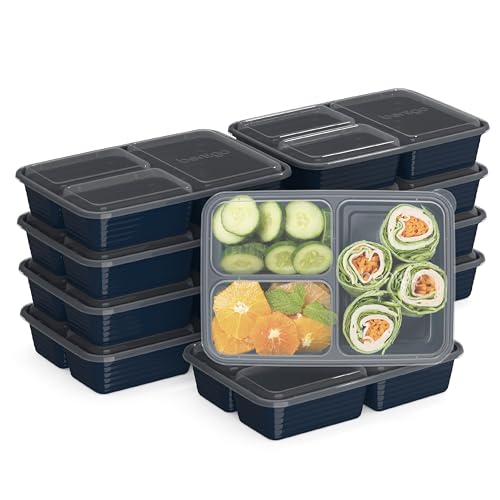
Bentgo Prep – 20-Piece 3-Compartment Reusable Meal Prep Containers with Lids, PFAS & BPA Free Materials, Durable, Microwave, Freezer, & Dishwasher Safe To Go Food Storage (Navy Blue)
#1 Brand Pick for Meal Prep Containers: Bentgo is the top pick for meal prep containers!* This lightweight,…
As an affiliate, we earn on qualifying purchases.
As an affiliate, we earn on qualifying purchases.
Tips for Organizing Your Freezer to Minimize Air Exposure

To keep your food fresh and prevent freezer burn, employing proper organization techniques is crucial. Use airtight containers to block air exposure, label and date everything for easy tracking, and store items in flat layers to maximize space. These simple steps help maintain quality and extend the shelf life of your frozen foods. Additionally, avoiding frequent temperature fluctuations by keeping the freezer consistently cold is essential to prevent freezer burn and preserve food integrity. Proper temperature management and freezer compartment organization work together to maintain an even environment, reducing the risk of ice crystal formation and moisture loss. Incorporating power tools and equipment such as temperature monitors or storage solutions can further help you maintain optimal conditions. Regularly monitoring temperature ensures your freezer remains at the ideal setting, preventing spoilage and waste.
Use Airtight Containers
Using airtight containers is one of the most effective ways to prevent freezer burn. They create a tight seal that limits air exposure, which is vital for maintaining food quality. When you store items in these containers, you reduce the chances of moisture loss and ice crystal formation. For even better protection, consider vacuum sealing your food before placing it in containers; this removes excess air and keeps your freezer organized. Proper freezer organization also means stacking containers efficiently and avoiding overfilling, so air can circulate properly. This helps prevent air infiltration and minimizes the risk of freezer burn while keeping your food fresh longer. Regularly check your containers for any signs of damage or leaks, ensuring your storage method remains airtight and effective. Additionally, maintaining consistent freezer temperatures can significantly reduce temperature fluctuations that contribute to freezer burn.
Label and Date Items
Ever wondered how to keep your freezer organized and prevent air exposure from causing freezer burn? The key is proper labeling and date tracking. Use clear labeling tips by writing the contents and freezing date on each package with a permanent marker. This helps you quickly identify items and prioritize what to use first. Always date your food when you freeze it, so you know exactly how long it’s been stored. This prevents accidental refreezing or forgetting about older items, which can lead to freezer burn over time. Keeping track of dates ensures you consume foods at their freshest and reduces unnecessary air exposure that causes dehydration and ice crystals. Consistent labeling and date tracking are simple steps that keep your freezer organized and your food preserved longer.
Store in Flat Layers
Storing items in flat layers is a simple yet effective way to reduce air exposure and prevent freezer burn. When you lay foods flat, they freeze evenly, minimizing air pockets that cause dehydration. Use stacking techniques to maximize space, keeping similar items together. Choose appropriate container sizes—smaller containers help with faster freezing and easier thawing, while larger ones save space. Flattening foods before freezing also speeds up the process and maintains quality. Proper freezer organization is key to improving airflow and preventing ice crystal formation, which can compromise food texture and flavor. Maintaining good airflow within your freezer ensures consistent freezing, reducing the chance of freezer burn. Here’s a visual guide:
| Container Size | Layer Thickness | Freezing Speed |
|---|---|---|
| Small | Thin | Fast |
| Medium | Moderate | Moderate |
| Large | Thick | Slow |
| Flat Pouches | Very thin | Fast |
How to Choose the Right Packaging Materials to Prevent Freezer Burn
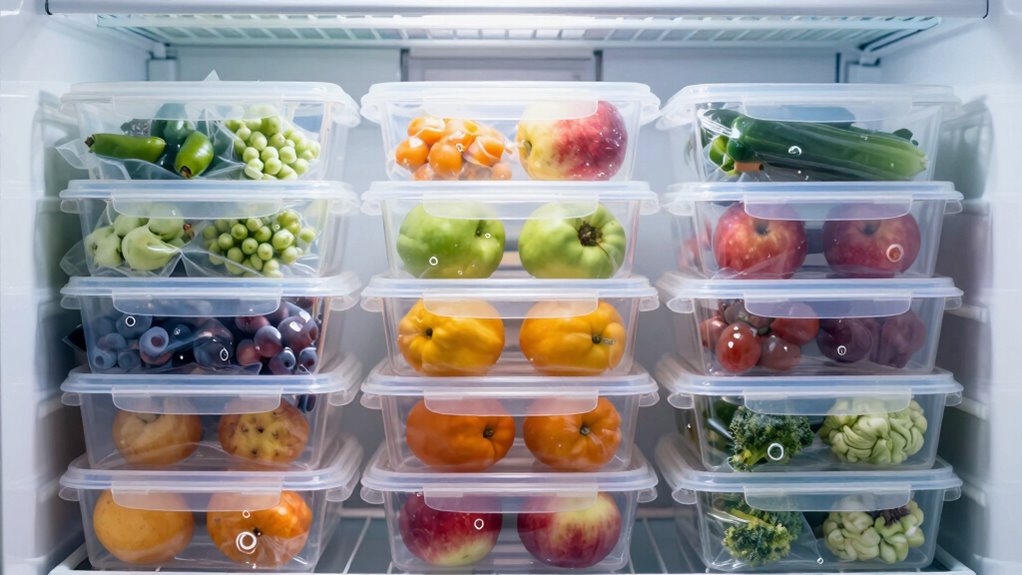
Choosing the right packaging materials is key to preventing freezer burn. You want options that create an airtight seal to keep moisture in and air out. When you select proper materials, your food stays fresher longer and free from freezer burn.
Proper Material Selection
Selecting the right packaging materials is crucial for preventing freezer burn because the wrong choices can allow moisture to escape and air to seep in. Choosing materials with proper insulation techniques helps maintain consistent temperatures and reduces moisture transfer. Durable, moisture-resistant packaging prevents air infiltration and preserves quality during freezer maintenance routines. Look for options like heavy-duty foil, vacuum-sealed bags, or rigid containers designed for freezing. These materials should be airtight and flexible enough to conform to the food’s shape, minimizing air pockets. Additionally, consider how well the packaging resists punctures or tears, which can compromise insulation. Proper material selection ensures your food stays protected from freezer burn, extending freshness and flavor.
- Insulation properties of packaging materials
- Barrier against moisture and air
- Flexibility for a snug fit
- Durability against punctures
- Compatibility with freezer temperatures
Airtight Seal Importance
Ensuring your packaging forms an airtight seal is vital for preventing freezer burn, as even small gaps can let moisture escape and air enter, leading to dehydration and flavor loss. An airtight seal keeps moisture in and air out, preserving food quality. Vacuum packing is especially effective, as it removes excess air and creates a tight barrier around your food. When choosing packaging materials, look for options specifically designed for freezer use, like vacuum seal bags or heavy-duty foil wraps, which can maintain a secure seal over time. Proper sealing prevents freezer burn by minimizing exposure to oxygen and moisture loss. Always double-check your seals before freezing, and consider investing in a quality vacuum sealer for the most reliable protection.
How Long Can Food Stay in the Freezer Without Freezer Burn?
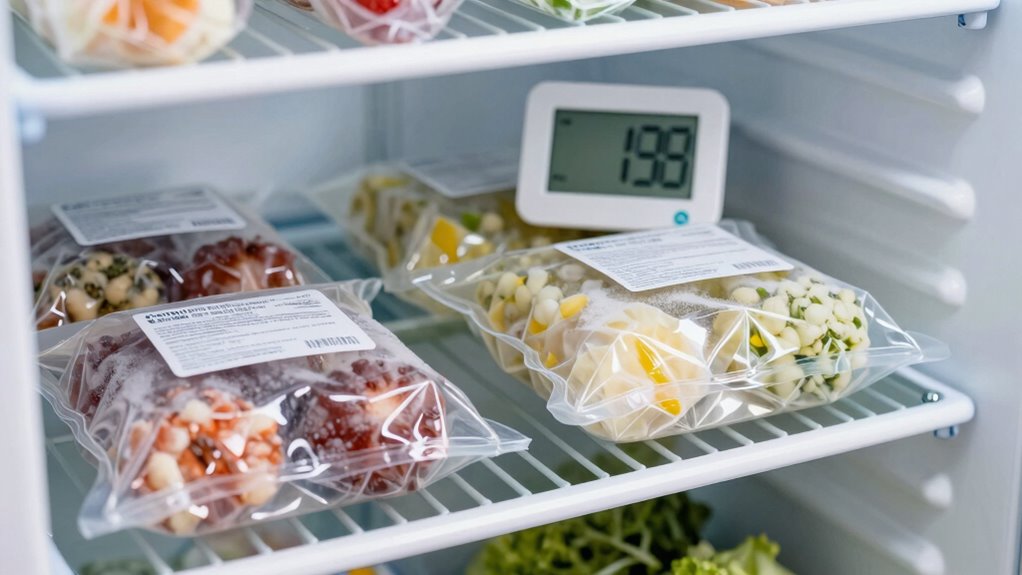
You can typically store most foods in the freezer for several months without worrying about freezer burn, but the exact time varies depending on the type of food. Proper freezer longevity is key to *ideal* food preservation and maintaining quality. For best results, aim to consume meats within 3–6 months, while fruits and vegetables can last 8–12 months. Dairy products like cheese and butter stay good for about 6–9 months. Cooked leftovers are best used within 2–3 months. To maximize freshness, keep your freezer at 0°F (−18°C) and minimize temperature fluctuations. Remember, the longer food stays frozen, the higher the chance of freezer burn if not stored properly. Regularly check your freezer’s temperature and practice good storage habits to extend food preservation. Understanding freezer maintenance can further help prevent freezer burn and ensure your food stays fresh longer.
Common Mistakes That Lead to Freezer Burn: And How to Avoid Them
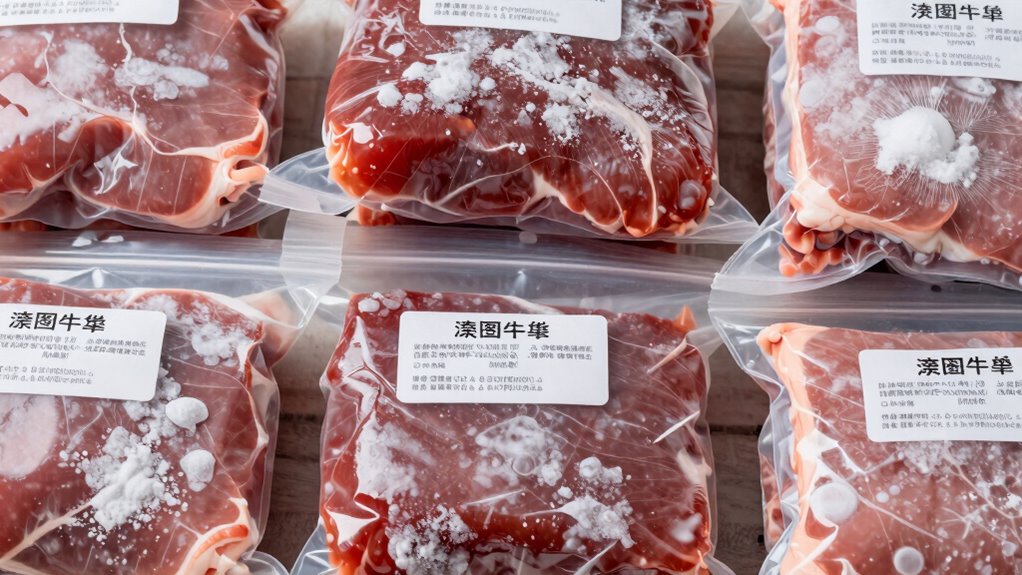
Many common mistakes can accelerate freezer burn and compromise your food’s quality. Poor storage techniques, like leaving food exposed or not using airtight containers, expose your items to air and humidity, speeding up dehydration. Packaging mistakes, such as using flimsy plastic wrap or not removing excess air from bags, also create opportunities for freezer burn. To avoid these issues, always use proper storage techniques—airtight containers or heavy-duty freezer bags—and squeeze out as much air as possible before sealing. Label your packages with dates to track freshness and prevent overextending storage times. Additionally, understanding the importance of proper packaging can help you maintain optimal freezer conditions. Using high-quality, airtight containers designed specifically for freezing can further reduce moisture loss. Proper freezer temperature control is also essential, as keeping the freezer at the correct temperature slows down the dehydration process. Maintaining the correct temperature can also help prevent the growth of bacteria and mold. By paying attention to how you package and store your food, you substantially reduce the risk of freezer burn and keep your frozen goods tasting fresh longer.
Tips for Thawing Frozen Foods Without Losing Quality
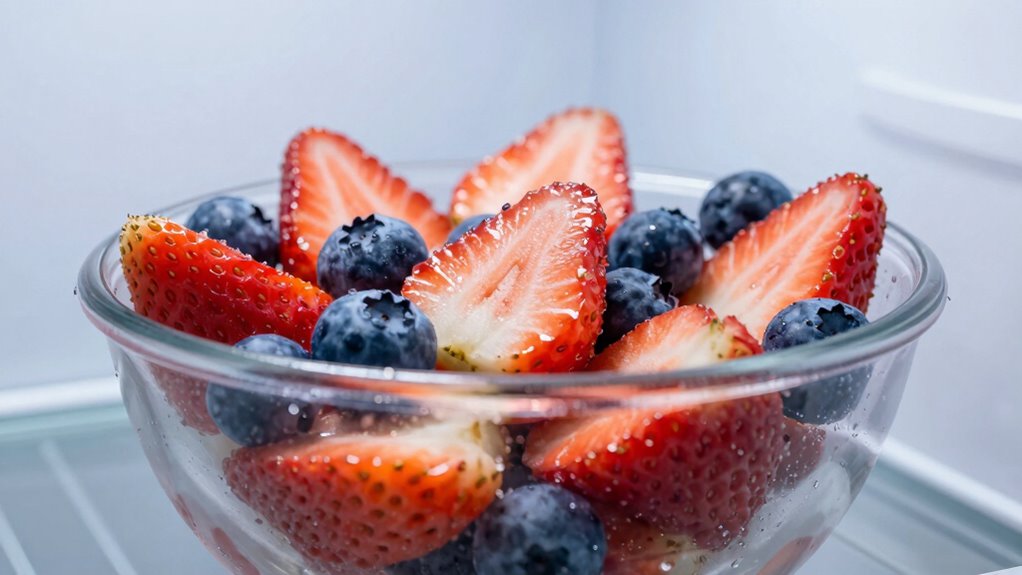
Thawing frozen foods properly is essential to preserve their texture, flavor, and safety. Using the right thawing techniques ensures your food stays fresh and maintains ideal food texture preservation. To avoid quality loss, consider these tips:
Proper thawing preserves flavor, texture, and safety—use refrigerator, cold water, or microwave methods carefully.
- Thaw in the refrigerator for slow, even thawing
- Use cold water for quicker results, changing the water regularly
- Microwave on defrost setting for convenience, but cook immediately afterward
- Keep foods in sealed containers to prevent contamination
- Avoid thawing at room temperature to prevent bacterial growth
How to Spot and Remove Food Affected by Freezer Burn

Ever wondered how to identify freezer burn on your stored foods? Look for dry, discolored patches, often whitish or grayish, which indicate ice crystal formation and dehydration. These spots typically appear on the surface of your food and signal improper food storage or prolonged freezing. To remove freezer-burned sections, simply cut away the affected areas with a sharp knife, ensuring you eliminate all visible signs of ice crystal formation. Remember, while freezer-burned food may lose some texture and flavor, it’s still safe to eat if the damage is minimal. Proper food storage, including airtight packaging and consistent freezing temperatures, helps prevent ice crystals and freezer burn. Regularly inspecting your frozen items ensures you catch and remove any affected portions before wasting food or compromising quality. Given the importance of proper storage, understanding food storage techniques can significantly reduce freezer burn incidents. Using airtight containers and maintaining a steady freezer temperature are key strategies in preventing freezer burn and preserving food quality. Additionally, employing temperature control methods can further ensure your food remains in optimal condition during long-term storage.
Frequently Asked Questions
Can Freezer Burn Affect Food Safety or Only Quality?
Freezer burn mainly affects the quality preservation of your food, causing dehydration and texture changes, but it doesn’t typically impact food safety. You can usually still eat freezer-burned items without risking food safety, as bacteria aren’t involved. However, if the food develops an off smell, color, or sliminess, it’s best to discard it. Focus on proper storage to prevent freezer burn and maintain both safety and quality.
Does the Type of Food Influence Freezer Burn Susceptibility?
Think of your freezer like a fortress, where some foods are more vulnerable than others. Food type plays a big role in freezer burn susceptibility; delicate items like baked goods or fresh produce tend to suffer more. Proper packaging materials act like armor, protecting against air exposure. To keep your food at its best, choose the right packaging for each food type, sealing it tightly to prevent freezer burn.
Are There Natural Remedies to Repair Freezer-Burned Food?
While natural remedies can’t fully restore freezer-burned food, you can try trimming off affected areas to improve texture and taste. Marinating the food in flavorful liquids may help mask freezer burn’s effects, but it doesn’t reverse the damage. For better food restoration, focus on proper storage and quick consumption. Remember, prevention is key—using airtight containers and freezing at consistent temperatures minimizes freezer burn, keeping your food fresh longer.
How Can I Tell if Freezer Burn Has Reached an Unsafe Level?
You can tell if freezer burn has reached an unsafe level by checking the food’s texture and color changes. If the texture becomes excessively dry, tough, or leathery, it’s a sign of advanced freezer burn. Also, look for significant color changes, such as darkened or discolored patches. While freezer burn doesn’t always make food unsafe, these indicators suggest the quality has deteriorated, and you might want to discard or repurpose it.
What Are the Best Practices for Stacking Frozen Foods to Prevent Freezer Burn?
To prevent freezer burn, you should stack frozen foods with airflow optimization in mind by avoiding overcrowding. Keep items spaced out so cold air circulates evenly. Use container sealing techniques like airtight lids or vacuum-sealed bags to minimize moisture loss. Wrap items in foil or plastic wrap before placing them in containers. Regularly organize your freezer to prevent blocked airflow and ensure foods stay properly sealed, reducing freezer burn risk.
Conclusion
By following these tips, you can keep your food fresher longer and save money by avoiding freezer burn. Did you know that up to 20% of stored frozen food can be lost to freezer burn each year? Proper wrapping, temperature control, and organization make all the difference. Take control of your freezer today, and enjoy delicious, high-quality meals every time you cook. Your food—and your wallet—will thank you!