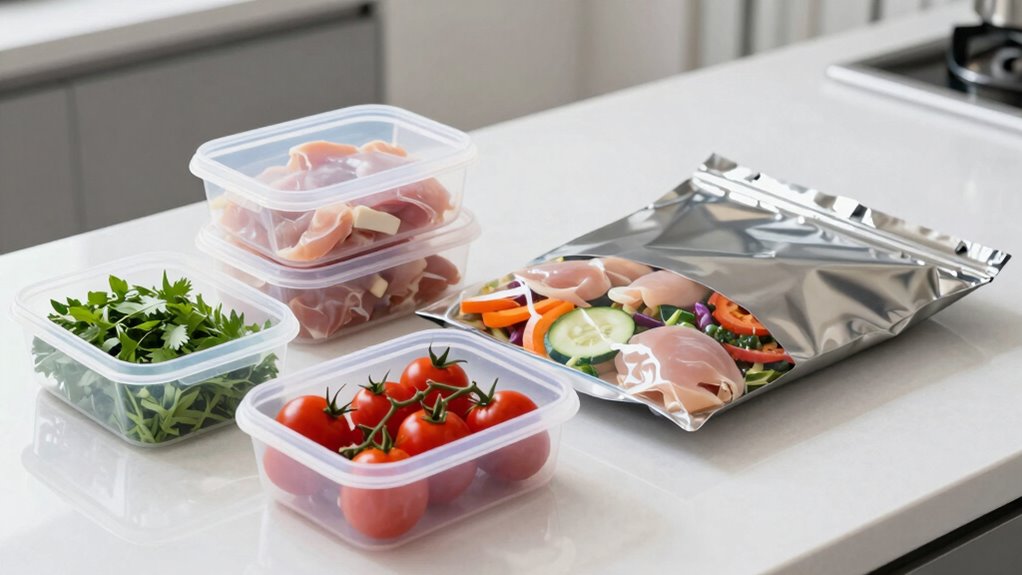
To freeze raw foods without icy damage, start by thoroughly preparing ingredients—wash, dry, and portion meats or produce. Use airtight, moisture-resistant containers or vacuum-seal bags, removing as much air as possible. Keep your freezer at or below 0°F and organize packages with labels and dates. Freeze quickly to form small ice crystals, and thaw safely in the fridge or cold water later. Follow these steps to keep your raw meals fresh and freezer-burn free. Learn more to perfect your technique.
Key Takeaways
- Use rapid freezing techniques, like flash freezing or pre-chilling, to create smaller ice crystals and prevent ice buildup.
- Remove as much air as possible from packaging using vacuum sealers or water displacement methods to avoid ice formation.
- Wrap raw ingredients tightly with moisture barriers such as freezer bags or airtight containers before freezing.
- Keep the freezer temperature at or below 0°F (-18°C) to prevent ice crystals from growing and ensure consistent freezing.
- Label packages clearly and organize by ingredient type for easy access and to avoid overpacking, which can cause uneven freezing.
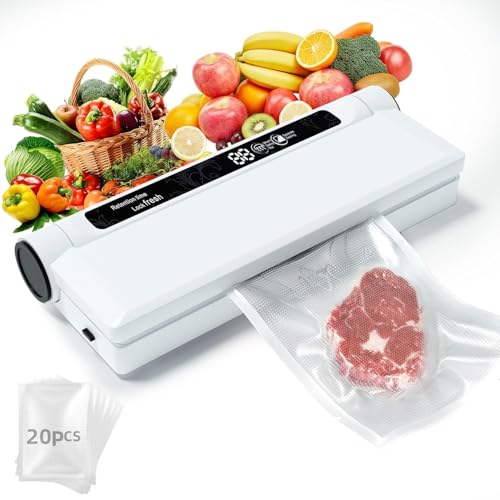
Compact Vacuum Sealer Machine, 75KPA Strong Suction, LED Digital Timer Display, Dual Use for Dry & Wet Foods, Includes 20 Bags, Ideal for Home Kitchen Use, White
- Sealing Modes: Dry and Moist modes for versatile sealing
- Powerful Suction: 75KPA suction with digital timer
- Food Preservation: Maintains freshness and flavor
As an affiliate, we earn on qualifying purchases.
As an affiliate, we earn on qualifying purchases.
Why Freezing Raw Foods Can Cause Ice Crystals and How to Prevent Them
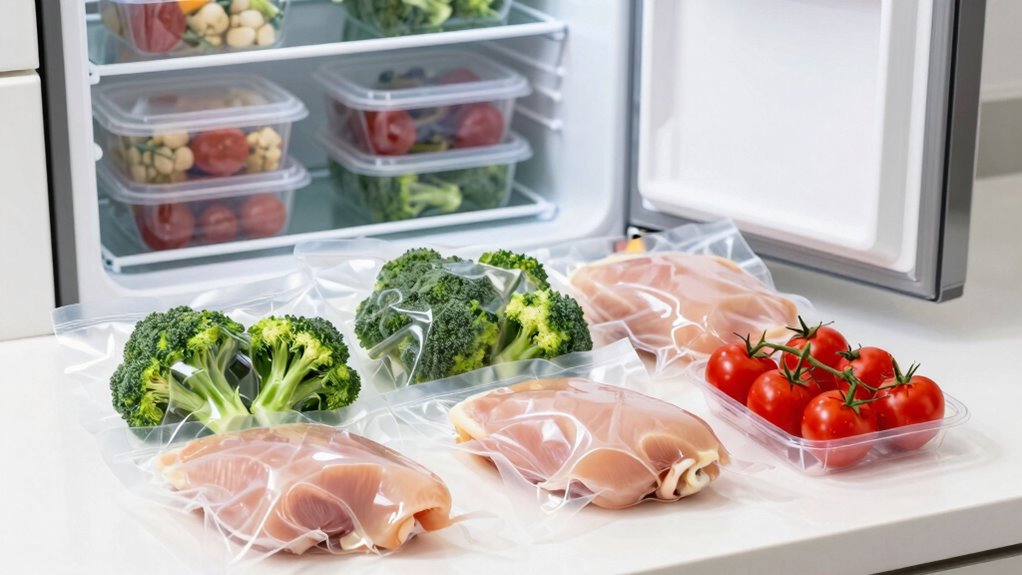
When you freeze raw foods, ice crystal formation can occur inside the cells, damaging the food’s texture and quality. These crystals form because water inside the food turns into ice during freezing. Large ice crystals can puncture cell walls, leading to mushy textures once thawed. Additionally, improper freezing can cause freezer burn, which happens when exposed surfaces lose moisture and develop dry, gray patches. To prevent this, you should use airtight packaging that minimizes air exposure and removes as much air as possible before sealing. Rapid freezing also helps by forming smaller ice crystals, which are less damaging. Proper temperature control and avoiding temperature fluctuations are essential, as they promote ice crystal growth and freezer burn. Incorporating quick freezing techniques that promote quick and even cooling can significantly improve the quality of your raw foods. Using proper handling methods ensures your raw foods stay fresh and retain their original texture and flavor. Understanding freezer storage guidelines is crucial for optimal preservation, and implementing consistent temperature maintenance can further reduce ice crystal formation and preserve food quality.
The Essential Principles for Freezing Raw Foods Without Freezer Burn
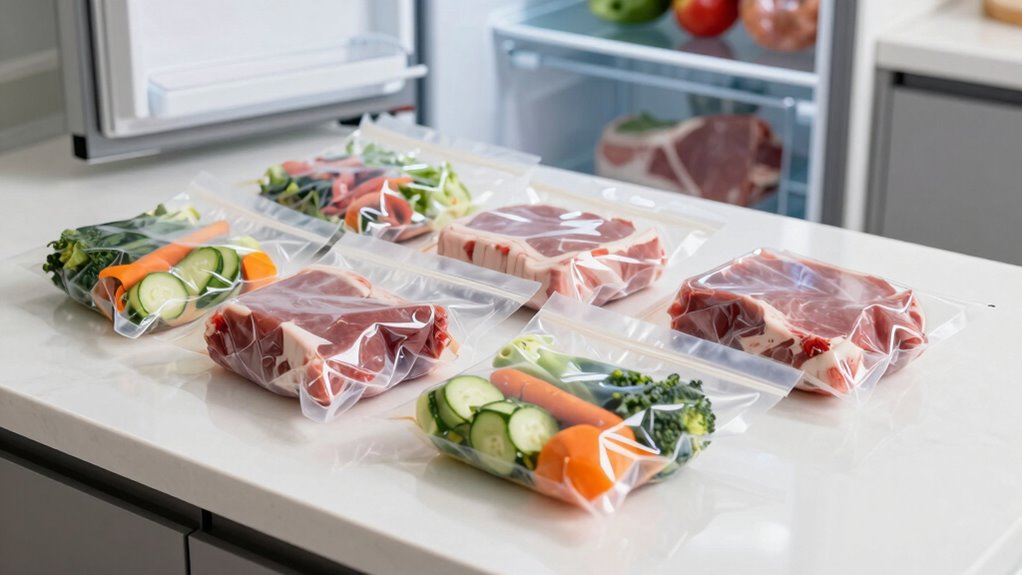
To keep your raw foods fresh and prevent freezer burn, you need to focus on proper packaging techniques and effectively remove excess air. Fashion statements can reflect personal beliefs and values, so choosing eco-friendly packaging can also align with sustainable practices. Controlling your freezer’s temperature is also vital to slow down ice crystal formation, which can compromise food quality. Electric power, which can be generated through bike generators, can be a sustainable way to power small appliances or devices in off-grid situations, emphasizing the importance of efficient energy use. Additionally, understanding creative storytelling can help you develop engaging content around your food prep process, encouraging others to adopt healthy habits. Incorporating knowledge of archiving and preservation can further enhance your ability to maintain the freshness of your frozen meals. Being aware of essential oils for food preservation can also be beneficial in extending the shelf life of your frozen goods. By mastering these principles, you’ll preserve quality and extend the shelf life of your frozen meals.
Proper Packaging Techniques
Proper packaging is essential to prevent freezer burn and preserve the quality of your raw foods. Using vacuum sealing is one of the most effective methods because it removes air, which causes freezer burn, and creates a tight seal around your food. If you don’t have a vacuum sealer, guarantee you use moisture barriers like heavy-duty aluminum foil, freezer bags, or airtight containers. These barriers prevent moisture loss and protect against air exposure. When packaging, remove as much air as possible, especially with bags, to reduce the risk of ice crystals forming. Proper sealing and moisture barriers ensure your raw foods stay fresh longer, retain their flavor, and maintain their texture without getting icy or dried out during freezing. Incorporating innovative energy-efficient packaging solutions can further enhance the preservation process and reduce environmental impact.
Air Removal Strategies
Removing air effectively is crucial to prevent freezer burn and keep your raw foods fresh. Vacuum sealing is the best way to achieve this, as it evacuates air completely from packaging. Use a vacuum sealer to remove excess air and create a tight seal, preventing freezer burn and preserving flavor. If you don’t have a vacuum sealer, manually pressing out air before sealing with a zip-top bag also helps. Squeeze out as much air as possible, then seal tightly. For liquids, freeze in smaller portions or use specialty bags designed for liquids. Proper air evacuation minimizes ice crystals, maintains texture, and extends shelf life. Here’s a quick guide:
| Method | Equipment | Best For |
|---|---|---|
| Vacuum sealing | Vacuum sealer | Bulk raw meats, sauces |
| Manual pressing | Zip-top bags | Marinades, small portions |
| Water displacement | Plastic bags & water | Liquids, soups |
| Using straws | Zip-top bags | Removing air from bags |
| Special storage bags | Liquid-proof bags | Juices, broths |
Freezing Temperature Control
Controlling the temperature inside your freezer is key to preventing freezer burn and preserving the quality of raw foods. Keep your freezer at or below 0°F (-18°C) to maintain food safety and extend shelf life. Fluctuating temperatures can cause ice crystals to form, leading to freezer burn and compromised texture. Use a reliable thermometer to monitor your freezer’s temperature regularly. Avoid overloading, which can obstruct cold air circulation and cause uneven freezing. Proper temperature regulation ensures raw meats and other foods stay safe to eat longer, reducing waste and maintaining flavor. Consistent freezing temps also help prevent bacterial growth, protecting your health. Maintaining a steady temperature is essential for freezer performance and overall food preservation. Additionally, temperature stability is crucial for preventing the formation of ice crystals that can damage food texture over time. Proper insulation and avoiding frequent door openings also contribute to temperature consistency, ensuring your freezer operates optimally. Understanding the impact of energy efficiency on your freezer can further improve its performance and reduce power consumption.
Choosing the Best Containers and Packaging for Fresh Raw Meals
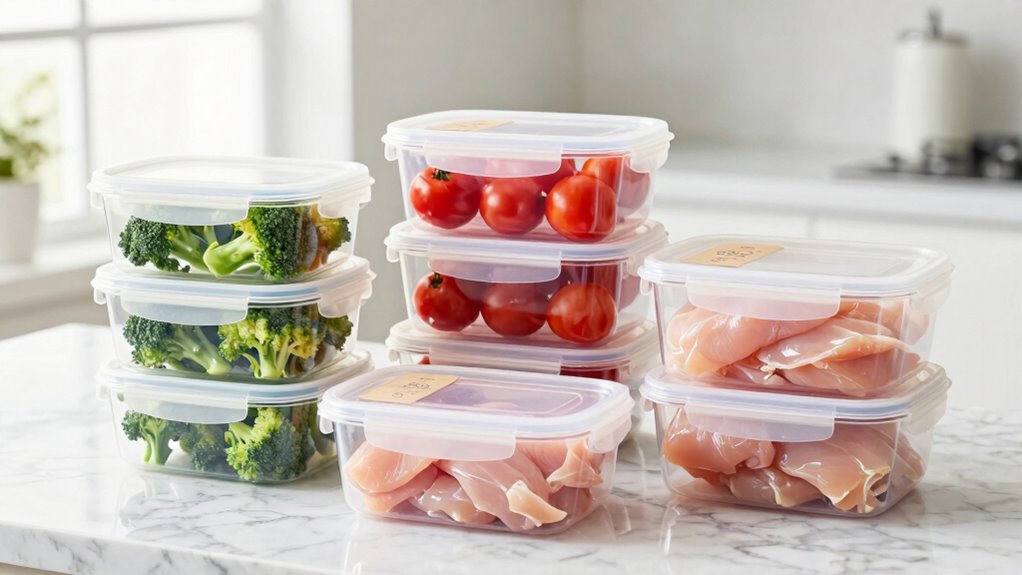
Choosing the right containers and packaging is essential to keep your raw meals fresh and safe in the freezer. Your container selection should prioritize airtight seals and durable materials to prevent freezer burn and contamination. Opt for BPA-free plastic containers, glass containers with tight-fitting lids, or vacuum-sealable bags designed for freezing. Packaging materials matter too; use freezer-specific wraps or vacuum-sealers to remove excess air, which slows spoilage. Avoid flimsy or porous options that can crack or allow moisture transfer. Properly labeled containers help track freshness and prevent confusion. Incorporating vetted wave and wind considerations in your packaging choices ensures that your raw meals remain fresh longer and are protected from freezer-related damage. Additionally, selecting containers that maintain consistent temperature helps prevent temperature fluctuations that can compromise food safety. Using appropriate insulation materials can further help regulate temperature and extend freezer life. Ensuring your packaging materials are resistant to freezer burn is crucial for maintaining quality. Incorporating temperature regulation techniques and high-quality packaging guarantees your raw meals stay fresh longer, maintain their texture, and are safe to eat when you’re ready to cook.
How to Prepare Raw Ingredients for Freezing to Keep Them Fresh
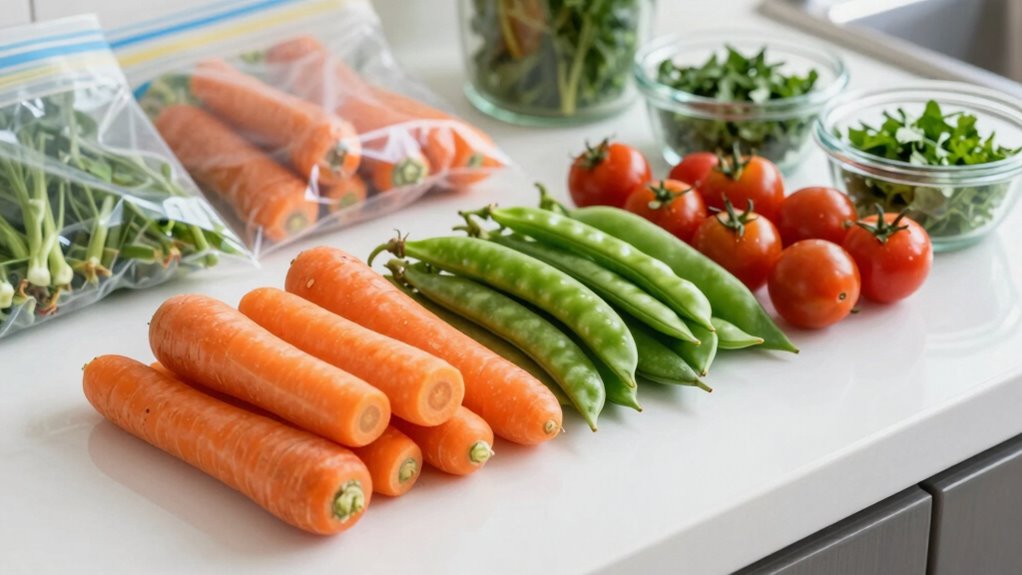
To keep your raw ingredients fresh in the freezer, proper preparation is essential. Start by washing and drying produce thoroughly to prevent ice crystals and spoilage. Use airtight containers or freezer-safe bags, removing excess air to prevent freezer burn. For meats and seafood, consider portioning into meal-sized sizes and wrapping tightly. Label each package with the date to track freshness. When it’s time to thaw, use gentle thawing techniques like overnight refrigeration or cold water baths to preserve texture and nutrients. This careful prep guarantees your ingredients stay fresh and ready for meal presentation without icy buildup. Proper preparation minimizes waste and makes your freezer meals more appealing and convenient to use later.
Organizing and Labeling Your Raw Freezer Meals for Easy Use
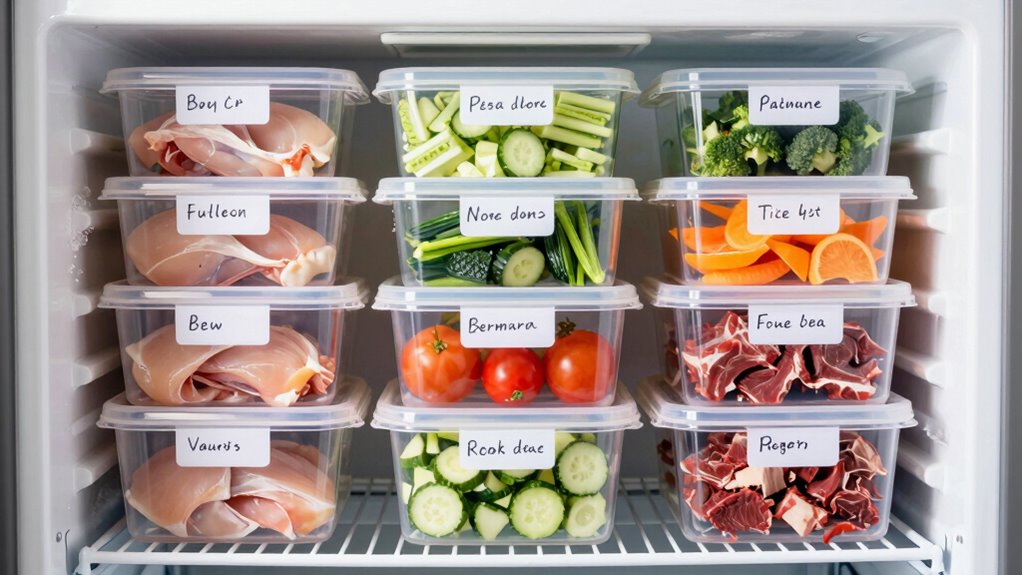
Once your raw ingredients are properly prepared and stored in the freezer, organizing and labeling them guarantees you can easily find what you need later. Effective meal prep depends on clear labeling techniques that prevent confusion. Use waterproof markers or labels to write the contents, date, and portion size. Group similar ingredients together for quick access. For example:
| Ingredient | Date Frozen | Portion Size |
|---|---|---|
| Chicken Breasts | 03/15/24 | 2 pieces |
| Ground Beef | 03/16/24 | 1 lb |
| Vegetables | 03/17/24 | 2 cups |
This system streamlines meal prep, helps reduce waste, and keeps your freezer organized. Proper labeling guarantees your raw freezer meals stay easy to identify and ready for use when needed. Incorporating efficient organization techniques can further enhance your meal prep routine, especially when utilizing supportive storage methods that maintain ingredient quality over time. Additionally, understanding proper storage temperatures ensures your frozen foods stay safe and preserve their freshness during long-term storage. Being aware of safe freezing practices can help prevent freezer burn and ensure optimal quality, especially when handling vetted storage guidelines for different types of dog foods and ingredients.
Freezing Techniques to Maintain Texture and Flavor of Raw Foods
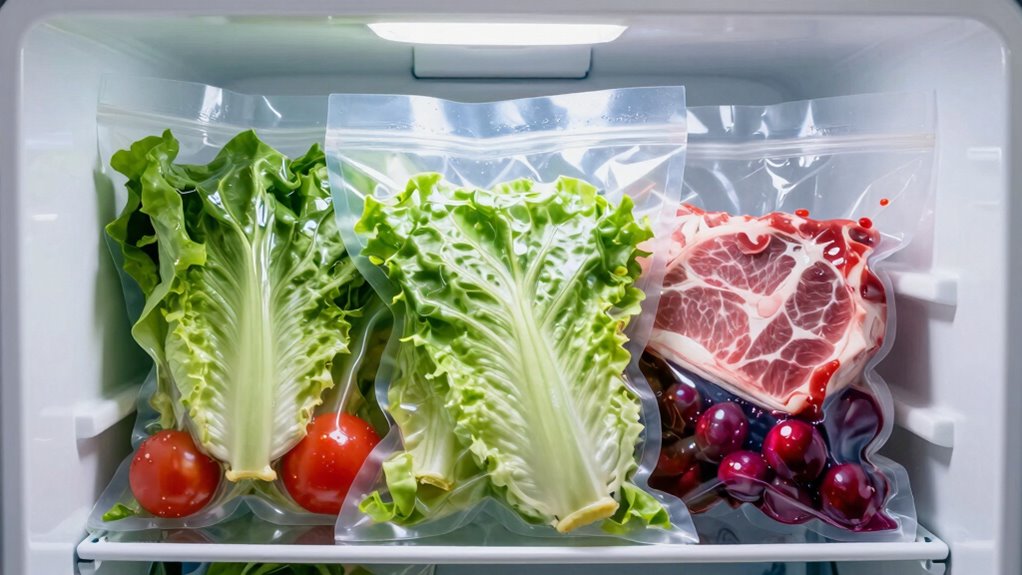
Using proper packaging methods helps prevent freezer burn and preserves the texture and flavor of your raw foods. You should also pay attention to ideal freezing times to avoid quality loss. When you combine these techniques, your meals stay fresh and delicious for longer periods. Incorporating multi-functional gear in your storage solutions can also streamline your prep process and optimize space.
Proper Packaging Methods
Proper packaging methods are essential for preserving the texture and flavor of raw foods during freezing. Using vacuum sealing removes air, which helps prevent freezer burn and maintains freshness. It’s especially effective for raw meats, seafood, and produce. Moisture barriers, like heavy-duty freezer bags or specially designed wraps, also protect foods from moisture loss and ice crystal formation. Confirm you remove as much air as possible before sealing to minimize exposure to cold air. Label each package with the date to keep track of freshness. Avoid overpacking, which can cause uneven freezing and damage delicate textures. With these packaging techniques, your raw foods stay flavorful, tender, and ready for quick meal prep, making your freezer a reliable resource for healthy, preserved ingredients.
Optimal Freezing Time
To preserve the texture and flavor of your raw foods, paying attention to freezing times is key. Proper timing prevents freezer burn and maintains quality. For organic vegetables, aim to freeze within 8–12 months; this keeps their nutrients and crunch intact. Meat marinades should be frozen for no more than 3–4 months to prevent flavor loss and freezer burn. Here are some tips to optimize your freezing time:
- Use a thermometer to ensure your freezer stays at 0°F (-18°C).
- Label packages with the date to track storage duration.
- Freeze in small, flat portions for quick freezing and thawing.
Following these guidelines helps sustain the texture and flavor of your raw foods, making meal prep easier and more enjoyable.
Common Mistakes When Freezing Raw Foods and How to Avoid Them
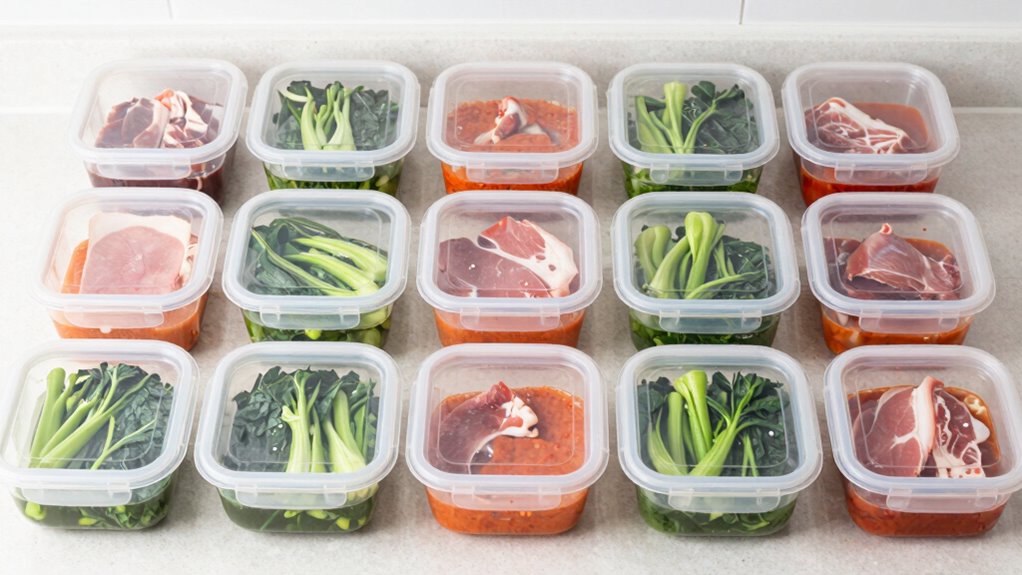
One of the most common mistakes when freezing raw foods is not preparing them correctly, which can lead to freezer burn, spoilage, or loss of quality. Packaging errors, like leaving foods exposed or using improper containers, often cause dehydration and ice crystals. To visualize this, consider the table below:
| Improper Packaging | Effect | Solution |
|---|---|---|
| Not airtight seals | Freezer burn | Use vacuum-sealed bags or airtight containers |
| Overfilled containers | Crushing or damage | Leave space for expansion |
| Thin or damaged bags | Exposure to air and moisture | Use durable, quality freezer bags |
Avoid these mistakes by choosing proper wrapping, removing excess air, and labeling everything clearly. Proper prep ensures your raw foods stay fresh and tasty longer.
Safely Thawing and Cooking Your Raw Freezer Meals
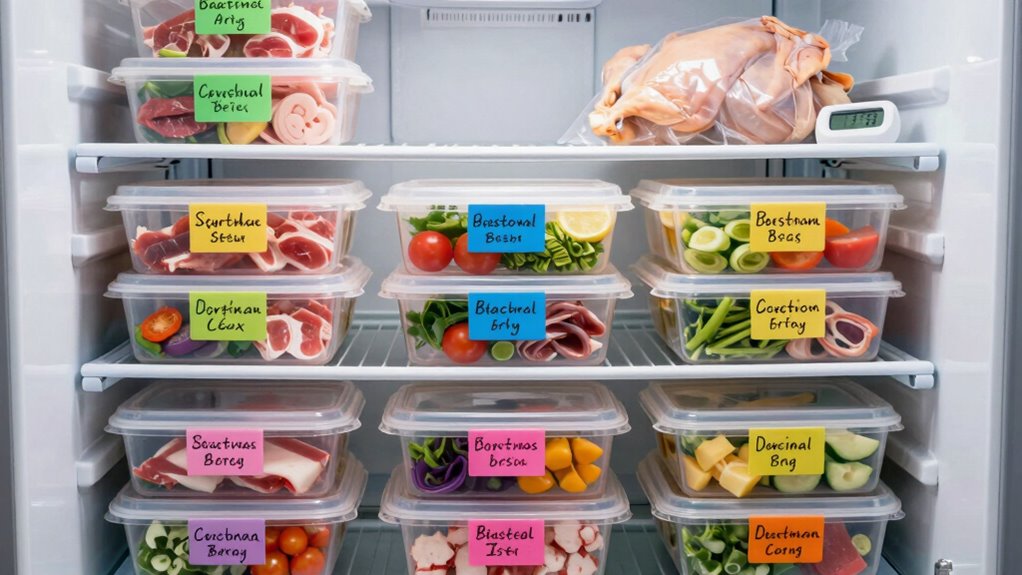
When it’s time to thaw your raw freezer meals, safety should be your top priority to prevent foodborne illnesses. Proper thawing methods maintain food safety and preserve meal variety. First, always thaw in the refrigerator, keeping meals at a safe 40°F or below. Second, use the cold-water method if you’re short on time—submerge sealed bags in cold water, changing it every 30 minutes. Third, thaw in the microwave if you’re cooking immediately afterward, ensuring even heat distribution. Avoid thawing at room temperature, which can promote bacterial growth. Once thawed, cook your meals thoroughly to recommended temperatures. This approach guarantees food safety, preserves the integrity of your ingredients, and ensures you enjoy a variety of nutritious, safe meals from your freezer stash.
Troubleshooting Icy Freezer Meals: What to Do When Freezing Goes Wrong
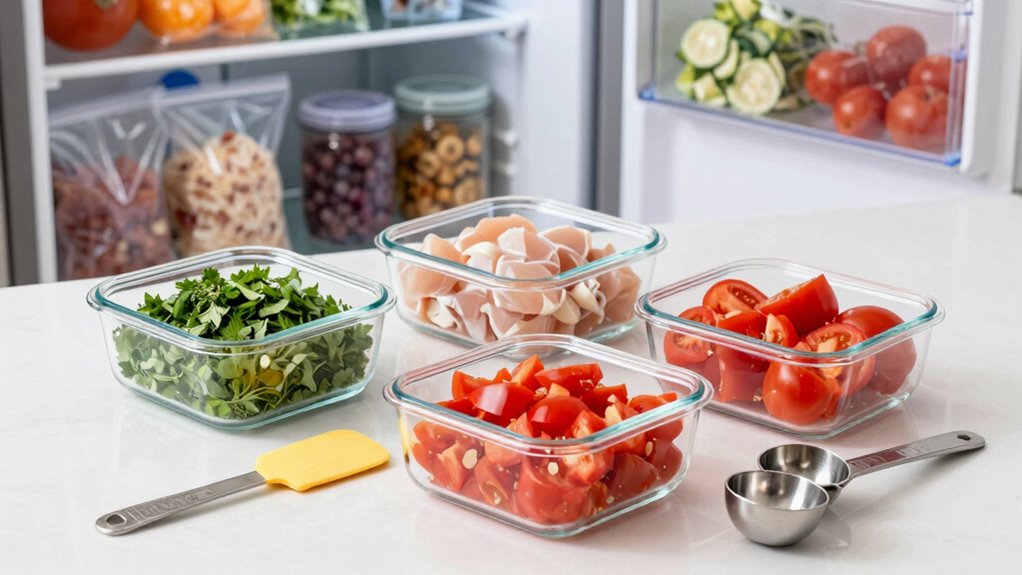
If your freezer meals turn icy or develop ice crystals beyond what’s expected, it can compromise the quality and safety of your food. Ice crystal formation occurs when moisture escapes or condenses during freezing, leading to freezer burn and texture changes. To fix this, gently thaw the affected meals in the refrigerator, then repackage them in airtight containers, removing excess air to prevent further ice crystal buildup. When freezing again, focus on freezer burn prevention by using proper storage techniques—such as double-wrapping with freezer-safe materials and removing as much air as possible. Avoid opening the freezer frequently or exposing meals to temperature fluctuations. These steps help maintain ideal food quality, ensuring your meals stay fresh, flavorful, and safe to eat.
Frequently Asked Questions
How Long Can I Store Raw Freezer Meals Without Spoilage?
You can store raw freezer meals for up to 3 to 6 months without spoilage, but beyond that, freezer burn may occur, affecting quality. To prevent this, guarantee proper packaging and airtight sealing. Keep an eye on storage duration, as prolonged time increases the risk of deterioration. Regularly check your meals for signs of freezer burn or spoilage to keep your food safe and tasty.
Can I Freeze Cooked and Raw Ingredients Together?
Yes, you can freeze cooked and raw ingredients together, but it’s best to contemplate freezing consistency and ingredient layering. Raw ingredients generally freeze better and maintain quality longer, so layer them at the bottom. Cooked ingredients might become mushy or change texture, so keep them on top or in separate containers if possible. This approach helps prevent spoilage and preserves the meal’s overall quality.
What Are the Safest Methods to Thaw Raw Frozen Meals?
Like a careful sailor, you should thaw raw frozen meals using safe techniques. Place your food in the fridge to thaw slowly at a safe temperature, maintaining below 40°F. You can also use cold water baths, changing the water every 30 minutes, or microwave on the defrost setting for quick thawing, but cook immediately afterward. These methods prevent bacteria growth and keep your meals safe and fresh.
Do Different Types of Raw Foods Require Special Freezing Techniques?
Yes, different raw foods do require special freezing techniques to guarantee food safety. For example, meats and seafood should be stored in airtight, leak-proof storage containers to prevent cross-contamination. Vegetables and fruits need proper blanching before freezing to maintain quality and safety. Always label your containers with the date, and use appropriate storage methods for each type to prevent freezer burn and ensure safe, high-quality meals.
How Can I Prevent Cross-Contamination in My Freezer?
To prevent cross-contamination in your freezer, you should focus on proper freezer organization and cross contamination prevention. Always store raw meats separately from cooked foods, ideally in sealed containers or on the bottom shelves. Label everything clearly, and wipe up any drips immediately. Keep raw foods tightly wrapped, and use separate utensils to avoid transferring bacteria. These steps keep your freezer safe and your food fresh.
Conclusion
Don’t let fears of ice crystals stop you from enjoying homemade freezer meals. With the right techniques, you can keep raw foods fresh, flavorful, and ready whenever you need them. Remember, a little prep and organization go a long way—plus, even if some ice forms, it won’t ruin your meals. So go ahead, freeze with confidence, and enjoy healthy, convenient meals anytime without the icy surprises!