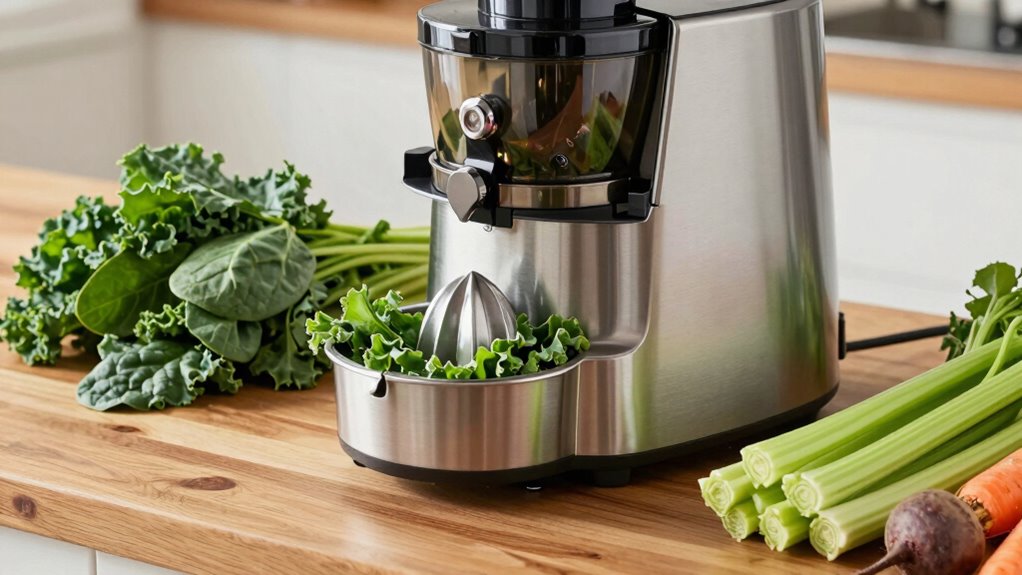

To make a juicer better for greens, you need one with slow, masticating technology that gently extracts nutrients without damaging delicate fibers, preserving enzymes and vitamins. These juicers work at low speeds, reducing heat and oxidation, which helps retain more nutrients from leafy vegetables. For hard produce, a more powerful, high-speed juicer is usually better because it can handle tough textures. Keep exploring to discover which options suit your needs best.

Get health and wellness essentials delivered free with Prime
- Fast, free delivery on millions of items
- Prime Video, Amazon Music and more included
- Member-only deals all year
Key Takeaways
- Masticating juicers operate at low speeds, gently extracting juice from delicate greens without damaging fibers.
- They generate less heat and oxidation, preserving nutrients in leafy vegetables better than hard produce.
- Higher pulp efficiency in slow juicers maximizes juice extraction from greens, leaving drier pulp.
- Their gentle mechanism prevents clogging and damage when processing delicate, leafy ingredients.
- Quiet, energy-efficient, and easy to clean, making them ideal for frequent green juice preparation.
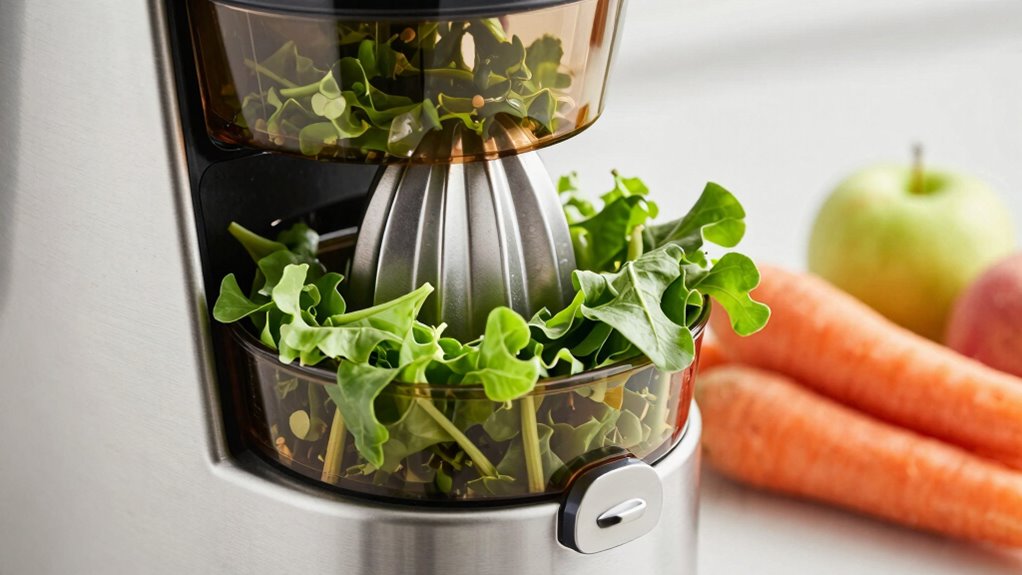
When choosing a juicer, understanding the differences between extracting juice from greens and hard produce is crucial. Not all juicers perform equally across these types of ingredients, and your selection impacts nutrient retention and pulp efficiency. Greens, like kale or spinach, are delicate and contain high water content, which means you need a juicer that can gently extract juice without sacrificing essential nutrients. Hard produce, such as apples or carrots, requires more power and efficiency to break down dense fibers and extract maximum juice. Knowing how your juicer handles these differences ensures you get the most out of each ingredient.
Choosing the right juicer depends on whether you prioritize greens or hard produce for maximum nutrients and efficiency.
Juicers designed for greens typically feature slow, masticating or auger mechanisms. These operate at low speeds, which is gentler on delicate leafy vegetables, helping preserve nutrients like vitamins and enzymes that degrade quickly with heat or oxidation. The slow extraction process enhances nutrient retention by minimizing heat buildup and oxidation, key factors that can diminish the health benefits of your juice. Additionally, masticating juicers tend to produce less heat and friction, further protecting sensitive nutrients. They also tend to have higher pulp efficiency when it comes to greens, extracting more juice from leafy textures and leaving behind drier pulp, indicating maximum juice extraction. Slow juicing is also generally quieter and more energy-efficient, making it a preferred choice for health-conscious users. In fact, many users find that nutrient preservation is significantly better with slow, masticating juicers compared to centrifugal models. Furthermore, ease of cleaning is often a consideration, as masticating juicers typically have fewer parts and simpler mechanisms. Additionally, understanding the different technologies employed in various juicers can help consumers make better-informed decisions about their health and convenience needs.
slow masticating juicer for greens
As an affiliate, we earn on qualifying purchases.
As an affiliate, we earn on qualifying purchases.
Frequently Asked Questions
Do Juicers Designed for Greens Also Handle Seeds Well?
Juicers designed for greens often handle seeds poorly because they lack robust seed crushing abilities. If you’re aiming to juice seeds, look for models with strong pulp separation and seed crushing features. These juicers can effectively break down seeds without clogging or damaging the machine. However, most greens-focused juicers may struggle with hard seeds, so choose one with the right power and technology to handle both greens and seeds efficiently.
Are There Specific Cleaning Requirements for Leafy Greens?
You might think leafy green cleaning is tedious, but it’s straightforward. For leafy greens, you should rinse thoroughly under cold water to remove dirt, grit, and pesticides. Pay extra attention to the stems and folds where debris hides. Regular cleaning of your juicer’s parts, especially the filter and blades, guarantees peak performance and prevents buildup. Proper cleaning requirements keep your greens fresh and your juice tasting its best.
Can a Juicer for Greens Extract Juice From Root Vegetables?
Some juicers designed for greens can handle root vegetables, but not all are equally compatible. Look for models with high power and sturdy augers for better root vegetable compatibility. These juicers often boast improved seed extraction efficiency, ensuring you get maximum juice from tougher produce. However, if you mainly want to juice root vegetables, choose a juicer specifically built for that purpose to achieve the best results.
How Does Juicer Noise Level Affect Daily Use?
Imagine your kitchen as a peaceful oasis, disrupted by a loud juicer. The noise comparison reveals how some models hum softly like a gentle stream, making daily operation less intrusive. A quieter juicer permits you to enjoy mornings without waking the household or disturbing your zen. Investing in low-noise technology guarantees your juicing routine remains smooth, peaceful, and suited for everyday use without sacrificing efficiency or power.
Is Pulp Output From Greens Juicers Suitable for Composting?
Yes, pulp output from greens juicers is suitable for composting. The pulp retains high nutrient content, enriching your compost and promoting healthy plant growth. Using green pulp in compost offers benefits like improved soil structure and increased organic matter. You’ll find it a sustainable way to recycle leftover fiber, reduce waste, and boost your garden’s liveliness, making your compost bin a nutrient-rich resource for your plants.
Conclusion
Choosing the right juicer depends on what you want to juice most often. If greens are your focus, a masticating or slow juicer is your best bet, as it preserves nutrients and handles leafy textures with ease. Did you know that green juices retain up to 70% more vitamins when juiced properly? By selecting the right juicer, you’ll enjoy more nutritious, vibrant drinks that boost your health and keep your greens fresh and flavorful every time.
Halloween Picks
halloween
As an affiliate, we earn on qualifying purchases.