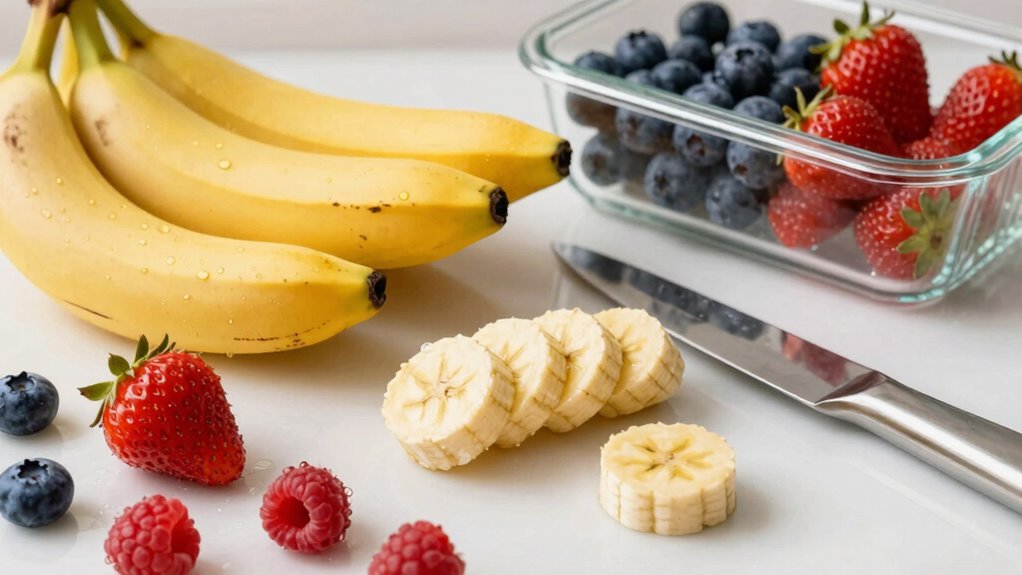
To freeze bananas and berries for better smoothie texture, start by selecting ripe bananas and fresh berries. Peel and slice bananas into 1-inch pieces. Make sure your berries are clean and dry, hulling strawberries if necessary. Lay the fruit in a single layer on a parchment-lined baking sheet and freeze for 2-3 hours until solid. Once frozen, transfer to airtight bags, removing excess air. This method keeps your fruit fresh and easy to blend—keep going to discover more tips!

Get health and wellness essentials delivered free with Prime
- Fast, free delivery on millions of items
- Prime Video, Amazon Music and more included
- Member-only deals all year
Key Takeaways
- Select ripe bananas and fresh, clean berries for optimal flavor and texture in smoothies.
- Peel and slice bananas into 1-inch pieces to ensure even freezing and easier blending.
- Hull strawberries and keep berries dry to prevent clumping during freezing.
- Freeze fruit in a single layer on a parchment-lined baking sheet to avoid sticking together.
- Store frozen fruit in airtight containers or vacuum-sealed bags to maintain quality and prevent freezer burn.
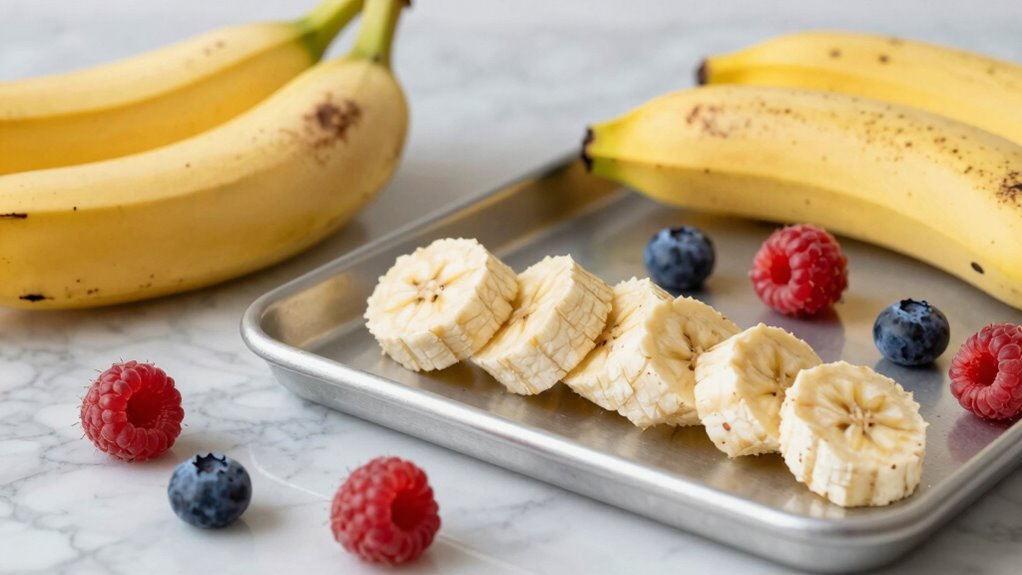
Freezing bananas and berries is a simple way to preserve their freshness for later use, especially when you have more than you can consume. Whether you’ve got a surplus from your last grocery run or your garden’s bounty, knowing how to freeze them properly can enhance your smoothie preparation. Using the right freezing techniques can make a world of difference in texture, flavor, and convenience.
Freezing bananas and berries preserves their freshness and enhances smoothie preparation, making texture and flavor truly exceptional.
To get started, you’ll want to select ripe bananas and fresh berries. For bananas, peel them and cut them into 1-inch slices. This not only speeds up the freezing process but also makes them easier to blend later. For berries, like strawberries, blueberries, or raspberries, make sure they’re clean and dry. If you’re using strawberries, hull them first. You’re aiming for a uniform size so that they freeze evenly and are easy to toss into your blender.
Once you’ve prepared your fruit, it’s time to freeze. One effective freezing technique is to lay the banana slices or berries in a single layer on a baking sheet lined with parchment paper. This prevents them from sticking together. Place the baking sheet in the freezer for about 2-3 hours, or until the fruit is solid. After that, transfer the frozen fruit into airtight freezer bags or containers. Make sure to remove as much air as possible before sealing to prevent freezer burn. Proper freezing techniques ensure the fruit retains its flavor and texture during storage. Additionally, storing the fruit in airtight containers can help maintain its quality over time. Incorporating proper packaging can further extend the shelf life of your frozen produce. Using correct storage methods can also help prevent freezer burn and spoilage, maximizing freshness. To further protect your frozen fruit, consider using vacuum-sealing methods, which can eliminate air and keep the produce fresher for longer.
When you’re ready to whip up a smoothie, you can grab the frozen fruit directly from the freezer. Using frozen bananas and berries gives your smoothie that creamy, thick texture that fresh fruit simply can’t replicate. They’ll blend effortlessly, creating a revitalizing drink without the need for ice, which can dilute the flavor. You can mix and match your frozen fruit for a variety of flavors, too, making your smoothies diverse and exciting.
vacuum-sealed freezer bags for fruits
As an affiliate, we earn on qualifying purchases.
As an affiliate, we earn on qualifying purchases.
Frequently Asked Questions
Can I Freeze Overripe Bananas and Berries?
Yes, you can definitely freeze overripe bananas and berries! In fact, those overripe fruits have some great benefits. They’re sweeter and can enhance your smoothies, giving them a creamier texture and richer flavor. Just peel and slice the bananas, and wash the berries before freezing. Once frozen, these fruits will blend perfectly into your smoothies, making them delicious and nutritious. So, don’t toss those overripe fruits—freeze them instead!
How Long Do Frozen Bananas and Berries Last?
Frozen fruits like bananas and berries stay fresh for about six to eight months. If you’re whipping up delicious smoothie recipes, you’ll still enjoy their nutritional benefits even after that time. Just make sure they’re stored in airtight containers to prevent freezer burn. So, grab those overripe bananas and berries, freeze them, and savor their sweetness in smoothies for months to come!
Do I Need to Wash Berries Before Freezing?
Yes, you should wash berries before freezing them. Use gentle washing techniques, like rinsing them under cool water and patting them dry with a paper towel. This helps remove dirt and any pesticides. Once they’re clean, spread the berries out on a baking sheet to freeze individually before transferring them to a freezer bag for berry storage. This way, you won’t end up with a clump of frozen berries, making smoothie prep easier!
Can Frozen Fruits Be Used in Baking?
Yes, you can definitely use frozen fruits in baking! They’re great for adding moisture and flavor to your recipes. Just remember to adjust baking times slightly, as frozen fruits may release extra liquid. For baking tips, toss the frozen fruits in a bit of flour before adding them to your batter to prevent sinking. You can also blend them into your smoothie recipes for a delicious twist. Enjoy experimenting!
What’s the Best Way to Thaw Frozen Fruits?
If you think leaving your frozen fruits on the counter is a gourmet thawing method, think again! For the best results, try these thawing methods: place your fruits in the fridge overnight or give them a quick spin in the microwave. If you’re in a hurry, running them under cold water works too. Remember these smoothie tips: slightly thawed fruits blend smoother, giving you that creamy texture you crave. Enjoy!
Conclusion
Now that you’ve mastered the art of freezing bananas and berries, you’re practically a smoothie connoisseur! Forget those sad, lukewarm concoctions; you’re ready to blend icy perfection. Just imagine your friends marveling at your frosty creations while you sip with the grace of a smoothie sommelier. So go ahead—freeze those fruits like they’re on a mission to save your breakfast from mediocrity. Your blender will thank you, and your taste buds will sing!
Halloween Picks
halloween
As an affiliate, we earn on qualifying purchases.