
To stay organized and guarantee your pet’s raw food stays fresh and safe, develop a routine of checking and recording your freezer temperature daily or weekly. Place your thermometer visibly inside or on the door, and use logs or apps to track temperature trends. This habit helps you catch issues early and maintain consistent conditions, preventing spoilage and cross-contamination. Keep essential tips in mind, and you’ll find yourself better managing your raw feeding routine with ease.
Key Takeaways
- Establish a routine to check and record freezer temperatures daily or weekly for consistent monitoring.
- Place the thermometer visibly inside or on the freezer door to facilitate easy and regular readings.
- Use logs or digital apps to track temperature trends and identify performance issues promptly.
- Organize raw meats by expiration date and storage conditions to streamline feeding schedules and safety checks.
- Incorporate temperature verification into existing chores like cleaning or reorganizing to maintain habit consistency.

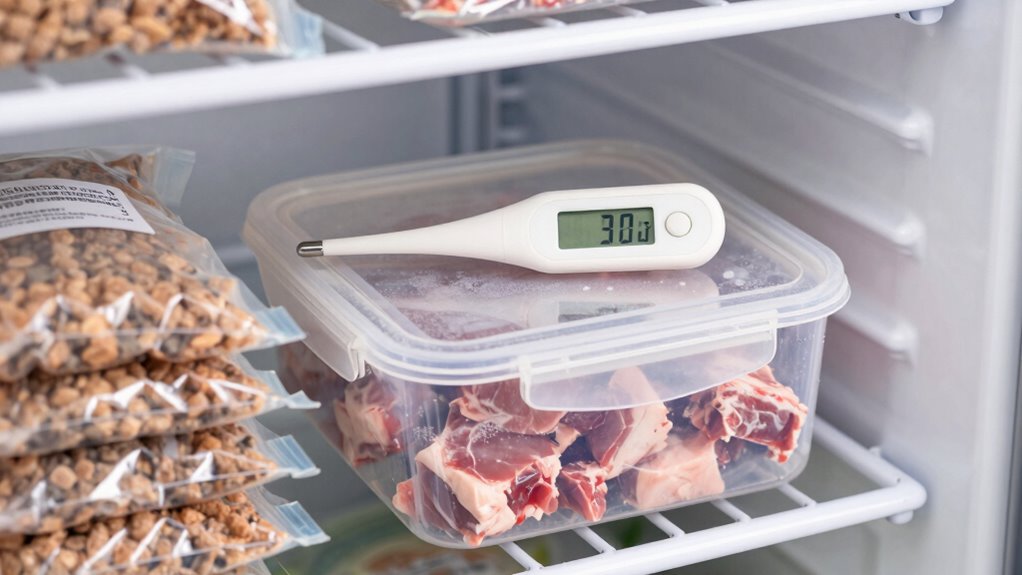
Maintaining the correct temperature in your freezer is vital for preserving food quality and safety, and developing a habit of regularly checking your freezer thermometer makes this task effortless. As someone who manages raw feed for your pets, you understand how essential proper meat storage is to prevent spoilage and ensure safety. Consistent temperature monitoring helps you keep the freezer at the ideal setting, typically around 0°F (-18°C), which slows bacterial growth and maintains the freshness of meats. When you make checking your thermometer a routine, it becomes second nature, and you avoid surprises that could compromise your feeding schedule or lead to wasted food.
You might find it helpful to designate a specific time each day or week to verify the temperature. This could be during your grocery run, when cleaning the freezer, or as part of your daily chores. By aligning thermometer checks with other habits, like reorganizing stored meats or labeling packages, you reinforce the importance of temperature control. Keep your thermometer in a visible spot, perhaps attached to the freezer door or inside the unit, so it’s easy to glance at without digging through frozen food. Regularly noting the temperature readings in a log or app helps you track trends over time, making it easier to identify issues before they become problems. Temperature monitoring is a crucial aspect of food safety and organization.
Temperature monitoring isn’t just about keeping the freezer at the right setting; it’s also about how you manage your raw meat storage. When you know the exact temperature, you can better organize your meats by expiration dates and types, ensuring that older packages get used before they spoil. If you notice the temperature creeping above 0°F, you might need to troubleshoot your freezer, like checking the door seal or adjusting the thermostat. Staying proactive prevents potential food safety hazards and keeps your meats in prime condition for feeding. Incorporating freezer maintenance into your routine also helps ensure consistent performance and prevents unexpected breakdowns. Additionally, understanding the importance of proper storage can motivate you to stay diligent with your monitoring habits.
Developing this habit also helps you stay organized overall. You’re less likely to forget which meats are thawed or nearing expiration, and you can plan your feeding schedule accordingly. Consistent temperature checks give you peace of mind, knowing that your meats are stored correctly and safe for your pets. Keeping a dedicated storage system not only streamlines your process but also minimizes the risk of cross-contamination or accidental spoilage. Over time, this routine becomes automatic, saving you time and effort. It’s a simple but effective way to take control of your raw feeding routine, ensuring that your meats stay fresh, safe, and ready for use whenever you need them. Making temperature monitoring part of your regular routine helps you stay organized and confident in your meat storage practices.

AcuRite Digital Wireless Fridge and Freezer Thermometer with Alarm, Max/Min Temperature for Home and Restaurants (00515M) 4.25" x 3.75"
- Includes Refrigerator and Freezer Thermometers: Transmits readings to digital display
- Easy-to-Read LCD Display: Magnetic, wall mount, or countertop stand
- Customizable Temperature Alarms: Alerts for temperature spikes or appliance issues
As an affiliate, we earn on qualifying purchases.
As an affiliate, we earn on qualifying purchases.
Frequently Asked Questions
How Often Should I Check My Freezer Thermometer?
You should check your freezer thermometer at least once a week to guarantee proper frozen storage and temperature monitoring. Regular checks help you catch any temperature fluctuations early, which is vital for keeping raw food safe and maintaining quality. Keep a habit of verifying the thermometer’s accuracy, especially after power outages or if you notice signs of freezer issues. Consistent monitoring helps you stay organized and makes sure your raw feeding routine remains safe and effective.
What Is the Ideal Temperature Range for Raw Pet Food?
Think of your freezer as a fortress guarding your pet’s health. Keep the temperature between -10°F and 0°F to guarantee nutrient preservation and food safety. This chilly range prevents harmful bacteria from creeping in and preserves essential nutrients in raw food. Regularly check your thermometer to maintain this icy barrier, making sure your pet’s meals stay fresh, safe, and packed with goodness.
Can a Digital Thermometer Be More Accurate Than an Analog One?
A digital thermometer can often be more accurate than an analog one because of digital accuracy, providing precise readings quickly. However, analog reliability depends on proper calibration and quality. You should choose based on your needs—digital models tend to be more consistent and easier to read, while high-quality analog thermometers can be just as dependable if maintained properly. Overall, digital thermometers often offer better accuracy for monitoring freezer temperatures.
How Do I Calibrate My Freezer Thermometer?
Imagine you notice your freezer’s temperature fluctuating unexpectedly. To calibrate your freezer thermometer, use calibration methods like the ice water method—place it in a mix of ice and water, wait for 8-10 minutes, then check the reading. Make certain proper thermometer placement, ideally in the center of the freezer, away from walls or door seals. Adjust the thermometer if needed, so it reads 0°F (or -18°C) accurately.
What Signs Indicate My Freezer Is Too Warm?
If your freezer is too warm, you might notice temperature fluctuations that prevent it from maintaining a consistent cold. Frost buildup on the walls or door seals can also be a sign. These issues indicate your freezer isn’t reaching or maintaining the proper temperature, risking spoilage. Regularly checking your thermometer helps catch these signs early, so you can adjust settings or troubleshoot to keep your raw feed fresh and safe.
Conclusion
Sticking to your freezer thermometer habit keeps your raw feeding routine organized and your pet safe. Did you know that maintaining your freezer at the right temperature can reduce food spoilage by up to 25%? By regularly checking and recording temperatures, you guarantee your pet’s meals stay fresh and nutritious. This simple habit not only saves you time and stress but also helps prevent health issues. Stay consistent, and your furry friend will thank you for it!