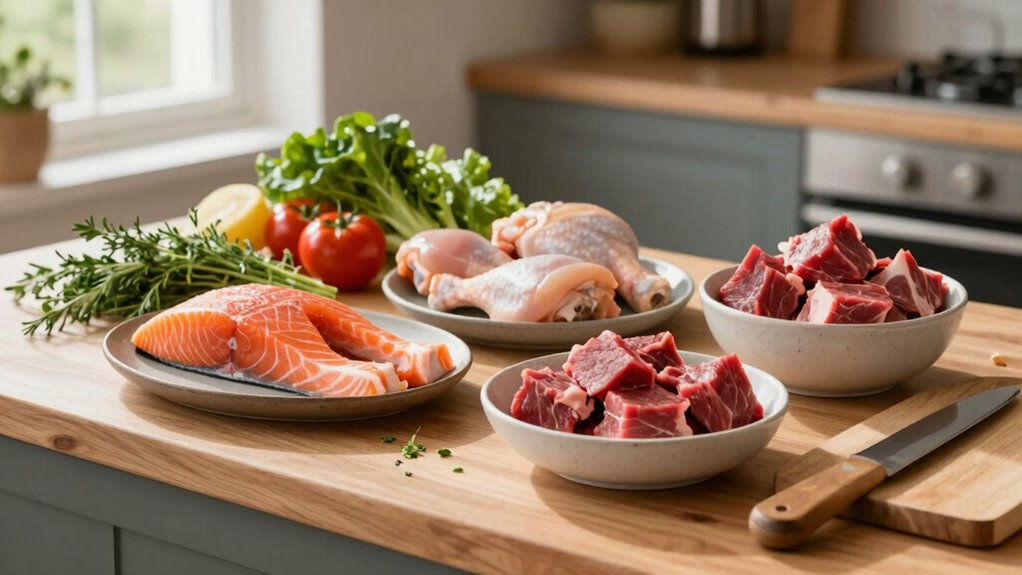
Rotating proteins in a raw pet diet is simple. Start by creating a weekly plan, assigning specific days for proteins like chicken, beef, or fish. Gradually introduce new proteins by mixing them with familiar foods to avoid digestive upset. Keep an eye on how your pet responds and adjust as needed. Don’t forget to take into account seasonal changes and activity levels when selecting proteins. There’s so much more you can discover to keep your pet’s diet exciting and healthy.
Key Takeaways
- Create a simple weekly protein rotation schedule, assigning specific days to different proteins for easy planning.
- Gradually introduce new proteins by mixing them with familiar foods to minimize digestive upset.
- Include a variety of protein sources like chicken, beef, and fish to ensure balanced nutrient intake.
- Monitor your pet’s reaction to new proteins and adjust the rotation based on their preferences and digestive health.
- Consider seasonal changes and your pet’s activity levels when selecting proteins for an optimal diet.

When you’re feeding your pet a raw diet, rotating proteins can play an essential role in their overall health. It’s not just about variety; it’s about making sure your pet gets a balanced intake of nutrients. By incorporating different protein sources, you can help maintain a dietary balance that promotes good digestive health and keeps your furry friend thriving. Each type of meat offers unique nutrients, so mixing them up can lead to a more well-rounded diet. Incorporating nutritional variety can also prevent dietary boredom and encourage healthy eating habits.
Start by selecting a few protein sources that you know your pet enjoys. Chicken, beef, turkey, fish, and lamb are popular choices, but don’t hesitate to explore other options like venison or rabbit. This variety not only keeps mealtime exciting for your pet but also helps in allergy management. If your pet has sensitivities or allergies, rotating proteins allows you to identify which proteins work best for them while minimizing the risk of developing new allergies.
Meal planning is key when you’re rotating proteins. You might find it helpful to create a weekly or monthly plan that outlines which proteins to include each day. For instance, you could designate Mondays for chicken, Tuesdays for beef, and so on. This structure simplifies your shopping and makes sure you always have a variety on hand. As you plan, keep in mind the importance of balancing protein types with other components of a raw diet, like fruits, vegetables, and supplements. This holistic approach guarantees your pet receives all essential nutrients. Additionally, understanding animal dietary needs can help you make informed choices about your pet’s diet.
When introducing a new protein, do so gradually. Mixing a small amount of the new protein with what they’re currently eating allows their digestive system to adjust. Monitor your pet for any signs of digestive upset, like changes in stool or behavior. If everything goes smoothly, you can confidently incorporate that protein into your rotation.
Don’t forget to take into account the season and your pet’s activity level. Some proteins may be more suitable during colder months, while others might be lighter and easier to digest during warmer weather. Adjusting the protein rotation based on these factors can further enhance your pet’s health.

TBMax 2 Pack Cat Dog Food Storage Containers 10 to 14 Lbs, Portable Travel Pet Container Dispenser with Easy-Pouring Spout & Cup, Airtight Bird Seed Container Dog Treat Storage Bin
- Large Capacity: Holds 5-7 lbs of pet food each
- Airtight Seal: Snap-lock latches with silicone gaskets
- Easy Dispensing: Large spout for mess-free pouring
As an affiliate, we earn on qualifying purchases.
As an affiliate, we earn on qualifying purchases.
Frequently Asked Questions
Can I Mix Different Protein Sources in One Meal?
Yes, you can mix different protein sources in one meal! Combining proteins like chicken, beef, and fish can create balanced and nutritious meals for your pet. When meal planning, aim for a variety of protein combinations to guarantee your pet gets a range of nutrients. Just keep an eye on any food sensitivities your pet might have. This approach simplifies your raw diet while still providing the diversity your furry friend needs.
How Often Should I Rotate Protein Sources?
You should rotate protein sources every few days to reap the protein rotation benefits. Aim for a variety of protein sources, like chicken, beef, and fish, to keep your pet’s diet balanced and interesting. This variety helps guarantee your pet gets all the essential nutrients. Switching it up regularly also prevents potential allergies and keeps mealtime exciting. Remember, consistency is key, but diversity in protein is just as important!
Are There Any Allergens to Consider When Rotating Proteins?
Yes, you should consider potential allergens when rotating proteins. Start with allergen identification by noting any previous reactions your pet might’ve had. Common allergens include chicken, beef, and fish. If your pet shows signs of protein sensitivity, like itching or digestive issues, switch to novel proteins such as duck or lamb. Always introduce new proteins gradually, monitoring for any adverse reactions to guarantee a smooth change while keeping your pet healthy and happy.
What Are Signs My Pet Is Adjusting Well to New Proteins?
When you see your pet thriving like a blooming flower after a rain, that’s a great sign they’re adjusting well to new proteins. Look for improved digestive health—firm stools and regular bathroom habits indicate their system is adapting. You might also notice positive behavioral changes, like increased energy and playfulness. If they seem content and enthusiastic at mealtime, it’s a clear signal that they’re embracing the new dietary variety.
Can I Use Frozen Proteins for Rotation?
Yes, you can absolutely use frozen proteins for rotation! Frozen proteins offer several benefits, such as convenience and extended shelf life. When you’re ready to serve, use proper thawing techniques—like placing the protein in the fridge overnight or submerging it in cold water. Avoid microwaving, as it can create hotspots. This way, you keep your pet’s meals fresh and nutritious while enjoying the variety that rotation brings.
Conclusion
By gently introducing a variety of proteins into your pet’s raw diet, you’re not just keeping mealtime exciting; you’re also supporting their overall health and happiness. Think of it as a delightful culinary adventure for your furry friend! With a little planning and creativity, rotating proteins can be a breeze. So, embrace the joy of diverse flavors and watch your pet thrive in both taste and wellness. After all, a happy pet makes for a happy home!