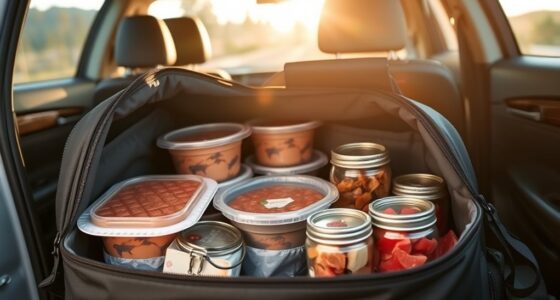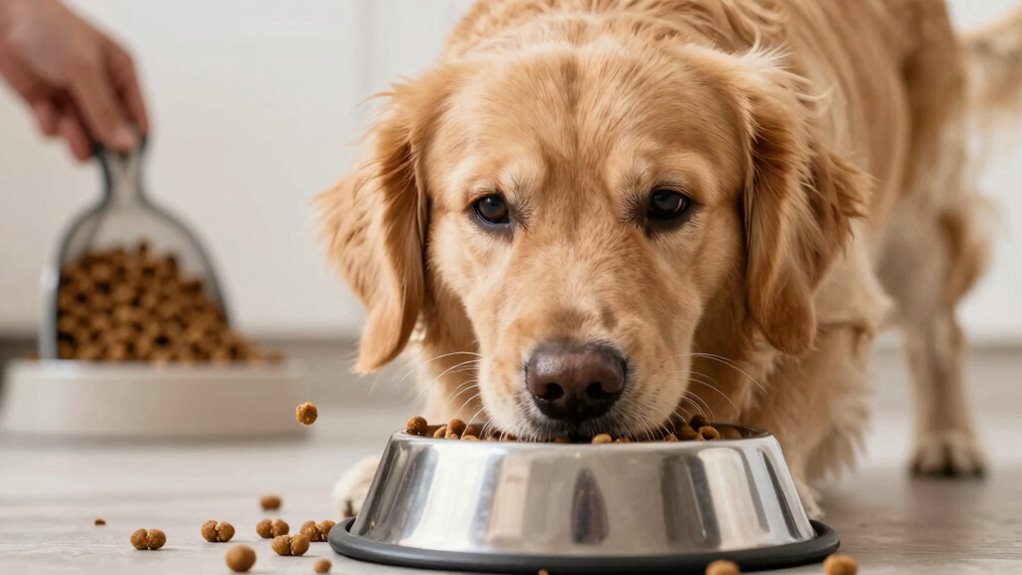
Some raw-fed pets eat too fast due to anxiety or fear of missing out, often rooted in previous experiences. The design of their bowl might also contribute, as narrow or deep bowls can make them rush. Establishing a consistent feeding routine and using slow-feed bowls can help calm their eating habits. Additionally, serving smaller portions and adding mental stimulation during meals can make a big difference. There’s more you can do to create a better feeding experience for your pet.
Key Takeaways
- Fast eating in raw-fed pets may stem from fear of missing out due to past experiences, leading to anxiety during meals.
- The design of feeding bowls, particularly narrow or deep ones, can encourage pets to eat faster by making food harder to access.
- Implementing slow-feed bowls can help prevent gulping and promote healthier eating habits, reducing the risk of health complications.
- Establishing consistent feeding routines creates a calm environment, helping pets feel more secure and less rushed during mealtime.
- Dividing meals into smaller portions and incorporating mental stimulation can enhance satisfaction and encourage a more mindful approach to eating.
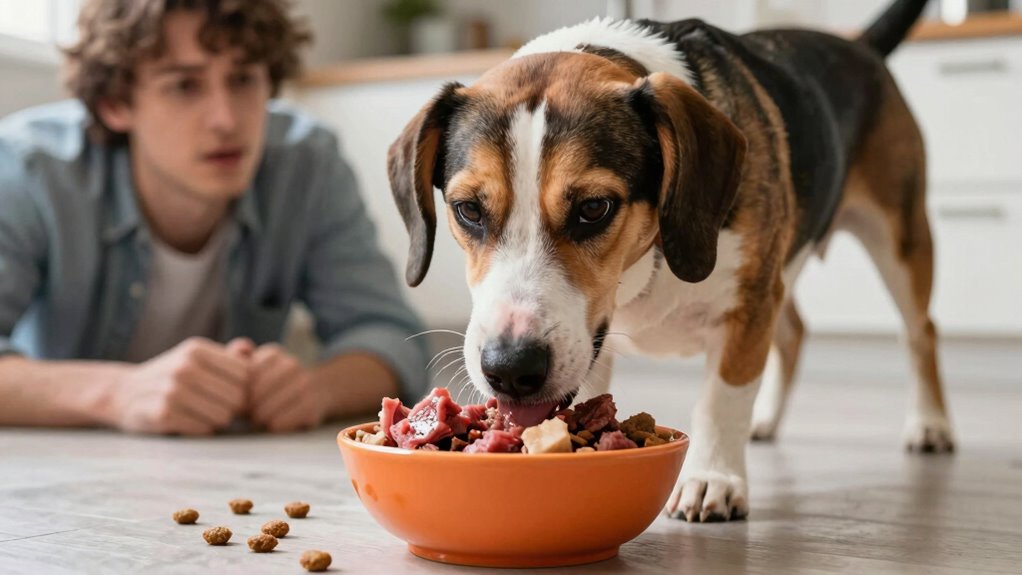
Have you ever had a pet that’s been through tough times, like a shelter or a multi-pet household, they may have developed a fear of missing out on food. This anxiety can manifest in fast eating, which can lead to health complications like bloat. Recognizing this anxiety can be the first step in changing their eating habits. Additionally, understanding that feeding anxiety can stem from past experiences or environment helps in addressing the root cause. You might not realize how the bowl shape can impact your pet’s eating speed. A deep or narrow bowl can make it harder for them to reach their food, encouraging them to eat faster in an attempt to get every last morsel. Opting for a wider, flatter bowl can help slow them down, making it easier for them to access their meal without feeling rushed. Using slow-feed bowls designed to prevent gulping can further promote healthier eating habits. Proper feeding routines also play a crucial role in reducing anxiety and pacing their eating. Establishing a consistent and calm feeding environment can help reduce feeding-related stress, leading to a more relaxed eating experience. Moreover, incorporating mental stimulation during mealtime can distract pets from rushing their food, promoting mindful eating. Portion control is another essential factor in managing how fast your pet eats. If you’re serving large portions, it might contribute to their tendency to inhale their food. Consider splitting their meals into smaller, more manageable portions throughout the day. This not only helps them feel more satisfied but can also alleviate some of the anxiety tied to mealtime.
As an affiliate, we earn on qualifying purchases.
Frequently Asked Questions
Can I Use Puzzle Feeders for Raw-Fed Pets?
Yes, you can use puzzle feeders for raw-fed pets! These feeders come in various types and can help slow down their eating. By incorporating different feeding strategies, you’ll make mealtime more engaging and mentally stimulating for your pet. Just guarantee the puzzle feeder is suitable for raw food and easy to clean. This way, you’ll promote better digestion while keeping your furry friend entertained during meals. Enjoy mealtime together!
How Do I Know if My Pet Is Overeating?
Knowing if your pet is overeating is like spotting a balloon that’s about to pop. Watch for overeating indicators such as weight gain, lethargy, or frequent vomiting. You should also monitor their portion control; if they’re finishing meals too quickly or begging for more, it might be time to adjust their servings. Keeping an eye on their behavior can help you maintain a healthy eating routine for your furry friend.
Are There Specific Breeds Prone to Eating Too Fast?
Yes, certain breeds are more prone to eating too fast due to their breed characteristics and feeding habits. Breeds like Labrador Retrievers and Beagles often gobble down their food quickly, driven by their strong appetites. This can lead to digestive issues. To manage this, you might want to contemplate using slow-feed bowls or dividing meals into smaller portions, helping your pet eat at a healthier pace while still enjoying their meals.
What Are the Signs of Digestive Issues From Fast Eating?
If your pet eats too fast, watch for bloating symptoms like a swollen belly or discomfort. You might notice nausea signs, such as drooling, lip-smacking, or vomiting after meals. These issues can indicate that their digestive system is struggling to keep up. Keeping an eye on these behaviors helps you address potential problems early. Consider adjusting their feeding routine to promote slower eating and prevent these uncomfortable symptoms.
Can Stress Affect My Pet’s Eating Speed?
Yes, stress can definitely affect your pet’s eating speed. In fact, studies show that 30% of pets display anxiety behaviors during mealtime. Stress triggers, like a noisy feeding environment or irregular meal timing, can cause your pet to gulp down food quickly. To help, create a calm atmosphere and stick to a consistent schedule. This way, you can encourage a more relaxed eating pace, improving their overall digestive health.
Conclusion
So, next time you watch your furry friend wolf down their meal, consider what’s really going on. Is it just excitement, or could there be something deeper at play? Adjusting their feeding routine might make all the difference. Imagine your pet savoring each bite, relishing every morsel instead of racing through their food. What if that simple change could lead to a healthier, happier companion? The answer might just transform mealtime into a moment of true joy.