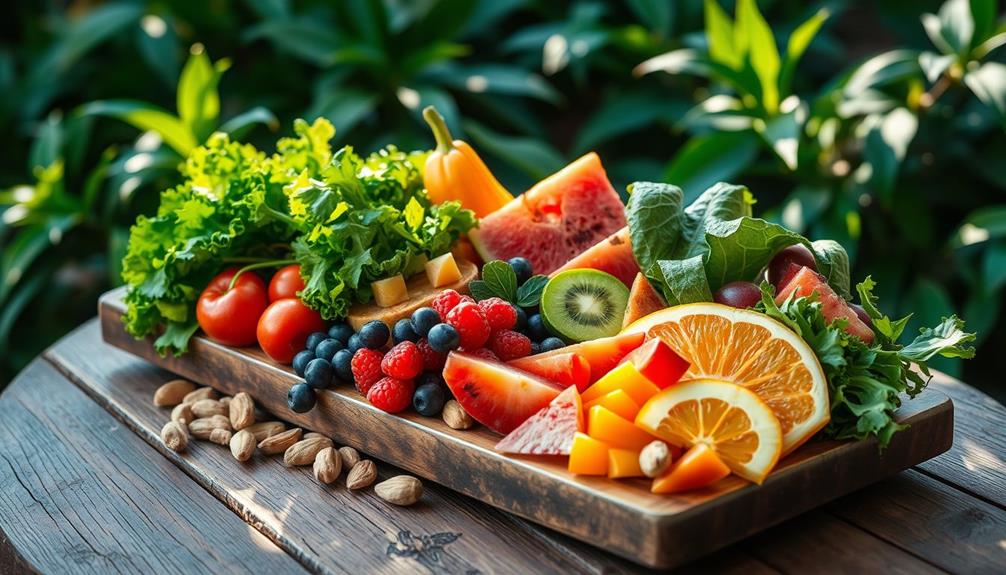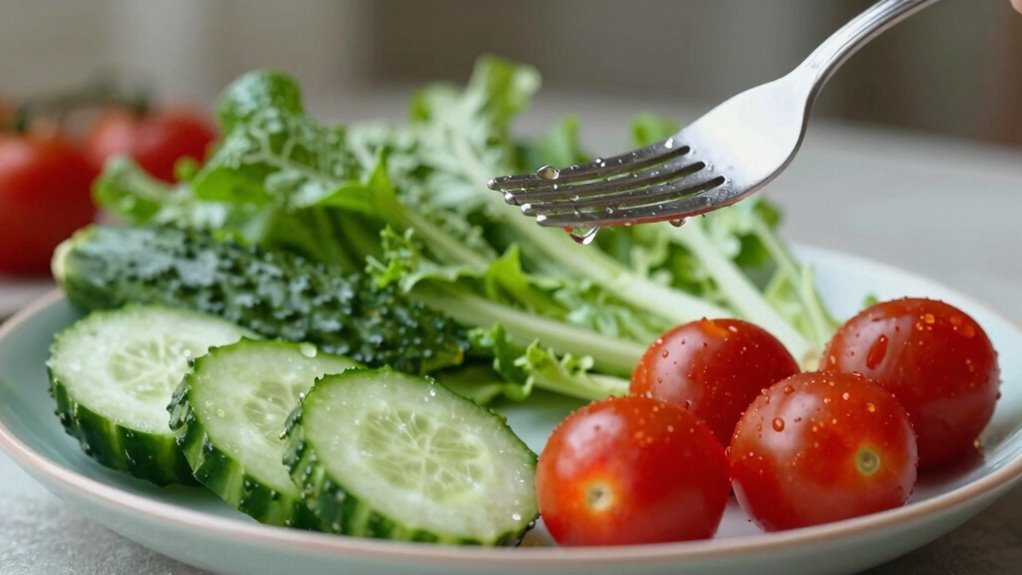
Chewing more slowly boosts your satisfaction with raw meals by helping you savor their unique flavors and textures. It encourages mindful eating, making you more aware of fullness signals and preventing overeating. By breaking down food into smaller particles, it also aids digestion and enhances nutrient absorption. Plus, a relaxed eating environment allows you to truly connect with your meal, turning it into a calming experience. There’s so much more to explore about the benefits of eating slowly.
Key Takeaways
- Chewing slowly enhances meal satisfaction by allowing for a deeper appreciation of flavors and textures in raw foods.
- Mindful eating through slower chewing promotes awareness of fullness signals, preventing overeating during raw meals.
- Taking time to chew breaks down food particles, aiding digestion and improving nutrient absorption from raw ingredients.
- Slower chewing fosters sensory engagement, helping to discover subtle flavors in raw meals that might otherwise be missed.
- A relaxed eating environment encourages mindful eating, transforming the experience into a calming ritual that enhances overall satisfaction.
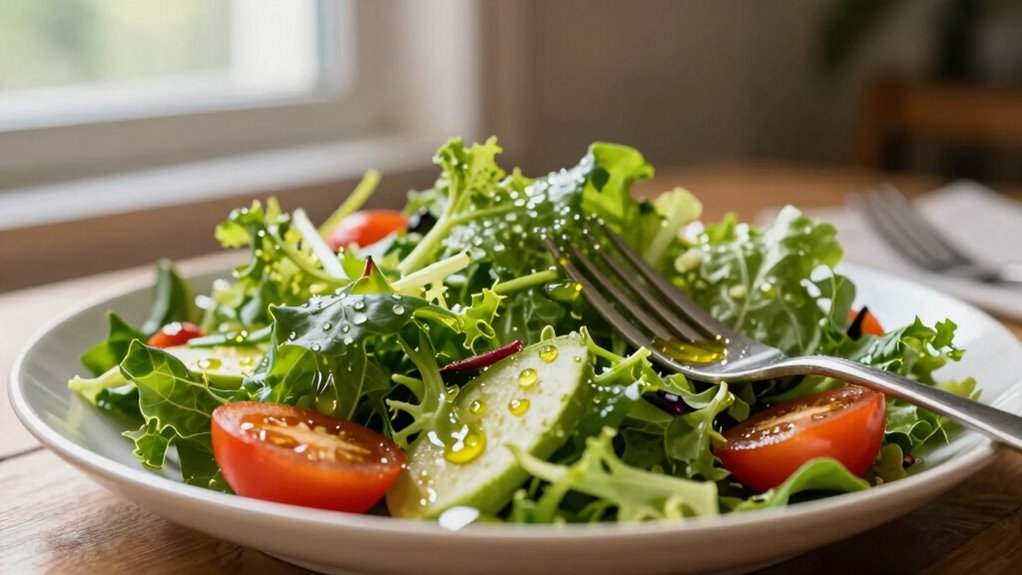
When you chew slowly, not only do you savor each bite, but you also enhance your overall meal satisfaction. Mindful eating is all about being present during your meals, and slowing down your chewing is a key part of that practice. When you take the time to truly experience the flavors and textures of your food, you’re more likely to feel fulfilled by what you eat. Instead of just rushing through your meal, you engage with it, making each bite an opportunity to appreciate the effort that went into your dish.
As you chew more slowly, you give your body the chance to register fullness signals before you overeat. This awareness can lead to better portion control, as you’re less likely to consume more than you need. If you find yourself finishing a meal and still feeling hungry, it might be time to reflect on how quickly you’re eating. By consciously slowing down, you can tap into those digestion benefits that come from giving your body the time it needs to process food properly. When you chew thoroughly, you break down the food into smaller particles, making it easier for your stomach to digest, which can ultimately enhance your satisfaction.
Chewing slowly helps your body register fullness, promoting better portion control and enhancing your overall meal satisfaction.
Moreover, chewing slowly allows you to enjoy the nuances of your meal. You might discover flavors you hadn’t noticed before or appreciate the textures in a way that makes the meal more enjoyable. This sensory engagement not only heightens your meal experience but also fosters a deeper connection to the food you consume. When you’re mindful of your eating habits, it’s easier to cultivate a positive relationship with food, leading to healthier choices in the long run.
You might also find that meals enjoyed in a relaxed manner often bring a sense of calm. Eating becomes less of a chore and more of a ritual. By allowing yourself the time to chew slowly, you create a peaceful eating environment where you can focus on the moment rather than multitasking or hurrying through your meal. This shift in attitude can transform mealtime from a rushed experience into one that nourishes both your body and mind.
slow eating mindful eating utensils
As an affiliate, we earn on qualifying purchases.
As an affiliate, we earn on qualifying purchases.
Frequently Asked Questions
How Does Chewing Slowly Affect Digestion Rates?
Chewing slowly boosts saliva production, which helps break down food and makes digestion more efficient. As you take your time, enzymes in your saliva start the digestion process, leading to better nutrient absorption in your body. When you chew thoroughly, you also create smaller food particles, which your stomach and intestines can handle more easily. This means your body can utilize those nutrients more effectively, promoting overall health and well-being.
Can Chewing Slowly Help With Weight Loss?
Yes, chewing slowly can help with weight loss. By practicing mindful eating, you tune into your hunger cues and recognize when you’re satisfied, which promotes portion control. Slowing down gives your brain time to register fullness, reducing the chances of overeating. It can also help curb emotional eating, as you become more aware of what you truly need versus eating out of habit or stress. Enjoy your meals, and you might find it easier to manage your weight.
What Are the Best Foods to Chew Slowly?
The best foods to chew slowly include crunchy vegetables, whole grains, and fruits. As you savor each bite, you’ll notice how the texture appreciation enhances your meal experience. Mindful eating becomes second nature when you focus on the flavors and textures, making every bite more satisfying. You might find that foods like carrots, quinoa, and apples not only taste better, but also help you feel fuller and more content. Enjoy the journey!
How Many Times Should I Chew Each Bite?
You should aim to chew each bite about 20 to 30 times. This chewing technique encourages mindful eating, allowing you to savor your food’s flavors and textures. By chewing more thoroughly, you also aid digestion and enhance satisfaction with your meal. Pay attention to how each bite feels, and take your time—this practice can transform your eating experience, helping you appreciate every aspect of your food.
Does Chewing Slowly Improve Flavor Perception?
Chewing slowly definitely doesn’t enhance flavor perception—who’d want to actually enjoy their food, right? But in reality, taking your time boosts flavor enhancement by allowing your taste buds to fully engage. You savor the sensory experience, discovering nuances you might’ve missed in a rushed bite. So, the next time you munch, slow down a bit. You’ll be surprised at how much more vibrant and delicious your meal can taste!
Conclusion
As you savor each bite, imagine each chew as a brushstroke on a canvas, transforming a simple meal into a masterpiece. Chewing slowly allows flavors to unfold like petals of a blooming flower, deepening your satisfaction. By taking your time, you’re not just feeding your body; you’re nurturing your soul. So, the next time you eat, let your meal become a work of art—one delicious bite at a time.