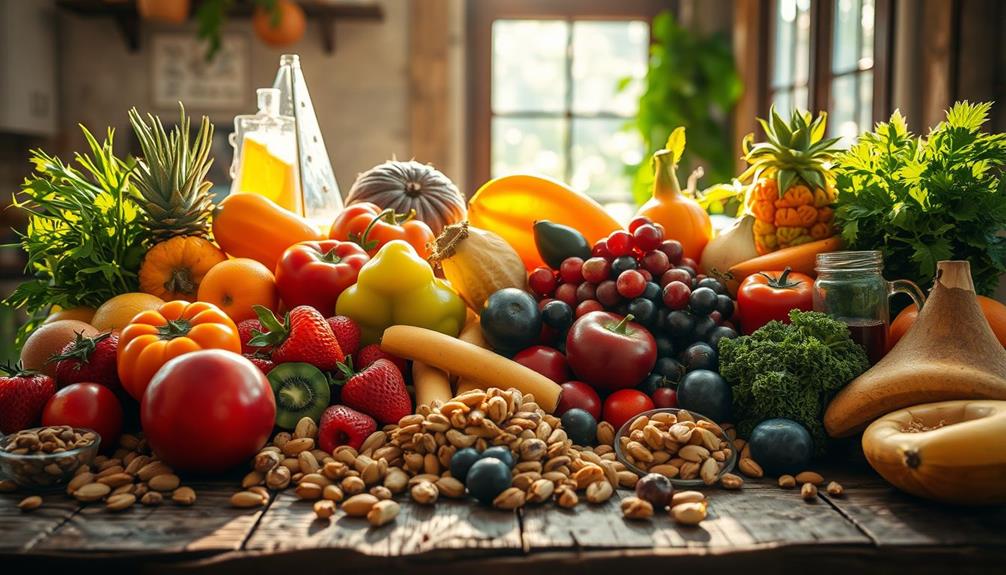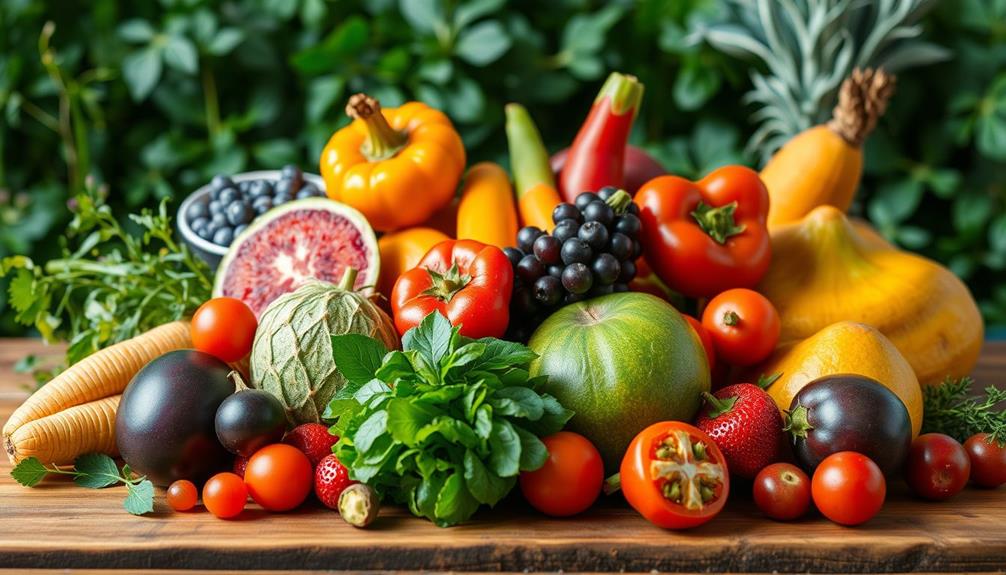

High-water produce, like strawberries and celery, isn’t just delicious; it’s your key to staying hydrated. With their high water content, these fruits and veggies help boost your energy, improve mood, and support digestion. They’re easy to grab on the go and can easily fit into your meals. By choosing these fresh options over processed snacks, you’ll enhance your nutrition and hydration. Discover fun ways to enjoy them and elevate your meals for better health.
Key Takeaways
- High-water fruits like strawberries and grapes provide hydration and essential vitamins, making them ideal snacks for busy lifestyles.
- Vegetables such as celery and zucchini are excellent sources of hydration, easily incorporated into meals and snacks.
- Staying hydrated through high-water produce enhances energy levels, mood, and digestion, promoting overall well-being.
- Choosing fresh, colorful fruits and vegetables over processed snacks maximizes water intake and nutritional benefits.
- Creative recipes, like smoothies and fruit salads, make it enjoyable to include high-water produce in your diet.
Imagine reaching for a bowl of fresh strawberries or a handful of grapes. These water-rich fruits are not only tasty but also loaded with vitamins and antioxidants. Strawberries, for instance, contain about 91% water, while grapes are close behind at around 81%. When you incorporate these into your meals or snacks, you’re not just treating your taste buds; you’re giving your body a hydration boost. Plus, they’re easy to grab on the go, making them an excellent choice for busy lifestyles.
Now consider the hydration benefits that come with consuming high-water produce. Staying hydrated helps maintain your energy levels, improves your mood, and supports digestion. When you include these fruits and veggies in your diet, you’re effectively increasing your water intake, which can also assist in regulating body temperature and preventing fatigue. It’s a simple yet powerful way to keep your body functioning at its best. Hydration is essential for overall health and well-being. Incorporating a variety of these foods can also improve your overall diet quality by providing essential nutrients.
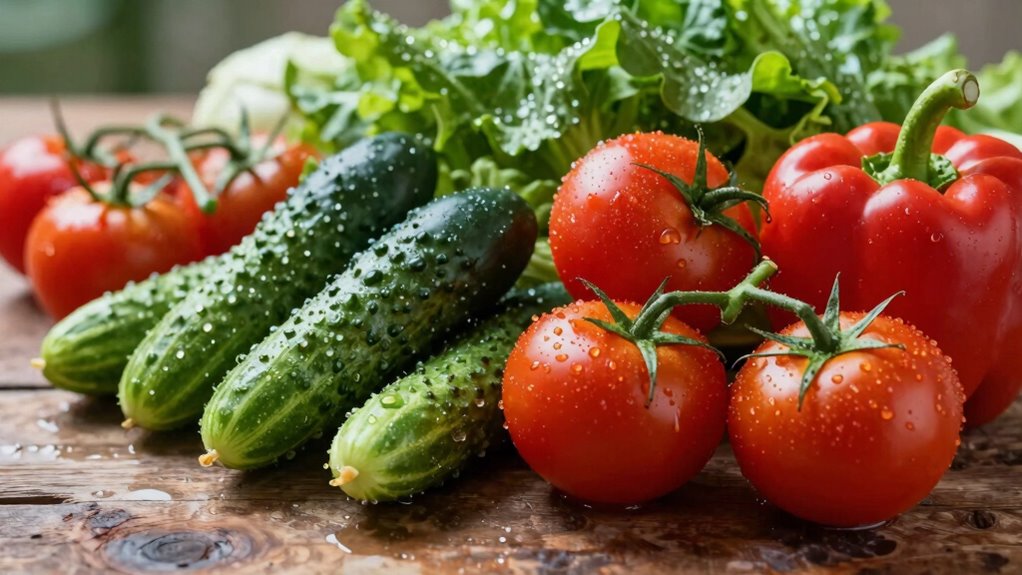
You might also want to explore incorporating vegetables like celery, zucchini, and bell peppers. Celery, for example, is about 95% water, making it a fantastic addition to any meal or snack. You can enjoy it raw, spread it with nut butter, or toss it in a salad for some added crunch. Zucchini, another high-water veggie, is versatile and can be spiralized, grilled, or sautéed. The possibilities are endless when it comes to enjoying these hydrating options. Including high-water vegetables in your diet is an easy way to boost hydration and nutrition simultaneously. Additionally, choosing fresh produce over processed snacks can maximize the water content you consume daily. Consuming a variety of colorful fruits and vegetables can also provide a broader spectrum of essential nutrients, supporting overall health. Incorporating sustainable food choices can further enhance your health benefits and reduce environmental impact.
Consider blending water-rich fruits into smoothies or adding them to your favorite salads. You’ll not only enhance the flavors but also increase the hydration benefits they offer. If you’re looking for a rejuvenating way to cool down, try making a fruit salad with a mix of watermelon, cantaloupe, and mint. It’s a treat that’s as invigorating as it is hydrating.
Incorporating high-water produce into your daily routine is a straightforward way to prioritize hydration. Embrace these delicious options, and you’ll feel better, both inside and out.
high water content fruits and vegetables
As an affiliate, we earn on qualifying purchases.
As an affiliate, we earn on qualifying purchases.
Frequently Asked Questions
What Are Some Examples of High-Water Produce?
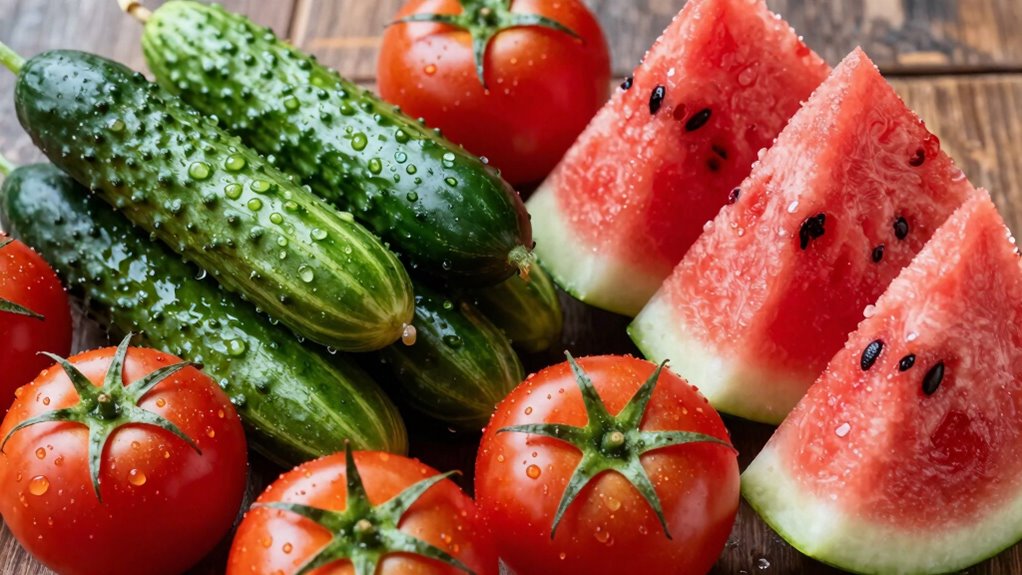
Some examples of high-water produce include various cucumber varieties like English cucumbers and Persian cucumbers, which are crisp and hydrating. Watermelon types, such as seedless and picnic watermelons, are also excellent choices. These fruits and vegetables not only quench your thirst but are also low in calories, making them perfect for snacks or salads. You’ll enjoy their invigorating taste while staying hydrated throughout the day!
How Does High-Water Produce Benefit Skin Health?
Imagine your skin as a sponge, thirsting for hydration. High-water produce helps your skin retain moisture, keeping it plump and vibrant. By incorporating fruits and veggies like cucumbers and watermelon, you boost your skin’s elasticity, making it more resilient against aging. These natural wonders provide essential vitamins and minerals, creating a radiant glow that turns heads. So, munch on those juicy snacks, and watch your skin transform into a canvas of health!
Can High-Water Produce Aid in Weight Loss?
Yes, high-water produce can aid in weight loss. These foods typically have low caloric density, meaning you can eat larger portions without consuming too many calories. When you include them in your meals, you’ll feel fuller longer, helping with appetite control. By choosing fruits and vegetables with high water content, you’re not just hydrating, but also supporting your weight loss goals. So, load your plate with these nutritious options!
Is High-Water Produce More Expensive Than Regular Produce?
High-water produce can be more expensive than regular produce, but it often depends on market trends and seasonal availability. When you compare costs, fruits like watermelon and cucumber might carry a premium, especially in off-seasons. However, if you shop smart and look for sales, you can find great deals. Remember, investing in high-water produce can provide added benefits like hydration and nutrients that might outweigh the extra cost.
How Should High-Water Produce Be Stored for Freshness?
To keep high-water produce fresh, use airtight storage containers to minimize moisture loss. Refrigeration tips include wrapping items like cucumbers or tomatoes in a damp paper towel before placing them in the container. This helps maintain humidity. Store leafy greens in a breathable bag, avoiding excess water. Check your fridge’s temperature; it should be around 34°F to 40°F. Regularly inspect your produce and remove any spoiled items to prevent spoilage of the rest.
Conclusion
Incorporating high-water produce into your diet isn’t just a smart choice; it’s a invigorating splash of health. With each bite, you’re not only hydrating your body but also nourishing it with essential nutrients. Think of these fruits and veggies as nature’s water bottles, quenching your thirst and fueling your energy. So, embrace the hydration advantage, and let vibrant produce brighten your plate and your life. After all, staying hydrated has never tasted so good!