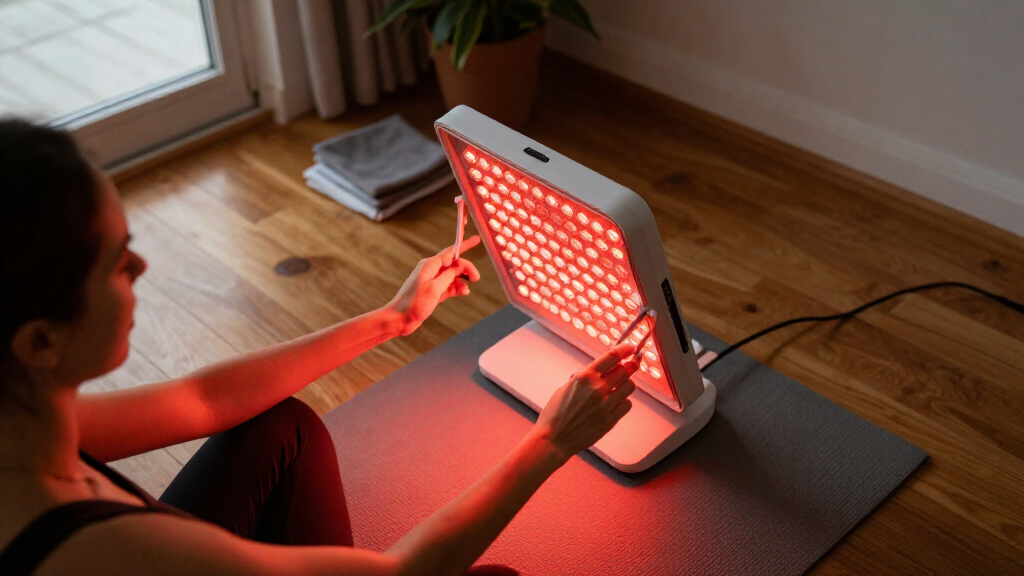
For most people choosing infrared light therapy panels, I’d start with the Hooga PRO300: its tabletop stand makes targeted sessions easier to set up than a bare panel. The BestQool Pro100 stands out for shoppers seeking a broader wavelength mix, while the Full-Body Red Light Therapy Mat offers a larger contact-style format rather than a small upright panel. The main tradeoffs are coverage versus portability, simple red-and-near-infrared setups versus extra wavelengths, and a ready-to-use stand versus a lower-profile unit. I compare all 15 options by their stated features and practical fit, not by promises of medical results. Read on for the full breakdown and help matching a panel to your space and routine.

Get health and wellness essentials delivered free with Prime
- Fast, free delivery on millions of items
- Prime Video, Amazon Music and more included
- Member-only deals all year
Key Takeaways
- The Hooga PRO300 is my best overall pick because its tabletop stand gives it a practical advantage for targeted use over panel-only models such as the HG200.
- Stand design changes day-to-day usability. Several Viconor models and the Hooga HG300 include a stand, while buyers should check each listing carefully to distinguish supported positioning from a bare panel.
- Wavelength counts are not a simple quality ranking. The BestQool Pro100 lists four wavelengths, while many options use 660nm red and 850nm near-infrared; the extra wavelengths matter only if they suit the buyer’s intended setup.
- Coverage is a major dividing line. Compact panels such as the Hooga HG200 suit focused areas, whereas the 39.4-by-23.6-inch mat favors a broader, laid-down format.
- Several product names describe overlapping Viconor and Morfone formats. Buyers should compare the exact panel, lamp, wavelength, and stand configuration rather than assuming similar names mean identical equipment.
| Morfone Tri-Wavelength Red Light Therapy Panel for Face and Body |  | Best for Adjustable Tri-Wavelength Targeting | Wavelengths: 660 nm, 850 nm, 940 nm | LED beads: 120 | Panel size: 14.2 × 6.3 in | VIEW LATEST PRICE | See Our Full Breakdown |
| LEDINO Red Light Therapy Panel with 204 LEDs, 660nm, 850nm and 940nm |  | Best for Adjustable Home Setup | LED configuration: 204 three-in-one LED beads | Wavelengths: 660 nm red, 850 nm infrared, 940 nm infrared | Panel design: Curved | VIEW LATEST PRICE | See Our Full Breakdown |
| Hooga PRO300 Red Light Therapy Panel with Tabletop Stand |  | Best for Controlled Tabletop Sessions | Model: PRO300 | Wavelengths: 660 nm red and 850 nm near-infrared | LED configuration: 60 dual-chip LEDs | VIEW LATEST PRICE | See Our Full Breakdown |
| Full-Body Red Light Therapy Mat with 640 LEDs, 39.4 x 23.6 Inches |  | Best for Broad, Hands-Free Coverage | LED configuration: 640 triple-chip LEDs | Wavelengths: 660 nm red and 850 nm near-infrared | Power: 48 W | VIEW LATEST PRICE | See Our Full Breakdown |
| Viconor Red Light Therapy Panel, 660nm and 850nm Dual-Chip LEDs, 300W |  | Best for Wall-Mounted Localized Sessions | Wavelengths: 660 nm red and 850 nm near-infrared | LED configuration: 60 dual-chip LEDs; 120 chips | Power: 300 W | VIEW LATEST PRICE | See Our Full Breakdown |
| Hooga HG300 Red and Near-Infrared Light Therapy Panel with Adjustable Stand |  | Best Overall Compact Panel | Wavelengths: 660 nm red and 850 nm near-infrared | LED count: 60 | Irradiance: Over 73 mW/cm² at 6 inches | VIEW LATEST PRICE | See Our Full Breakdown |
| Viconor Red Light Therapy Lamp for Face and Body with Stand |  | Best for Flexible Positioning | Wavelengths: 660 nm red and 850 nm near-infrared | LED count: 120 | Design: Curved portable panel | VIEW LATEST PRICE | See Our Full Breakdown |
| Hooga HG200 Red Light Therapy Panel for Face and Body |  | Best for Beginners | Wavelengths: 660 nm red and 850 nm near-infrared | LED count and ratio: 40 LEDs; 1:1 red-to-near-infrared | Irradiance: Over 90 mW/cm² at 6 inches | VIEW LATEST PRICE | See Our Full Breakdown |
| Viconor Red Light Therapy Lamp for Face and Body |  | Best for Customizable Controls | Wavelengths: 660 nm red and 850 nm infrared | LED chips: 60 three-in-one chips | Lighting modes: 4 | VIEW LATEST PRICE | See Our Full Breakdown |
| Viconor Red Light Therapy Lamp with Stand, 660 nm Red and 850 nm Near-Infrared LEDs |  | Best for Simple Dual-Band Coverage | Wavelengths: 660 nm red and 850 nm near-infrared | LED count: 120 | Design: Curved portable panel | VIEW LATEST PRICE | See Our Full Breakdown |
| 5-Color Red Light Therapy Lamp for Face and Body |  | Best for Adjustable Multi-Color Use | LED count: 180 | Light modes: Red 660 nm, blue 465 nm, purple 660 nm + 465 nm, yellow 600 nm, and orange 660 nm + 600 nm | Near-infrared wavelength: 850 nm in every mode | VIEW LATEST PRICE | See Our Full Breakdown |
| Red Light Therapy Panel with Adjustable Stand, 660nm Red and 850nm Near-Infrared LEDs |  | Best for Flexible Positioning | LED count: 150 | Wavelengths: 660 nm red and 850 nm near-infrared | Stand: Adjustable with bendable tube | VIEW LATEST PRICE | See Our Full Breakdown |
| Morfone Red Light Therapy Panel with 660nm, 850nm, and 940nm LEDs |  | Best for Multi-Wavelength Control | LED beads: 200 | Wavelengths: 660 nm, 850 nm, and 940 nm | Panel size: 16 × 8 inches | VIEW LATEST PRICE | See Our Full Breakdown |
| BestQool Pro100 Red Light Therapy Panel, 4 Wavelengths, 160W |  | Best for Modular Expansion | Model: Pro100 | Power: 160W | Wavelength count: 4 | VIEW LATEST PRICE | See Our Full Breakdown |
| BestQool BQ60 Red Light Therapy Panel, 660nm Red and 850nm Near-Infrared, 105W |  | Best for Straightforward Dual-Wavelength Sessions | Model: BQ60 | Power: 105W | Wavelengths: 660 nm red and 850 nm near-infrared | VIEW LATEST PRICE | See Our Full Breakdown |
| infrared light therapy panel | Wavelengths |
|---|---|
| Morfone Tri-Wavelength Red Lig | 660 nm, 850 nm, 940 nm |
| LEDINO Red Light Therapy Panel | 660 nm red, 850 nm infrared, 940 nm infrared |
| Hooga PRO300 Red Light Therapy | 660 nm red and 850 nm near-infrared |
| Full-Body Red Light Therapy Ma | 660 nm red and 850 nm near-infrared |
| Viconor Red Light Therapy Pane | 660 nm red and 850 nm near-infrared |
| Hooga HG300 Red and Near-Infra | 660 nm red and 850 nm near-infrared |
| Viconor Red Light Therapy Lamp | 660 nm red and 850 nm near-infrared |
| Hooga HG200 Red Light Therapy | 660 nm red and 850 nm near-infrared |
| Viconor Red Light Therapy Lamp | 660 nm red and 850 nm infrared |
| Viconor Red Light Therapy Lamp | 660 nm red and 850 nm near-infrared |
| 5-Color Red Light Therapy Lamp | — |
| Red Light Therapy Panel with A | 660 nm red and 850 nm near-infrared |
| Morfone Red Light Therapy Pane | 660 nm, 850 nm, and 940 nm |
| BestQool Pro100 Red Light Ther | — |
| BestQool BQ60 Red Light Therap | 660 nm red and 850 nm near-infrared |
More Details on Our Top Picks
Morfone Tri-Wavelength Red Light Therapy Panel for Face and Body
The Morfone is a flexible choice for buyers who want 660 nm red, 850 nm infrared, and 940 nm infrared in one compact panel. Its five modes, including pulse, let you select among light combinations rather than using a single fixed setup. Compared with the Hooga PRO300, which offers independent red and near-infrared controls, Morfone adds a third wavelength and a height-adjustable bracket; Hooga instead lists a digital timer, cooling fans, and panel-linking support. Morfone’s 180-degree rotating bracket helps aim light at different areas without requiring a wall mount. The tradeoff is that its 14.2 × 6.3-inch face still calls for targeted positioning rather than broad coverage, and the listed outlet compatibility is 110 V. It also may feel only slightly warm, rather than providing substantial heat.
Pros:- Combines 660 nm, 850 nm, and 940 nm wavelengths with five modes, including pulse.
- Height adjustment and 180-degree rotation make it easier to aim at different areas.
- Panel dimensions suit targeted face and body sessions.
- Protective sunglasses are included.
Cons:- The 14.2 × 6.3-inch panel requires repositioning for larger body areas.
- Listed as compatible with 110 V outlets, limiting suitability where that supply is unavailable.
- The description says the light does not generate heat beyond becoming slightly warm.
Best for: Buyers who want three wavelengths and an adjustable stand for switching between face and smaller body areas.
Not ideal for: People seeking broad, hands-free full-body coverage or a panel with a stated built-in cooling fan and digital timer.
- Wavelengths:660 nm, 850 nm, 940 nm
- LED beads:120
- Panel size:14.2 × 6.3 in
- Light modes:5, including pulse mode
- Bracket:Aviation-grade aluminum; 180° rotation and height adjustment
- Voltage compatibility:110 V
- Recommended use:10–30 minutes, 3–7 times per week
- Included accessory:Protective sunglasses
- Quality assurance:1 year against manufacturing defects
Our verdict“Choose Morfone if adjustable positioning and three wavelengths matter more to you than broad coverage or substantial warmth.”
LEDINO Red Light Therapy Panel with 204 LEDs, 660nm, 850nm and 940nm
LEDINO pairs three wavelengths with the most adaptable positioning in this group: a curved panel that adjusts through 360 degrees and a stand ranging from 20 to 50 inches. That range makes it easier to set up for different body areas than the Morfone’s smaller, height-adjustable bracket, while its included desktop stand also supports more compact sessions. The smart controller, five power modes, and 1–30-minute shutoff timer give buyers more session controls than the Viconor panel, whose listed controls are a 5–30-minute timer. LEDINO’s 204 three-in-one beads and two stand options make it a versatile home station, but it is not a set-and-forget heat source: the top setting can reach 125°F, and prolonged direct skin contact may cause burns. Its recommended routine also calls for regular sessions.
Pros:- Three wavelengths are combined in 204 three-in-one LED beads.
- Curved panel positioning and a 20–50-inch adjustable height support varied setups.
- Smart controller offers five power modes and a 1–30-minute auto-shutoff timer.
- Includes protective goggles, a therapy stand, and a desktop stand.
Cons:- The highest power setting can reach 125°F and may burn skin with prolonged direct contact.
- The recommended routine involves repeated 10–30-minute sessions.
- A floor stand and separate desktop stand take more setup and storage space than a compact tabletop panel.
Best for: Home users who want a height-adjustable panel, multiple wavelength options, and both floor-stand and desktop setups.
Not ideal for: Buyers who prefer a low-heat device, need a simple compact panel, or do not want to monitor warmth during sessions.
- LED configuration:204 three-in-one LED beads
- Wavelengths:660 nm red, 850 nm infrared, 940 nm infrared
- Panel design:Curved
- Panel adjustment:360°
- Adjustable height:20–50 in
- Power modes:5
- Auto-shutoff timer:1–30 minutes
- Maximum temperature:125°F
- Warranty:2 years
Our verdict“Choose LEDINO if you want three wavelengths and flexible floor-or-desktop positioning, and are comfortable monitoring heat.”
Hooga PRO300 Red Light Therapy Panel with Tabletop Stand
The Hooga PRO300 is the more control-focused tabletop pick: its 660 nm red and 850 nm near-infrared wavelengths can be operated independently, and a digital timer helps structure sessions. Flicker-free operation and internal cooling fans are useful design details for buyers planning regular use. Compared with the Morfone Tri-Wavelength Panel, the PRO300 has fewer listed wavelengths and lacks Morfone’s height-adjustable bracket, but it adds a three-year manufacturer warranty and can connect to other PRO Series panels. Its table mount is a real boundary: this 4.3 kg panel is not described as freestanding, so buyers need a stable surface and should not expect the flexible floor positioning offered by LEDINO. The 60-degree beam angle is suited to directed use, not a substitute for a large full-body mat.
Pros:- Independent controls let users select red light and near-infrared separately.
- Digital timer supports more structured sessions.
- Internal cooling fans and flicker-free design are included.
- Adjustable tabletop stand, panel-linking capability, and three-year manufacturer warranty.
Cons:- Tabletop mounting requires a suitable stable surface.
- At 4.3 kg, it is a substantial panel to move between setups.
- Offers two listed wavelengths, fewer than the three-wavelength Morfone and LEDINO panels.
Best for: Buyers who want independent red and near-infrared controls in a tabletop panel and may later connect other PRO Series panels.
Not ideal for: People who need a floor-standing or wall-hanging setup, a third wavelength, or broad full-body coverage from one device.
- Model:PRO300
- Wavelengths:660 nm red and 850 nm near-infrared
- LED configuration:60 dual-chip LEDs
- Wattage:300 W
- Mounting type:Table mount
- Beam angle:60 degrees
- Dimensions:61.2 × 15.7 × 3.1 in
- Weight:4.3 kg
- Warranty:3-year manufacturer warranty
Our verdict“Choose the PRO300 if independent wavelength controls and a tabletop format matter more than portability or extra wavelengths.”
Full-Body Red Light Therapy Mat with 640 LEDs, 39.4 x 23.6 Inches
This mat takes a different approach from the upright panels in this roundup: its 39.4 × 23.6-inch foldable surface is designed to cover larger areas such as the back, waist, shoulders, and hips while you lie or sit against it. The 640 triple-chip LEDs combine 660 nm red and 850 nm near-infrared light, and the listed 123 mW/cm² irradiance is specified at the mat surface. Five heat levels, 10 Hz and 40 Hz pulse modes, and a 10–90-minute auto-shutoff timer offer more session variation than the Hooga PRO300’s tabletop-panel setup. The tradeoff is that a mat is less aimable than Morfone or LEDINO panels, and its larger footprint needs storage space. The product data also gives no material or cleaning instructions, which may matter for shared use or use with dogs.
Pros:- 39.4 × 23.6-inch surface is suited to broader body-area coverage.
- Combines 660 nm red and 850 nm near-infrared light with 10 Hz and 40 Hz pulse modes.
- Five heat levels and a 10–90-minute auto-shutoff timer allow session adjustments.
- Foldable design is intended for use at home, the gym, or the office.
Cons:- The mat’s size may require substantial storage space.
- Product data does not specify the material or cleaning instructions.
- Unlike an adjustable panel, it offers less flexibility for directing light at a specific area.
Best for: People who want a broad light-therapy surface for larger body areas and prefer a foldable mat over an upright panel.
Not ideal for: Buyers who need a compact, easy-to-clean device or want to direct light precisely at a small area without laying out a mat.
- LED configuration:640 triple-chip LEDs
- Wavelengths:660 nm red and 850 nm near-infrared
- Power:48 W
- Irradiance:123 mW/cm² at the mat surface
- Dimensions:39.4 × 23.6 in
- Heat levels:5
- Pulse modes:10 Hz and 40 Hz
- Timer:10–90 minutes with auto shutoff
- Intended users:Humans and dogs
Our verdict“Choose this mat if broad coverage and a reclining setup matter more than precise aiming or compact storage.”
Viconor Red Light Therapy Panel, 660nm and 850nm Dual-Chip LEDs, 300W
Viconor makes the most sense for buyers who want a straightforward two-wavelength panel that can sit on a table or hang on a wall. Its 60 dual-chip LEDs combine 660 nm red and 850 nm near-infrared light, while the 5–30-minute timer and built-in cooling fan keep the listed controls and hardware focused on practical, localized sessions. The product reports 140 mW/cm² irradiance at six inches, giving a specified measurement distance that the Morfone description does not provide. Compared with the Hooga PRO300, Viconor includes a hanging kit and eye protection, while Hooga adds independent wavelength controls, a tabletop stand, and panel-linking support. Viconor’s main limitation is coverage: it is intended for targeted treatment, not the broader areas handled by the full-body mat. It also needs a stable surface or suitable mounting point.
Pros:- Dual-chip LEDs provide 660 nm red and 850 nm near-infrared wavelengths.
- 5–30-minute timer supports adjustable session lengths.
- Built-in cooling fan is included.
- Hanging kit and eye protection support wall-mounted or tabletop use.
Cons:- Designed for localized treatment rather than full-body coverage.
- Requires a suitable tabletop surface or mounting point.
- No independent wavelength controls are listed, unlike the Hooga PRO300.
Best for: Buyers who want a compact, mountable panel for localized sessions and value a stated irradiance measurement distance.
Not ideal for: People seeking full-body coverage, floor-stand flexibility, or independent controls for each wavelength.
- Wavelengths:660 nm red and 850 nm near-infrared
- LED configuration:60 dual-chip LEDs; 120 chips
- Power:300 W
- Irradiance:140 mW/cm² at 6 in
- Timer:5–30 minutes
- Cooling:Built-in cooling fan
- Mounting options:Tabletop or wall-mounted
- Included accessories:Hanging kit, eye protection, user manual
Our verdict“Choose Viconor for a mountable localized panel with a built-in fan, but skip it if broad coverage is your priority.”
Hooga HG300 Red and Near-Infrared Light Therapy Panel with Adjustable Stand
The Hooga HG300 is my strongest all-around pick for buyers who want a small panel with meaningful control over how they use its two wavelengths. Its independent red and near-infrared controls let you choose either band or combine them, while the timer and adjustable tabletop stand make it easier to set up repeatable, targeted sessions. Compared with the smaller Hooga HG200, the HG300 has more LEDs and a larger stated wattage, making it the more capable of the two for a compact setup. It still cannot match a broad-coverage panel or mat: its 12.6-inch length is better suited to one area at a time than whole-body use. The corded design also limits where you can position it, and its stated irradiance is measured at six inches, so that figure should not be treated as a guarantee of results.
Pros:- Independent controls allow red, near-infrared, or combined operation.
- Adjustable tabletop stand helps direct light toward a chosen area.
- Built-in timer and active cooling support a more practical home setup.
- Includes protective eyewear and a three-year warranty.
Cons:- Compact dimensions limit coverage, so larger areas require repositioning.
- Corded power restricts placement to locations near an outlet.
Best for: Home users who want a compact tabletop panel with separate red and near-infrared controls for treating one area at a time.
Not ideal for: Buyers seeking hands-free full-body coverage or a panel they can use away from an outlet; its compact tabletop format requires close positioning and mains power.
- Wavelengths:660 nm red and 850 nm near-infrared
- LED count:60
- Irradiance:Over 73 mW/cm² at 6 inches
- Wattage:300 watts
- Dimensions:12.6 x 4.92 x 2.44 inches
- Mount:Adjustable tabletop stand
- Features:Independent wavelength controls, built-in timer, active cooling
- Warranty:3 years
Our verdict“Choose the HG300 for versatile, targeted tabletop sessions; skip it if you need broad body coverage from one position.”
Viconor Red Light Therapy Lamp for Face and Body with Stand
The Viconor 120-LED curved lamp stands out for buyers who need more ways to position a compact panel, rather than more detailed light controls. Its included stand and hook, up to 180° adjustment, and 3 m cord offer useful placement flexibility around a desk or treatment area. That makes it easier to direct the panel toward different body areas than the fixed tabletop format of the Hooga HG200. Both offer 660 nm red and 850 nm near-infrared light, but the HG200 provides specified modes, a timer, and irradiance data; Viconor’s listed details emphasize mobility and panel shape instead. The tradeoff is limited coverage: despite its 120 LEDs, the panel is described as small, and the product information does not give irradiance or panel dimensions. Buyers should also be comfortable following the suggested 15–30 minute daily session guidance.
Pros:- Stand and hook provide two ways to position the panel.
- Up to 180° adjustment supports directing light at different areas.
- A 3 m power cord gives more placement freedom than a short lead.
- Combines 660 nm red and 850 nm near-infrared light.
Cons:- Small panel limits the area illuminated at one time.
- Irradiance, panel dimensions, and timer features are not specified.
- Corded operation still requires access to an outlet.
Best for: People who want a small red and near-infrared lamp that can be placed on a stand or hung and repositioned around a home.
Not ideal for: Buyers who need documented irradiance, a built-in timer, or broad coverage; those details are not specified for this model.
- Wavelengths:660 nm red and 850 nm near-infrared
- LED count:120
- Design:Curved portable panel
- Adjustment:Up to 180° angle and height adjustment
- Mounting accessories:Stand and hook
- Power cord:3 m
- Suggested session duration:15–30 minutes daily
Our verdict“Pick this Viconor when flexible hanging or stand placement matters more than documented output or session controls.”
Hooga HG200 Red Light Therapy Panel for Face and Body
For a first panel, the Hooga HG200 keeps the setup straightforward without leaving out useful controls. Its red, near-infrared, or combined modes, built-in timer, cooling fan, and adjustable stand give new users a clear tabletop format for targeted sessions. The stated irradiance is over 90 mW/cm² at six inches, higher than the HG300’s stated figure, but the HG200 has only 40 LEDs and a smaller 9.8-inch length; output figures alone do not tell you how much body area a panel covers. Compared with the Hooga HG300, this model is more compact and has lower stated wattage, making it the simpler choice where desk space matters. Its limits are practical: it is corded, not water resistant, and eye protection is needed. It is not a substitute for a larger panel when treating broad areas at once.
Pros:- Offers red, near-infrared, or combined modes.
- Built-in timer and cooling fan simplify tabletop sessions.
- Adjustable stand supports directing light toward a selected area.
- Three-year manufacturer warranty.
Cons:- Small dimensions limit coverage and require repositioning for larger areas.
- Not water resistant, so it is unsuitable for wet or humid locations.
- Requires a corded outlet and eye protection during use.
Best for: New users who want a compact, easy-to-position tabletop panel with a timer and selectable red and near-infrared modes.
Not ideal for: People who need large-area coverage or plan to use a panel in a humid space; this model is small, corded, and not water resistant.
- Wavelengths:660 nm red and 850 nm near-infrared
- LED count and ratio:40 LEDs; 1:1 red-to-near-infrared
- Irradiance:Over 90 mW/cm² at 6 inches
- Power:200 watts
- Dimensions:9.8 x 6.3 x 1.2 inches
- Mount:Adjustable tabletop stand
- Modes and features:Red, near-infrared, or both; built-in timer and cooling fan
- Warranty:3 years
Our verdict“The HG200 suits first-time buyers who value a compact, controlled tabletop routine over wider coverage.”
Viconor Red Light Therapy Lamp for Face and Body
The Viconor 60-chip lamp is the control-focused choice among these compact options. Its four lighting modes, five brightness levels, touch controls, and remote give users more ways to adjust a session than the simpler Hooga HG200, which offers wavelength selection and a timer but no listed brightness levels or remote. The curved panel and 360° rotating head also make it easier to redirect light between areas such as the face, shoulders, and legs without relying on a fixed angle. The tradeoff is that the panel is described as small, so customization does not translate into broad coverage. The listing gives no irradiance value or specific timer durations, which makes it harder to compare output and plan sessions from the product data alone. Its 660 nm red and 850 nm infrared wavelengths match the dual-band approach used by the Hooga panels.
Pros:- Four lighting modes and five brightness levels allow more adjustment than the Hooga HG200.
- Remote and touch controls offer two ways to change settings.
- Curved panel and 360° rotating head support flexible aiming.
- Combines 660 nm red and 850 nm infrared light.
Cons:- Small panel limits the area covered in one session position.
- Timer duration options and irradiance are not specified.
- The listed features do not include a stated warranty or cooling system.
Best for: Users who want remote operation and several brightness and lighting settings while aiming a small panel at different body areas.
Not ideal for: Buyers who prioritize measured irradiance, clearly stated timer durations, or treating large areas without moving the lamp.
- Wavelengths:660 nm red and 850 nm infrared
- LED chips:60 three-in-one chips
- Lighting modes:4
- Brightness levels:5
- Controls:Touch panel and remote control
- Timer:Adjustable; duration options not specified
- Design:Curved panel, bracket stand, 360° rotating lamp head
Our verdict“Choose this Viconor for adjustable controls and remote use, not for documented output or broad treatment coverage.”
Viconor Red Light Therapy Lamp with Stand, 660 nm Red and 850 nm Near-Infrared LEDs
This 120-LED Viconor lamp is a straightforward pick for buyers who want a curved dual-band panel with basic positioning options rather than a long list of electronic controls. The included stand and hook, adjustable height, and 180° angle adjustment make it easier to aim at a chosen area than the tabletop-only Hooga HG200. It shares the 660 nm red and 850 nm near-infrared wavelengths found on that Hooga, but does not list the HG200’s timer, cooling fan, selectable light modes, or irradiance figure. The 1.8 m cord is also shorter than the 3 m lead supplied with the other Viconor 120-LED lamp in this roundup, which may affect where it can be placed. Its curved, portable design is useful for targeted sessions, but the listing gives no panel dimensions or output measurement, and the recommended daily sessions require access to a power outlet.
Pros:- Combines 660 nm red and 850 nm near-infrared light.
- Curved panel is designed to focus light toward the target area.
- Stand and hook support tabletop or hanging placement.
- Adjustable height and 180° angle allow flexible aiming.
Cons:- No irradiance figure or panel dimensions are provided.
- No timer or lighting-mode controls are specified.
- The 1.8 m cord may restrict placement near an outlet.
Best for: Buyers who want a portable curved panel with a stand and hook for directing dual-band light at one area at a time.
Not ideal for: Users who need a built-in timer, specified irradiance, or generous cord reach; those features are not listed, and the cord is 1.8 m.
- Wavelengths:660 nm red and 850 nm near-infrared
- LED count:120
- Design:Curved portable panel
- Accessories:Stand and hook
- Adjustment:180° angle and adjustable height
- Power cord:1.8 m
- Recommended use:15–30 minutes daily
Our verdict“Pick this model for simple, adjustable targeting with a stand and hook; choose the Hooga HG200 if built-in session controls matter more.”
5-Color Red Light Therapy Lamp for Face and Body
Five selectable color modes make this lamp more adaptable than the BestQool BQ60, which sticks to red, near-infrared, or both. Each mode on this model also includes 850 nm near-infrared light, while the rotating panel and stand support floor or tabletop placement. That flexibility may suit someone who wants to position light at different heights without committing to a fixed mounting setup. Five brightness levels, preset timers, and both remote and wired controls add practical ways to manage a session. The tradeoff is that the extra color choices do not make it a larger treatment panel: its coverage area is not specified. Assembly is required, and sessions are limited to preset durations from 20 to 60 minutes.
Pros:- Five color modes, each paired with 850 nm near-infrared light
- 360-degree panel rotation and floor-stand or tabletop setup
- Five brightness levels and automatic shutoff timer choices
- Remote and wired controls provide two ways to operate it
Cons:- Requires assembly before use
- Timer choices are limited to preset 20- to 60-minute sessions
- Panel coverage dimensions are not provided
Best for: Home users who want several selectable light colors and the option to position a panel on the floor or a tabletop.
Not ideal for: Buyers prioritizing a clearly stated panel coverage area or shorter, custom timer intervals.
- LED count:180
- Light modes:Red 660 nm, blue 465 nm, purple 660 nm + 465 nm, yellow 600 nm, and orange 660 nm + 600 nm
- Near-infrared wavelength:850 nm in every mode
- Stand height:45–60 inches
- Panel rotation:360 degrees
- Brightness levels:5
- Timer settings:20, 30, 40, 50, or 60 minutes
- Setup and controls:Floor stand or tabletop; remote and wired controller with digital display
Our verdict“Choose this lamp if adjustable positioning and multiple color modes matter more to you than a specified treatment area or freely set session length.”
Red Light Therapy Panel with Adjustable Stand, 660nm Red and 850nm Near-Infrared LEDs
This panel’s strongest case is its adjustable stand and bendable tube, which let you change height and angle without relying on the more extensive floor-to-tabletop arrangement of the 5-Color Red Light Therapy Lamp. Its 150 LEDs pair 660 nm red light with 850 nm near-infrared, and reflective cups are designed to focus the output rather than spread it broadly. That makes the positioning hardware a better reason to choose it than a long feature list: it can be aimed where needed at home, in an office, or while traveling. The tradeoff is less control detail than the Morfone panel, which lists several modes and three wavelengths. Assembly is required, and the 850 nm light is invisible, so the panel’s operation cannot be judged by visible glow alone.
Pros:- 660 nm red and 850 nm near-infrared wavelengths
- Bendable tube and adjustable stand support varied angles and heights
- Reflective cups are designed to focus the light
- Listed for use at home, in an office, or while traveling
Cons:- Assembly is required
- Near-infrared light is invisible during operation
- The supplied specifications do not list brightness settings, timer controls, or panel dimensions
Best for: People who need to aim a compact panel at different body areas across home, office, or travel settings.
Not ideal for: Buyers seeking multiple wavelengths, selectable light modes, or detailed onboard session controls.
- LED count:150
- Wavelengths:660 nm red and 850 nm near-infrared
- Stand:Adjustable with bendable tube
- Reflectors:Reflecting cups
- Suggested session length:10–30 minutes
- Suggested frequency:3–7 times per week
Our verdict“Pick this model if flexible aiming matters more than multiple wavelengths or a detailed set of controls.”
Morfone Red Light Therapy Panel with 660nm, 850nm, and 940nm LEDs
With 660 nm, 850 nm, and 940 nm LEDs, this Morfone panel offers a broader wavelength mix than the 660/850 nm BestQool BQ60. Five light modes, including pulse mode, add another layer of choice for users who want more than a simple red, infrared, or combined setting. Its 16 × 8-inch panel and height-adjustable aluminum bracket, which rotates 180 degrees, support aiming at different areas without a separate floor-and-tabletop configuration like the 5-Color Red Light Therapy Lamp. The tradeoff is a more involved set of options without stated irradiance or power figures in the supplied specifications, making output comparisons harder. It is specified for 110V outlets, and the manufacturer says it is not intended to generate heat.
Pros:- Three listed wavelengths: 660 nm, 850 nm, and 940 nm
- Five light modes include a pulse mode
- Height-adjustable aluminum bracket rotates 180 degrees
- Protective sunglasses are included
Cons:- Specified for 110V outlets
- Supplied specifications do not state irradiance or power
- Manufacturer says the light is not intended to generate heat
Best for: Buyers who want three listed wavelengths, pulse capability, and an adjustable bracket in a mid-size panel.
Not ideal for: Shoppers who need documented irradiance figures, broad voltage compatibility, or heat-producing equipment.
- LED beads:200
- Wavelengths:660 nm, 850 nm, and 940 nm
- Panel size:16 × 8 inches
- Light modes:5, including pulse mode
- Bracket:Aviation-grade aluminum; height adjustable and rotates 180 degrees
- Recommended session:10–30 minutes, 3–7 times per week
- Voltage compatibility:110V
- Included accessory and warranty:Protective sunglasses; 1-year coverage against manufacturing defects
Our verdict“Choose the Morfone if wavelength and mode variety outrank published output figures or broader voltage compatibility.”
BestQool Pro100 Red Light Therapy Panel, 4 Wavelengths, 160W
The Pro100 is the clearest choice here for a buyer who may want to expand coverage later: its modular design connects compatible Pro series panels, unlike the standalone BestQool BQ60. The panel combines red and near-infrared light in three modes, with a 60-degree beam angle and smart controls intended for home use. Its listed irradiance is 109 mW/cm² at three inches, a useful reference point for comparing the stated output, though that close-range measurement does not describe performance at every distance. At 19.7 × 8.4 inches, it is still a single panel rather than a full-body setup; wider coverage means adding compatible units. Compared with the Morfone, it prioritizes modularity and stated irradiance over a listed 940 nm wavelength and pulse mode.
Pros:- Compatible Pro series panels can connect for a wider treatment area
- Three modes combine red and near-infrared light
- Listed irradiance of 109 mW/cm² at 3 inches
- Compact dimensions and smart controls suit at-home placement
Cons:- Wider coverage requires additional compatible panels
- The irradiance figure is specified only at 3 inches
- The supplied specifications do not identify the four individual wavelengths
Best for: Home users who want a compact panel now with the option to connect compatible panels for wider coverage.
Not ideal for: Buyers who need broad coverage from one unit or want output figures measured at multiple distances.
- Model:Pro100
- Power:160W
- Wavelength count:4
- Light modes:3
- Light types:Red and near-infrared
- Irradiance:109 mW/cm² at 3 inches
- Beam angle:60 degrees
- Dimensions and weight:19.7 × 8.4 × 2.6 inches; 6.61 pounds
Our verdict“Pick the Pro100 if you value a modular setup and a stated close-range irradiance figure more than one-panel coverage.”
BestQool BQ60 Red Light Therapy Panel, 660nm Red and 850nm Near-Infrared, 105W
The BQ60 keeps the wavelength setup straightforward: choose 660 nm red, 850 nm near-infrared, or both. That makes it easier to use than the Morfone panel’s five modes and three wavelengths if you simply want the two common wavelengths with separate controls. The included adjustable U-shaped stand and hanging kit give it more placement options than a fixed panel, while touchscreen controls and a cooling system support home use. It is also specified as flicker-free. The tradeoff is that the product data does not provide panel dimensions, so it is difficult to estimate coverage or storage needs before buying. Its listed irradiance is 95.6 mW/cm² at three inches, while the Pro100 lists a higher figure at the same distance and offers modular expansion.
Pros:- Separate red and near-infrared settings plus a combined mode
- Adjustable stand and hanging kit support different placements
- Touchscreen controls and cooling system are included
- LEDs are specified as flicker-free
Cons:- Panel dimensions are not provided
- Listed irradiance is measured at 3 inches
- Offers fewer wavelength options than the Morfone panel
Best for: First-time panel buyers who want simple red, near-infrared, and combined settings with stand or hanging placement.
Not ideal for: Buyers who need a clearly stated panel size, a broader wavelength range, or an expandable modular system.
- Model:BQ60
- Power:105W
- Wavelengths:660 nm red and 850 nm near-infrared
- Irradiance:95.6 mW/cm² at 3 inches
- Light modes:Red, infrared, or both
- Stand:Adjustable U-shaped stand
- Mounting:Hanging kit included
- Controls and LED specification:Touchscreen; flicker-free LEDs
Our verdict“Choose the BQ60 for uncomplicated dual-wavelength use and flexible mounting, but select the Pro100 if modular expansion matters more.”
How We Picked
I ranked these infrared light therapy panels by how clearly their stated design supports a practical home setup: panel or mat format, listed wavelengths, included or adjustable stands, and the scale of use suggested by the product description. A useful configuration matters more than a headline wattage or LED count on its own, since those numbers do not tell the whole story about coverage, placement, or the comfort of routine use.
The top positions go to products with a clear role and useful setup details, including the Hooga PRO300 for tabletop positioning and the BestQool Pro100 for its four-wavelength configuration. I placed compact or less clearly differentiated options lower, not because they cannot suit a buyer, but because their descriptions provide fewer advantages over close alternatives. I also weighed versatility against complexity: a broader wavelength list is not automatically a better fit, and a stand can be more useful than extra features for someone who needs easy positioning.
Factors to Consider When Choosing Infrared Light Therapy Panels
Before choosing among these panels, I’d match the format to the way you can realistically use it at home. A panel’s specifications matter, but so do available space, positioning, coverage, and whether its stated features solve a real need for you.
Match Panel Size and Format to Your Intended Coverage
Start by deciding whether you want to target a smaller area or position a larger portion of your body near the device. Compact panels can be easier to store and place on a desk, but they cover less at once and may require repositioning. A mat changes the setup: it offers a broad surface, but it takes more room and works differently from an upright panel. Avoid treating a high LED count as proof of wide, even coverage; the product dimensions and intended placement give more useful context. If the listing does not clearly state the treatment area or how far away the panel is meant to sit, seek that information before buying. Choose a size that fits both your space and the routine you can maintain.
Choose Wavelengths for a Reason, Not by Count
Many products here list 660nm red and 850nm near-infrared, while some add 940nm or offer a wider wavelength selection. More listed wavelengths can appeal to buyers who want a broader configuration, but a longer feature list does not by itself prove better results or a better match. Check whether the product explains how its wavelengths are delivered and whether you can control them separately. If you only want a straightforward red-and-near-infrared setup, extra modes may add complexity without improving your experience. Do not assume two panels are equivalent because both mention red and near-infrared light; output, coverage, controls, and operating guidance also matter. Favor clear specifications over vague claims.
Treat Stands and Positioning as Core Features
A stand can determine whether a panel is simple to use or awkward to position. Tabletop and adjustable stands help place a device at a workable angle without improvising with furniture, while a panel without a stand may need a stable surface or separate support. Before ordering, check whether the stand is included, adjustable, and compatible with the way you plan to use the panel. A product title that mentions a stand may refer to a specific version, so confirm the exact configuration in the listing. Think about storage too: a larger stand can make setup easier but take up more floor or desk space. If you expect to move the panel often, portability and stability both deserve attention.
Read Wattage and LED Counts in Context
Wattage and LED count can help distinguish models, but neither number alone tells you how much light reaches the intended area. Buyers often compare headline figures without checking measurement conditions, panel dimensions, distance, or whether the claimed power is electrical input or another specification. Seek a stated irradiance measurement, its distance from the panel, and the measurement method if the manufacturer provides them. Without that context, avoid treating a higher number as a guarantee of stronger or more effective use. Build quality, reliable controls, and a sensible setup can matter more to everyday satisfaction than a larger spec on a product page. If those details are missing, keep your expectations restrained.
Check Controls, Session Guidance, and Safety Information
Routine-friendly controls can make a meaningful difference: look for clear instructions, straightforward buttons, and an understandable timer if one is included. Confirm whether the manufacturer gives guidance for distance and session duration rather than relying on a general rule from another device. Red and near-infrared light can be intense, and near-infrared may not be visible even when active, so do not use brightness as a measure of output. Review eye-protection guidance and any cautions that apply to your health or medications; ask a clinician if you have a condition that could affect light sensitivity. Be wary of claims that promise to treat or cure disease. A well-documented device is easier to use responsibly than one with unclear operating information.
Pay More for a Clear Benefit, Not a Longer Feature List
A higher-spec model makes sense when its added coverage, stand, controls, or wavelength options fit a need you can name. For a first device, a simpler dual-wavelength panel may be easier to understand than a model with multiple modes. Buyers seeking a premium configuration should still check whether the added features are independently controllable and supported by clear specifications. Think beyond the purchase: consider how much room the unit needs, how it will be stored, and whether replacement parts or warranty support are described. A low-cost, bare panel may be a poor fit if it requires extra spending or effort to position safely. The best value is the model that provides the setup you will use without paying for features you do not need.
Frequently Asked Questions
Is a panel with more wavelengths necessarily better than a 660nm and 850nm model?
No. A wider wavelength selection, such as the four listed for the BestQool Pro100, may suit someone seeking more configuration options, but wavelength count alone does not establish performance or personal suitability. Check whether the device lets you control wavelengths independently and whether its documentation explains the output and recommended setup. If you want a straightforward panel, a clearly specified 660nm-and-850nm model may be simpler to operate. Choose based on features you will actually use, not the largest number in the title.
Should I choose a panel with a stand or buy a separate support?
A stand included with the panel can make positioning simpler and reduce the need to improvise a stable setup. It is especially useful if you plan to move the device between areas or want a repeatable angle. Still, check what the listing includes: a tabletop stand and an adjustable stand do not offer the same placement options. A panel-only model may work if you already have a secure support surface and its dimensions suit that setup. Do not assume the stand is included just because a related model in the product line has one.
How can I compare claimed wattage or LED counts across different panels?
Use those figures as product details, not as a direct measure of the light delivered to your body. Manufacturers may report electrical power, LED count, or output under different conditions, making simple comparisons unreliable. Look for irradiance data with a stated distance and measurement method, plus panel dimensions and operating instructions. If a listing gives a large number but little context, treat the claim cautiously. Clear documentation is a stronger basis for comparison than a single headline specification.
Is a full-body mat a better choice than an upright panel?
Neither format is automatically better; they support different home setups. The mat in this roundup measures 39.4 by 23.6 inches and offers a broad laid-down surface, while upright panels are easier to aim at a selected area and may suit a stand-based routine. A mat needs enough room for its footprint and may not provide the same positioning flexibility as a panel. Before choosing, consider where you will use and store it, how you prefer to position yourself, and what the manufacturer says about operation. If you specifically want an upright, adjustable setup, a panel with a stand is the closer match.
What should a beginner prioritize when buying an infrared light therapy panel?
I’d prioritize clear operating instructions, a manageable size, and easy positioning over a long list of wavelengths. A simple panel with a stable stand can make it easier to follow the manufacturer’s distance and session guidance consistently. Confirm the exact model’s controls, included accessories, and safety information before ordering. Avoid assuming that a device is suitable for a health condition based on general product claims; ask a clinician when light sensitivity, medication, or another concern applies. Starting with a clearly documented setup leaves less guesswork than choosing the most feature-heavy option.
Conclusion
For the best overall, I’d choose the Hooga PRO300 for its practical tabletop stand and clear targeted-use role. The best value direction is the BestQool BQ60 if you want a more compact dual-wavelength panel and do not need the Pro100’s four-wavelength configuration; verify its exact setup and specifications before deciding. For a premium-style feature set, the BestQool Pro100 is the standout here because it lists four wavelengths, though that breadth only helps if you value those options. Beginners may prefer a simpler Hooga HG200 or a stand-equipped model with clear operating guidance rather than a complex feature list. For broader, laid-down coverage, consider the full-body mat; for flexible positioning, compare the Hooga HG300 and Viconor stand-equipped lamps. My final choice would come down to the space you have, the area you want to target, and the quality of the exact model’s documentation.