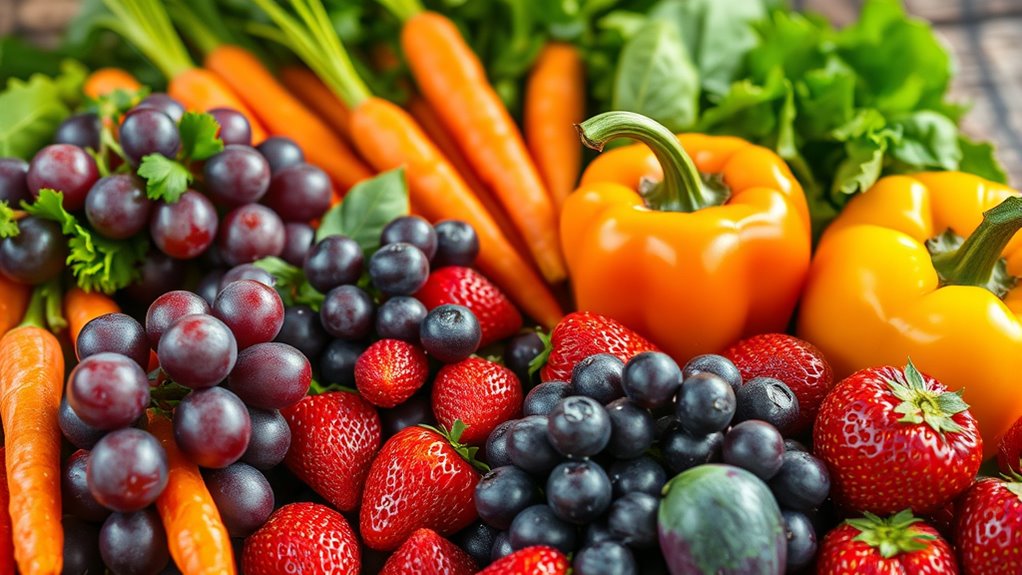

Eating a colorful variety of plant foods provides essential antioxidants and phytochemicals that boost your body’s defenses and support long-term health. Bright berries, leafy greens, orange vegetables, and fruits like citrus pack powerful compounds such as anthocyanins, flavonoids, and carotenoids. These nutrients help neutralize free radicals, reduce inflammation, and lower the risk of chronic diseases like heart disease and cancer. To discover more about how each color benefits your health, continue exploring this fascinating topic.
Key Takeaways
- Brightly colored fruits and vegetables contain specific phytochemicals linked to antioxidant properties and disease prevention.
- Different colors indicate diverse bioactive compounds like anthocyanins, carotenoids, and vitamin C.
- Consuming a variety of colors maximizes the intake of health-promoting antioxidants and phytochemicals.
- These compounds help neutralize free radicals, reduce inflammation, and lower chronic disease risk.
- Incorporating colorful plant foods supports immune health, cellular repair, and overall long-term wellness.
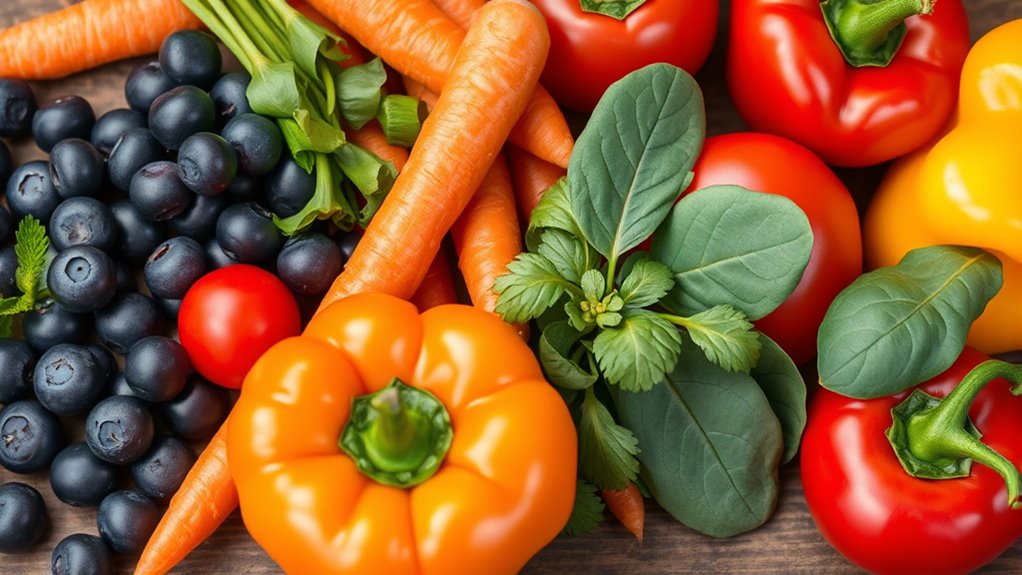
Antioxidants and phytochemicals are powerful compounds found in many plant-based foods that can help protect your body from damage caused by free radicals. These substances are abundant in colorful fruits, vegetables, herbs, and grains, and they play a vital role in maintaining your overall health. When you include a variety of these foods in your diet, you not only enjoy their vibrant colors but also gain access to their rich array of bioactive compounds that support your body’s defenses.
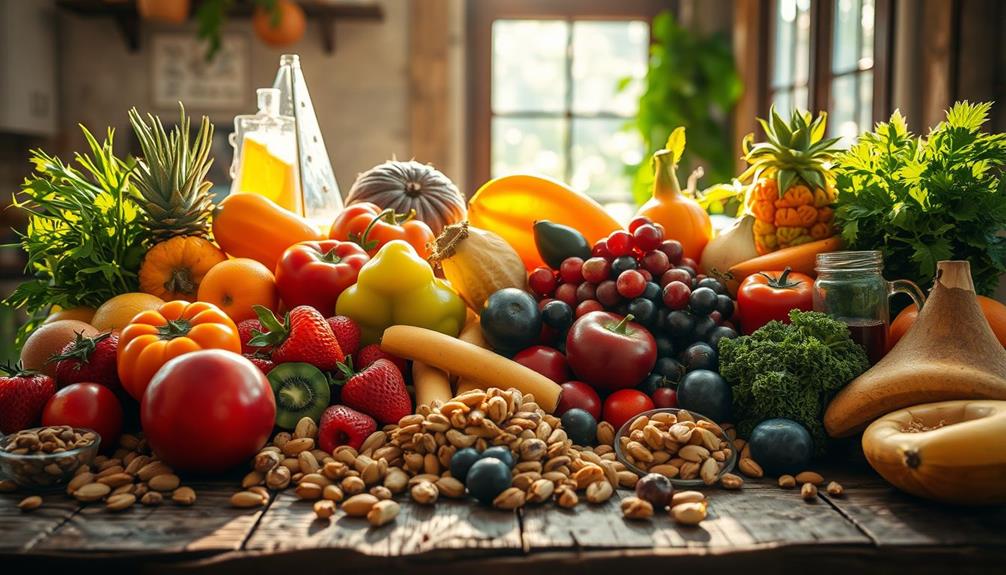
Food sources rich in antioxidants and phytochemicals include berries like blueberries, strawberries, and blackberries, which are loaded with anthocyanins. Leafy greens such as spinach, kale, and Swiss chard contain high levels of flavonoids and carotenoids. Brightly colored vegetables like carrots, bell peppers, and sweet potatoes are packed with beta-carotene and other carotenoids, contributing to their vivid hues. Fruits like citrus, pomegranates, and grapes offer a bounty of vitamin C and polyphenols, which are known for their immune-boosting and anti-inflammatory properties. Whole grains, nuts, seeds, and legumes also provide a variety of phytochemicals that promote health.
Berries, leafy greens, colorful vegetables, and fruits are rich in antioxidants and phytochemicals that boost your health.
The health benefits of consuming these foods are extensive. Antioxidants help neutralize free radicals—unstable molecules that can damage cells, DNA, and tissues, potentially leading to chronic diseases such as heart disease, cancer, and neurodegenerative disorders. By regularly eating foods rich in antioxidants and phytochemicals, you bolster your body’s natural defenses, reduce inflammation, and support cellular repair. These compounds also improve your immune function, enhance skin health, and may even slow down the aging process. Furthermore, some phytochemicals have been linked to lowering blood pressure, reducing cholesterol levels, and improving insulin sensitivity, all of which contribute to a healthier cardiovascular system.
Incorporating a rainbow of plant-based foods into your meals makes it easier to obtain a broad spectrum of these beneficial compounds. Think about adding berries to your breakfast, tossing leafy greens into salads, snacking on nuts, or including brightly colored vegetables in your stir-fries. The more diverse your diet, the more likely you are to benefit from the unique health-promoting properties of each food source. Remember, eating a colorful variety isn’t just visually appealing—it’s a simple, effective way to harness the power of antioxidants and phytochemicals for your long-term health.

NOW Supplements, Super Antioxidants with Herbal Extracts and a Broad Spectrum of Flavonoids for Immune Support, 120 Veg Capsules
PHYTOFLAVONOID FORMULA: Including green tea extract, milk thistle extract, turmeric root extract, quercetin, bromelain extract, rosemary, grape seed…
As an affiliate, we earn on qualifying purchases.
As an affiliate, we earn on qualifying purchases.
Frequently Asked Questions
How Do Antioxidants Affect Aging Processes?
Antioxidants help slow aging by maintaining your oxidant balance, which reduces oxidative stress. This stress accelerates aging markers like wrinkles and loss of skin elasticity. When you consume antioxidants, they neutralize free radicals that damage cells, supporting healthier skin and tissues over time. By balancing oxidation, you can potentially delay signs of aging and promote a more youthful appearance and overall well-being.
Can Phytochemicals Prevent Specific Chronic Diseases?
Research suggests that plant-based compounds, or phytochemicals, can help prevent specific chronic diseases. You might find that consuming a colorful variety of fruits and vegetables strengthens your immune system and reduces risks of heart disease, cancer, and diabetes. These compounds work by fighting inflammation and neutralizing harmful free radicals. Incorporating a diverse range of phytochemicals into your diet can be a powerful strategy for disease prevention and promoting long-term health.
Are Natural Sources Better Than Supplements for Antioxidants?
You’re better off getting antioxidants from natural food sources rather than supplements. Natural foods retain their antioxidants through minimal food processing, ensuring you get a complex mix that works synergistically. Supplements often lack this synergy and may have questionable efficacy. Plus, food provides additional nutrients that enhance absorption and health benefits. So, prioritize whole fruits, vegetables, and grains for maximum antioxidant intake and overall well-being.
Do Different Colors of Foods Offer Unique Health Benefits?
Yes, different food colors offer unique health benefits because each color symbolizes specific nutrients and phytochemicals. For example, red foods often contain lycopene, while orange and yellow foods have carotenoids, and green foods are rich in chlorophyll. Using culinary color pairing not only enhances visual appeal but also guarantees you get a variety of antioxidants and phytochemicals, maximizing your health benefits through diverse colors on your plate.
How Much Antioxidant Intake Is Recommended Daily?
Imagine you’re in the 21st century, and experts recommend you aim for about 5 to 10 servings of antioxidant-rich foods daily. While there’s no official daily intake for antioxidants, focusing on colorful fruits and vegetables boosts antioxidant absorption naturally. Follow dietary guidelines emphasizing variety, and remember, a balanced diet helps you get enough antioxidants to support your health and fight oxidative stress effectively.

COUNTRY FARMS Super Reds, Energizing Polyphenol Superfood, 48 Super Fruits and Berries, Powerful Antioxidants and Polyphenols, Supports Energy, 20 Servings, Mixed Berry Flavor
STRAIGHT FROM THE GARDEN. Don’t skimp on your fruit and veggies consumption! Just one serving of Country Farms…
As an affiliate, we earn on qualifying purchases.
As an affiliate, we earn on qualifying purchases.
Conclusion
Think of antioxidants and phytochemicals as your body’s vibrant shield, protecting you from harm like a colorful armor. By eating a variety of colorful fruits and vegetables, you’re fueling this shield to stay strong and resilient. Remember, each bright hue offers unique benefits, turning your plate into a powerful rainbow of health. Embrace these natural defenders, and you’ll keep your body thriving, just like a garden blooming with life and vitality.

Micro Ingredients Super Greens Powder, 1lb | 100 Superfood Blend with Daily Greens, Fruits, Vegetables, Mushrooms & Probiotics | Source of Vegan Protein & Enzymes | Non-GMO, Gluten-Free, No Additives
Micro Ingredients offers a full-spectrum Super Greens Powder in a natural original flavor. A nutrient-dense blend of 100…
As an affiliate, we earn on qualifying purchases.
As an affiliate, we earn on qualifying purchases.

XPRS Nutra Size 0 Empty Capsules – 100 Count Empty Vegan Capsules – Vegetarian Pills – DIY Vegetable Capsule Filling- Veggie Pill Caps for Do-It-Yourself Supplements (Multi Color)
Easy to Fill – Whether you like to manually fill your caps or use a capsule filling machine,…
As an affiliate, we earn on qualifying purchases.
As an affiliate, we earn on qualifying purchases.