
To build a beginner raw fridge setup, start by organizing your fridge into sections for fruits, vegetables, nuts, and seeds. Use clear containers to keep everything visible and label them to track expiration dates. Maintain a temperature between 35°F and 40°F, checking regularly with a thermometer. Wrap leafy greens in damp paper towels and store ethylene-producing fruits separately. With these tips, you’ll enhance freshness and streamline your cooking. There’s so much more to explore for ideal organization!

Get health and wellness essentials delivered free with Prime
- Fast, free delivery on millions of items
- Prime Video, Amazon Music and more included
- Member-only deals all year
Key Takeaways
- Designate Sections: Organize the fridge into clear sections for fruits, vegetables, nuts, and seeds for easy access and visibility.
- Temperature Control: Maintain a temperature between 35°F and 40°F to ensure freshness of raw ingredients.
- Proper Storage: Use damp paper towels for leafy greens and perforated bags to maintain moisture while preventing spoilage.
- Regular Cleaning: Clean the fridge regularly to minimize bacteria and check for items nearing expiration to reduce waste.
- Utilize Clear Containers: Store ingredients in clear bins or containers, labeling them for easy identification and tracking of expiration dates.
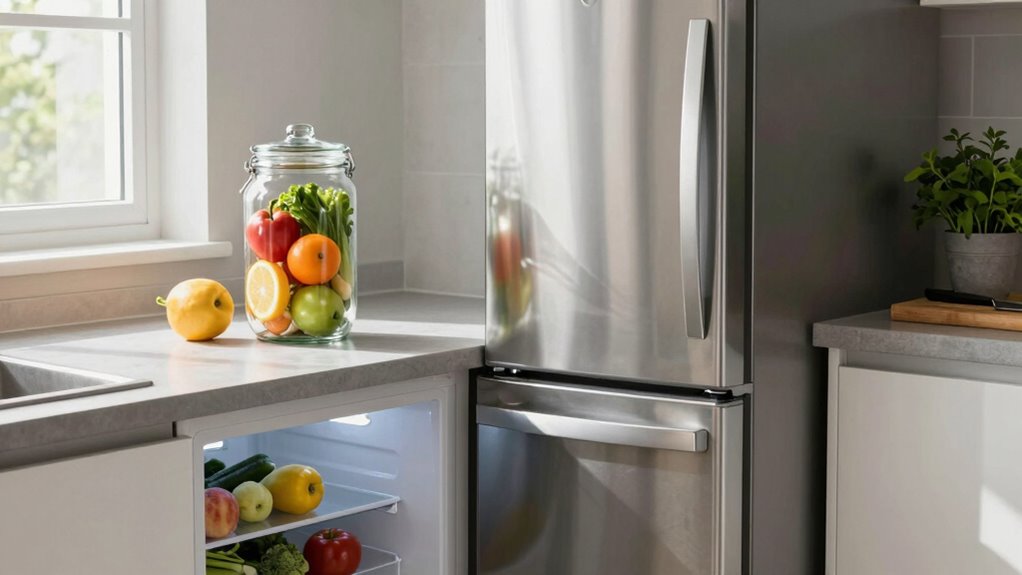
Building a raw fridge setup can seem challenging, but with the right steps, you can create an efficient space for your fresh, unprocessed foods. The first thing you’ll want to take into account is the layout of your fridge. You’ll need to confirm you have enough room for various ingredients, from fruits and vegetables to nuts and seeds. Organizing your fridge not only maximizes space but also helps you maintain ideal raw food storage conditions.
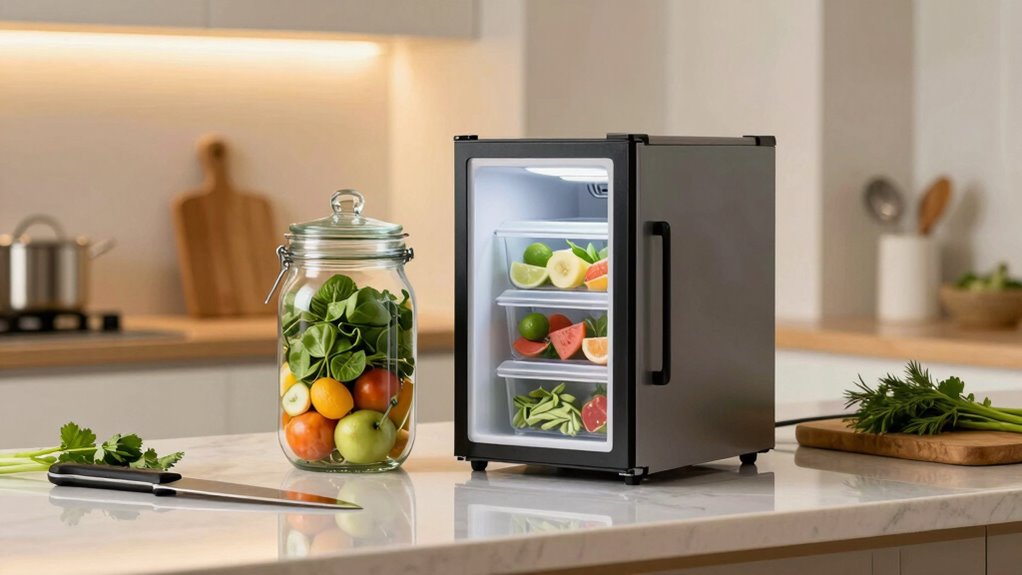
Start by dividing your fridge into sections. Dedicate one area for fruits, another for vegetables, and a third for nuts and seeds. This separation helps you find what you need quickly and keeps your ingredients fresh longer. Use clear containers or bins to keep everything visible and categorize them further if necessary. This way, you won’t waste time rummaging through your fridge every time you need something. Proper food storage techniques can greatly extend the freshness of your ingredients. Additionally, labeling containers can further improve organization and help you keep track of expiration dates.
Organize your fridge by sections for fruits, vegetables, and nuts to enhance freshness and streamline your cooking process.
Temperature control is essential in a raw fridge setup. Most raw foods should be stored in a fridge set between 35°F and 40°F (1.6°C to 4.4°C). Too cold can freeze delicate items, while too warm can lead to spoilage. Invest in a thermometer to monitor the temperature regularly. If you find fluctuations, think about adjusting the thermostat or checking for maintenance issues with your fridge. Keeping a consistent temperature helps guarantee your produce stays fresh and nutritious. Proper air circulation is also crucial to prevent spoilage and maintain even temperature distribution throughout the fridge.
When it comes to storing leafy greens, wrap them in a damp paper towel and place them in a perforated bag to maintain moisture without creating excess humidity. For fruits, think about keeping ethylene-producing fruits, like bananas, away from others to prevent premature ripening. You want to maximize the lifespan of your raw foods, so pay attention to how different items interact with each other in the fridge. Additionally, understanding air quality and proper ventilation can help prevent spoilage and maintain freshness for longer. Regularly cleaning your fridge also helps reduce bacteria buildup and preserves optimal food safety.
Lastly, regularly check your fridge for any items that are nearing the end of their shelf life. You’ll want to consume those first to avoid waste. Plan your meals around what needs to be used up, making it easier to maintain a fresh supply of ingredients. By keeping your raw fridge organized and maintaining proper temperature control, you’ll create a vibrant space that supports your healthy eating habits. With dedication and a little effort, you’ll find that building a raw fridge setup isn’t just manageable; it can become an enjoyable part of your culinary journey.
refrigerator temperature thermometer
As an affiliate, we earn on qualifying purchases.
As an affiliate, we earn on qualifying purchases.
Frequently Asked Questions
What Types of Containers Are Best for Raw Food Storage?
For raw food storage, use glass containers with airtight lids to maintain freshness and guarantee food safety. These containers prevent odors and keep your food organized. If you need larger storage, opt for plastic bins that seal tightly. Make certain all containers are BPA-free to avoid harmful chemicals. By choosing the right containers, you’ll keep your raw foods safe and delicious longer, making meal prep easier and more enjoyable!
Can I Use a Regular Fridge for Raw Food?
You might think using a regular fridge for raw food is a recipe for disaster, but it can actually work—if you’re careful! Just make certain your fridge temperature stays at 34-40°F to guarantee raw food safety. Keep your ingredients organized and use airtight containers to prevent cross-contamination. So, while your fridge isn’t a fancy raw food vault, it can still keep your meals fresh and safe with a little attention!
How Do I Maintain Optimal Humidity Levels?
To maintain ideal humidity levels, you should focus on humidity control and moisture management. Use a hygrometer to monitor humidity, aiming for 30-50%. Keep fruits and veggies in breathable bags to allow moisture escape. Avoid overcrowding the fridge; that can trap humidity and promote mold. Regularly check for spoiled items and remove them promptly. You might also consider using a small bowl of salt or baking soda to absorb excess moisture.
What Are the Common Mistakes in Raw Food Storage?
Storing raw food is like tending a delicate garden; if you neglect it, everything wilts. Common mistakes include ignoring temperature control, which invites food spoilage. You might think all fridges are the same, but fluctuating temperatures can ruin your ingredients. Additionally, overcrowding your fridge can block airflow, creating warm spots. Don’t forget to check expiration dates and store items properly to keep your garden thriving and your meals fresh.
How Often Should I Clean My Raw Fridge Setup?
You should clean your raw fridge setup at least once a week to maintain hygiene. Regular cleaning frequency prevents bacteria buildup and keeps your food fresh. Start by emptying the fridge, then wipe down shelves with a mild, food-safe cleaner. Don’t forget to sanitize your containers and check for expired items. These sanitation tips help guarantee a safe environment for your raw foods, ultimately supporting your healthy eating habits.
Conclusion
Setting up a beginner raw fridge isn’t just about storing food; it’s about embracing a healthier lifestyle. Did you know that incorporating more raw foods can boost your energy levels by up to 30%? By keeping your fruits, veggies, and nuts organized and fresh, you’ll not only enjoy better-tasting meals but also feel the benefits in your daily life. So, plunge into it and create a space that inspires you to eat fresh and vibrant foods every day!
Evergreen bestsellers Picks
bestsellers
As an affiliate, we earn on qualifying purchases.