TL;DR
A personal blender is a compact countertop blender designed to make one or two servings, often in a cup you can take with you. It usually handles soft fruit, yogurt, and liquid well, while frozen fruit, ice, leafy greens, and thick mixtures depend on the model and recipe. Match cup size, ingredient capability, cleaning, and transport features to the smoothies you actually make.
Your smoothie can go from bright and berry-sweet to stubbornly lumpy in the time it takes to press one button. The blender matters, but so do the ingredients, the cup shape, and how much liquid you add. A small appliance can make weekday breakfasts easier; it can also leave frozen fruit wedged above the blades if you ask more of it than it can handle.

Get health and wellness essentials delivered free with Prime
- Fast, free delivery on millions of items
- Prime Video, Amazon Music and more included
- Member-only deals all year
A personal blender for smoothies is built for small portions and quick routines. This guide explains what these blenders do well, how to choose a cup and motor for your recipes, and how to blend and clean safely. You’ll also see where cordless convenience helps and where a full-size blender may suit you better.
Match the blender to your usual ingredients; wattage alone cannot predict smoothie texture.
Personal blender cups commonly hold about 12–32 ounces, but the fill line determines the practical amount.
For many models, adding liquid first and frozen ingredients last can help ingredients circulate; follow your blender’s manual.
Check cleaning instructions, noise, lid security, warranty, and replacement parts alongside blending performance.
Keep hands away from blades, stay below the fill line, and never blend carbonated liquids in a sealed cup.
What a Personal Blender Can Do for Your Daily Smoothie
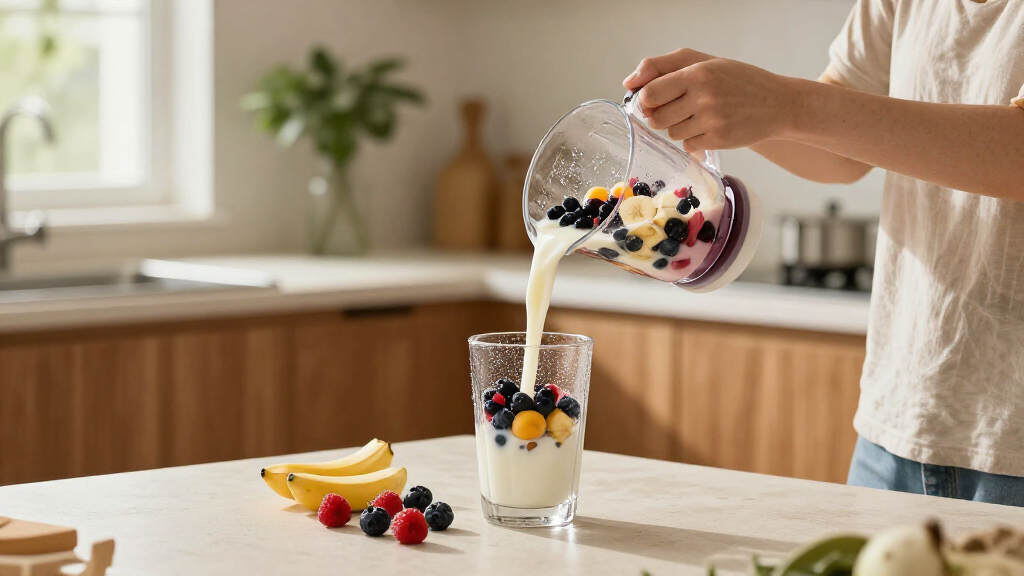
A personal blender is a compact countertop blender designed to make one or two servings at a time. Many models let you blend directly in a travel cup, which can turn a busy morning into a quick routine: add banana, milk, yogurt, and berries, blend, then screw on a drinking lid. The machine takes up less counter space than a full-size blender and suits small batches.
That convenience has limits. Soft fruit, yogurt, and liquids are usually straightforward; ice, frozen fruit, tough greens, and very thick mixtures can be harder. Think of the blender as a small commuter car: nimble for everyday trips, but not built for every heavy haul. If you make a berry-and-yogurt drink most mornings, a basic compact model may meet your needs. If your breakfast is mostly frozen mango, kale, seeds, and very little liquid, check the manufacturer’s guidance and independent tests for those ingredients before buying.
What should you expect from one? Convenience and smaller portions, with results that depend on the model and recipe. A quick drink after a walk is a natural fit. Making several large servings for the whole household may call for a larger blender, even if a personal cup is easier to wash.
Products Worth Considering

Oura Ring 4 Smart Ring, Silver, Size 10

Therabody Theragun Prime Plus Heated Deep Tissue Massage Gun, Black

Withings Body Smart Wi-Fi and Bluetooth Body Composition Scale
As an affiliate, we earn on qualifying purchases.
Match Your Favorite Ingredients to the Blender’s Strengths
A personal blender for smoothies works best when you match its capabilities to what goes into your cup. Motor wattage alone cannot tell you whether a smoothie will turn silky: blade design, cup shape, and how ingredients circulate also matter. A tall, tightly packed cup can leave pieces above the blades, while a recipe with enough liquid gives ingredients more room to move.
Take Maya’s weekday blend: half a banana, a handful of ripe berries, yogurt, and milk. A compact plug-in blender will generally find that combination easier than a drink packed with ice cubes, frozen pineapple, chia seeds, and kale stems. For frozen fruit, smaller pieces and enough liquid can help, though a thick blend may still need a pause or a shake if the manual allows it. Cordless USB-rechargeable models often put portability first and may be better suited to smaller portions and softer ingredients.
Before you buy, look for ingredient-specific guidance, not just a wattage number or glossy product photo. Check whether the manufacturer permits ice crushing and frozen fruit, then look for independent testing of the same kind of recipe you make. If you mostly blend tender greens with liquid, you may be happy with a compact machine. If fibrous stems leave threads in your drink, that texture tells you the blender has reached its limits.
Choose a Cup That Fits Your Usual Serving
Choose cup capacity by your usual serving and check the usable fill line, not only the number printed on the box. Personal blender cups commonly hold about 12–32 ounces, but you need room for ingredients to move and space below the maximum line. A cup labeled 24 ounces may not suit a 24-ounce smoothie once you account for that headroom.
For example, if you make a small banana smoothie before commuting, a lighter cup may feel comfortable to carry. If you use a larger recipe after a workout, a bigger cup offers more flexibility—but may be bulkier in a bag or harder to fit in a car cup holder. Compare the practical tradeoffs before settling on a size.
| What you need | What to check | Everyday example |
|---|---|---|
| Small morning drink | Compact cup and clear fill mark | A 12-ounce portion of berries and yogurt |
| Room for a larger recipe | Actual usable capacity below the fill line | A thicker breakfast blend with extra milk |
| Drink on the way out | Cup weight, lid security, and cup-holder fit | Carrying it upright to the train or car |
A travel lid does not automatically make a cup leakproof. “Leak-resistant” designs may still spill if you toss them sideways in a bag. Try the closed cup upright before carrying it, and follow the maker’s transport instructions.
Load Ingredients in an Order That Helps Them Blend
For many personal blenders, liquid first, softer ingredients next, and frozen or harder ingredients last helps ingredients move toward the blades. Your model’s manual takes priority because some blenders use different blade assemblies or blending directions. Think of loading the cup like building a gentle path toward the blades instead of dropping a frozen wall on top of them.
- Check the fill line and use the portion size recommended by the maker.
- Add liquid first, such as milk or water, if the recipe and manual allow it.
- Add soft ingredients, such as ripe banana, yogurt, or berries.
- Add frozen or harder ingredients last, cutting large pieces smaller where appropriate.
- Blend as instructed, pausing or shaking only if the manual says that is safe for your model.
For instance, if your blueberry smoothie stalls, compare two attempts: one with frozen berries packed against the blades and one with liquid at the bottom. That simple change may improve movement through the cup, although it cannot make a low-powered blender suitable for every thick recipe. Add liquid gradually when the drink feels too dense. A splash can free up the blend; too much can turn a spoonable breakfast into a thin drink.
Check Cleaning, Noise, and Replacement Parts Before You Buy
A blender is easier to use regularly when cleanup and storage fit your kitchen. Removable blade assemblies and dishwasher-safe cups can save time, but dishwasher guidance differs by model. Some machines allow you to blend water with a drop of soap for a quick rinse; others require a different routine. Follow the manual, keep the motor base out of water, and handle the blades as directed.
Picture an early weekday: you have two minutes before leaving, and berry pulp has dried around the cup threads. A cup that rinses clean quickly can be more useful to you than an extra preset button. Check how the blade assembly comes apart, whether lids and cups are sold separately, and what the warranty covers. Seals and blades can wear with frequent use, so available replacement parts matter if you plan to blend most days.
Also check noise and storage. Small does not mean quiet: a blender can still send a sharp whirr through a quiet kitchen. Measure space for the motor base and cup, which may need separate storage, and look at the machine’s controls. One-touch programs may simplify a routine, while pulse or manual controls can give you more say over texture. Extra cups and lids can help a household, but check compatibility and price before you add them to your cart.
Use Your Blender Safely, Then Decide If It Suits You
A personal blender is a good match when you want frequent single-serving drinks and quick cleanup; it is a weaker match when you need large batches or reliable results from very tough ingredients. Decide using your routine rather than the promise of a perfect smoothie. If you blend ripe peaches and milk, a small model may be all you need. If you make thick frozen bowls for three people, the cup size and power could become a daily frustration.
Safety matters even for a tiny appliance. Keep hands and utensils away from blades, do not exceed the fill line, and let hot ingredients cool unless the manufacturer explicitly permits blending them with clear instructions. Never blend carbonated liquids in a sealed cup, because pressure can build inside. Travel cups are generally meant for cold drinks, not hot soup; only use one for hot liquids if the maker specifically says it is safe.
For a practical buying check, write down two or three smoothies you actually make, including the hardest ingredient in each. Verify that your chosen model’s instructions support them, then check capacity, lid security, cleaning directions, noise, warranty, and replacement parts. A simple comparison can spare you from paying for features you won’t use—or discovering your favorite kale blend leaves a gritty, fibrous surprise.
Frequently Asked Questions
Can a personal blender crush ice?
Some models can, but performance varies. Check your manual for ice-crushing instructions and do not add large, hard cubes unless the manufacturer permits them.
Can a personal blender blend frozen fruit?
Many models handle frozen fruit better when you add enough liquid and use smaller pieces. A very thick mixture may need pauses or shaking, if your manual allows those steps.
Are personal blenders good for leafy greens?
They can blend tender greens with sufficient liquid, though tough stems or large quantities may leave a fibrous texture. If greens are a regular ingredient, seek model-specific guidance or independent tests.
Can I blend hot soup in a personal blender cup?
Do not assume a travel cup is designed for hot liquids or steam pressure. Only blend hot ingredients if the manufacturer explicitly approves it and provides safe instructions; otherwise, let them cool and use an appropriate container.
How do I know what size personal blender to buy?
Start with the amount you normally drink and check the usable space below the fill line. A larger cup gives you more room, while a smaller cup may be lighter and easier to store or carry.
Are cordless personal blenders as powerful as plug-in models?
Cordless models emphasize portability and often suit small portions and softer ingredients. They may struggle more with ice, frozen fruit, and thick blends, so check the maker’s guidance for the recipes you have in mind.
Conclusion
Choose a personal blender for the smoothie you actually make: check that it handles your ingredients, holds your usual serving below the fill line, and cleans up without becoming a chore. Treat wattage and travel lids as clues to investigate, not guarantees of smooth results or spill-proof carrying.
Start with one familiar recipe and let the cup do its small, useful job. A good morning blend should leave you with berries on your breath—not a pile of parts on the counter.