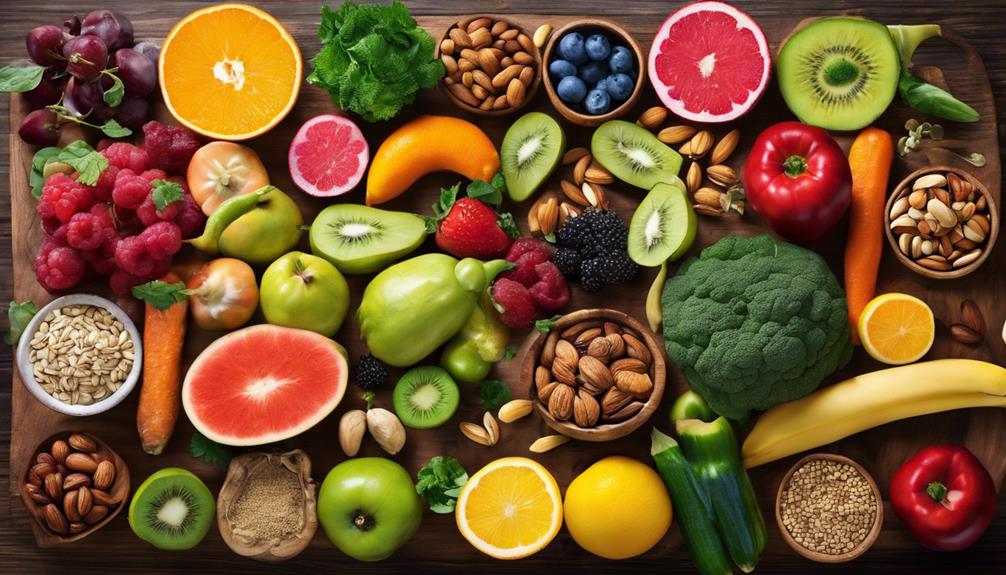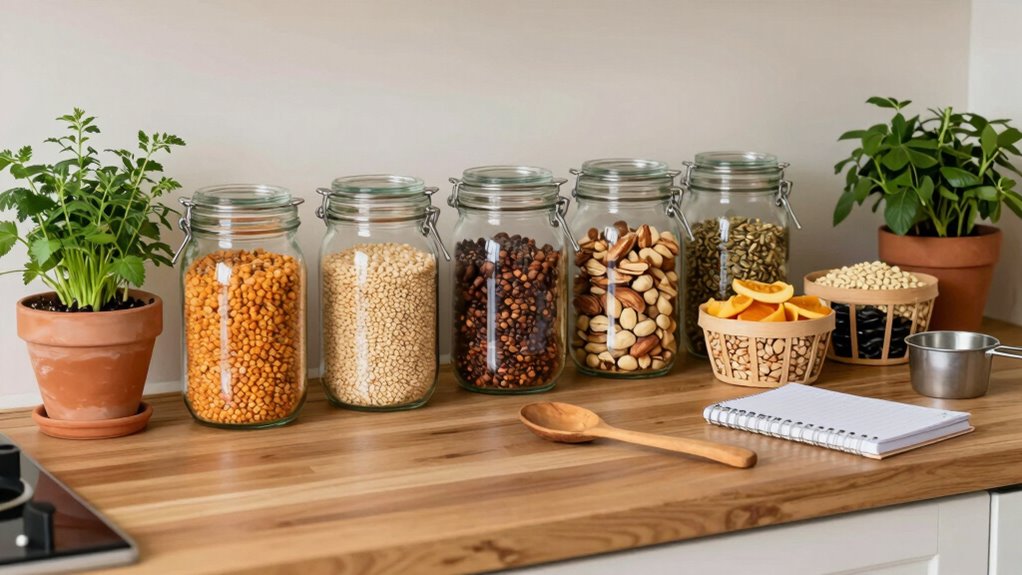

To create a beginner raw pantry without overspending, start by stocking budget-friendly staples like nuts, seeds, grains, and legumes. Buy in bulk to save money on favorites like almonds, quinoa, and lentils. Include dried fruits for natural sweetness and enhance flavors with herbs and spices. Choose seasonal produce for the best prices, and freeze extras to minimize waste. With these essential items, you’ll maximize nutrition and creativity in your meals—discover even more tips to make your pantry thrive.

Get health and wellness essentials delivered free with Prime
- Fast, free delivery on millions of items
- Prime Video, Amazon Music and more included
- Member-only deals all year
Key Takeaways
- Buy in Bulk: Purchase nuts, seeds, grains, and legumes in bulk to significantly reduce costs and ensure a steady supply for various recipes.
- Focus on Versatile Staples: Choose foundational ingredients like quinoa, lentils, and dried fruits that can be used in multiple dishes.
- Incorporate Seasonal Produce: Opt for fresh, seasonal vegetables to save money while supporting local and organic farming practices.
- Stock Essential Herbs and Spices: Invest in a few key herbs and spices to enhance flavors without adding calories or significant costs.
- Consider Home Sprouting: Sprout grains and legumes at home for increased nutrition and variety, minimizing reliance on processed alternatives.
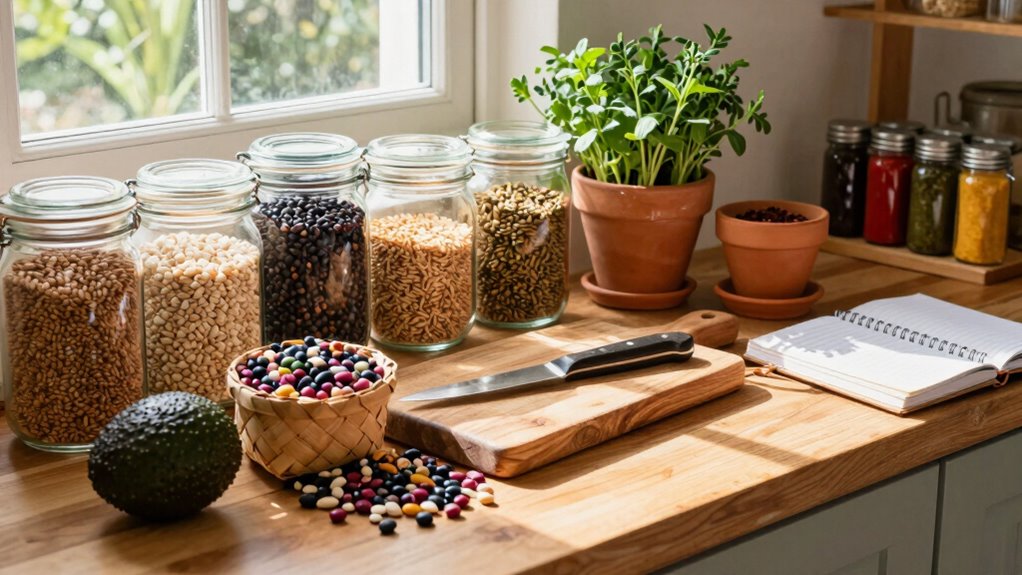
Starting a raw pantry can feel overwhelming, but it doesn’t have to be. You might worry about the cost or complexity of sourcing raw staples, but with a little planning, you can create a well-stocked pantry without breaking the bank. The key is to focus on budget-friendly ingredients that provide versatility and nutrition.
First, think about the basics. Nuts and seeds are foundational raw staples. Almonds, walnuts, chia seeds, and flaxseeds not only offer healthy fats and protein but also serve as the backbone for many recipes. You don’t need to buy every type of nut—just choose a couple that you enjoy and can use in various ways. Consider buying in bulk to save money; this often notably reduces the price per pound.
Nuts and seeds are essential raw staples, offering healthy fats and protein. Choose a few favorites and buy in bulk for savings.
Next, look into grains and legumes. Quinoa, buckwheat, and lentils can be sprouted and are excellent sources of nutrients. They’re also budget-friendly ingredients, especially when purchased in bulk. These staples can be mixed into salads or blended into smoothies, giving you plenty of options to keep your meals interesting. Incorporating nutrient-dense ingredients like these can help you maximize health benefits without overspending. Additionally, some grains and legumes can be dehydrated or sprouted at home, reducing the need for store-bought processed options. Learning about sprouting techniques can further boost the nutritional value of your pantry staples.
Don’t forget about dried fruits. They can add sweetness and texture to your dishes. Raisins, apricots, or dates can transform a simple raw granola or energy ball into a delightful treat. Again, consider bulk purchasing, which can help you save considerably.
Herbs and spices are essential for flavor without extra calories. Stock up on staples like garlic powder, cumin, and turmeric. Fresh herbs like basil or cilantro can elevate any dish and are relatively inexpensive. A small investment in spices can make a big difference in the variety of meals you can create.
Next, explore the produce section. Fresh vegetables like kale, carrots, and bell peppers can easily be incorporated into salads or wraps. Buying seasonal produce often means lower prices, making it more affordable to fill your pantry. Also, consider freezing fruits and veggies when they’re on sale. This way, you’ll always have raw ingredients on hand, even when fresh options are scarce. Utilizing frozen produce can help maximize your budget while maintaining nutritional quality.
Additionally, incorporating biodiversity-friendly practices like choosing organic or locally grown produce can contribute to sustainable living and support environmental health. Lastly, keep it simple. You don’t need a massive variety of items to create delicious meals. Focus on a few quality raw staples, and get creative with how you combine them. You’ll find that sticking to a budget while building your raw pantry is entirely achievable, and soon enough, you’ll be enjoying a diverse range of healthy meals without overspending.
As an affiliate, we earn on qualifying purchases.
Frequently Asked Questions
How Do I Store Raw Pantry Items Effectively?
To store raw pantry items effectively, use airtight containers to keep your ingredients fresh. Clear containers work best, as they let you see what you’ve got. Label each container with its contents and the date you bought it, ensuring easy organization. Group similar items together, like grains or nuts, to simplify your cooking process. Regularly check for any expired items, and rotate your stock to maintain freshness.
Can I Mix Different Brands of Raw Ingredients?
Absolutely, you can mix different brands of raw ingredients! Think of it like a colorful mosaic—each piece adds its own charm. Just verify brand compatibility; some brands might have different processing methods that affect flavor or texture. Always prioritize ingredient quality, too. If one brand’s nuts are fresher than another’s, it’ll elevate your dish. So, go ahead and create your unique blend, but keep an eye on those details for the best results!
What’s the Shelf Life of Raw Pantry Foods?
The shelf life of raw pantry foods varies by ingredient. Generally, grains and legumes last 6 months to a year, while nuts and seeds can stay fresh for about 3 to 6 months. For ideal food safety, store these items in airtight containers in a cool, dark place. Always check for signs of spoilage, like off smells or discoloration, to guarantee your pantry stays stocked with safe and nutritious options.
Are There Any Raw Pantry Items I Should Avoid?
Building a raw pantry is like crafting a masterpiece; you need the right ingredients. You should avoid overly processed ingredients, as they defeat the purpose of raw food. Items like refined oils, sugar, and pre-packaged snacks can undermine your health goals. Stick to whole foods, like nuts, seeds, and dried fruits, which provide better nutrition and flavor. Focus on quality, and your raw pantry will thrive without breaking the bank.
How Can I Incorporate Raw Foods Into Cooking?
To incorporate raw foods into your cooking, start by exploring their benefits, like enhanced nutrients and flavors. Try simple recipe ideas, like raw salads with fresh veggies and nuts, or smoothies blending fruits and greens. You can also make raw energy bars using dates and nuts. Experiment with spiralizing zucchini for pasta or using cauliflower for rice. These options keep your meals vibrant, nutritious, and delicious, making healthy eating enjoyable and easy.
Conclusion
Creating a beginner raw pantry doesn’t have to break the bank. With a little planning, you can stock up on essentials that nourish both body and budget. Imagine whipping up vibrant meals that not only taste amazing but also support your health goals. By focusing on versatile ingredients, you’ll discover the joy of raw cooking without the hefty price tag. So, why wait? Immerse yourself in this delicious journey and transform your kitchen into a haven of fresh possibilities!
Fall Picks
fall essentials
As an affiliate, we earn on qualifying purchases.