For an RV, the best portable air conditioner depends on whether you need a fixed 12V roof or wall unit or a compact spot cooler you can move between spaces. My best overall pick is the 10,000 BTU 12V DC rooftop air conditioner, which pairs higher stated cooling capacity with an RV-oriented installation. The dual-mount 12V model with a heater adds flexibility, while the 5,200 BTU, 400W portable units suit smaller areas where lower power draw matters. The tradeoffs are cooling capacity, electrical demand, installation, and whether the unit can cool an entire RV or only a nearby zone. Read on for the full comparison and guidance on choosing a unit that fits your rig.

Get health and wellness essentials delivered free with Prime
- Fast, free delivery on millions of items
- Prime Video, Amazon Music and more included
- Member-only deals all year
Key Takeaways
- The two 10,000 BTU 12V units lead on stated cooling capacity. The rooftop model is a straightforward fit for buyers seeking a fixed RV installation; the dual-mount model adds a 4,500 BTU heater and more mounting flexibility.
- Five compact options cluster around 4,095 to 5,200 BTU. They are better matched to small rooms, tents, or localized cooling than to cooling a large RV interior.
- The 5,200 BTU, 400W models share a power-focused spec. The GETUHAND listings and the silver 4-in-1 model may be close alternatives, so buyers should compare included accessories, dimensions, and venting details before choosing.
- The 7,000 BTU portable model sits between the compact coolers and 10,000 BTU fixed units. Its stated capacity may suit buyers seeking a portable format with more cooling headroom, though electrical and exhaust requirements still determine RV fit.
- Product names alone leave important questions unanswered. The listings do not establish runtime on a battery, cooling performance in a specific RV, or installation compatibility, so those details need confirmation before purchase.
| 10000 BTU 12V DC RV Rooftop Air Conditioner with APP Remote |  | Best for Battery-Powered RVs | Cooling capacity: 10,000 BTU | Power source: 12V DC RV battery | Average night-mode draw: About 350W at 30°C ambient | VIEW ON AMAZON | See Our Full Breakdown |
| GETUHAND Portable Tent Air Conditioner 5200BTU 400W, Drain-Free Camping AC for Tents, RVs, Trucks & Bedrooms |  | Best Portable Pick for Small RV Spaces | Cooling capacity: 5200 BTU | Wattage: 400W | Coverage area: Up to 130 sq. ft. | VIEW ON AMAZON | See Our Full Breakdown |
| 12V RV Air Conditioner with Dual Roof or Wall Mount, 10,000 BTU Cooling and 4,500 BTU Heater |  | Best for Flexible Installation | Power: 12V DC | Cooling capacity: 10,000 BTU | Heating capacity: 4,500 BTU PTC | VIEW ON AMAZON | See Our Full Breakdown |
| 4095 BTU Portable Air Conditioner for Camping, RVs, and Small Rooms |  | Best Compact Corded Option | Cooling capacity: 4095 BTU | Coverage: 86 sq. ft. | Weight: 29 lbs | VIEW ON AMAZON | See Our Full Breakdown |
| Countrymod 5000 BTU Portable Air Conditioner for Camping, Tent, RV, Boat & Fishing |  | Best for Simple, Lightweight Cooling | Cooling capacity: 5000 BTU | Power: 110V AC, 450W | Noise: 45–46dB | VIEW ON AMAZON | See Our Full Breakdown |
| 5200 BTU Portable Camping Air Conditioner, 4-in-1, 400W, Silver |  | Best for Flexible Power | Cooling capacity: 5200 BTU | Coverage area: Up to 130 sq. ft. | Power consumption: 400 W | VIEW ON AMAZON | See Our Full Breakdown |
| GETUHAND Portable Tent Air Conditioner, 5200 BTU, 400 W |  | Best for Small Sleeping Areas | Cooling capacity: 5200 BTU | Power: 400 W | Coverage area: 108 sq. ft. | VIEW ON AMAZON | See Our Full Breakdown |
| 7000 BTU Portable Camping Air Conditioner | 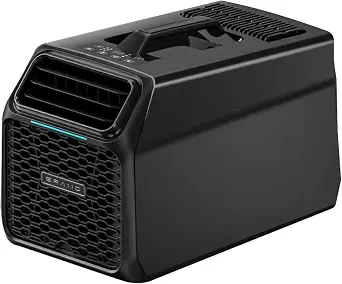 | Best for Higher Cooling Capacity | Cooling capacity: 7000 BTU | Dimensions: 21.38 × 12.4 × 14.29 in | Weight: 33 lb | VIEW ON AMAZON | See Our Full Breakdown |
| portable air conditioner for rv | Cooling capacity | Weight | Sleep-mode noise | Dimensions |
|---|---|---|---|---|
| 10000 BTU 12V DC RV Rooftop Ai | 10,000 BTU | 54 lbs | 40dB | — |
| GETUHAND Portable Tent Air Con | 5200 BTU | 35.8 lbs | 45dB | 10.2 × 12.8 × 23.4 inches |
| 12V RV Air Conditioner with Du | 10,000 BTU | — | 40dB | — |
| 4095 BTU Portable Air Conditio | 4095 BTU | 29 lbs | — | — |
| Countrymod 5000 BTU Portable A | 5000 BTU | 30.8 lbs | — | 21.3 × 11.4 × 13 inches |
| 5200 BTU Portable Camping Air | 5200 BTU | — | 45 dB | 12.8 × 10.6 × 22.8 in |
| GETUHAND Portable Tent Air Con | 5200 BTU | 32.6 lb | — | 22.9 × 11.25 × 13.7 in |
| 7000 BTU Portable Camping Air | 7000 BTU | 33 lb | 58 dB | 21.38 × 12.4 × 14.29 in |
More Details on Our Top Picks
10000 BTU 12V DC RV Rooftop Air Conditioner with APP Remote
For RV owners who want rooftop cooling without running an inverter, this 10,000 BTU 12V DC unit is the lineup’s strongest match for a battery-based electrical system. Its stated nighttime draw of about 350W and 40dB Sleep mode suit overnight use, provided the battery bank can support the load. Compared with the GETUHAND 5200BTU Portable Tent Air Conditioner, it offers substantially more cooling capacity and a roof-mounted setup, but gives up portability between vehicles and needs a suitable roof cutout. It also has cooling only, while the dual-mount 12V RV Air Conditioner adds supplementary heat. App, remote, and panel controls give owners several ways to adjust it. The key tradeoff is electrical capacity: the listing says all-night operation calls for a sufficiently large battery bank, such as 400Ah.
Pros:- Runs directly from a 12V DC RV battery without an inverter
- 10,000 BTU cooling capacity
- Sleep mode is rated at 40dB
- App, infrared remote, and physical panel controls
Cons:- All-night use requires a sufficiently large battery bank
- Cooling only, with no heating function
- Roof installation limits portability and requires a compatible cutout
Best for: RV owners with a compatible 14-by-14-inch roof opening and a large 12V battery bank who want overnight cooling without an inverter
Not ideal for: Travelers without a substantial battery bank, or anyone who needs heating or a portable unit they can move between spaces
- Cooling capacity:10,000 BTU
- Power source:12V DC RV battery
- Average night-mode draw:About 350W at 30°C ambient
- Sleep-mode noise:40dB
- Weight:54 lbs
- Roof cutout:14 × 14 inches
- Compatible roof thickness:1.5–3.5 inches
- Controls:Bluetooth app, infrared remote, physical panel
Our verdict“Choose this rooftop unit if your RV has the right opening and battery capacity for quiet overnight cooling.”
GETUHAND Portable Tent Air Conditioner 5200BTU 400W, Drain-Free Camping AC for Tents, RVs, Trucks & Bedrooms
The GETUHAND makes the most sense for buyers who need a movable unit for a small RV interior, tent, or truck setup. Its 5200 BTU capacity is rated for spaces up to 130 square feet, and the 35.8 lb body can run in its carry bag, avoiding the permanent roof installation required by the 10,000 BTU 12V DC RV Rooftop Air Conditioner. It also supports 110V AC, compatible power stations, and EV V2L, giving it more power-source flexibility than the Countrymod 5000 BTU, which is listed for 110V AC. That flexibility comes with setup limits: adapters are sold separately, and a power station must meet the stated requirements. Cooling is also modest beside the rooftop model, so this is better suited to a compact space than cooling an entire large RV.
Pros:- 5200 BTU capacity rated for spaces up to 130 square feet
- Supports 110V AC, 1500W-plus power stations, and EV V2L
- Drain-free operation under 70% humidity
- Cooling, dry, sleep, and fan modes with a 24-hour timer
Cons:- At 35.8 lbs, it is heavy for a portable unit
- Power adapters are sold separately
- Its stated coverage and cooling capacity may be insufficient for larger RV interiors
Best for: Campers and RV owners who want a portable 5200 BTU unit for a small space and have access to compatible AC or power-station output
Not ideal for: People who need whole-RV cooling, a lightweight unit, or a setup that works without buying the required power adapters
- Cooling capacity:5200 BTU
- Wattage:400W
- Coverage area:Up to 130 sq. ft.
- Power options:110V AC, 1500W-plus power station, or EV V2L
- Weight:35.8 lbs
- Dimensions:10.2 × 12.8 × 23.4 inches
- Sleep-mode noise:45dB
- Modes and timer:Cooling, dry, sleep, fan; 24-hour timer
Our verdict“Pick the GETUHAND for portable cooling in a small RV space when you can supply compatible power.”
12V RV Air Conditioner with Dual Roof or Wall Mount, 10,000 BTU Cooling and 4,500 BTU Heater
This is the most adaptable permanent-install option here: the 12V system supports either rooftop or vertical wall mounting, which can help RV owners whose roof layout does not suit a conventional unit. It also pairs 10,000 BTU cooling with 4,500 BTU of supplementary PTC heat, adding shoulder-season usefulness absent from the cooling-only 10000 BTU 12V DC RV Rooftop Air Conditioner. Sleep mode is rated at 40dB, and the listing gives a power draw as low as 21A. The tradeoff is that the heater is explicitly supplementary, so it should not be treated as primary heat in cold weather or a large interior. Installation may also need an additional air-duct extension kit for thicker walls or roofs, sold separately. Compared with portable 110V models, this requires a more involved, fixed installation.
Pros:- Supports rooftop or vertical wall installation
- Runs from a 12V DC system without an inverter
- Provides 10,000 BTU cooling and supplementary 4,500 BTU PTC heat
- 40dB Sleep mode with phone and remote controls
Cons:- Supplementary heater is not intended as primary heat for cold or large spaces
- Air-duct extension kit for thicker installations is sold separately
- Fixed installation is less flexible than the GETUHAND portable unit
Best for: RV owners with a 12V system who need a choice of roof or wall mounting and want supplementary heat for milder conditions
Not ideal for: Buyers seeking a plug-in portable unit or anyone relying on the built-in heater as their main heat source in cold weather
- Power:12V DC
- Cooling capacity:10,000 BTU
- Heating capacity:4,500 BTU PTC
- Mounting:Rooftop or vertical wall
- Roof cutout:14.1 × 14.1 inches
- Wall cutout:14 × 7 inches
- Sleep-mode noise:40dB
- Power draw:As low as 21A
- Installation thickness:1.5–3.5 inches
Our verdict“Choose this model if you need a permanent 12V unit that can fit either a roof or wall opening and want added mild-weather heat.”
4095 BTU Portable Air Conditioner for Camping, RVs, and Small Rooms
At 29 lbs and 4095 BTU, this is the lightest listed portable option, making it a practical fit for buyers who move a small AC between a compact RV and other spaces. Its compressor cooling and four modes give it more flexibility than a fan-only cooler, while app, voice, and remote control support add convenience. Compared with the Countrymod 5000 BTU, it is lighter but has lower stated cooling capacity; the GETUHAND offers more capacity and broader power options, though it weighs more. This model is rated for just 86 square feet, so its compact size comes with a clear limit on the space it can serve. It also needs corded power and may require drainage in humid conditions. The listed voltage and wattage ranges vary, so buyers should confirm the specific power requirements before planning their setup.
Pros:- 29 lb weight makes it lighter than the other listed portable units
- Compressor cooling with cool, dry, fan, and sleep modes
- Remote, app, and voice-control support
- 24-hour timer
Cons:- 86 sq. ft. stated coverage limits it to small spaces
- Requires corded power
- Drainage may be needed in humid conditions
Best for: Solo RV travelers or campers who need a lighter portable compressor AC for a small area near a corded power source
Not ideal for: People cooling larger RV interiors, camping without corded power, or seeking a clearly specified single voltage and wattage
- Cooling capacity:4095 BTU
- Coverage:86 sq. ft.
- Weight:29 lbs
- Listed voltage:110V; description also lists 110/220V working voltage
- Listed power:400W listed; 420–600W range also provided
- Modes:Cool, dry, fan, sleep
- Noise:45dB listed; 46–50dB in Sleep mode also provided
- Refrigerant:R-290
Our verdict“Choose this compact model for a small RV area when low carry weight matters and corded power is available.”
Countrymod 5000 BTU Portable Air Conditioner for Camping, Tent, RV, Boat & Fishing
The Countrymod sits between the 4095 BTU compact model and the larger GETUHAND: it offers 5000 BTU cooling in a 30.8 lb portable package with a built-in handle. That makes it a sensible option for buyers who want a movable AC for a small RV, tent, or boat and have standard AC power available. Its cooling, sleep, dehumidifier, and fan modes cover more than basic temperature control, and the remote and timer make adjustments easier when the unit is tucked into a tight space. Compared with the GETUHAND, it is lighter and simpler on power requirements, but lacks the listed power-station and EV V2L options. The main compromise is off-grid use: it requires 110V AC, so battery-powered camping calls for a suitable power source. Its 21.3-inch depth can also take up valuable floor space.
Pros:- 5000 BTU cooling for small spaces
- Four modes: cooling, sleep, dehumidifier, and fan
- Remote control and timer
- 30.8 lb weight with a built-in carry handle
Cons:- Requires 110V AC, limiting use without a generator or compatible power supply
- Its 21.3-inch depth can occupy substantial space in a compact RV
- Heavier than the 29 lb 4095 BTU portable model
Best for: RV and tent campers who want a carry-handle portable AC for a small space and can provide 110V AC power
Not ideal for: Off-grid travelers without AC power or RV owners who cannot spare floor space for a 21.3-inch-deep unit
- Cooling capacity:5000 BTU
- Power:110V AC, 450W
- Noise:45–46dB
- Weight:30.8 lbs
- Dimensions:21.3 × 11.4 × 13 inches
- Modes:Cooling, sleep, dehumidifier, fan
- Controls:Push buttons and remote control
- Installation type:Portable
Our verdict“Pick the Countrymod for portable 5000 BTU cooling if you have 110V power and room for its deeper body.”
5200 BTU Portable Camping Air Conditioner, 4-in-1, 400W, Silver
Power flexibility is this model’s RV advantage: it runs from 110V AC and is also listed as compatible with 1500W-or-higher power stations and EV V2L. That gives campers more ways to cool a small space when a standard outlet is out of reach. Its 5200 BTU capacity and coverage claim of up to 130 square feet are broader than the GETUHAND Portable Tent Air Conditioner’s stated 108 square feet, while the 400W draw is specified for both. Four modes, a timer, and a 45 dB sleep mode add useful control for overnight use. The tradeoffs are that alternative power adapters are sold separately and the no-manual-drain claim applies only below 70% humidity. It suits compact RV setups, not buyers seeking a whole-RV cooling solution.
Pros:- Compatible with 110V AC, 1500W-or-higher power stations, and EV V2L
- Four operating modes and a 24-hour timer
- Listed sleep-mode noise is 45 dB
- No manual drainage required below 70% humidity
Cons:- Adapters for alternative power sources are sold separately
- Drain-free operation is limited to conditions below 70% humidity
- Coverage is intended for spaces up to 130 square feet, not an entire RV
Best for: RV and van campers who want a compact 400W unit with the option to use a compatible power station or EV V2L
Not ideal for: Travelers who camp in humid conditions and cannot manage condensate, or who need cooling for more than a small space
- Cooling capacity:5200 BTU
- Coverage area:Up to 130 sq. ft.
- Power consumption:400 W
- Dimensions:12.8 × 10.6 × 22.8 in
- Operating modes:Cooling, dry, sleep, fan
- Timer:24 hours
- Sleep-mode noise:45 dB
- Power compatibility:110V AC, 1500W+ power stations, EV V2L
- Drainage:No manual drainage required below 70% humidity
Our verdict“Choose this model if flexible power options matter for cooling a small RV space and you can handle drainage when humidity rises.”
GETUHAND Portable Tent Air Conditioner, 5200 BTU, 400 W
For a compact RV bedroom, tent, or van sleeping area, the GETUHAND offers 5200 BTU cooling in a corded 110V unit weighing about 33 pounds. Its stated coverage is 108 square feet, making its intended footprint clearer and narrower than the 130-square-foot claim for the 5200 BTU Portable Camping Air Conditioner. Both list four modes and a 24-hour timer, but this model’s listed noise reaches 46–50 dB in sleep mode, a little higher than that rival’s 45 dB figure. R-290 refrigerant and a carry handle round out the listed details. Humidity affects upkeep: drainage may be needed above 70%, and the corded power source gives it fewer off-grid options than the Silver model. Pick it for a small, powered space rather than broad coverage.
Pros:- 5200 BTU capacity for small spaces up to 108 square feet
- Four modes and a 24-hour timer
- Carry handle and a listed weight of 32.6 pounds
- No drainage needed in cooling mode below 70% humidity
Cons:- Corded 110V power limits use away from suitable electrical supply
- Drainage may be needed when humidity exceeds 70%
- Sleep-mode noise is listed at 46–50 dB
Best for: Campers with access to 110V power who need cooling for a tent, truck cab, van, or RV sleeping area up to 108 square feet
Not ideal for: Off-grid RV travelers who need power-station compatibility, or campers in humid climates who want to avoid condensate drainage
- Cooling capacity:5200 BTU
- Power:400 W
- Coverage area:108 sq. ft.
- Dimensions:22.9 × 11.25 × 13.7 in
- Weight:32.6 lb
- Modes:Cool, dry, sleep, fan
- Timer:24 hours
- Noise:46 dB listed; 46–50 dB in sleep mode
- Power and drainage:110V corded electric; cooling-mode drainage not needed below 70% humidity
Our verdict“Choose the GETUHAND for a small sleeping area with 110V access if its limited coverage and possible humid-weather drainage suit your setup.”
7000 BTU Portable Camping Air Conditioner
This 7000 BTU unit is the higher-capacity choice among these three portable models, which may appeal to RV owners whose small indoor space needs more cooling than the two 5200 BTU options can provide. It stays portable at 33 pounds and adds a remote control and temperature settings from 60°F to 86°F. The listed power draw is under 550W, higher than the 400W draw stated for both the Silver 5200 BTU model and the GETUHAND, so power planning matters for camping without shore power. The compromise also includes 58 dB sleep-mode noise, louder than the other two units’ listed sleep figures. Drain-free operation is limited to below 70% humidity; above that, a hose is recommended. Consider it for added capacity, not quietest overnight operation.
Pros:- 7000 BTU listed cooling capacity, higher than the two 5200 BTU options
- Remote control included
- Temperature range from 60°F to 86°F
- 33 lb weight and four operating modes
Cons:- Power consumption is listed as under 550W, above the 400W figures for the two 5200 BTU models
- Sleep-mode noise is listed at 58 dB
- Drain hose is recommended above 70% humidity
Best for: RV owners with a suitable power source who want more listed cooling capacity and remote temperature control for a small space
Not ideal for: Campers prioritizing lower power draw or quieter sleep-mode operation, or those who cannot route a drain hose in humid weather
- Cooling capacity:7000 BTU
- Dimensions:21.38 × 12.4 × 14.29 in
- Weight:33 lb
- Power consumption:Under 550 W
- Modes:Cool, dry, sleep, fan
- Temperature range:60°F–86°F
- Sleep-mode noise:58 dB
- Remote control:Included
- Drainage:No drain below 70% humidity; drain hose recommended above 70%
Our verdict“Pick this model if its higher listed BTU capacity and remote control matter more to you than lower power use and quieter sleep operation.”

How We Picked
I ranked these options around the practical needs behind the search for a portable air conditioner for an RV: stated cooling capacity, power requirements, installation format, and flexibility across camping settings. The 10,000 BTU 12V rooftop unit ranks first for its RV-specific format and higher stated capacity; the dual-mount 12V unit follows closely because its heater and mounting choices add versatility. Portable models rank by the balance their listed capacity and power draw suggest, with the 7,000 BTU unit ahead of the smaller-capacity group.
I also weighed how much information the product details provide for an RV buyer. A stated BTU figure or 400W draw helps with initial comparisons, but neither proves how well a unit will cool a particular rig or run from a given power source. Since the listings do not provide enough detail to confirm noise, exhaust setup, dimensions, or battery runtime, I treat those as questions buyers should resolve rather than assume. Every option has a meaningful fit limit: fixed units require installation compatibility, while compact portable models may serve a single zone rather than an entire RV.
| portable air conditioner for rv | Modes |
|---|---|
| 10000 BTU 12V DC RV Rooftop Ai | — |
| GETUHAND Portable Tent Air Con | — |
| 12V RV Air Conditioner with Du | — |
| 4095 BTU Portable Air Conditio | Cool, dry, fan, sleep |
| Countrymod 5000 BTU Portable A | Cooling, sleep, dehumidifier, fan |
| 5200 BTU Portable Camping Air | — |
| GETUHAND Portable Tent Air Con | Cool, dry, sleep, fan |
| 7000 BTU Portable Camping Air | Cool, dry, sleep, fan |
Factors to Consider When Choosing Portable Air Conditioner For Rv
Before choosing a unit, I would start with the RV itself: its layout, power system, openings, and the area you want cooled. Product categories can blur the difference between a roof-installed air conditioner and a portable camping cooler, even though they have different installation and operating needs. These checks help translate a listing’s headline specs into a realistic fit.
Match Cooling Capacity to the Space You Need to Cool
BTU figures offer a useful starting point, but they do not directly tell you how a unit will perform in every RV. A small sleeping area has a different load from a sun-exposed living space with several occupants and appliances. Treat a compact 4,095 to 5,200 BTU model as a possible zone cooler unless the manufacturer confirms suitability for your RV’s size and conditions. A 7,000 or 10,000 BTU rating suggests more capacity on paper, but insulation, sunlight, humidity, and airflow affect results. Check the product’s recommended room area and operating conditions against your layout. Buying solely by the largest BTU number can leave you with a unit that is hard to power or install.
Check the Power Source and Realistic Runtime
A listing that says 12V DC or 400W does not by itself tell you whether the unit will run from your RV battery setup. Ask for operating current, startup demand, and any inverter requirements, then compare those figures with your battery capacity and charging sources. Runtime also changes with duty cycle, ambient heat, and the other loads running in the RV. If you mostly camp with shore power, your priorities may differ from those of someone relying on solar and batteries. Avoid treating a low wattage figure as a guarantee of all-night cooling. Get a clear runtime estimate for your power system before relying on a unit away from hookups.
Decide Between Fixed Installation and a Portable Unit
Roof and wall units can suit buyers who want a dedicated RV installation, but they require compatible openings, mounting dimensions, and a safe electrical connection. A portable unit avoids a permanent roof opening, yet it still needs space, stable placement, and a route for warm exhaust air. Confirm whether a portable model includes the required vent adapter and whether that setup works with your windows, doors, or RV panels. Measure both the unit and its clearance needs before ordering. A dual-mount product sounds adaptable, but its actual fit depends on the mounting hardware and instructions supplied. Installation convenience matters most when a mismatch would require modifications to the rig.
Plan for Airflow, Venting, and Condensation
Cooling depends on where cold air goes and where hot air leaves, so venting is part of the system rather than an afterthought. A portable AC that exhausts heat into the RV can undermine its own cooling, even when its capacity looks suitable. Check the exhaust hose length, outlet dimensions, and available mounting options for a sealed route outside. Drain-free claims can simplify upkeep, but buyers should verify the conditions under which a unit collects or expels moisture. In humid weather, condensation handling may differ from use in a dry climate. Leave room to access filters, drains, and vents after installation.
Compare Noise, Space, and Everyday Setup
In a compact RV, physical footprint and operating noise can affect comfort as much as cooling capacity. Ask for dimensions and sound information, since neither is consistently clear in these product listings. Consider where the unit will sit, whether it blocks a walkway, and how close it will be to the bed or seating area. A portable model may be easier to move between trips but still take up valuable storage space when packed. A fixed model preserves floor space but is less flexible if you camp in different vehicles. The best compromise depends on whether you value a clear interior, a movable cooling zone, or a permanent setup.
Check What Is Included and What Support Is Available
Two products with similar headline specs can differ in the parts needed to use them. Before buying, confirm whether the package includes a power cable, exhaust hose, mounting hardware, remote, and any adapters required by your RV. Look for clear setup instructions and a stated warranty or service channel, especially for units that need a roof or wall installation. For similarly named models, compare exact model identifiers and accessory lists instead of assuming they are identical or interchangeable. Ask the seller about replacement filters and other routine parts. These details can determine whether a promising listing becomes a practical cooling setup.
Frequently Asked Questions
Can a 5,200 BTU portable air conditioner cool my whole RV?
It may help cool a small, enclosed area, but the listing alone cannot establish whole-RV performance. RV size, insulation, sunlight, humidity, and airflow all affect the result. Check the manufacturer’s recommended area and ask whether the stated capacity applies to conditions like yours. If you want to cool multiple rooms, consider how air will circulate or whether you need a higher-capacity installation. Plan around the space you need cooled most, such as the sleeping area.
Can I run a 12V RV air conditioner from my battery overnight?
The 12V label does not answer that on its own. You need the unit’s current draw and startup demand, plus your battery’s usable capacity and charging input. Runtime will also depend on outside temperature, thermostat settings, and other loads. Ask the seller for a runtime estimate using a battery capacity close to yours, and confirm any wiring or protection requirements. If the answer is unclear, plan to use shore power or another supported source until you have reliable figures.
Does a portable RV air conditioner need a window or wall vent?
Many portable air conditioners must send warm exhaust air outside to cool effectively. The required outlet and hose setup vary, so check the exact model instructions rather than assuming a standard window kit will fit an RV. Make sure the vent can be sealed around the opening to reduce hot air and moisture entering the cabin. Also confirm that the hose can reach without sharp bends or blocking a door. If the listing does not specify the vent parts, ask what is included before buying.
Should I choose a rooftop unit or a portable camping air conditioner?
A rooftop unit is a stronger fit when you want dedicated RV cooling and your rig supports the required opening, mounting, and electrical setup. A portable camping model can work for localized cooling and may suit buyers who do not want a permanent installation. It still needs room, exhaust routing, and a power source capable of supporting it. Compare the total installation requirements and usable interior space, not only BTU figures. Your camping power setup and willingness to modify the RV should guide the choice.
Is the heater on the dual-mount 12V model a substitute for my RV furnace?
The listing gives a 4,500 BTU heater figure, but that alone does not show whether it can heat your whole RV or serve as a primary heat source. Ask about the heated area, operating conditions, power draw, and safety requirements. A small heater function may be useful for taking the chill off a limited space, while a furnace is designed around your vehicle’s broader heating needs. Check the manual and your RV’s existing systems before relying on it in cold weather. Compare the added heating feature with the installation and electrical demands it brings.
Conclusion
For best overall, I would start with the 10,000 BTU 12V rooftop model if your RV supports its installation and power needs. The dual-mount 12V unit is my pick for buyers who want mounting flexibility and a heater function, while the 5,200 BTU, 400W models offer the clearest starting point for value-minded shoppers focused on compact, localized cooling. Beginners should first confirm venting, included accessories, and power requirements; a portable format may be easier to place, but it still needs a workable exhaust route. For a smaller tent, truck, or single RV zone, compare the 4,095 and 5,000 BTU options by dimensions and setup details. If you need more portable capacity, investigate the 7,000 BTU model, then confirm its electrical and venting fit before choosing.
Cold & flu season Picks
humidifiers
As an affiliate, we earn on qualifying purchases.