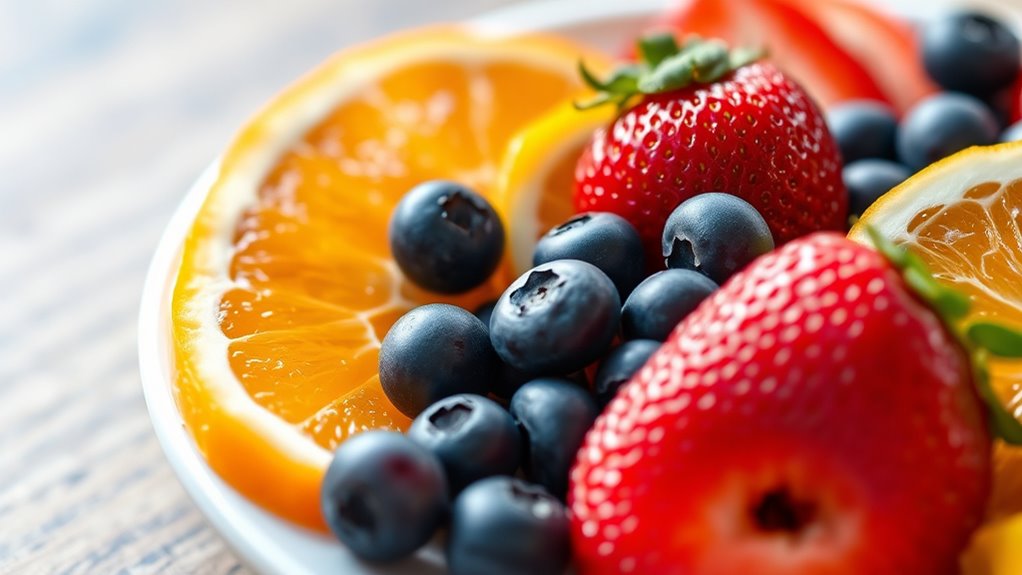

To manage blood sugar on a fruit-forward diet, focus on choosing low-GI fruits like berries, apples, and pears, and pair them with healthy fats or proteins to slow absorption. Control your portions to prevent spikes and add fiber-rich foods, such as chia seeds or oats, to help stabilize blood sugar levels. Monitoring your response can give you personalized insights. Keep exploring these strategies to find what works best for your body.
Key Takeaways
- Choose low-GI fruits like berries and apples to prevent rapid blood sugar spikes.
- Pair fruits with healthy fats or proteins to slow digestion and moderate blood sugar response.
- Practice portion control to avoid excessive carbohydrate intake from fruit servings.
- Incorporate fiber-rich foods to further slow carbohydrate absorption and stabilize blood glucose.
- Regularly monitor blood sugar levels to identify personal responses and adjust fruit choices accordingly.
If you’re following a fruit-forward diet, understanding how it affects your blood sugar is essential. Fruits are naturally sweet and packed with nutrients, but their impact on blood glucose levels depends largely on their fruit glycemic index. The glycemic index measures how quickly a particular fruit raises your blood sugar after eating it. High-GI fruits, like watermelon or ripe bananas, cause rapid spikes, triggering a swift insulin response. Conversely, low-GI fruits such as berries, apples, and pears tend to cause a slower, more controlled rise in blood sugar levels. Knowing this can help you make smarter choices, especially if you’re managing diabetes or trying to maintain steady energy levels throughout the day.
Understanding the impact of fruit glycemic index helps manage blood sugar effectively.
When you consume high-GI fruits, your body responds by releasing a large amount of insulin to help shuttle glucose into cells. This quick insulin response can lead to a rapid drop in blood sugar afterward, sometimes leaving you feeling tired or hungry again shortly after eating. Over time, frequent spikes and crashes can contribute to insulin resistance, making it harder for your body to regulate blood sugar efficiently. To avoid this, you might want to focus more on low-GI fruits, which promote a gradual increase in blood glucose and a more moderate insulin response. Combining fruits with healthy fats or proteins, like nuts or yogurt, can further slow digestion and blunt blood sugar spikes, providing a more balanced energy release.
It’s also important to contemplate portion sizes. Even low-GI fruits can impact your blood sugar if eaten in large quantities. Moderation helps keep your blood glucose levels stable and prevents unnecessary insulin surges. Additionally, pairing fruits with fiber-rich foods can slow down carbohydrate absorption, smoothing out the insulin response. For example, adding chia seeds or oats to your fruit salad not only boosts fiber but also helps maintain steadier blood sugar levels.
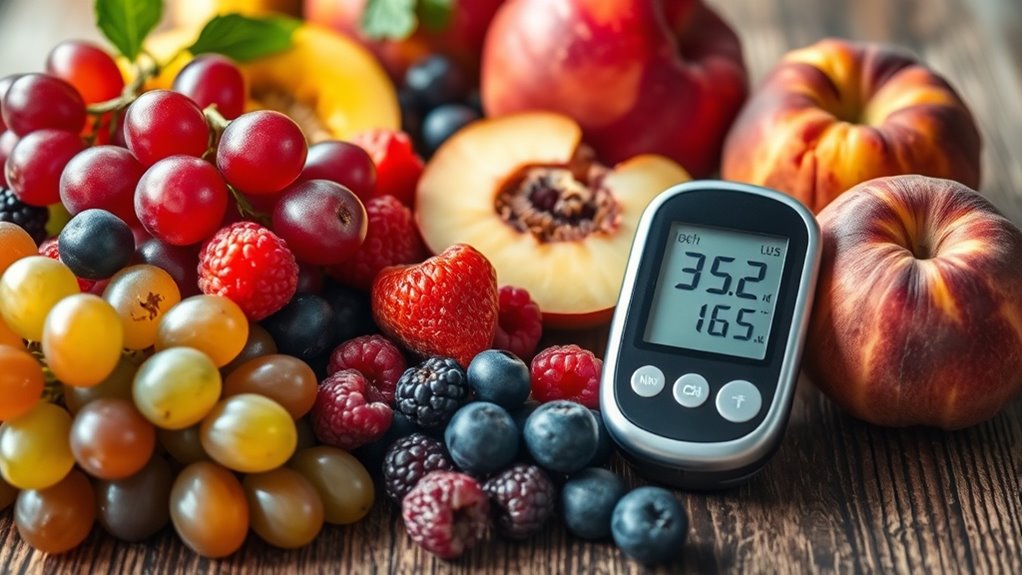
Research shows that blood sugar regulation can be optimized by mindful eating habits, which is especially crucial when following a fruit-forward diet. Monitoring how different fruits affect your blood sugar is key, especially if you’re sensitive to fluctuations. Using a glucose meter to check your levels after eating various fruits can give you personalized insights. Over time, you’ll learn which fruits cause minimal blood sugar spikes and can incorporate those more regularly into your diet. Remember, a fruit-forward diet doesn’t mean you have to avoid high-GI fruits entirely; instead, focus on balance, portion control, and pairing to support healthy insulin responses. This way, you can enjoy the benefits of fruits without compromising your blood sugar management.

Ascensia CONTOUR NEXT GEN Blood Glucose Monitor All-In-One Kit with 20 Test Strips, Accurate Blood Sugar Monitor, Easy-to-Use Glucose Meter, Portable and Reliable Diabetes Testing Kit
CLINICALLY PROVEN ACCURACY: Track and manage your diabetes confidently with our reliable blood glucose monitoring system. Readings that…
As an affiliate, we earn on qualifying purchases.
As an affiliate, we earn on qualifying purchases.
Frequently Asked Questions
How Do Fruit-Forward Diets Affect Long-Term Blood Sugar Control?
A fruit-forward diet can improve your long-term blood sugar control by boosting insulin sensitivity and supporting metabolic health. When you include nutrient-dense fruits, your body adapts better to glucose, reducing spikes and crashes. However, it’s essential to balance fruit intake with other foods. By doing so, you help maintain steady blood sugar levels, promote healthy metabolism, and reduce risks of insulin resistance over time.
Are There Specific Fruits Better for Blood Sugar Regulation?
Think of certain fruits as gentle rain for your blood sugar—low glycemic index fruits help maintain steady levels. Berries, with their low fruit glycemic index and rich berry benefits, are especially good choices. They cause smaller blood sugar spikes and pack antioxidants. So, opt for berries like strawberries, blueberries, and raspberries to keep your blood sugar balanced while enjoying the sweet taste of nature’s jewels.
Can Exercise Influence Blood Sugar Levels on Fruit-Heavy Diets?
Yes, exercise can influence your blood sugar levels on fruit-heavy diets. Timing your workouts, especially after meals, helps lower blood sugar spikes. Opt for moderate to high-intensity workouts, as they improve insulin sensitivity and glucose uptake. If you exercise before eating, it may help stabilize your levels. Consistent activity combined with mindful exercise timing and intensity can effectively manage blood sugar while enjoying a fruit-forward diet.
What Are the Signs of Blood Sugar Imbalance From Fruit Consumption?
You might notice blood sugar imbalance if fruit cravings hit unexpectedly, or if you experience energy fluctuations that seem to swing wildly. Ironically, what feels like a natural boost can quickly turn into a crash, leaving you tired or irritable. Keep an eye out for these signs, as they indicate your blood sugar isn’t staying steady. Recognizing these signals helps you adjust your diet before more serious issues develop.
How Does Fiber Intake From Fruit Impact Glycemic Responses?
Fiber intake from fruit buffers your blood sugar response by slowing down glucose absorption, which helps prevent spikes. Higher fiber content can lower the fruit glycemic index, making fruits less likely to cause rapid blood sugar increases. As you include more fiber-rich fruits in your diet, you’ll notice steadier energy levels and better blood sugar control, supporting overall metabolic health. So, choose fruits with more fiber for a balanced, glycemic-friendly diet.

Glycemic Index Chart,Magnetic Low Glycemic Index Foods List for Diabetics & Health Seekers,Diabetes & Diet Management(Glycemic Chart)
A4 SIZE + MAGNETIC BACKING – Large 8.3 x 11.7-inch laminated sheet attaches securely to refrigerators, lockers, or…
As an affiliate, we earn on qualifying purchases.
As an affiliate, we earn on qualifying purchases.
Conclusion
So, next time you indulge in a fruit-forward diet, remember to balance your carbs and monitor your blood sugar. Isn’t it worth asking if your choices support your health goals? By being mindful of portion sizes and combining fruits with protein or healthy fats, you can enjoy the sweetness without the spike. After all, doesn’t life taste better when you feel good? Keep experimenting and listening to your body—your health will thank you.

Sanar Naturals Chia Seeds | High Fiber Supplement, GLP-1 Support, Plant-Based Protein with Omega-3 | Superfood for Smoothies Baking and Oatmeal | Vegan, Non-GMO, Raw Bulk, Gluten Free, 10 oz
SUPRPORTS HEALTHY DIET: Natural source of fiber and lignans to support digestive health and help promote your weight…
As an affiliate, we earn on qualifying purchases.
As an affiliate, we earn on qualifying purchases.

Blood Sugar Support Complex Supplement | Supports Healthy Blood Sugar Levels Already Within Normal Range | With Berberine, Cinnamon, Chromium, Turmeric, Apple Cider Vinegar, Bitter Melon | 60 Capsules
𝗔𝗱𝘃𝗮𝗻𝗰𝗲𝗱 𝗕𝗹𝗼𝗼𝗱 𝗦𝘂𝗴𝗮𝗿 𝗖𝗼𝗺𝗽𝗹𝗲𝘅 – Formulated with a blend of 19 active ingredients, including Cinnamon, Chromium, Mulberry, and…
As an affiliate, we earn on qualifying purchases.
As an affiliate, we earn on qualifying purchases.