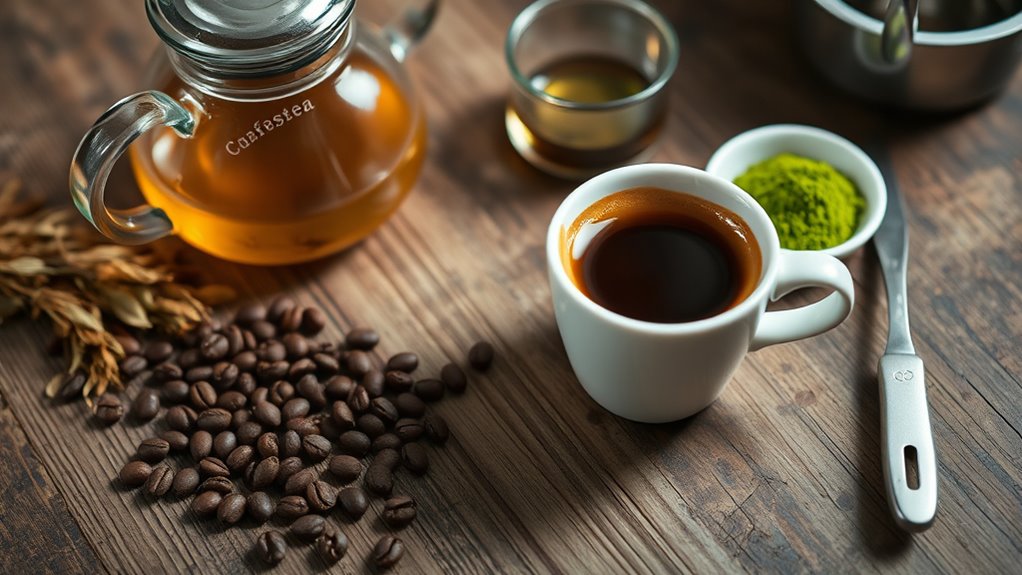

If you’re seeking caffeine alternatives, consider herbal infusions like chamomile, peppermint, or rooibos, which offer rich flavors without the jitters. Functional drinks infused with herbs such as ginseng or lavender can boost energy or promote relaxation naturally. These options help you enjoy warm or cold beverages that support wellness and reduce caffeine intake. Keep exploring to discover how these flavorful, healthful choices can transform your daily drink routine.
Key Takeaways
- Coffee and tea are traditional caffeine sources, but herbal infusions offer flavorful, caffeine-free alternatives.
- Herbal infusions like chamomile and peppermint provide relaxation and wellness benefits without caffeine jitters.
- Functional beverages combine herbs and botanicals to support energy, focus, or calmness naturally.
- Switching to herbal and functional drinks can reduce caffeine intake while maintaining enjoyable flavors.
- These alternatives promote a balanced lifestyle with hydration, health benefits, and sensory variety.
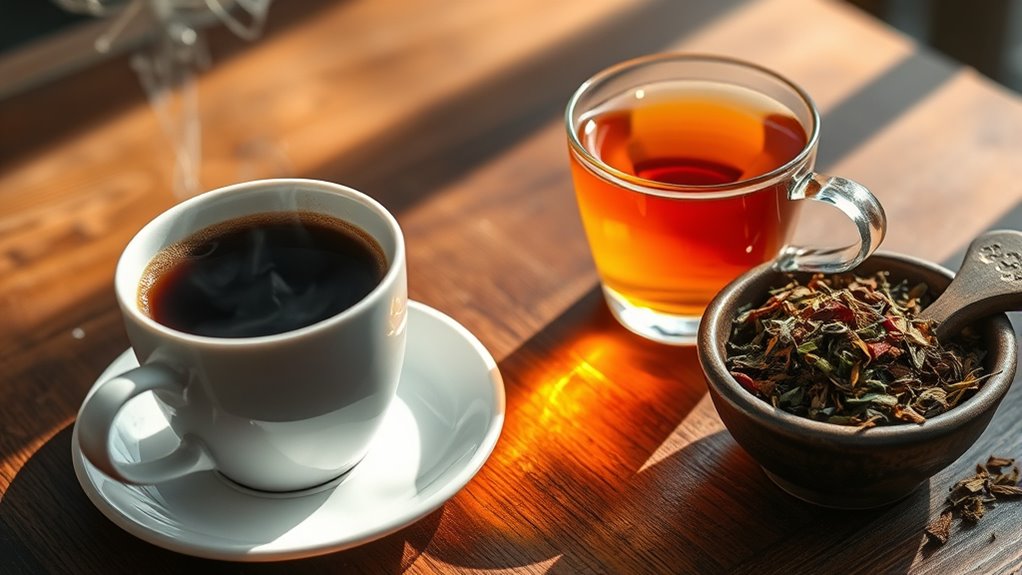
Are you looking to cut back on coffee and tea but still want a flavorful boost? If so, exploring herbal infusions and functional beverages could be just what you need. These alternatives offer a variety of tastes and benefits without the jitters or crash often associated with caffeine. Herbal infusions, made from dried herbs, flowers, and roots, provide a natural way to enjoy a warm, aromatic drink that can soothe your mind and body. They come in countless combinations—chamomile, peppermint, rooibos, and hibiscus, just to name a few—each offering unique flavors and health perks. Unlike traditional coffee or tea, herbal infusions typically contain little to no caffeine, making them ideal for those seeking to reduce their intake while still savoring a flavorful beverage.
Discover flavorful herbal infusions with little to no caffeine for a soothing, healthful beverage alternative.
Functional beverages are another exciting category to think about. These drinks are designed not only to hydrate but also to deliver specific health benefits, often through added nutrients, adaptogens, or botanicals. Many functional beverages now incorporate herbs and superfoods that support energy, focus, or relaxation, providing a natural alternative to highly caffeinated drinks. By choosing these beverages, you can enjoy a flavorful experience that also boosts your wellness. For example, drinks infused with ginseng, turmeric, or matcha can offer gentle energy without the crash, while herbal blends with chamomile or lavender promote calmness and stress relief. These drinks are often lightly sweetened or flavored with natural ingredients, making them more appealing and healthier than many commercial energy drinks or sodas.
Switching from coffee or tea to herbal infusions and functional beverages isn’t just about reducing caffeine; it’s about discovering new flavors and health benefits. You might find that herbal infusions become your go-to for a soothing afternoon break or a calming bedtime ritual. Meanwhile, functional beverages can keep you energized during busy mornings or help you unwind after a long day. Many of these drinks are easy to prepare—simply steep dried herbs or botanicals in hot water, or opt for ready-made options that are convenient and portable. Over time, you may notice improvements in your sleep, digestion, or overall energy levels, thanks to the natural properties of these drinks. Additionally, exploring alternative beverages can broaden your palate and introduce you to a variety of herbal and botanical profiles.
Incorporating herbal infusions and functional beverages into your routine can be a simple yet effective way to enjoy a flavorful boost without relying solely on coffee and tea. They allow you to explore new tastes and experience the health benefits of herbs and botanicals, all while reducing your caffeine intake. Whether you prefer a warm mug in the morning or a cooling cold drink during the day, these alternatives provide versatile options that keep you energized and satisfied, naturally.
Frequently Asked Questions
How Does Caffeine Affect Sleep Quality?
Caffeine can markedly affect your sleep quality by causing sleep disruption, especially if you’re sensitive to it. When you consume caffeine late in the day, it stays in your system longer, making it harder to fall asleep or stay asleep. Your caffeine sensitivity determines how strongly it impacts you, so paying attention to your body’s reactions helps. Reducing intake before bedtime can improve your sleep and overall restfulness.
Are There Health Risks With Decaffeinated Coffee and Tea?
While decaffeinated coffee and tea are generally safe, you might want to be aware of potential health risks. The decaffeination process sometimes involves chemicals, leaving residues that could pose concerns for sensitive individuals. Though most products undergo thorough processing, choosing organic options or those labeled as chemical-free can help minimize exposure. Overall, moderation and informed choices can help you enjoy your beverages without unnecessary worries.
Can Herbal Teas Replace Traditional Caffeine Sources Effectively?
Yes, herbal teas can effectively substitute traditional caffeine sources, especially if you’re looking for a caffeine substitution. They offer numerous herbal tea benefits, like calming effects and antioxidants, without the jitters or sleep disruptions caffeine can cause. You can enjoy herbal infusions daily, making them a healthy alternative. Just make certain you choose herbal teas that suit your taste and health needs, and you’ll find a satisfying, caffeine-free option.
What Are Natural Caffeine Alternatives for Athletes?
You might stumble upon natural caffeine alternatives for athletes when least expecting it. Plant-based energizers like maca root and yerba mate provide a gentle boost, while adaptogenic herbs such as Rhodiola and ginseng help enhance endurance and reduce fatigue. These options work harmoniously with your body, offering sustained energy without jitters, making them ideal for athletic performance. Keep an eye out for these powerful natural aids in your routine.
How Does Caffeine Impact Hydration Levels Throughout the Day?
Caffeine can affect your hydration balance by acting as a mild diuretic, which may lead to increased fluid retention and dehydration if consumed excessively. Throughout the day, it’s important to monitor your intake, especially if you’re active, because caffeine could cause you to lose more fluids than you take in. To stay well-hydrated, balance your caffeine consumption with plenty of water and other hydrating fluids.
Conclusion
Think of caffeine sources like a garden—you can choose your favorite blooms, whether coffee, tea, or alternatives. Each offers a unique burst of energy, like sunlight reaching different flowers. By exploring these options, you’re cultivating a vibrant, balanced routine that energizes without overwhelming. Just remember, like tending a garden, moderation helps your energy flourish. So, pick what fuels you best, and enjoy a lively, harmonious brew that keeps you thriving throughout your day.