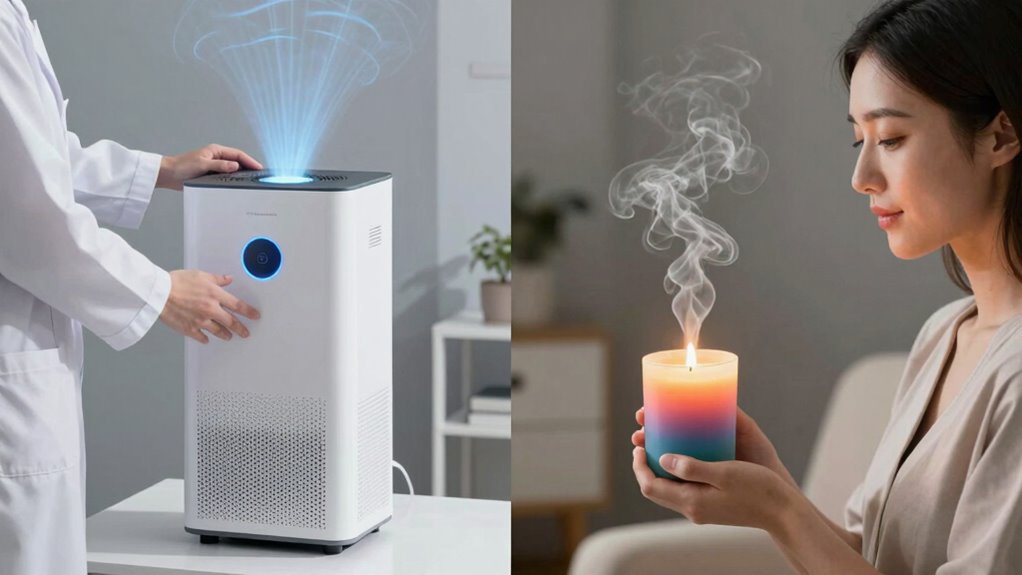

Cleaning the air involves using filters like HEPA or activated carbon to trap pollutants and airborne contaminants, removing odors at their source for a lasting effect. Masking odors, on the other hand, just covers smells with added scents temporarily, without eliminating the cause. While masking can make things seem fresher briefly, cleaning the air provides a healthier environment overall. Keep exploring to learn how effective odor neutralization can make a real difference.

Get health and wellness essentials delivered free with Prime
- Fast, free delivery on millions of items
- Prime Video, Amazon Music and more included
- Member-only deals all year
Key Takeaways
- Cleaning the air removes pollutants and odors through filters, improving overall air quality, while masking only covers odors temporarily with added scents.
- Air cleaning targets the source of odors and airborne contaminants, whereas masking conceals smells without removing their cause.
- Odor neutralization chemically or biologically breaks down odor molecules for lasting elimination, unlike masking which offers only short-term freshness.
- Effective air cleaning reduces bacteria and VOCs, while masking simply hides odors without addressing underlying issues.
- Combining air purification and odor neutralization provides a comprehensive approach, unlike masking alone, which leaves the source unresolved.
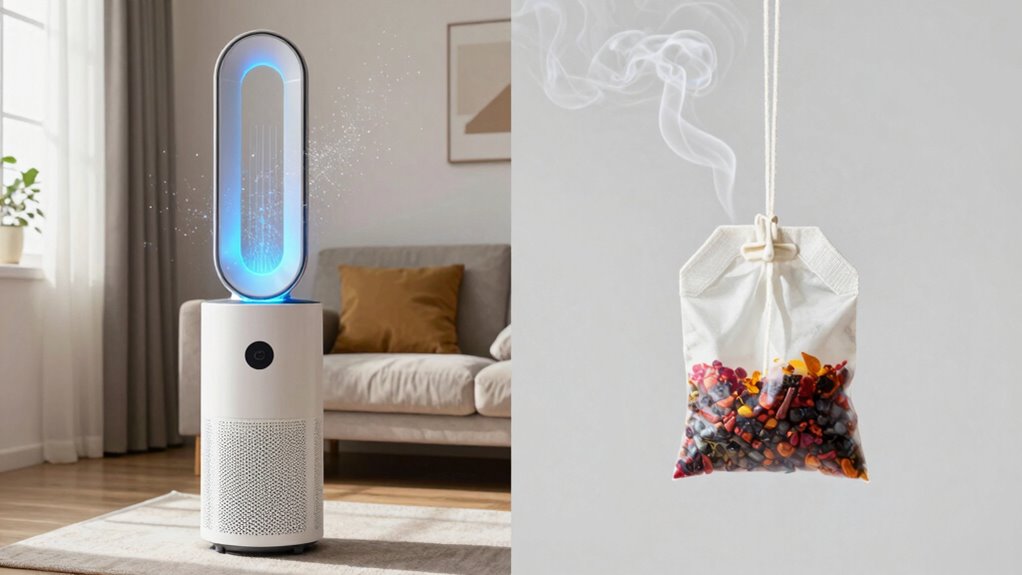
When it comes to dealing with unwanted odors in your home or car, understanding the difference between cleaning the air and masking odors is essential. Many people assume that simply covering up a smell is enough, but true freshness requires more. Air purification and odor neutralization are two effective strategies that address odors at their source, rather than just hiding them temporarily.
Cleaning the air involves actively removing odor-causing particles and contaminants. Air purification systems, such as HEPA filters or activated carbon filters, work to trap airborne particles, bacteria, and volatile organic compounds that contribute to bad smells. These devices don’t just mask odors; they improve overall air quality by reducing airborne pollutants. When you use air purification, you’re treating the environment directly, which means you’re less likely to deal with lingering smells that keep recurring. This process is especially useful for persistent or strong odors, like pet smells, smoke, or cooking fumes, which often stay embedded in the air and surfaces. Additionally, choosing the right air purification technology can significantly enhance the effectiveness of odor removal.
Air purification traps particles and bacteria, improving air quality and reducing persistent odors from pets, smoke, or cooking fumes.
Odor neutralization, on the other hand, aims to chemically or biologically eliminate odors rather than just cover them up. Many products designed for odor neutralization contain enzymes or other active ingredients that break down odor molecules at their source. This method transforms unpleasant smells into harmless or less noticeable compounds, resulting in a genuinely fresher environment. Unlike masking agents, which simply add a different scent to cover up the original smell, odor neutralizers target the root cause. For example, if you have a lingering musty smell in your basement or a stubborn smell from your pet, odor neutralization can effectively eliminate the scent rather than just disguising it temporarily.
It’s important to recognize that masking odors with air fresheners or scented sprays doesn’t address the underlying problem. These products might make your space smell pleasant for a short time, but they don’t remove the odor particles themselves. In contrast, air purification combined with odor neutralization offers a thorough approach. You get cleaner, fresher air and a more lasting solution to unpleasant smells. So, if you want a healthier, more inviting environment, focus on systems and products that clean the air and neutralize odors at their source. This way, you’re not just hiding the smell—you’re eliminating it altogether, creating a space that truly feels fresh and clean. Recognizing the importance of air quality improvement can help you make better choices for a healthier living space.
As an affiliate, we earn on qualifying purchases.
Frequently Asked Questions
How Long Does Air Cleaning Typically Take to Show Results?
Air cleaning results can vary, but generally, you’ll notice improvements within a few hours to a couple of days. Regular air purifier maintenance, like changing filters, is key to sustained effectiveness. If you’re relying on odor absorption methods, expect quicker results—often within hours—since these trap or neutralize odors directly. Keep your environment well-ventilated, and you’ll see a noticeable difference in air quality sooner.
Are Certain Air Purifiers More Effective Against Specific Odors?
Coincidences often lead you to the right solution. Some air purifiers, equipped with HEPA filters, excel at capturing airborne particles, while activated charcoal specifically targets and absorbs odors. If you’re dealing with pet smells or cooking odors, choose a purifier with activated charcoal. For dust or allergens, HEPA filters work best. Combining both filters offers all-encompassing odor and particle removal, ensuring fresher indoor air.
Can Masking Odors Improve Air Quality in the Long Term?
Masking odors doesn’t improve air quality long-term because it only covers up smells, a common air quality myth. While odor masking effectiveness might make your space smell better temporarily, it doesn’t remove pollutants or allergens. For genuine air quality improvements, you need air purifiers that clean the air by filtering out particles and contaminants. Relying solely on masking can give a false sense of freshness without addressing underlying air issues.
What Are the Health Benefits of Properly Cleaning Indoor Air?
Properly cleaning indoor air with air filtration and odor neutralization offers health benefits like reducing allergens, dust, and pollutants that can trigger asthma or allergies. It also minimizes airborne bacteria and viruses, improving respiratory health. By removing odors, you create a fresher environment, decreasing stress and enhancing well-being. Regularly cleaning your indoor air helps prevent illness, supports better sleep, and promotes overall health for you and your family.
Do All Air Purifiers Remove Bacteria and Viruses?
Not all air purifiers remove bacteria and viruses. Those with advanced air filter technology, like HEPA filters, are designed for bacterial elimination, capturing particles as small as 0.3 microns. If you’re concerned about germs, choose an air purifier with HEPA filters or UV-C light technology. These features actively target bacteria and viruses, providing cleaner, healthier indoor air, unlike basic models that only mask odors without eliminating harmful microorganisms.
Conclusion
Remember, cleaning the air actually removes pollutants and germs, making your environment healthier, while masking odors only hide them temporarily. Did you know that indoor air can be up to five times more polluted than outdoor air? So, instead of just covering up smells, invest in air purifiers that truly clean the air. It’s a simple step that can considerably improve your well-being and indoor environment. Don’t settle for masking—choose to genuinely clean your air.
Cold & flu season Picks
humidifiers
As an affiliate, we earn on qualifying purchases.