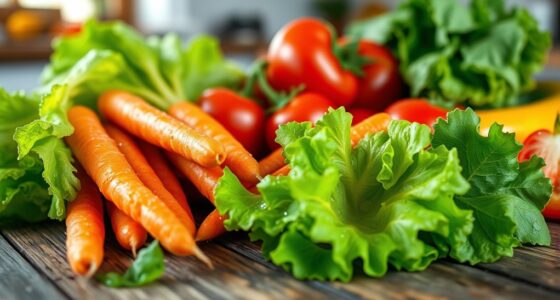
When craving cooked foods, try warming raw dishes at low temperatures using dehydration or gentle warmers to bring out comforting textures and flavors. Ferment or marinate vegetables to create savory, tender bites that mimic cooked tastes. Enjoy raw soups like gazpachos served slightly chilled or at room temperature for a hearty feel. Sprouting grains and fermenting add new textures and complex flavors, satisfying your cravings while staying true to raw principles. Keep exploring these techniques to discover even more satisfying options.

Get health and wellness essentials delivered free with Prime
- Fast, free delivery on millions of items
- Prime Video, Amazon Music and more included
- Member-only deals all year
Key Takeaways
- Use dehydration to warm nuts, seeds, or veggies below 118°F, creating comforting textures and flavors without cooking.
- Ferment vegetables with warm spices or citrus to develop complex, savory flavors that mimic cooked dishes.
- Prepare raw soups like gazpacho or chilled stews with fresh herbs for a hearty, warming experience.
- Sprout grains and seeds to add tender, nutrient-rich textures similar to cooked ingredients.
- Marinate vegetables in warm herbs or citrus to enhance flavor and create a satisfying, cooked-like taste.
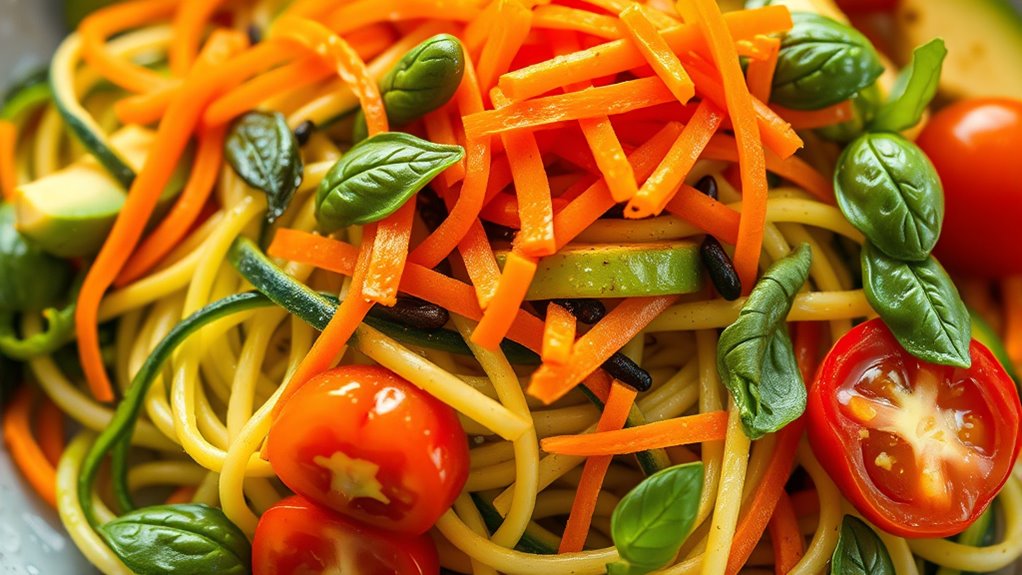
If you’re interested in maintaining a raw food lifestyle but want to explore options beyond traditional raw diets, there are plenty of alternatives that can meet your nutritional needs without sacrificing convenience or variety. One effective way to do this is by incorporating raw food alternatives that mimic cooked dishes, using clever culinary techniques and food preservation methods. These techniques allow you to enjoy warm, satisfying meals without losing the benefits of raw eating.
Start by exploring lightly heated dishes that stay within the raw food domain. For instance, gentle dehydration or warm food dehydrators can create warm, hearty wraps or crackers that feel more substantial. These methods involve food preservation techniques that keep ingredients raw but give them a different texture and temperature. You can warm nuts, seeds, or vegetables at low temperatures, typically below 118°F (48°C), ensuring they retain most of their nutrients while providing a comforting, cooked-like experience. This approach not only enhances flavor but also introduces a new dimension to your raw diet, satisfying cravings without breaking your dietary principles.
Explore lightly heated dishes with dehydration to enjoy warm, hearty raw foods without sacrificing nutrients or principles.
Another culinary technique involves fermenting or marinating foods to amplify their flavors and add warmth. Fermentation, a traditional food preservation method, not only extends shelf life but also boosts nutrient availability and creates complex flavors. For example, fermented vegetables like kimchi or sauerkraut can be eaten at room temperature, offering a tangy, savory experience that feels more filling. Marinating vegetables in warm spices or citrus can also give them a cooked appearance and taste, making raw dishes more appealing when you’re craving something more substantial.
You can also experiment with raw soups or stews that use food preservation techniques like soaking or blending. Creating raw gazpachos or cold soups with fresh herbs and spices can be highly satisfying, especially when served slightly chilled or at room temperature. These dishes can mimic the comforting qualities of cooked soups, providing warmth in flavor rather than temperature, which helps satisfy your craving for cooked foods.
Finally, incorporating sprouting and fermentation as preservation methods *open the door* to new flavors and textures. Sprouting transforms seeds and grains into tender, nutrient-dense sprouts that add a cooked-like texture to salads or wraps. Fermentation not only preserves food but also enhances digestibility and flavor complexity. These techniques are practical, easy to implement, and expand your raw food repertoire, making it easier to enjoy diverse, satisfying meals without resorting to traditional cooking. Additionally, exploring healthy eating principles can help you better understand how to balance raw and lightly cooked foods for optimal nutrition. By mastering these food preservation and culinary techniques, you can enjoy a more versatile, flavorful raw food lifestyle that still satisfies your desire for warm, cooked-inspired dishes.
raw food dehydrator for warming nuts and vegetables
As an affiliate, we earn on qualifying purchases.
As an affiliate, we earn on qualifying purchases.
Frequently Asked Questions
Can Raw Food Alternatives Provide the Same Nutrients as Cooked Foods?
Raw food alternatives can provide many nutrients, but nutrient retention and food bioavailability vary. Cooking often enhances bioavailability of certain nutrients like lycopene and beta-carotene, making them easier for your body to absorb. However, raw foods can preserve heat-sensitive vitamins like C and B. To get the best of both, include a mix of raw and cooked foods in your diet, ensuring you maximize nutrient retention and bioavailability for ideal health.
Are Raw Food Substitutes Suitable for All Dietary Restrictions?
You should consider that raw food substitutes may not suit everyone, especially if you have food allergies or specific dietary restrictions. Some raw options contain allergens or lack certain nutrients essential for your health. Always check ingredient labels and consult with a healthcare professional or dietitian to guarantee these alternatives fit your dietary needs safely. It’s crucial to prioritize your health when choosing raw substitutes for cooked foods.
How Do Raw Options Compare in Taste and Texture to Cooked Dishes?
Imagine biting into a crunchy apple that rivals the crispness of a fresh apple pie. Raw options often have distinct flavor profiles, like the bright tang of raw veggies or the sweet juiciness of fruits, but they may lack the cooked dish’s warmth and depth. Texture similarities vary; some raw foods mimic cooked textures, while others are crisper or more fibrous. You’ll find raw foods can satisfy your cravings with unique taste and texture experiences.
What Are the Best Raw Foods to Satisfy Sweet Cravings?
When satisfying sweet cravings with raw foods, opt for fruit desserts like fresh berries, mango slices, or pineapple chunks, which naturally satisfy your sweet tooth. You can enhance their flavor with natural sweeteners such as honey or agave. These options provide a delicious, healthy alternative to cooked desserts, offering vibrant taste and texture while keeping your craving for sweetness fulfilled without processed sugars.
Are There Any Safety Concerns With Consuming Raw Food Alternatives?
You should consider food safety when trying raw food alternatives because consuming raw items can pose risks like bacteria or parasites. To minimize these, wash all produce thoroughly and store them properly. Be cautious of cross contamination by separating raw produce from raw meats or other sources of bacteria. By following proper food safety practices, you can enjoy raw options safely without worry.
Conclusion
So next time you crave cooked comfort, remember these raw alternatives—they’re so delicious, they’ll make your taste buds dance like a symphony. Embrace the crunch, the crispness, and the vibrant flavors that raw foods offer. Who knew that satisfying your cravings could be as simple as biting into nature’s own masterpieces? Trust me, once you try these options, you’ll wonder how you ever lived without their invigorating, guilt-free goodness. Your palate will thank you for this revitalizing, bold switch!
Cold & flu season Picks
humidifiers
As an affiliate, we earn on qualifying purchases.